 Chalid Lutfie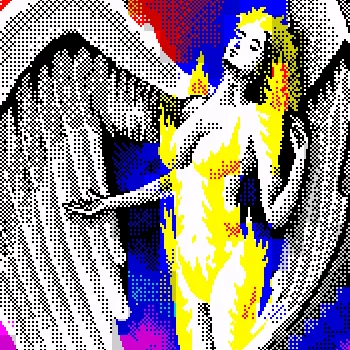
Origins of the Still Flying Project
The creative genesis of Still Flying dates back to the highly active European demoscene of the early 2000s. At the time, the ZX Spectrum—a home computer released in 1982—remained a platform of choice for a dedicated subculture of programmers, musicians, and digital artists. Despite the machine’s significant hardware constraints, including a limited sound chip capable of only three-channel pulse-width modulation, practitioners like C-Jeff pushed the boundaries of what could be achieved through creative coding and synthesis.
C-Jeff utilized the Pro Tracker 3 interface, a standard tool for the platform, to assemble the tracks that would eventually comprise the album. The composition process was characterized by the necessity for extreme technical economy; every note, frequency modulation, and rhythmic pattern had to be manually programmed within the restrictive environment of the Zilog Z80 processor. This period of development, lasting throughout 2002, resulted in a cohesive body of work that challenged the common perception of the ZX Spectrum’s sonic capabilities.
A Chronology of Release and Distribution
The trajectory of Still Flying from a private composition project to a recognized demoscene release followed a deliberate timeline. Following its initial creation, the album gained wider visibility through its integration into the demoscene’s competitive circuit.
The track "My Mind is Free" served as one of the project’s early ambassadors. Originally written for the CAFe 2002 demoparty, the piece was submitted under the title "My mind free," a minor grammatical oversight that C-Jeff later attributed to the language barriers prevalent in the international computing community at the time. Despite the linguistic hurdle, the composition resonated with the judging panel and the audience, securing a 13th-place finish in the highly competitive ZX Spectrum AY Music category. Following the conclusion of the event, the track was formally integrated into the Still Flying tracklist.
A similar narrative surrounds the track "Lonely Soul." Although not initially part of the original conceptual framework for the album, the track was composed during the same intensive creative period. Sharing the stylistic DNA and atmospheric direction of the other tracks, it was submitted to the Paradox 2002 demoparty. The response was notably more favorable than that of its predecessor; "Lonely Soul" took 2nd place in its respective competition, further solidifying C-Jeff’s reputation as a rising talent within the scene.
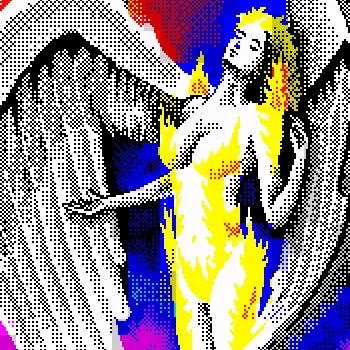
Approximately 18 months after the initial compositions were finalized, the project reached its full potential as an interactive medium. The album was re-released as a dedicated executable musicdisk—a software application that allowed users to listen to the album through a user interface coded by Vortex. The presentation was enhanced by graphics designed by the artist Schafft and data compression handled by Poisoned CyberJack. This transition from a collection of audio files to a piece of executable software highlighted the collaborative nature of the demoscene, where programmers and musicians frequently pooled their technical resources to showcase their collective capabilities.
Technical Context and Hardware Constraints
To understand the significance of Still Flying, one must consider the technical landscape of 2002. The AY-3-8910 sound chip, which powered the ZX Spectrum, was designed primarily for basic audio effects in gaming rather than sophisticated musical composition. It lacked the polyphonic capabilities of later sound cards or modern digital audio workstations (DAWs).
By utilizing Pro Tracker 3, C-Jeff was required to work within the confines of the chip’s three channels: one for melody, one for harmony, and one for percussion/noise. Creating "lyric music novels" in such an environment required a profound understanding of mathematical frequency ratios and timing intervals. The album’s production represents a triumph of engineering ingenuity, where the limitations of 8-bit architecture were treated not as obstacles, but as the foundation for a distinct aesthetic. The subsequent mastering of the tracks by MmcM further ensured that the album maintained its sonic integrity while transitioning from the raw output of the ZX Spectrum to modern digital formats.
Industry Impact and the Demoscene Legacy
The impact of Still Flying extends beyond its initial release, serving as a case study for the preservation and evolution of chiptune music. The demoscene, while often relegated to the periphery of mainstream music industry discussions, has been a critical incubator for digital innovation. The techniques developed by early practitioners like C-Jeff laid the groundwork for contemporary "lo-fi" and electronic genres that prioritize hardware-based authenticity.
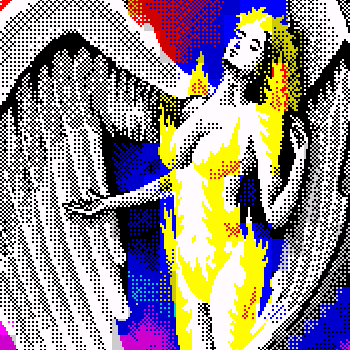
The release of the musicdisk version of the album is particularly significant in the context of digital archeology. By bundling the music with custom code, graphics, and compression, the team behind the musicdisk created a self-contained environment that preserved the original playback experience. This practice remains a hallmark of the demoscene, ensuring that artistic works are not just saved as raw data, but as functional programs that reflect the hardware environment of their era.
The recognition garnered at events like CAFe 2002 and Paradox 2002 provided the necessary validation for C-Jeff to pursue further creative endeavors. These demoparties were the primary venues for peer review and professional networking in the early 2000s, acting as the industry standard for judging technical prowess. The success of Still Flying at these venues provided a quantifiable metric for the quality of the work, moving it from a hobbyist project to a celebrated contribution to the ZX Spectrum software library.
Analysis of the "Lyric Music Novel" Concept
The tagline "lyric music novels" provides a unique lens through which to view the album. While the tracks are instrumental, the descriptor suggests an intent to convey complex emotional states or narrative arcs through melody alone. This approach distinguishes Still Flying from much of the technical-heavy, rhythm-focused output that was common in the demoscene at the time.
By focusing on the "lyrical" quality of the compositions, C-Jeff demonstrated that 8-bit sound could evoke melancholy, hope, and reflection. The stylistic consistency across the tracks suggests a deliberate effort to create an album-length experience rather than a series of disparate demos. This conceptual maturity was rare for the period and helped distinguish the work in a crowded field of amateur compositions.
Official Credits and Archival Status
The project was a collaborative effort involving several prominent figures within the demoscene, as evidenced by the production credits. C-Jeff served as the primary composer and producer, overseeing the creative vision and the technical execution. The visual aesthetic, crucial for the musicdisk release, was managed by Schafft, whose artwork provided the necessary visual context for the audio. Mastering, a vital step in ensuring the tracks were suitable for wider distribution, was handled by MmcM, whose expertise ensured that the technical limitations of the original source files were mitigated without sacrificing the authentic "chiptune" character of the sound.
The album remains under the copyright of C-Jeff, preserving the intellectual property rights associated with the work since 2002. The ongoing availability of the album on platforms like Bandcamp reflects a continued interest in early 2000s electronic music and serves as an important bridge for contemporary listeners interested in the history of computer-generated sound.
Broader Implications for Digital Art
The legacy of Still Flying is a testament to the longevity of the demoscene’s influence on modern music production. As digital tools become increasingly powerful and accessible, the constraints faced by C-Jeff in 2002 might seem archaic to a modern producer. However, the creative discipline required to work with limited hardware remains a valuable skill, fostering a deep understanding of sound design and composition.
Furthermore, the transition of Still Flying from an executable musicdisk to a widely accessible digital album illustrates the changing landscape of media consumption. The preservation of such works is essential for a comprehensive history of digital culture. The album serves not only as a collection of music but as a record of the community, the hardware, and the technical expertise that defined a specific moment in the history of computing. By maintaining the availability of these tracks, the creator ensures that the innovations of the 2002 era continue to inform and inspire future generations of digital artists and chiptune enthusiasts.
In conclusion, Still Flying stands as a foundational document in the career of C-Jeff and a noteworthy entry in the history of ZX Spectrum development. Through its blend of technical restriction and creative ambition, the project transcended the limitations of its medium, proving that the tools of the past are still capable of delivering compelling artistic narratives in the present.