 Chalid Lutfie
After a three-year hiatus following the collaborative success of Parallel Processing, chiptune virtuoso Danimal Cannon—the moniker of multi-instrumentalist Dan Behrens—is set to release his highly anticipated solo project, Lunaria. Scheduled for a March 11th release, the album represents a significant evolution in Behrens’ creative trajectory, serving as the definitive realization of his long-standing ambition to fuse the raw, bit-crushed aesthetics of Nintendo Game Boy sound chips with the technical complexity of progressive metal guitar work. While fans have experienced this hybrid style during his high-energy live performances for years, Lunaria marks the first time this sonic synthesis has been fully captured and refined within a studio recording environment.
A Chronological Evolution of Sound
The genesis of Lunaria can be traced back to Behrens’ earlier work, specifically his 2011 release, Roots. During that period, the challenge of achieving a cohesive blend between digital synthesis and analog strings proved technically daunting. At the time, Behrens opted to keep the two mediums largely distinct, fearing that the frequency spectrums of the Game Boy’s 8-bit pulse waves and the midrange frequencies of electric guitars would clash, leading to a cluttered mix.
The three-year gap since his 2013 collaboration with Zef, Parallel Processing, was not merely a period of inactivity but a deliberate interval of technical maturation. According to Behrens, mastering the interplay between these two disparate worlds required four years of rigorous experimentation. The result, as presented on Lunaria, is a departure from his previous work; it is less an experiment and more a calculated, symphonic integration. By treating the Game Boy not merely as a novelty sound source but as a core member of a traditional band lineup, Behrens has moved the chiptune genre toward a more expansive, progressive framework.
Conceptual Depth and The Giant Impact Hypothesis
The thematic backbone of Lunaria is rooted in scientific inquiry, reflecting Behrens’ personal interest in astrophysics. The album’s title and narrative structure are derived from the "Giant Impact Hypothesis," the prevailing scientific model explaining the formation of the Moon. This theory posits that a Mars-sized body, historically referred to as Theia, collided with the early Earth approximately 4.5 billion years ago, with the resulting debris eventually coalescing to form the lunar satellite.
Behrens has personified this celestial event through the character of "Lunaria," a figure representing both the impactor and the resulting moon. The title also functions as a linguistic play on "Lunar-aria," suggesting a musical composition or operatic expression focused on the celestial body. This infusion of high-concept narrative marks a shift in the chiptune landscape, where artists are increasingly looking toward abstract, scientific, and literary themes to elevate the genre beyond its nostalgic, retro-gaming origins.
Musical Influences and Technical Composition
The sonic palette of Lunaria is notably diverse, reflecting a broad range of influences that extend far beyond the 8-bit community. Behrens cites a wide spectrum of genres, including industrial acts like Nine Inch Nails and KMFDM, indie-rock experimentalists Buke and Gase, and the orchestral arrangements of Wolfgang Amadeus Mozart and contemporary choral composer Eric Whitacre. This eclectic synthesis manifests in the album’s heavy, rhythmic drive and its unexpected melodic shifts.
The inclusion of guest collaborators underscores the album’s elevated ambition. Emily Yancey, a professional vocalist with an operatic background, provides the haunting, ethereal vocal lines that give "Lunaria" the requested "celestial" character. Furthermore, the record features a piano performance by Samuel Ascher-Weiss, professionally known as Shnabubula. Ascher-Weiss was tasked with reinterpreting the track "Axis," arguably the most technically demanding piece on the record. By transposing a song written for a digital console onto a traditional acoustic piano, the collaboration highlights the inherent musicality of Behrens’ songwriting, stripping away the electronic artifice to reveal the core structural integrity of the composition.
Market Context and Industry Implications
The release of Lunaria comes at a pivotal time for the chiptune genre. Once relegated to a niche subculture of "demoscene" enthusiasts and hardware hackers, the sound has seen a resurgence through mainstream pop production and the indie game music explosion, highlighted by the massive success of the Shovel Knight original soundtrack.
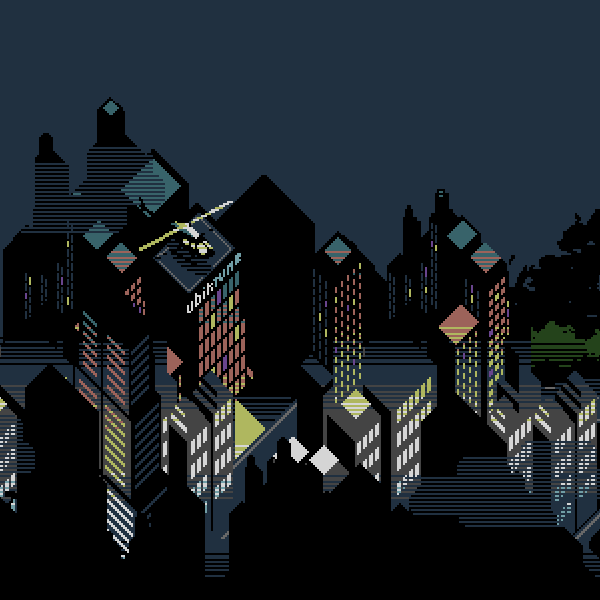
Industry analysts observe that by blending live instrumentation with chiptune, artists like Danimal Cannon are effectively expanding the genre’s appeal to a broader demographic of progressive rock and metal listeners. The move away from purely software-based production toward hybrid, multi-instrumental recordings suggests a maturation of the scene. As production tools become more accessible, the barrier to entry has lowered, forcing professional artists to differentiate themselves through superior arrangement, live performance proficiency, and high-concept storytelling.
The logistical rollout of Lunaria reflects these modern industry standards. By offering both a standard digital release and a physical format—a CD bundled with an original artwork poster by Minerva Mopsy—Behrens is catering to the demand for tangible collectibles that has persisted among dedicated fanbases in the digital age. This strategy, managed via the Bandcamp platform, allows for a direct-to-consumer model that provides higher margins for the artist while fostering a stronger sense of community.
Technical Analysis: Bridging the Digital and Analog
From a production standpoint, the success of Lunaria hinges on the frequency management of the Game Boy’s output. Chiptune sound chips are notoriously difficult to mix because their square and saw-tooth waves contain a high concentration of harmonics that can easily mask the detail of a distorted electric guitar.
Behrens’ approach appears to rely on dynamic side-chaining and frequency-specific EQ carving. By treating the Game Boy’s audio channels as individual instruments rather than a monolithic "backing track," he has created a soundscape where the guitar and the hardware provide a counterpoint to one another. This "band lineup" philosophy is a departure from the "backing track" model common in early electronic music, where the performer plays over a pre-recorded sequence. In the context of the album, the interplay is tight, deliberate, and rhythmically complex, pushing the limits of what is possible with the hardware limitations of the DMG-01 Game Boy console.
Reception and Future Outlook
While the full album release is slated for March 11th, the early reception of the lead single, "Behemoth," suggests that the shift in style has been well-received by his core audience. The track, which serves as a flagship for the album’s sound, demonstrates the heavier, industrial-influenced direction Behrens has taken.
The implications of this album for the wider electronic music scene are significant. If Lunaria succeeds in bridging the gap between the chiptune community and the mainstream progressive music industry, it could provide a roadmap for other artists looking to transition from niche, hardware-based hobbyism to full-scale professional touring and recording.
As Danimal Cannon moves into this new era, the focus remains on the synthesis of legacy technology and contemporary musical theory. By refusing to abandon the constraints of the Game Boy while simultaneously embracing the technical demands of modern metal and orchestral arrangement, Behrens has positioned Lunaria as a defining moment in his career. The project not only validates the five-year wait for a new solo studio record but also sets a new benchmark for what can be achieved when digital nostalgia is tempered with serious, disciplined musical craftsmanship.
For the listener, the album serves as an invitation to engage with a complex, extraterrestrial narrative through the lens of a highly specific, yet universally resonant, technological sound. As the music community prepares for the March 11th launch, the anticipation surrounding Lunaria underscores a broader truth: the most innovative music often arises from the friction between the old and the new, the digital and the physical, and the rigid constraints of hardware and the limitless possibilities of human creativity.