 Vera Clarissa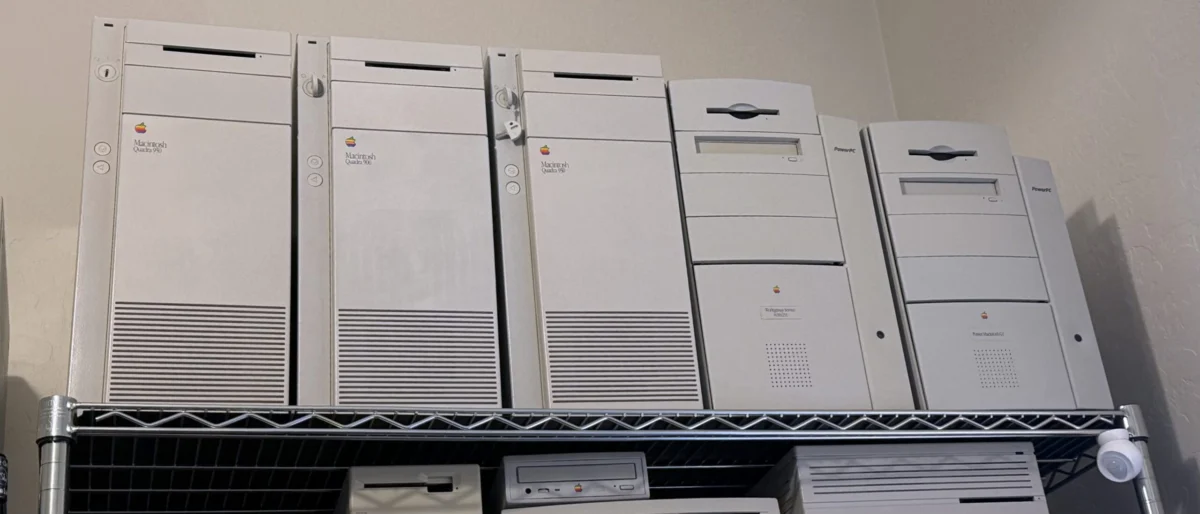
For vintage computing enthusiasts, the preservation of early 1990s hardware presents a persistent material challenge: the inevitable chemical degradation of high-impact polystyrene (HIPS) plastics used in iconic systems like the Macintosh Quadra and Workgroup Server series. As these machines cross the thirty-year threshold, the brominated flame retardants (BFRs) integrated into the plastic housings during manufacturing—essential for fire safety compliance at the time—undergo oxidative changes when exposed to ultraviolet (UV) radiation and atmospheric oxygen. This process results in the characteristic “dirty yellow” or brown discoloration that plagues the hobbyist community. While traditional chemical restoration methods, colloquially known as "retrobrighting," offer a path to mitigate this yellowing, they are insufficient for addressing structural damage, missing components, or the limitations of aged, brittle material. Recent developments in industrial color matching, specifically the identification of RAL 7044 as a viable surrogate for the proprietary "Apple Platinum" color, mark a significant milestone in the field of professional-grade vintage hardware restoration.
The Chemical Context of Plastic Degradation
The yellowing phenomenon is not a surface-level stain but a structural alteration within the polymer matrix. Apple’s design specifications for the early 1990s Macintosh line mandated a specific aesthetic profile: a neutral, light-gray tone officially referred to as "Platinum." This color was achieved through a complex pigment mixture housed in a plastic base containing BFRs, such as decabromodiphenyl ether.
When these plastics are exposed to ambient light, the bromine atoms in the flame retardants can become unstable. Over three decades, these atoms detach from the polymer chains, creating free radicals that react with oxygen. This chemical reaction leads to the formation of conjugated double bonds, which absorb light in the blue spectrum, causing the material to appear yellow or brown to the human eye. Because this is a deep-seated chemical change, standard cleaning agents are ineffective. While hydrogen peroxide-based oxidation reversal—using either UV exposure or submersion in a diluted peroxide solution—can temporarily restore the original hue, the process does not replace lost material or mend physical cracks, necessitating more permanent cosmetic solutions like repainting.
Chronology of Restoration Methodology
The pursuit of a perfect color match has evolved through several distinct phases within the enthusiast community. In the early 2000s, collectors relied on hit-or-miss attempts with off-the-shelf aerosol paints, often resulting in finishes that were either too blue, too yellow, or possessed an incorrect gloss level.
By 2024, the community shifted toward a more empirical approach. Forums dedicated to the 68k Macintosh architecture began a systematic comparison of standardized color systems. The consensus gradually moved away from proprietary consumer paints toward the RAL color space—a European standard for color matching used in industrial and architectural applications. The identification of RAL 7044, or "Silk Grey," emerged as the leading candidate. Unlike consumer paints, which often suffer from high-gloss finishes that betray the non-factory nature of the restoration, professional-grade mixtures can be formulated to mimic the low-sheen, matte surface texture of original 1990s Apple plastic.

Technical Analysis: Color and Texture Reproduction
The primary obstacle to achieving a "factory-fresh" look is not merely color accuracy, but the replication of the micro-texture inherent to injection-molded ABS plastics. Smooth, 3D-printed replacements or sanded repairs often create a surface that lacks the subtle light-diffusing properties of the original case.
To bridge this gap, restoration specialists have adopted a multi-stage finishing process:
- Surface Preparation: The substrate is meticulously cleaned and, if 3D-printed, sanded with progressively finer grit to remove layer lines.
- Texture Priming: Technicians utilize a textured primer, often designed for automotive plastics, to create a microscopic "tooth" that mimics the original injection-molding grain.
- Conductive Shielding: For specific models like the Quadra 950, which utilized factory-applied conductive nickel paint for internal RF shielding, repairs require the reapplication of electromagnetic interference (EMI) coatings before external aesthetic work can commence.
- Final Color Application: Utilizing a custom-mixed, matte-finish RAL 7044, multiple thin layers are applied to ensure uniformity without obscuring the newly established surface texture.
Data from recent restoration projects indicate that when these steps are followed, the disparity between a restored component and an original, well-preserved bezel is nearly indistinguishable under standard ambient lighting.
Broader Implications for the Vintage Computing Market
The professionalization of restoration techniques has significant implications for the value and longevity of vintage technology. As original stock diminishes and plastics become increasingly brittle, the ability to replicate factory aesthetics becomes a vital component of historical preservation.
Industry analysts observe that as hardware moves from "obsolete" to "collectible," the demand for high-fidelity restoration services is rising. This trend mirrors the automotive restoration market, where the ability to source "new-old-stock" parts is replaced by the capacity to manufacture or repair existing parts to original factory specifications. For the Macintosh enthusiast, this means that even machines suffering from severe battery leakage, structural cracking, or missing drive bezels—previously considered "parts machines"—are now viable candidates for complete restoration.
Official and Community Perspectives
While Apple Inc. has not issued guidance on the long-term maintenance of 1990s-era chassis, the preservation community operates under the mandate of maintaining historical accuracy. Collectors often emphasize the distinction between "refurbishing" (making the machine functional) and "restoring" (returning the machine to its historical appearance).

"The goal is not to improve the design, but to halt the entropy that three decades of aging has imposed," notes one lead contributor to the 68kMLA technical forums. The adoption of standardized color matching like RAL 7044 serves as a de facto industry standard, ensuring that restorations remain consistent across the global community of enthusiasts.
Challenges in Modern Restoration
Despite these advancements, the process remains time-intensive and requires a controlled environment. The climate in which the painting occurs—specifically humidity and airborne particulate matter—can significantly affect the final outcome. In environments like Arizona, where low humidity accelerates drying times but wind-borne dust can contaminate the finish, the process requires specialized dust-free enclosures.
Furthermore, the integration of modern storage solutions—such as BlueSCSI or SD-to-SCSI adapters—inside these restored cases creates a "hybrid" computing experience. The hardware looks and feels like a 1992 Macintosh, but performs with the speed and reliability of modern flash-based storage. This synthesis of original aesthetics and contemporary performance represents the current pinnacle of the vintage computing hobby.
Conclusion
The transition from amateur experimentation to standardized, professional-grade restoration marks a maturation point for the vintage Mac community. By leveraging industrial color matching and sophisticated surface-finishing techniques, collectors are successfully counteracting the degradation of aging polymers. This rigorous approach ensures that iconic hardware remains a tactile, visual component of the history of computing for future generations. As these machines continue to serve as both functional tools for legacy software and artifacts of design history, the commitment to aesthetic integrity through precision restoration will remain a cornerstone of the hobbyist ethos. The ability to return a weathered, yellowed machine to its original "Platinum" glory is more than just a cosmetic upgrade; it is a vital act of technological conservation.