 Vera Clarissa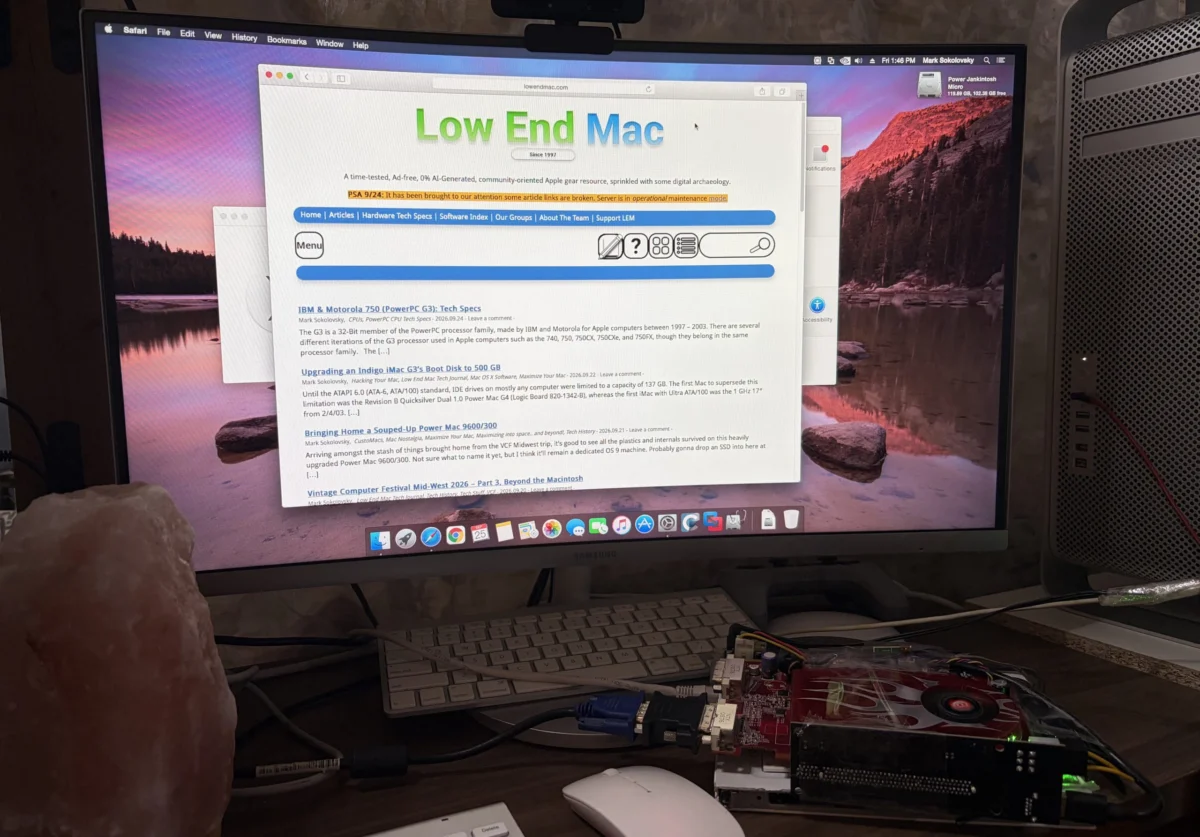
The international retrocomputing community has officially launched the 2026 iteration of RetroChallenge, a month-long event designed to encourage participants to push the boundaries of vintage hardware through documentation, modification, and creative engineering. Running throughout the month of October, the challenge serves as a global platform for hobbyists to tackle complex technical hurdles, with the process being monitored by the ACMS (Association for Computing Machinery and Science) and a panel of expert judges. The event culminates in a live digital "Show & Tell" on October 31, 2026, where participants will present five-minute overviews of their completed projects.
The Scope and Objectives of RetroChallenge 2026
RetroChallenge is not merely a competition but a collaborative documentation effort. The primary objective is to foster community engagement by requiring participants to maintain a public record of their progress. Judges evaluate projects based on a balanced rubric that includes technical ingenuity, the difficulty of the implementation, final project outcomes, and the visible passion of the developer.

To support the participants, the organizers have partnered with the HACKADAY RetroComputing Contest, allowing entries to be cross-listed for greater visibility. This synergy provides competitors with access to a broader network of engineers and enthusiasts who can offer peer feedback and troubleshooting assistance. The organizers have confirmed that the prize pool for this year includes a $500 AUD voucher, specialized components from ZuluSCSI, and exclusive event-branded merchandise, including pins and keychains.
Chronology of a Technical Challenge: The "Franken-Mac" Project
One of the most notable entries currently undergoing development for the 2026 challenge is a project centered on the "Mac Studio" concept—an alternate-history exploration of what a high-performance Apple desktop might have looked like had it been introduced in 2006 alongside the transition to Intel-based architecture.
The project originated from a series of "Franken-Mac" experiments conducted during the 2020–2022 period, which sought to revitalize aging hardware through modern peripheral integration. The current iteration involves taking a 2006-era Core 2 Duo MacBook logic board and decoupling it from its original form factor to create a custom-housed, high-performance desktop unit.

- Phase 1: Procurement and Testing (August 2026): The project began with the acquisition of two MacBook units from the Wisconsin Computer Club, purchased for a nominal cost. Initial testing confirmed the viability of the logic boards.
- Phase 2: Hardware Decoupling (Early September 2026): The developer stripped the MacBook down to the logic board, removing the AirPort card to facilitate the integration of an external GPU (eGPU) via the mini PCIe slot.
- Phase 3: Power Management Hurdles (Mid-September 2026): A significant engineering challenge emerged regarding power delivery. The MacBook logic board’s internal power rails were insufficient to drive a Radeon HD 2600 XT GPU. Initial attempts using a 12V 2A barrel jack power supply resulted in system instability and failure to initialize the graphical environment.
- Phase 4: Optimization and Finalization (Late September 2026): The developer successfully bypassed the power limitation by splicing a 12V 5A power supply originally intended for high-end storage hardware. This allowed the system to boot into a modified installation of Piker Alpha OS X Yosemite.
Technical Analysis: The Limits of Legacy Hardware
The project highlights the inherent limitations of 2006-era mobile computing, specifically the GMA 950 integrated chipset. To ensure the system remained stable with an external GPU, the developer was required to limit total system RAM to under 2.5 GB. This memory ceiling is a direct result of address space conflicts between the onboard chipset and external PCIe devices, a common bottleneck for retro-modders attempting to integrate modern peripherals into legacy systems.
The decision to utilize the MacBook’s bottom chassis as a structural base for the new desktop unit demonstrates a trend in "upcycling" within the retrocomputing community. By repurposing existing metal braces and shielding, the project minimizes the need for 3D printing or custom metal fabrication, instead relying on precise mechanical surgery to maintain the integrity of the original Apple components.
Broader Implications for the Retrocomputing Sector
The work being showcased in RetroChallenge 2026 reflects a broader shift in the hobbyist landscape. Where early retrocomputing was defined by simple restoration—replacing capacitors or cleaning chassis—the current movement is increasingly defined by "computational archaeology." This involves not just preserving the past, but actively reimagining it by forcing legacy silicon to interface with modern protocols, such as USB 3.0-connected PCIe risers and modern SSD storage solutions.

Industry observers note that projects like the "Power Hackintosh Micro" serve as a vital source of data for hardware preservationists. By documenting how to circumvent the graphical hardware limitations of mid-2000s Intel Macs, these developers are creating a knowledge base that will allow future generations of enthusiasts to keep these machines functional long after their original display and battery components have degraded.
Official Response and Community Engagement
The ACMS judges have signaled that they will be actively engaging with participants throughout October, offering encouragement and technical guidance. In a statement regarding the upcoming presentations, the panel emphasized that the "Show & Tell" component is designed to be accessible to all, regardless of the scale of the project.
"The goal is not to produce a mass-market product, but to demonstrate the creative application of technical skills," noted a spokesperson for the event. "Whether a participant is restoring a 1980s 8-bit machine or building a modern desktop from 2006 components, the value lies in the documentation of the struggle and the ultimate success of the configuration."

Future Outlook
As the event progresses toward the October 31 deadline, the community anticipates a surge in project documentation. The integration of modern software patches, such as Piker Alpha’s custom kernels, with legacy hardware remains a primary area of focus.
The success of the "Mac Studio" prototype in booting into an accelerated graphical environment provides a blueprint for others attempting similar builds. While the developer admits that the current project is a "monstrosity" of spliced cables and external power bricks, the core functional success serves as a foundation for further aesthetic refinement. As these projects reach their final phases, the global retrocomputing community remains a testament to the persistent viability of aging technology when paired with modern ingenuity.
For those looking to participate, the entry requirements remain open for the duration of the month, provided that the participant maintains an active, public-facing log of their hardware journey. The combination of monetary prizes, community feedback, and the technical challenge itself ensures that RetroChallenge 2026 will likely be the most documented year in the event’s history, providing a rich archive of technical solutions for the digital age.