Retno Hari Mulyono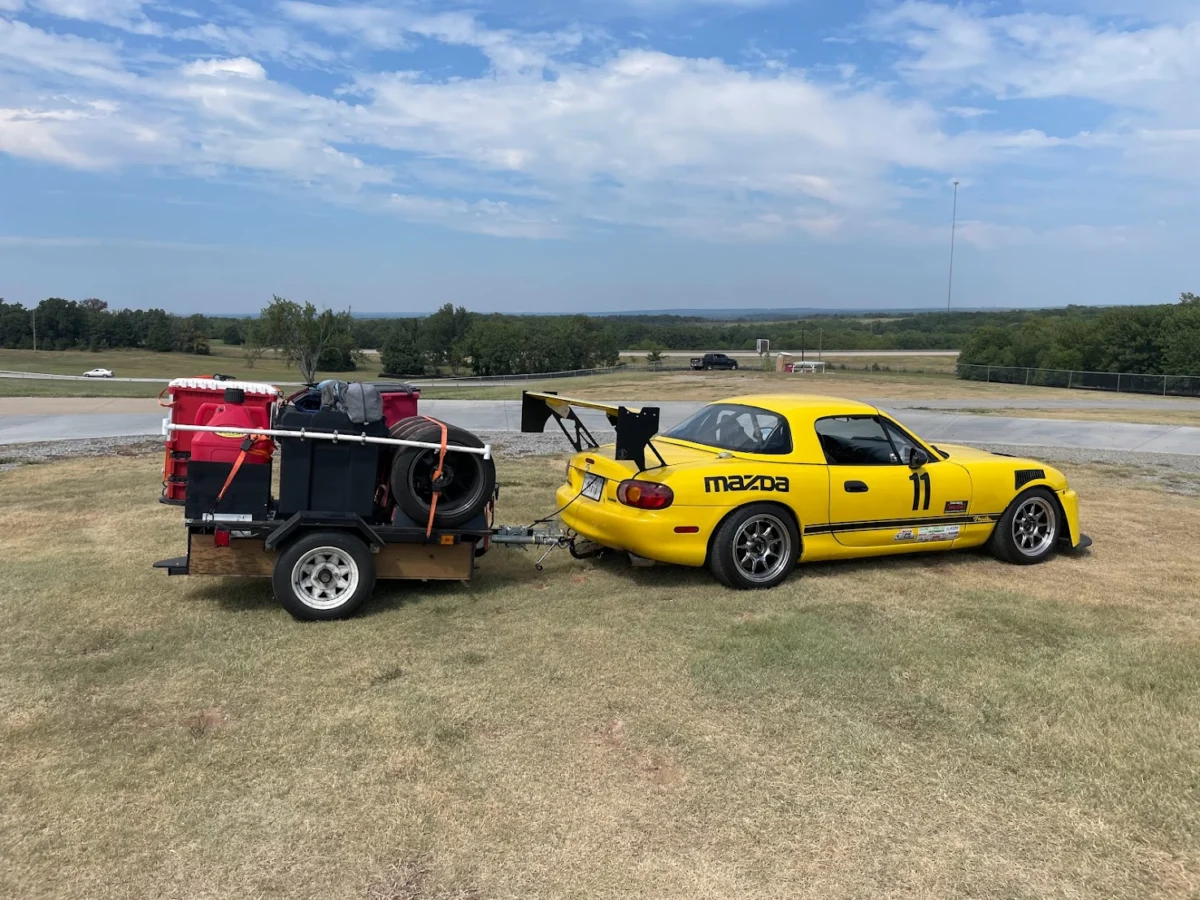
The ownership lifecycle of a dedicated track-day automobile presents a unique engineering and logistical challenge, bridging the gap between street-legal reliability and competitive motorsport endurance. Over the past three years, the Mazda MX-5 Miata (NB generation) has served as an evolving platform for intensive high-performance driving events (HPDE), SCCA Time Trials, and autocross competition. Entering its third consecutive year of comprehensive public documentation, this retrospective examines the mechanical alterations, logistical adaptations, and competitive milestones achieved between March 2023 and February 2024. Through systematic modifications in aerodynamics, powertrain maintenance, weight reduction, and driver ergonomics, the vehicle has transitioned from a dual-purpose street and track car into a dedicated precision instrument for regional motorsport circuits.
Logistical Evolution and Trailer Engineering
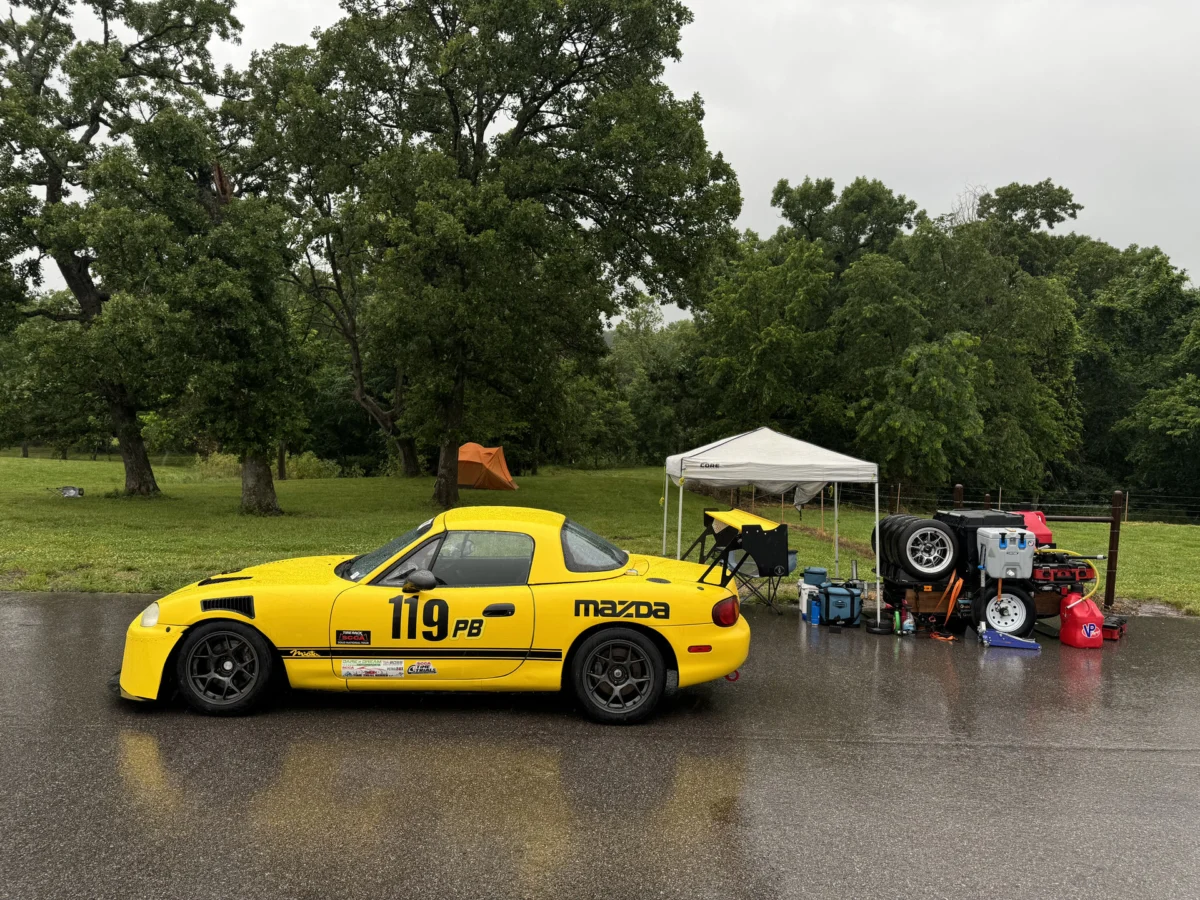
Transporting trackside consumables, spare components, and specialized equipment necessitates careful logistical planning for compact sports cars with limited internal cargo capacity. In March 2023, the support infrastructure underwent a significant upgrade. Originally constructed in 2022 to haul spare tires and tools to regional racing venues, the custom tire trailer received a structural overhaul. A new lower deck was fabricated, extending downward to a plane just below the trailer axle. This lowering of the center of gravity enhanced stability at highway speeds while maximizing vertical storage efficiency.
Further logistical enhancements included the replacement of dual five-gallon fuel jugs with a single, centrally mounted 15-gallon motorsport fuel container, streamlining refueling operations in the paddock. To mitigate common trackside failures, an under-trailer mounting bracket was engineered to securely carry a spare aerodynamic front splitter. Additionally, an integrated cylindrical transport tube was installed to accommodate various interchangeable wing gurney flaps, allowing for rapid aerodynamic tuning depending on circuit layouts. These infrastructure improvements ensured greater self-sufficiency during multi-day competition weekends across the Midwest.
Aerodynamic Adventures and Front-End Repairs
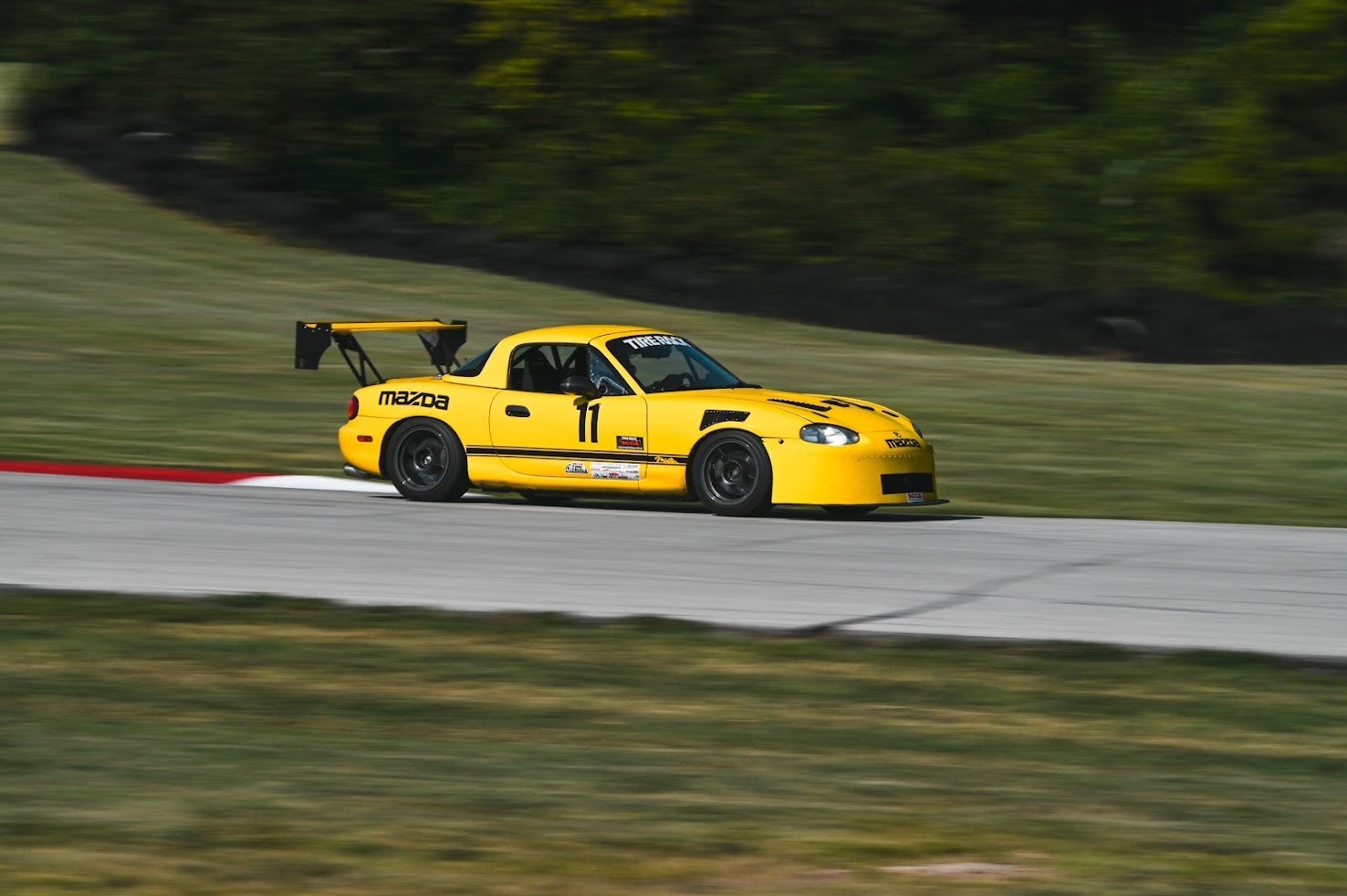
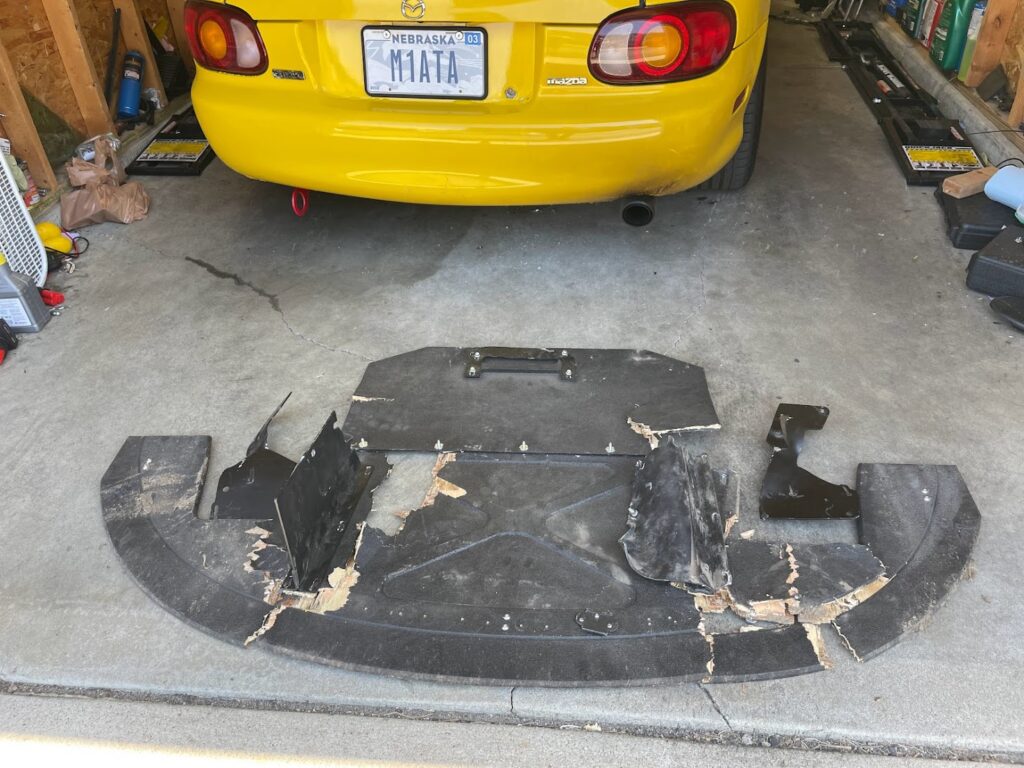
The installation of a Nine Lives Racing medium downforce aerodynamic kit over the 2022–2023 winter hibernation period introduced substantial performance gains, but immediately tested the structural limits of the NB chassis. Aerodynamic downforce places significant compressive and shear loads on front splitters and mounting infrastructure. During the initial push lap of the opening 2023 track event, an aggressive entry into a high-speed corner resulted in an off-track excursion. The subsequent impact severely fragmented the composite splitter, bent the heavy-duty mounting brackets, and distorted the factory radiator support structure.
Despite the structural damage, the vehicle completed the remainder of the track day and was driven home. Demonstrating the resilience required in amateur motorsports, a rapid-repair protocol was executed that very weekend. A dual-header weekend featuring a Friday track day followed by a Saturday-Sunday SCCA autocross event demanded immediate remediation. The factory front fascia was temporarily reinstalled for Saturday’s competition, while a replacement splitter was fabricated from a 1/4-inch sheet of plywood in time for Sunday’s runs.
Recognizing the inevitability of ground contact in low-slung, aero-equipped track cars, the fabrication of multiple spare splitters became standard operating procedure. A recurring issue with low-clearance scraping at paddock and track entrances prompted a transition to more robust materials. Ultimately, the configuration was upgraded to a 1/2-inch plywood splitter reinforced with custom side supports, providing optimal impact resistance and durability against the occasional curb strike or road irregularity.
Competitive Campaigning and Circuit Analysis
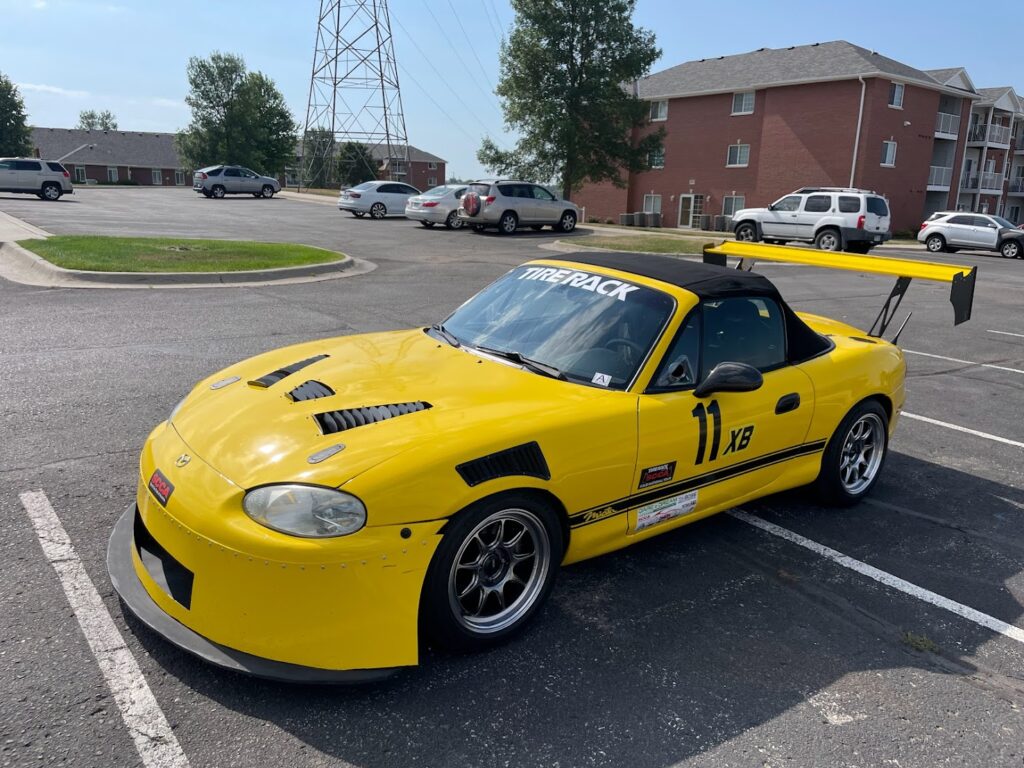
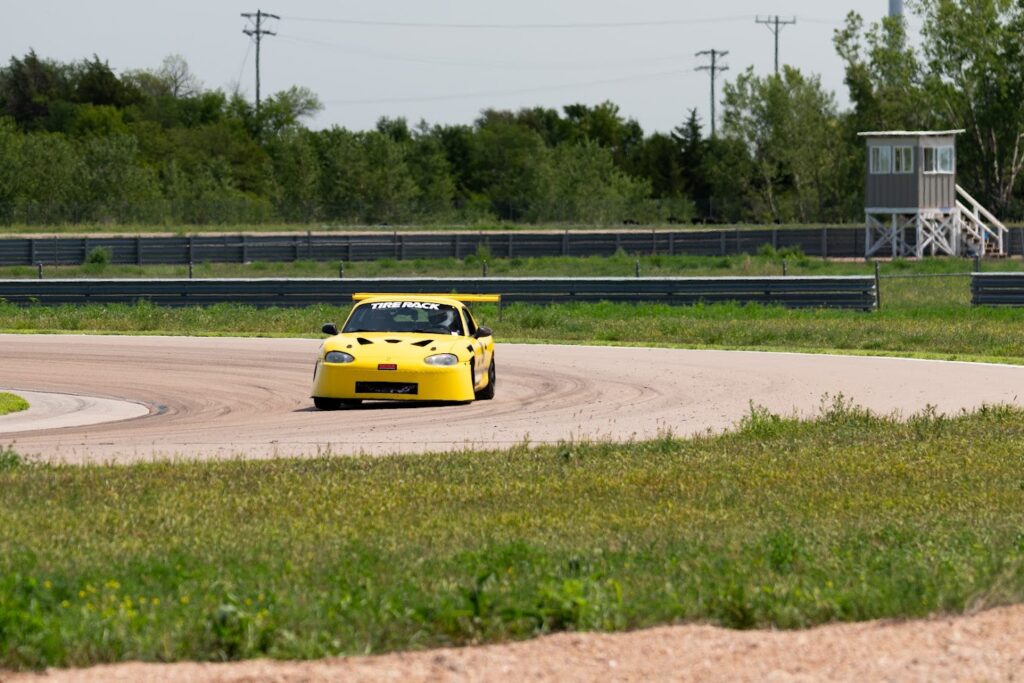
The 2023 competitive calendar saw intensive utilization across multiple Midwestern racing facilities, highlighted by participation in SCCA Time Trials and regional autocross series. In May 2023, the vehicle competed at Heartland Motorsports Park in Topeka, Kansas, marking its second appearance at the facility. For this season, the mechanical setup transitioned from Hankook RS4 endurance tires to a stickier compound: 225/45R15 Falken RT660 tires mounted on 15×9-inch wheels.
However, the event carried historical significance beyond lap times. At the conclusion of the 2023 motorsport season, Heartland Motorsports Park permanently ceased operations following a protracted dispute regarding unpaid property taxes. With the facility’s assets subsequently auctioned off individually and no confirmed plans for acquisition or reopening by new motorsport investors, the May 2023 Time Trials event stands as the final competitive outing for the platform at this historically significant venue.
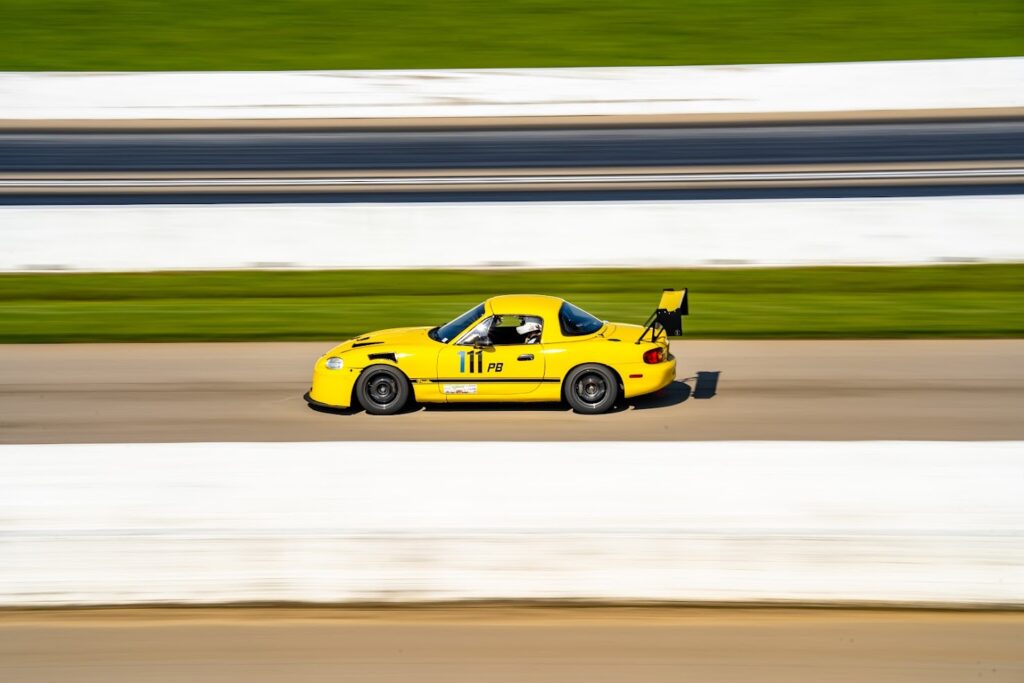
In July 2023, the racing calendar expanded to include Ozarks International Raceway, a technical, highly undulating circuit characterized by blind crests, continuous elevation changes, and minimal runoff areas. Prior to this event, diagnostic inspections revealed clutch slippage during transit to a local autocross. With insufficient time to source a specialized performance clutch before the Missouri circuit weekend, a standard parts-store organic replacement was hurriedly installed and bedded in. Despite the conservative clutch specification, the vehicle completed the weekend successfully. Driver confidence progressively increased across sessions, with lap times dropping consistently as familiarity with the perimeter barriers and topographical shifts improved.
August brought a return to Motorsports Park Hastings in Nebraska, where the vehicle recorded a fast lap of 1:42.78. When compared against established regional benchmarks—such as NASA Spec Miata lap records of 1:40.415 and TT6/TT5 classification records of 1:39.625 and 1:34.110, respectively—clear opportunities for driver development and chassis optimization were identified. Track analysts noted that substantial time remains recoverable in high-speed sweeping sections, such as Turn 3, where aerodynamic downforce theoretically permits full-throttle execution without braking input.
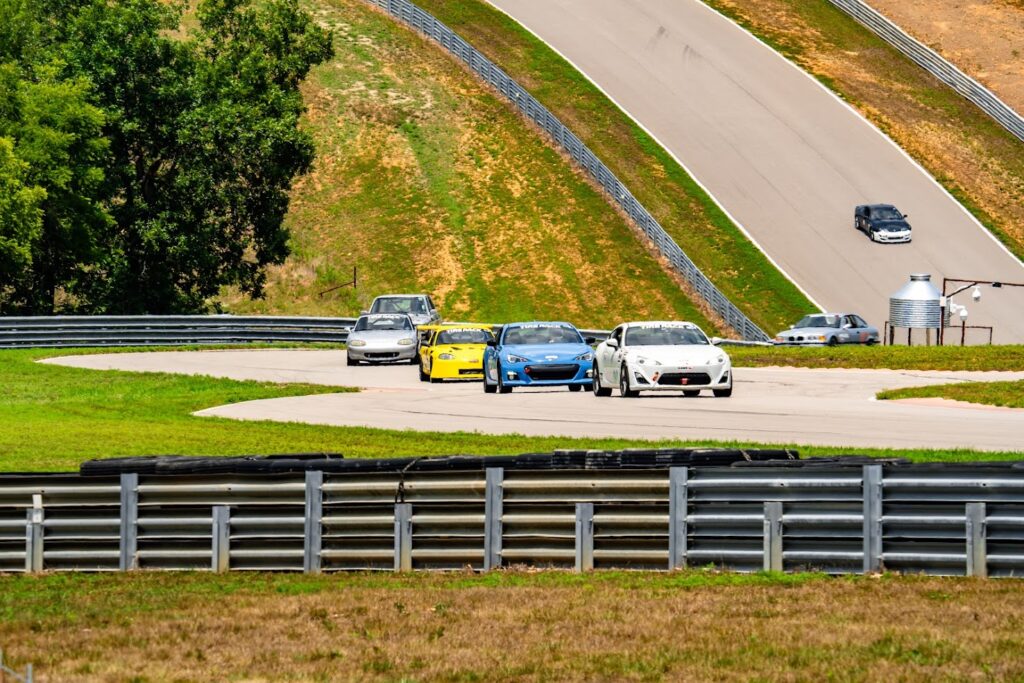
The tour continued in September 2023 with participation in the annual "Miatas at Hallett" event at Hallett Motor Racing Circuit in Jennings, Oklahoma. Running the circuit in both clockwise and counter-clockwise configurations over consecutive days provided a unique evaluation of vehicle dynamics. Unlike the claustrophobic wall placements at Ozarks, Hallett offered manageable elevation changes, safer runoff zones, and a shorter overall layout that accelerated the learning curve.
Powertrain Maintenance and Engine Management
Beneath the exterior modifications, the vehicle continues to rely upon its factory-original, unopened BP4W inline-four engine block. While foundational reliability enhancements—including comprehensive gasket replacements, a Boundary Engineering high-flow oil pump, a coolant flow reroute kit, upgraded valve springs, and an exhaust camshaft intake-side (Exhintake) swap—have been implemented, the high-mileage powerplant exhibits standard age-related wear, including minor oil consumption at high RPMs and exhaust smoke under warm engine deceleration.
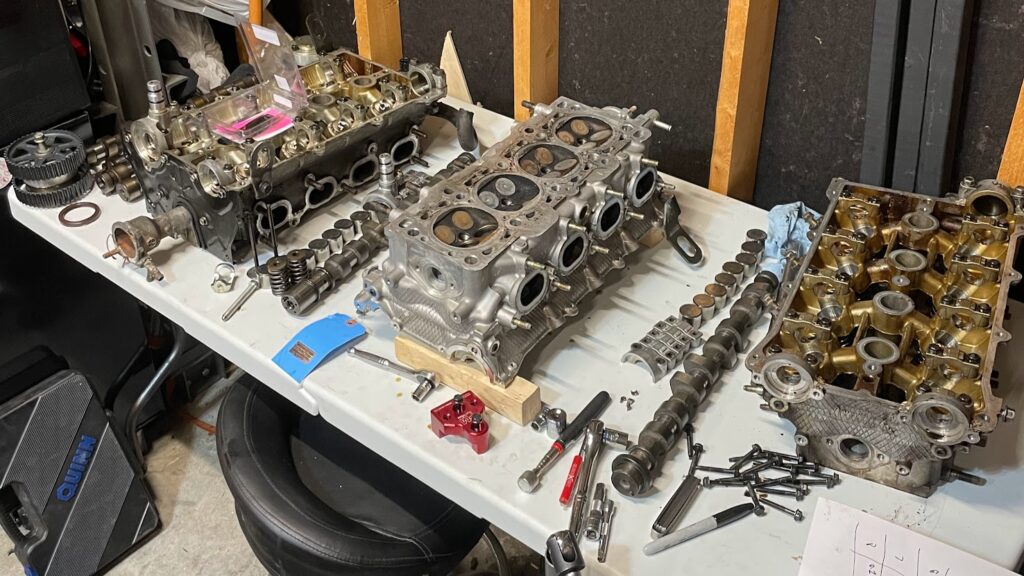
To safeguard against catastrophic mechanical failure during heavy track use, a multi-year inventory of spare components has been amassed, comprising two complete BP4W engines, one BP6D engine, and an additional spare BP6D cylinder head. Inspection of the initial spare BP4W motor revealed severe valvetrain wear, negative valve clearance, and fractured exhaust valves, though the bottom-end assembly demonstrated sound structural integrity.
To maintain operational readiness, a hybrid engine build was initiated. While a professional machine shop was contracted to complete complex machining and valve reconstruction for a spare BP6D cylinder head and block, an interim garage build was executed utilizing a refreshed BP4W bottom end combined with the rebuilt BP6D head and new BP6D pistons. This methodical approach ensures uninterrupted track participation should the primary powerplant succumb to thermal or mechanical fatigue.
Ergonomics, Thermal Management, and Safety
High-performance track driving places severe physiological demands on the driver, particularly during summer ambient temperatures where cockpit heat is amplified by safety apparel and lack of ventilation. To combat heat exhaustion, a Cool Shirt system—utilizing an insulated cooler and an inline pump to circulate chilled water through a specialized tubing-lined undershirt—was integrated into the vehicle’s safety framework. Initially secured via ratchet straps to the passenger seat, the system presented logistical conflicts whenever passengers were carried.
To resolve this limitation, a custom aluminum-angle mounting bracket was fabricated and permanently bolted to the trunk floor using structural brazing rods (Alumaweld). This engineering solution provided a lightweight, rigid, and cost-effective alternative to commercial mounting hardware, securing the thermal management system safely out of the passenger compartment.
Further interior refinements occurred during the winter 2023–2024 service window. The factory steering wheel and airbag assembly were replaced with a flat 330mm OMP motorsport steering wheel attached to a quick-release hub. While retaining a steering geometry comparable to stock within a slightly reduced diameter, the quick-release mechanism eliminated steering wheel obstruction during ingress and egress, a critical safety consideration for sanctioned motorsport events. Furthermore, the aftermarket assembly yielded a marginal weight reduction over factory components.
Weight Reduction and Chassis Optimization
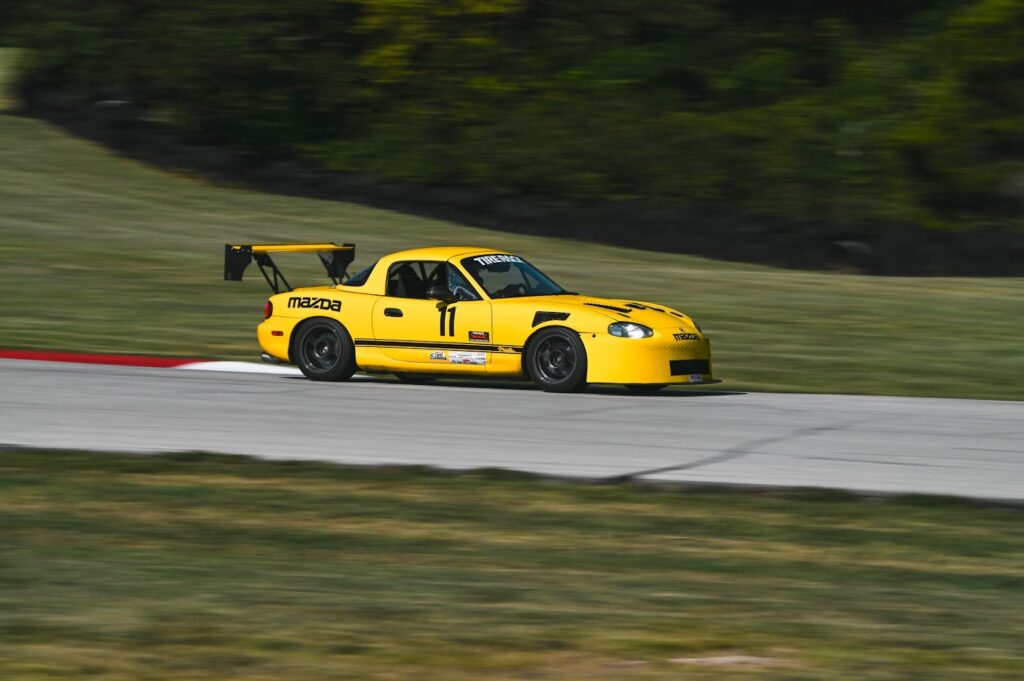
Class-based Time Trials depend heavily on power-to-weight ratios to determine competitive categorization. To ascend within its designated class without resorting to costly forced induction upgrades, the vehicle underwent a targeted weight-reduction regimen during the winter months. Systematic removal of non-essential wiring harnesses, redundant brackets, and superfluous interior trim yielded a total weight savings of approximately 50 pounds.
Statistical Analysis of Seasonal Utilization
A quantitative review of the 2023 calendar year underscores the intensive operational duty cycle demanded of the platform. The vehicle participated in:
- 15 dedicated HPDE track days across five states (an increase from 10 days in 2022).
- 15 regional autocross and SCCA Solo events (an increase from 9 events in 2022).
Tire wear analysis across these events yielded valuable endurance data. Bridgestone RE71-RS autocross tires demonstrated exceptional durability, surviving 17 competitive events and approximately 70 runs while retaining legal tread depth. Similarly, Falken RT660 track tires accumulated approximately 8.5 hours of on-track operation across 38 distinct thermal cycles while maintaining structural integrity and acceptable grip levels. For the subsequent season, exploratory testing is scheduled with Yokohama A052 and Nankang CRS v2 compounds to benchmark potential grip improvements against established baselines. Wet-weather testing using Continental ExtremeContact Sport tires further revealed that street-oriented all-weather rubber can achieve surprising parity with older, hardened endurance race compounds under precipitation conditions.
Summary and Future Outlook
Marking three years of continuous ownership, the NB Mazda MX-5 Miata has matured from a recreational street car into a highly refined, aerodynamically aggressive track machine. Through meticulous chassis tuning, preventative maintenance, logistical upgrades, and a grueling schedule comprising 30 total event days in 2023, the platform has proven its durability and adaptability across diverse Midwestern racing venues. While future development may eventually necessitate the adoption of forced induction to bridge the competitive power gap in Time Trials, the current naturally aspirated configuration balances reliability, mechanical sympathy, and driver engagement. Continuous, incremental optimization remains the guiding philosophy as the vehicle prepares for subsequent seasons of regional motorsport competition.