Cecilia Chamidah Nur
The landscape of retro gaming development is set to witness a significant milestone this autumn as industry veteran Kan Naito prepares to launch a crowdfunding campaign for his latest project, Lady Stalker 2D: The Solitary Ruler of the Calendar. Scheduled for October 9, 2026, the initiative aims to bring a new, officially engineered experience to the Nintendo Entertainment System (NES), effectively resurrecting the spirit of 1990s Japanese role-playing games. This project carries particular emotional and historical weight, as it serves as a vessel for the final character designs produced by the late Yoshitaka Tamaki, a visionary artist who passed away in 2023.
A Legacy Reclaimed: The Genesis of the Project
The history of Lady Stalker 2D is deeply intertwined with the foundational era of the Japanese RPG. Kan Naito, alongside the late Yoshitaka Tamaki and colleague Hiroyuki Takahashi, formed a creative triumvirate that defined the aesthetic and mechanical identity of several landmark titles at Climax Entertainment. Before their tenure at Climax, these creators were instrumental members of the development teams at Enix, the powerhouse responsible for the Dragon Quest franchise.

The intellectual lineage of Lady Stalker can be traced back to the development of Dragon Quest IV. During the late 1980s, Naito and his colleagues envisioned a spin-off title centered on the character of Princess Alena. When the proposal was ultimately shelved by the publisher, the creative team did not abandon their ambition. Instead, they adapted the core conceptual framework of that rejected pitch, evolving it into the 1995 title Lady Stalker, which was subsequently published by Taito for the Super Famicom. By returning to this intellectual property three decades later, Naito is effectively bridging the gap between his past aspirations and modern homebrew development capabilities.
Development Chronology and Milestones
The trajectory of this project has been marked by a deliberate and methodical pace. The initial public disclosure of the project occurred on March 25, 2026, which set the stage for the current development phase. Since that announcement, Naito has utilized social media and industry reports to provide updates on the game’s progress, highlighting a rigorous development cycle that prioritizes authentic hardware compatibility.
According to recent updates from the development team, the project has entered its final stages of production. The objective is to transition from the current technical refinement phase to mass production, with the crowdfunding campaign serving as the primary catalyst for manufacturing. If the campaign meets its funding thresholds, the distribution of the final physical cartridges is slated to occur between February and March 2027. This timeline reflects a conscious effort to deliver a finished product within a one-year window from the initial reveal, a rarity in the current era of prolonged development delays.

Technical Innovations: Beyond the Screen
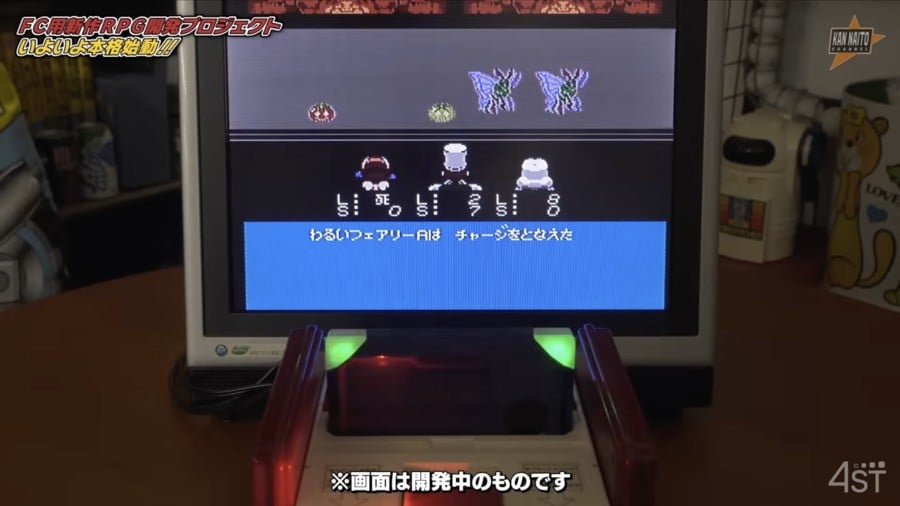
One of the most distinctive features of Lady Stalker 2D is its commitment to physical hardware innovation. Eschewing the trend of digital-only re-releases or software emulations, the project focuses on the tangible experience of the Famicom/NES era. The physical cartridge itself is being engineered with integrated light-emitting diodes (LEDs). These components are designed to react in real-time to on-screen gameplay events, providing a haptic and visual feedback loop that was technically impossible for original 8-bit hardware to achieve in 1995.
Furthermore, the team is concurrently developing a proprietary, Famicom-compatible console. This strategy serves a twofold purpose: it ensures that the game can be experienced in its intended technical state without the hardware degradation issues often found in decades-old consoles, and it establishes a new ecosystem for potential future releases. By controlling both the software and the hardware platform, the developers are mitigating compatibility risks, a common hurdle for modern physical releases of retro software.
The Role of Yoshitaka Tamaki
Yoshitaka Tamaki remains a foundational figure in the history of console RPGs, having provided the iconic character art for games such as Shining in the Darkness and Landstalker. His contribution to Lady Stalker 2D is described by Naito as an effort to honor characters that were essentially "left behind"—protagonists and designs that were conceptualized during the original Lady Stalker development period but never reached fruition.
For fans of the 16-bit era, the inclusion of Tamaki’s final works is a critical selling point. It provides a sense of closure for a career that defined the visual language of the 1990s adventure genre. The project acts as a bridge between the digital archives of a lost era and the current market for "new retro" software. Naito’s insistence on using these specific designs ensures that the game remains faithful to the stylistic sensibilities of the original Climax Entertainment team, providing a sense of continuity that few modern remasters can replicate.
Industry Implications and Market Impact
The decision to fund Lady Stalker 2D via a public crowdfunding campaign is indicative of a broader shift in the independent development sector. Major publishers have largely retreated from the 8-bit and 16-bit hardware markets, leaving a vacuum that is now being filled by small-scale, enthusiast-driven studios. This shift is not merely nostalgic; it represents a specialized market segment where consumers are willing to pay a premium for high-quality, physical collectibles that are compatible with original hardware.
The success of similar physical-media campaigns—such as those for Sunsoft compilations or Dreamcast hardware revivals—suggests that there is a sustained, if niche, demand for "legacy-hardware" development. By utilizing a crowdfunding model, Naito is mitigating the financial risks associated with the high costs of manufacturing custom cartridges and specialized PCBs (printed circuit boards). This model allows for a direct connection between the creator and the most dedicated segment of the player base, effectively bypassing traditional retail distribution channels that are often indifferent to legacy gaming.

Looking Toward the Release
As October 9, 2026, approaches, the gaming community is closely observing how Naito will navigate the transition from a conceptual project to a physical product. The "nostalgic yet new" marketing angle adopted by the team emphasizes that while the engine may be rooted in the technical limitations of the NES, the narrative and gameplay design are intended to feel contemporary in their pacing and structure.
The broader implications for the industry are significant. If Lady Stalker 2D succeeds in its goal of delivering a high-quality, LED-integrated cartridge that functions flawlessly on original Famicom systems, it could set a new benchmark for retro-focused game development. It demonstrates that the "Golden Age" of Japanese RPGs is not merely a subject for nostalgia but a living, evolving discipline. Kan Naito’s project serves as a testament to the fact that the design philosophies developed in the late 1980s and early 1990s possess a timeless quality, capable of resonating with modern audiences when executed with the appropriate respect for their origins.
As the development team nears the final stages of the project, the primary focus remains on the synthesis of legacy artistry and modern technical ambition. The forthcoming crowdfunding campaign will be the ultimate test of the appetite for such ventures, but given the pedigree of the developers involved and the unique nature of the hardware, Lady Stalker 2D is positioned to be one of the most notable releases in the niche retro-development space for the 2026–2027 fiscal cycle. Whether or not it achieves widespread commercial success, the project has already succeeded in preserving a piece of gaming history that might otherwise have been consigned to the annals of cancelled concepts and forgotten archives.