Farhan hamdan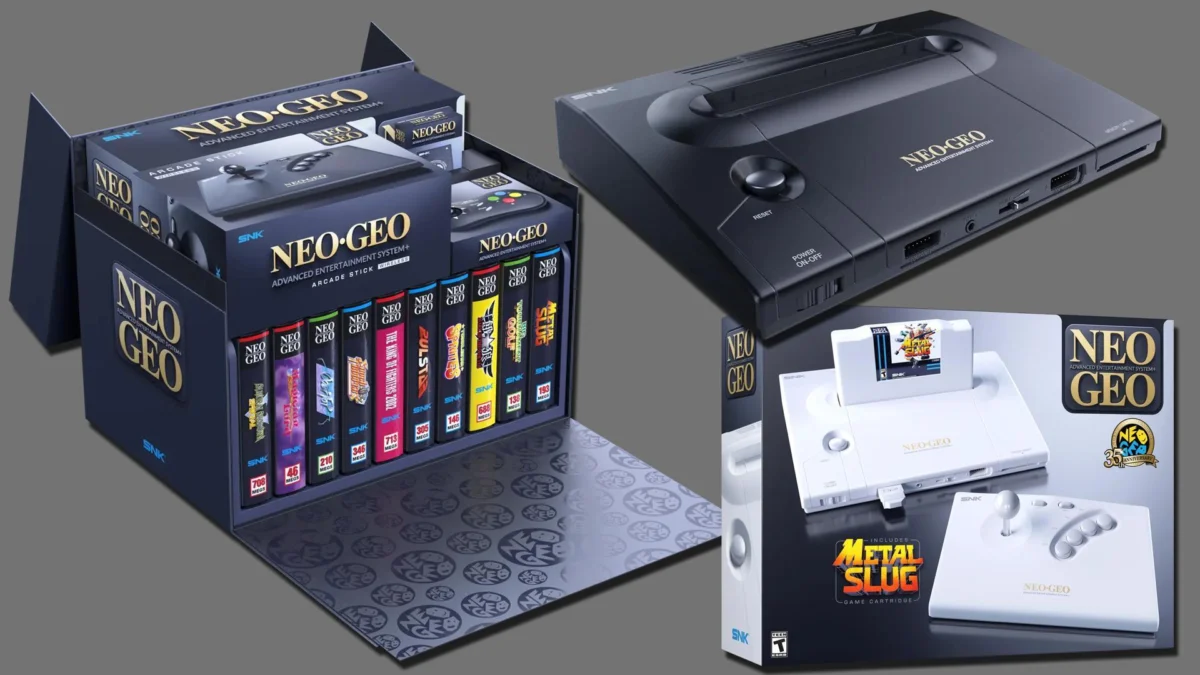
Plaion has officially announced a significant postponement for the highly anticipated Neo Geo AES+ hardware project, pushing its intended launch date back by an entire year to September 16, 2027. The sweeping schedule adjustment follows a confusing communications timeline over the summer, during which conflicting reports emerged regarding release windows and console specifications. While pre-orders for the hardware remain active across major retail platforms, the year-long delay highlights ongoing engineering and logistical challenges within the consumer electronics and retro gaming hardware sectors.
The announcement brings a wave of uncertainty to consumers who have tracked the project since its initial unveiling. Although Plaion has attributed the setback primarily to pervasive global supply constraints, industry analysts and hardware experts point toward an overly ambitious initial timeline as a core contributing factor. The project’s extended gestation period underscores the extreme difficulties hardware manufacturers face when attempting to transition open-source software architectures into mass-produced, application-specific integrated circuit (ASIC) consumer products within compressed commercial windows.
A Timeline of Confusion and Shifting Deadlines
The trajectory of the Neo Geo AES+ project has been marked by rapid developments and mixed messaging since it was first introduced to the public in April. When Plaion initially revealed the hardware initiative, the announcement lacked physical working prototypes, independent media reviews, or functional demonstrations. Despite the absence of finalized hardware for evaluation, the initial production schedule aimed to deliver finished units to consumers before the conclusion of the calendar year.
Industry observers immediately flagged the aggressive schedule as a major risk factor. Transitioning a complex gaming platform from concept to full-scale manufacturing typically requires rigorous quality assurance phases, prototype iterations, and extensive supply chain coordination—steps that routinely take years rather than months, even for seasoned industry veterans.
Conflicting statements compounded the public relations challenge during the summer months. In July, initial reports surfaced indicating a potential postponement, only for communications channels to pivot and claim the delay affected a separate product line. At that time, representatives seemingly reaffirmed that the Neo Geo AES+ would remain on track for a late-year release. The sudden policy reversal in September, establishing a definitive launch date of September 16, 2027, abruptly settles the debate but leaves consumers waiting significantly longer than anticipated.

Technical Pedigree and the Promise of the MiSTer Core
Despite the repeated scheduling adjustments, interest in the Neo Geo AES+ remains robust due to its high-profile technical lineage. The hardware architecture is designed by prominent community developers Jotego and Furrtek, leveraging the advanced capabilities of the MiSTer FPGA core ecosystem. By utilizing community-driven, highly accurate emulation and hardware recreation frameworks, the project bridges the gap between open-source preservation efforts and commercial hardware manufacturing.
The convergence of community-developed core technology with a corporate publisher willing to finance and scale ASIC production represents a novel model for retro gaming hardware. Traditional approaches to modernizing classic arcade and console hardware often involve expensive reproduction cartridges, niche boutique manufacturing runs, or software-based emulation boxes that frequently struggle with input latency and accurate cycle-timing.
An ASIC-based implementation of a proven FPGA core offers the potential to deliver hardware-level accuracy, authentic visual output, and responsive controls at a commercially viable price point. For enthusiasts and preservationists, this combination holds the promise of an accessible, definitive modern Neo Geo experience that respects the legacy of the original 16-bit powerhouse released by SNK in 1990.
Supply Chain Realities and Manufacturing Complexities
Plaion’s official justification for the delay cites severe global supply chain constraints affecting component sourcing and manufacturing bandwidth. In the post-pandemic electronic manufacturing landscape, lead times for specialized silicon, power management integrated circuits (PMICs), and memory modules continue to fluctuate wildly. Companies attempting to secure production capacity at semiconductor fabrication plants often face fierce competition from automotive and enterprise technology sectors.
However, supply chain bottlenecks alone do not fully explain the extensive twelve-month extension. The continued absence of independent hardware reviews or functional engineering samples made available to technical journalists suggests that internal development milestones have also necessitated additional time. Converting complex FPGA descriptions into hardened silicon via ASIC manufacturing requires precise verification procedures to prevent costly silicon respins. Any architectural revisions or bug fixes identified during the pre-production phase mandate extended testing cycles before mass production can commence.

Consumer Options, Refund Policies, and Retailer Procedures
In light of the revised release schedule, Plaion has elected to keep existing pre-order channels open for consumers committed to acquiring the hardware upon release. Official reservation portals, including the dedicated regional site at plaionreplai.us and listings on major retail platforms such as Amazon, remain operational.
For customers who wish to reevaluate their purchasing decision in response to the extended wait time, established consumer protection protocols apply. Buyers who placed reservations through standard retail outlets like Amazon can cancel their orders directly through their user accounts without financial penalty, following standard e-commerce cancellation procedures. For direct pre-orders placed through specialized retail channels, consumers are advised to contact customer support teams directly to initiate refund requests and inquire about localized policy terms.
Broader Implications for Retro Gaming Hardware Initiatives
The delay of the Neo Geo AES+ serves as a case study in the realities of modern retro hardware commercialization. As consumer demand for authentic, hardware-accurate retro gaming experiences surges, publishers and manufacturers are increasingly exploring ways to commercialize technology born from the open-source community.
Projects that attempt to commercialize community-driven engineering efforts must navigate a delicate balance between managing consumer expectations and executing complex industrial manufacturing logistics. Transparency regarding development hurdles, working prototypes, and realistic timelines remains crucial for maintaining consumer trust in a market segment heavily driven by nostalgia and collector enthusiasm.
Ultimately, the extended timeline gives the development team ample runway to refine the hardware, optimize manufacturing yields, and ensure that the final product meets the stringent performance expectations of the retro gaming community. Whether the Neo Geo AES+ can successfully deliver on its ambitious technical promises will depend heavily on whether working production units begin circulating for independent verification ahead of its new September 2027 launch window.