Edi Durjana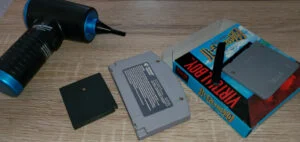
The preservation of digital artifacts has long been a central challenge for software preservationists, retro gaming enthusiasts, and archival institutions alike. In a novel approach to addressing the silent corruption of digital data, the Libretro development team has officially released the ROM Cleaner utility core for RetroArch. Developed by prominent software contributor Jesse Talavera—known previously for his work on the melonDS DS core, the McSoftServe project, and various RetroArch enhancements such as microphone integration and XDelta softpatching—the new utility is designed to target and eliminate data degradation within digital Read-Only Memory (ROM) backups.
While RetroArch has historically functioned strictly as a frontend for emulating vintage gaming hardware, running software titles ranging from the fourth generation of video game consoles to early arcade systems, the introduction of the ROM Cleaner core represents a conceptual pivot. It treats digital storage media not as immutable files, but as physical relics subject to the ravages of time. The core is now available for download directly through the standard RetroArch core downloader on supported platforms.
Understanding the Mechanics of Digital Media Degradation
To contextualize the development of the ROM Cleaner core, it is necessary to examine the physical realities of digital storage media. Contrary to the popular belief that digital files exist in a state of eternal perfection, the physical substrates that house digital data are subject to continuous decay. Solid-state flash memory experiences charge leakage over time, magnetic tape degrades through binder hydrolysis and demagnetization, and optical discs suffer from chemical breakdown known colloquially as "disc rot."
Even when games are successfully dumped into digital ROM formats, the underlying storage media used by enthusiasts—ranging from vintage hard drives and solid-state drives to cloud storage servers—are vulnerable to bit rot, silent data corruption, and environmental contaminants. Talavera and the Libretro development team have leaned into the metaphor of physical maintenance, highlighting that digital backups require care akin to cleaning the contacts of a physical cartridge or blowing dust out of a console slot.
The ROM Cleaner core utilizes an unconventional diagnostic and maintenance workflow. According to the release documentation, when a user encounters a digital backup that has begun to degrade or fails to boot due to accumulated digital debris, they can load the file through the ROM Cleaner core. The utility leverages the user’s microphone hardware—utilizing a process that requires the user to physically blow air toward their microphone—to clear accumulated virtual dust and restore the data integrity of the file.
Chronology of Development and Integration
The path toward the release of the ROM Cleaner core spans several years of architectural enhancements within the RetroArch ecosystem. The foundational work for this utility began with minor, seemingly unrelated updates to RetroArch’s input and hardware abstraction layers.
In the early stages of development, the Libretro team focused heavily on expanding RetroArch’s hardware integration capabilities. This included the implementation of robust microphone support, which allowed cores to interact with external audio input devices in real-time. Initially utilized for voice chat, microphone-based game mechanics (such as those found in certain Nintendo DS and arcade titles), and audio sampling, this feature laid the crucial technical groundwork for input-driven maintenance utilities.
Concurrently, developers like Jesse Talavera worked on improving system-level patching mechanisms, such as XDelta softpatching, which allowed users to modify ROM data dynamically without altering the underlying source files. These incremental updates created an environment flexible enough to support utility-based cores that do not function as traditional emulators.
Following months of covert development by Talavera, the project reached internal feature completion in early 2025. The development team conducted preliminary tests across various operating systems, ensuring compatibility with RetroArch’s cross-platform architecture. The official public rollout occurred in March 2025, when the core was pushed to the centralized Libretro buildbot servers and made accessible via the in-app core downloader.
Technical Specifications and Ecosystem Integration
The ROM Cleaner core operates differently from traditional libretro cores, which typically emulate a processor, PPU (Picture Processing Unit), and audio hardware. Instead, it functions as a diagnostic filter and data-scrubbing agent.
Integration into the existing RetroArch framework required careful consideration of how cores interact with user input. By tapping into the microphone API introduced in previous updates, the core measures audio input thresholds to execute its cleaning protocols. When a user blows into their microphone, the resulting decibel and frequency data trigger internal cleansing algorithms within the core, effectively simulating the traditional maintenance ritual of clearing dust from physical media hardware.
Compatibility spans the extensive range of platforms supported by RetroArch, including Windows, macOS, Linux, Android, and various single-board computers. Because the core relies on standard input libraries, users on platforms without native microphone hardware may require peripheral attachments to utilize the full scope of the utility’s cleaning features.
Industry Implications and Preservation Challenges
The release of the ROM Cleaner core arrives at a critical juncture for digital preservation. Museums, digital archives, and emulation communities face mounting pressure to secure aging software libraries against hardware obsolescence and media decay.
While traditional archival science relies on checksum verification (such as MD5, SHA-1, and CRC32 hashes) to detect data corruption, the introduction of utility-based cores like ROM Cleaner highlights a growing intersection between practical digital maintenance and enthusiast culture. Archivists note that while checksums can identify when a file has been corrupted, repairing or restoring lost data typically requires parity data, redundancy, or manual intervention.
Critics and software engineers have pointed out the satirical nature of using a microphone to "clean" digital files—a playful nod to the nostalgic, albeit technically ineffective, practice of blowing into Nintendo Entertainment System (NES) cartridges. However, within the retro gaming community, the tool serves a dual purpose: it functions as a functional diagnostic interface for handling problematic ROM dumps while paying homage to the rituals of classic gaming hardware maintenance.
Broader Impact on the Libretro Ecosystem
Libretro and RetroArch have long positioned themselves as comprehensive solutions for digital game preservation and accessibility. By expanding the scope of what can be loaded as a "core," the development team has opened the door for future non-emulation utilities.
The successful deployment of the ROM Cleaner core demonstrates that the libretro API is flexible enough to support maintenance tools, diagnostic software, and data management utilities alongside traditional game emulators. This modularity could pave the way for subsequent community-developed cores aimed at metadata organization, save-state management, and automated ROM verification.
As the digital preservation landscape continues to evolve, tools that bridge the gap between physical nostalgia and digital data management will remain vital to the communities dedicated to keeping vintage software alive. The ROM Cleaner core is now available for download, inviting users across the globe to test its capabilities and secure their digital archives for future generations.