Edi Durjana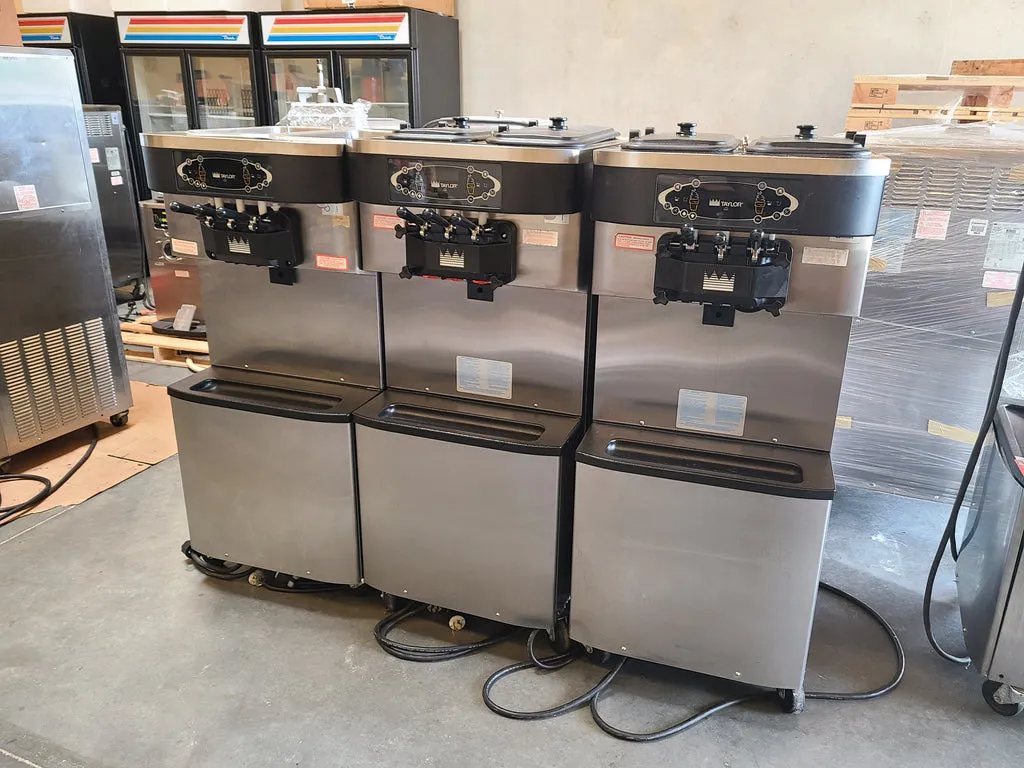
The boundaries of software emulation have officially expanded beyond traditional gaming consoles and vintage computing systems into the realm of commercial foodservice hardware. Jesse Talavera, a prominent contributor to the Libretro ecosystem and primary author of the melonDS DS core, has officially released McSoftServe, a software emulator designed to replicate the operational mechanics of the Taylor C713 commercial soft-serve ice cream machine. The C713 series is widely recognized as a staple appliance utilized extensively within the global fast-food sector, most notably by the prominent American hamburger restaurant chain McDonald’s. Available immediately for download directly through the RetroArch interface, this unorthodox emulation project bridges the gap between industrial automation and hobbyist virtualization, offering users a digital recreation of one of the most culturally and operationally infamous pieces of commercial kitchen equipment in modern history.
The development of McSoftServe marks a distinct departure from typical Libretro projects, which generally focus on preserving interactive entertainment software ranging from eighth-generation handhelds to retro arcade cabinets. Instead, this newly introduced core targets a complex electromechanical system governed by proprietary firmware, thermal sensors, motorized augers, and pressurized liquid dairy delivery systems. While initial documentation provided by the developer highlights the targeted hardware’s reputation for operational reliability alongside its notoriously demanding maintenance schedules, the translation of such industrial mechanics into a software emulator opens up new avenues for technical preservation and simulation-based diagnostics.
Background Context and Industrial Relevance
To understand the operational significance of the Taylor C713, one must examine the specific role commercial soft-serve equipment plays within the quick-service restaurant (QSR) industry. Manufactured by the Taylor Company, a subsidiary of Carrier Global Corporation, the C713 model is a heavy-duty, gravity-fed or pump-assisted commercial freezer designed to produce continuous streams of soft-serve ice cream, custard, or frozen yogurt. These units are engineered for high-volume commercial environments where consistency, food safety compliance, and rapid output are paramount.
However, the equipment is equally well-known throughout popular culture and industry circles for its complex maintenance requirements, including mandatory daily, weekly, and heat-treatment cleaning cycles. A malfunctioning soft-serve machine often results in prolonged operational downtime, leading to widespread consumer frustration and corporate scrutiny. The persistent unreliability of these machines across franchise locations has previously inspired independent hardware diagnostics tools, such as the third-party sensor devices developed by Kytch, which sparked high-profile legal battles over right-to-repair principles and firmware diagnostics.
Within this context, the release of an emulator like McSoftServe introduces a simulated environment where enthusiasts and engineers can observe the virtualized behavior of thermal thresholds, mix-hopper levels, and refrigeration cycles without the financial overhead or physical constraints of owning an industrial appliance valued at upwards of fifteen thousand dollars.
Chronology of Development and Release
The path toward the release of McSoftServe represents an evolving trajectory of unconventional emulation projects within the open-source community. While the exact timeline of the project’s internal development has been kept relatively concise by its creator, the conceptualization of industrial machinery emulation has grown organically alongside the maturation of high-performance emulation frameworks like Libretro and RetroArch.
Phase 1: Conceptualization and Firmware Analysis
Prior to the public announcement, independent developers within the retro-gaming community increasingly explored the boundaries of what could be compiled as a dynamic library (.lib or .so file) and executed within the Libretro API. Although Libretro was fundamentally designed for game loops, inputs, and graphical framebuffers, its flexible architecture allows for the execution of arbitrary state machines, provided they can be mapped to virtual inputs and display outputs. The initial phase of McSoftServe involved reverse-engineering the operational logic, error codes, and cycle protocols typical of modern commercial soft-serve freezers.
Phase 2: Integration into the RetroArch Ecosystem
Following internal testing of the core’s stability, the project reached a major milestone when it was cleared for direct distribution via the online RetroArch core updater. This integration allows end-users to download McSoftServe with the same ease as traditional console cores, signaling a shift toward treating non-gaming simulation software as first-class citizens within the Libretro repository.
Phase 3: Public Launch and Community Reception
The formal announcement by Jesse Talavera brought the project to public attention, generating widespread discussion across software development forums, emulation communities, and social media platforms. Users immediately began exploring the emulator’s interface to test its handling of virtualized operational states, error recovery procedures, and simulated dairy flow rates.
Technical Architecture and Operational Parameters
Operating an industrial soft-serve machine within a software-defined environment requires a specialized approach to input mapping and state tracking. Unlike traditional video games that rely on directional pads and action buttons, a commercial freezer relies on digital control panels, temperature thermistors, hopper level floats, and drive motor torque sensors.
McSoftServe translates these physical inputs into virtualized control schemes accessible via standard gaming peripherals or mouse-and-keyboard configurations. Key technical areas addressed by the emulator include:
- Thermal Regulation Simulation: The core models the thermodynamics of the freezing cylinder and the upper mix hopper, simulating ambient temperature shifts, refrigerant pressures, and the potential for product over-freezing or melting.
- Cycle Management: Users can navigate the complex menu systems native to the Taylor C713 firmware, initiating wash cycles, rinse phases, brush-cleaning reminders, and the critical daily heat-treatment sanitation cycles that prevent bacterial growth.
- Error Code Generation: A significant portion of the authentic C713 experience involves diagnosing and clearing operational fault codes. McSoftServe reportedly incorporates a robust simulation of these diagnostic alerts, challenging users to troubleshoot virtual mechanical failures.
Broader Impact, Implications, and Future Outlook
The debut of McSoftServe carries several notable implications for the broader software emulation community, the right-to-repair movement, and the virtualization of industrial hardware.
First, the project highlights the versatility of the Libretro API. By demonstrating that an architecture built for game console emulation can successfully host an industrial appliance simulator, developers have opened the door for future educational and diagnostic cores. Software developers can potentially utilize similar frameworks to train restaurant personnel, simulate kitchen workflows, or analyze the efficiency profiles of commercial appliances under various stress conditions.
Second, the release touches tangentially upon ongoing discussions surrounding industrial transparency and equipment accessibility. While McSoftServe is primarily positioned as a novel and surprising addition to the RetroArch library, the emulation of proprietary firmware and operational cycles underscores a growing public interest in understanding the inner workings of commercial machinery that heavily impacts everyday consumer experiences.
As the open-source community continues to experiment with non-traditional emulation targets, McSoftServe stands as a unique milestone—a bridge connecting retro-gaming infrastructure with the daily realities of the fast-food service industry. Users interested in exploring the mechanics of industrial soft-serve production can access the core directly through the RetroArch update interface, marking the beginning of an entirely new frontier in software preservation.