Chalid Lutfie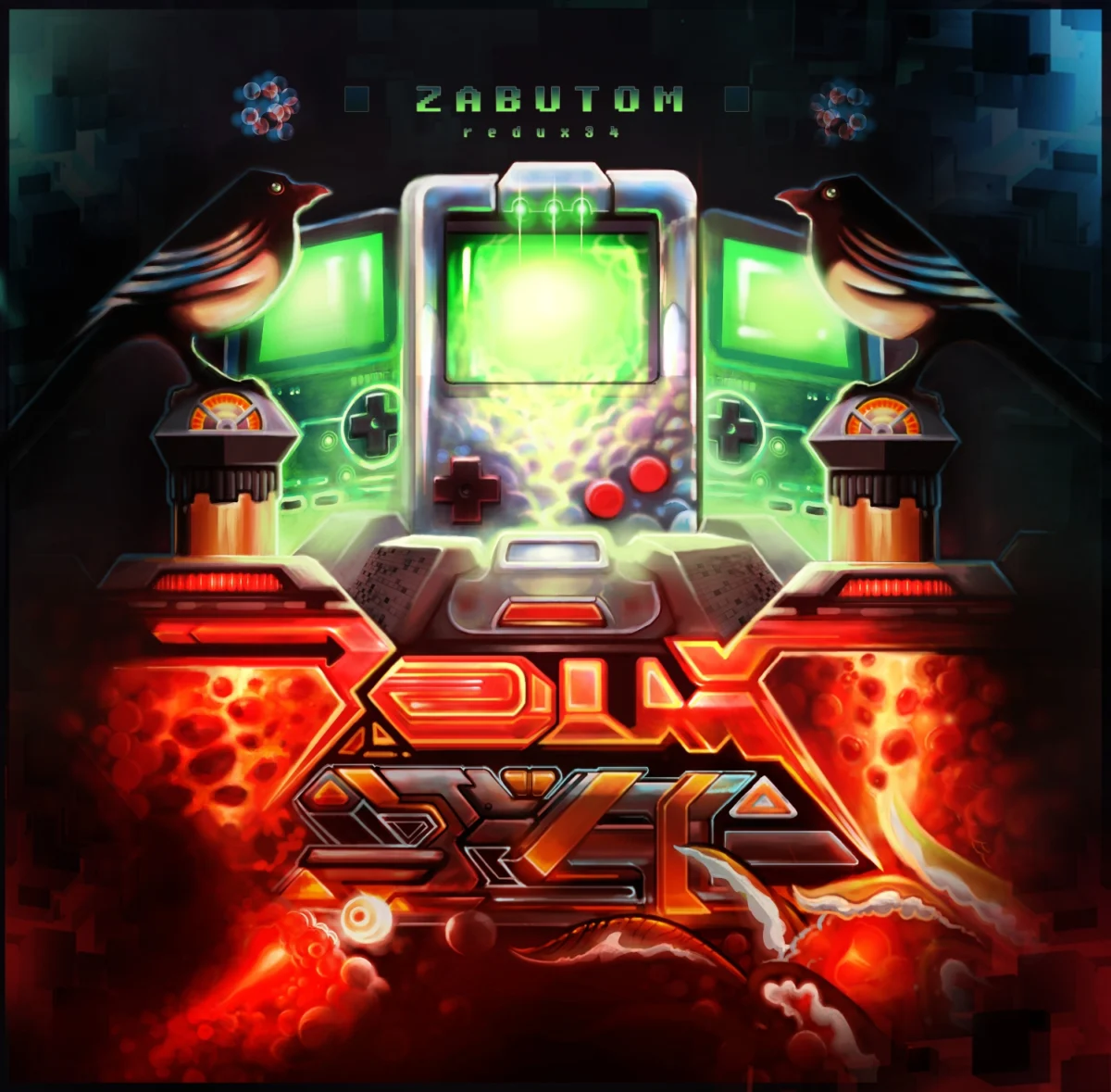
The international electronic music community has welcomed the latest offering from Swedish composer Niklas Sjösvärd, better known by his stage name zabutom, with the release of his highly anticipated full-length album, Redux34. Published on September 18, 2015, through the Ubiktune record label, the album represents a significant milestone in the artist’s career, blending the technical constraints of 8-bit hardware with the expansive textures of progressive rock, IDM, and folk music. This release follows years of meticulous development and serves as a testament to the artist’s formal musical training and his deep roots in the global demoscene.
Redux34 arrives at a pivotal moment for the chiptune genre, which has increasingly moved from a niche subculture defined by hardware limitations into a sophisticated medium for contemporary composition. Sjösvärd, a veteran of the scene, has utilized this project to bridge the gap between retro-gaming aesthetics and modern high-fidelity production. The album is characterized by its complex soundscapes, where 8-bit Nintendo bleeps are layered alongside electric guitars, analog synthesizers, and intricate delay textures, creating a retro-futuristic atmosphere that is both melancholic and hopeful.
The Artistic Evolution of Niklas Sjösvärd
Born in 1985, Niklas Sjösvärd has been a central figure in the Swedish electronic music landscape since the early 2000s. His journey began within the demoscene—an international computer art subculture focused on producing self-contained, sometimes extremely small, computer programs that generate audio and visual effects. This background provided Sjösvärd with a rigorous understanding of hardware limitations, forcing him to maximize the emotional and rhythmic impact of very limited sound channels.
Throughout the 2000s, Sjösvärd contributed to numerous demoscene releases and compilations, eventually performing at chiptune festivals and digital arts events worldwide. His reputation grew with the 2011 release of Zeta Force on the Ubiktune label. Zeta Force was a collection of high-energy tracks inspired by the "shoot ’em up" (shmup) arcade genre, and it quickly established itself as a classic within the chiptune community for its melodic precision and technical prowess.
However, Sjösvärd sought to transcend the boundaries of "pure" chip music. In 2014, he earned a bachelor’s degree in composition and electronic music from the Academy of Music and Drama at the University of Gothenburg. This formal education provided him with the tools to integrate traditional instrumentation and complex arrangement techniques into his digital compositions. His recent work has seen him branching out into experimental electronic music, modular live techno as part of the "Buchla Boys," and even folk-inspired acoustic performances with acts like Fowlcloud and Léonore Boulanger. Redux34 is the culmination of these diverse experiences, acting as a homecoming to his chiptune roots while incorporating the breadth of his musical education.
The Genesis and Technical History of Redux34
The development of Redux34 was a prolonged and often arduous process, spanning nearly seven years. The foundations of the album were laid in 2008, during a period when Sjösvärd was beginning to perform regularly at chip music festivals using the Nintendo Gameboy as a primary instrument. Much of the early material was composed using Little Sound DJ (LSDJ), a popular tracker software for the Gameboy, or via the Nintendo Entertainment System (NES) hardware.
The album’s title carries significant historical weight regarding its production. The word "Redux" refers to the necessity of recreating several tracks from the ground up following catastrophic hardware failures. In 2008, while Sjösvärd was finalizing the groundwork for the title track, his LSDJ cartridge crashed, completely erasing the stored music data. This forced a total reconstruction of the piece. This theme of "lost patterns" and technical setbacks became a recurring motif throughout the production of the album, as Sjösvärd repeatedly had to redo mixes and settings that were lost or corrupted over the years.

The suffix "34" in the title refers to the 3/4 time signature of the title track. In a genre frequently dominated by the 4/4 time signatures of electronic dance music, the use of waltz-like rhythms and complex meters highlights Sjösvärd’s interest in progressive rock and folk music. This rhythmic complexity is a defining feature of the album, setting it apart from the standard "bitpop" or "fakebit" styles that often prioritize simple, upbeat melodies.
Compositional Style and Genre Integration
Redux34 is a stylistic departure from Sjösvärd’s previous work, moving away from the straightforward arcade-inspired energy of Zeta Force toward a more nuanced and experimental sound. The album functions as a fusion of several distinct musical lineages:
- Chiptune and 8-Bit Hardware: The core of the album remains rooted in the pulse-width modulation and noise channels of 1980s gaming hardware. These sounds provide a nostalgic, "lo-fi" foundation that serves as the rhythmic and melodic backbone of the tracks.
- Progressive Rock: The influence of prog-rock is evident in the album’s long-form structures, shifting time signatures, and the integration of live electric guitars. The layering of these elements creates a "wall of sound" that is rarely heard in traditional chip music.
- IDM (Intelligent Dance Music): Drawing from the legacy of artists like Aphex Twin or Boards of Canada, Sjösvärd employs complex beat programming and glitch aesthetics. This is particularly visible in the album’s more atmospheric and experimental passages.
- Folk and Acoustic Elements: The melodic sensibilities of the album often lean toward folk-inspired compositions, reflecting Sjösvärd’s work with acoustic ensembles. These melodies provide a humanizing element to the synthetic textures.
The production of Redux34 was noted for its high fidelity, a challenge when working with the inherently noisy output of vintage hardware. By utilizing modern mixing techniques and high-end analog synthesizers, Sjösvärd has created a soundscape that feels expansive and professional, suitable for both dedicated headphones listening and club environments.
Visual Identity and Collaboration
The aesthetic presentation of Redux34 was curated to match its "retro-futuristic" sound. The album features cover art by Anders Karlsson, a concept artist and painter based in Norrköping, Sweden. Karlsson’s work for the album depicts mysterious, otherworldly landscapes that mirror the melancholic yet hopeful narrative Sjösvärd intended to convey through the music. The collaboration highlights the importance of visual storytelling in the electronic music scene, where the album art serves as a window into the conceptual world the artist has built.

Broader Impact and Industry Context
The release of Redux34 is a significant event for Ubiktune, a label known for pushing the boundaries of what is possible with chip music. By supporting artists who blend 8-bit sounds with progressive and experimental genres, Ubiktune has helped redefine the "chiptune" label from a description of hardware to a description of a specific sonic palette that can be used in any musical context.
Market analysts and music critics have noted that 2015 has been a year of maturation for the genre. As the initial novelty of "video game music" wears off, artists like zabutom are proving that these tools can be used to create serious, emotive, and technically complex art. The successful integration of live instrumentation and formal composition techniques seen in Redux34 suggests a path forward for other electronic musicians looking to incorporate retro aesthetics without being confined by them.
The album’s narrative—one of loss, reconstruction, and returning to one’s roots—resonates with a generation of digital creators who have navigated the rapid shifts in technology over the last decade. By reclaiming lost data and transforming hardware failure into a creative philosophy, Sjösvärd has produced a work that is as much about the process of creation as it is about the final audio product.
Availability and Distribution
Redux34 is currently available across all major digital distribution platforms, including Spotify, Apple Music, and Bandcamp. In a nod to the collectors and audiophiles within the community, the album has also been released as a physical CD, featuring the full artwork by Anders Karlsson. This physical release is particularly significant for the chiptune community, which maintains a strong culture of physical media and tangible artifacts despite its digital origins.

As zabutom continues to perform and promote the new material, the album is expected to become a staple of electronic music festivals and a benchmark for future "chip-prog" productions. With its intricate blend of the old and the new, Redux34 stands as a definitive statement from one of Sweden’s most innovative electronic composers.