Cecilia Chamidah Nur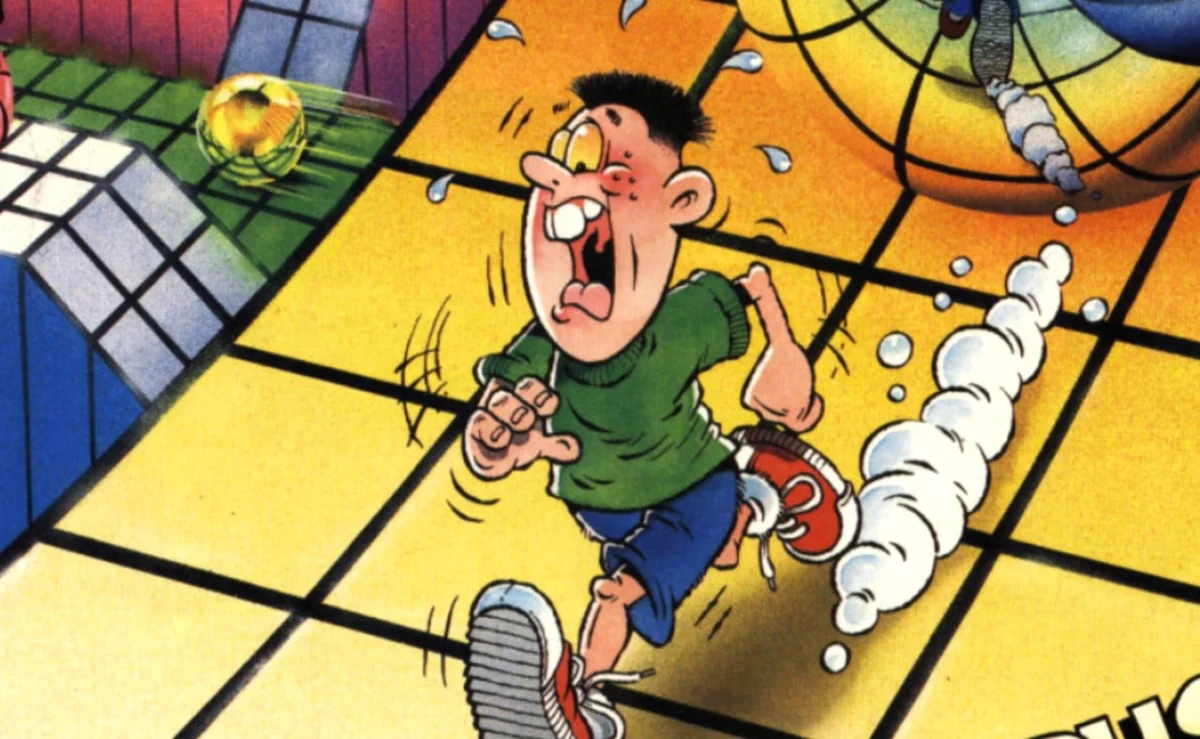
Naoki Horii, the esteemed CEO of M2 Co., Ltd., a company revered for its meticulous work in retro game preservation and emulation, has offered a rare glimpse into his personal "ultimate" game design aspirations. In a recent interview, Horii articulated a profound appreciation for titles that embody immediate accessibility and profound, stimulating interaction, singling out Atari’s 1984 arcade classic Marble Madness as the epitome of this design philosophy. This revelation comes from a leader whose company has become synonymous with the faithful recreation and enhancement of vintage gaming experiences, prompting a deeper look into the principles that drive M2’s acclaimed work and Horii’s own vision for game design.
M2’s Legacy in Retro Game Preservation
M2 Co., Ltd. has carved out a unique and highly respected niche within the video game industry. Established with a deep commitment to preserving and enhancing classic titles, the Japanese developer is celebrated for its exacting standards in emulation, porting, and adding quality-of-life features to retro games. Their extensive portfolio includes seminal works like the Sega Ages series for the Nintendo Switch, which brought arcade perfect renditions of Out Run, Thunder Force IV, and Gain Ground to modern platforms. They are also behind the critically acclaimed M2 ShotTriggers line, which delivers high-fidelity versions of revered shmups such as Battle Garegga Rev.2016 and Ketsui Deathtiny. This dedication extends to larger compilations, including the Darius Cozmic Collection and Castlevania Anniversary Collection, demonstrating a broad expertise across various genres and hardware architectures. M2’s reputation is built on an unwavering commitment to authenticity, often going to extraordinary lengths to ensure that their ports not only run flawlessly but also capture the nuanced feel and technical intricacies of the original hardware. This meticulous approach has earned them the trust and admiration of both developers and the retro gaming community alike, positioning M2 as a vanguard in the field of digital game preservation.
Horii’s Guiding Philosophy: The Primacy of Interaction
At the heart of M2’s success and Horii’s personal design ethos lies a fundamental belief in the power of direct, intuitive player interaction. Horii explicitly stated, "I value interaction above all in video games, especially when it’s sharp and well-defined." This statement serves as a cornerstone of his perspective, suggesting that the purest form of gaming joy stems from a clear, immediate connection between player input and on-screen (or in-game) response. This philosophy is not merely academic; it is evident in the precise controls and responsive gameplay that define M2’s retro adaptations. By focusing on "sharp edges" and "no natural stopping point," Horii describes an ideal game that continually draws the player in, offering an endlessly engaging loop of challenge and mastery. This perspective highlights a desire for games that transcend fleeting trends, instead aiming for timeless qualities rooted in fundamental human engagement. For Horii, a game is not just a collection of mechanics or a narrative; it is a meticulously crafted interactive system designed to provide an immediate and compelling experience.
The Enduring Romance of Side-Scrolling Shooters
Prior to discussing his ultimate choices, Horii acknowledged his fondness for side-scrolling shooters, citing a "certain romance to them." He specifically mentioned Darius and R-Type, two titans of the genre. M2 has already delved deep into the Darius universe, having developed the Darius Cozmic Collection and Darius Cozmic Revelation. These compilations brought together multiple iterations of Taito’s iconic series, known for its unique multi-screen arcade cabinets, aquatic-themed bosses, and innovative power-up systems. The Darius franchise, which began in 1986, has seen numerous entries across arcade and home platforms, evolving from the original’s groundbreaking three-screen setup to modern interpretations like Dariusburst. M2’s involvement has been lauded for its technical fidelity and inclusion of various regional versions and quality-of-life features, but Horii’s statement hints at a feeling of "unfinished business," suggesting a deeper creative connection to the series.
In contrast, R-Type, Irem’s seminal 1987 shooter, remains a frontier yet to be fully explored by M2. R-Type is legendary for its unforgiving difficulty, intricate level design, and the innovative "Force" weapon system, which allows players to strategically attach and detach an indestructible orb for offensive and defensive maneuvers. The series has spawned numerous sequels and spin-offs, maintaining a reputation for challenging gameplay and distinctive biomechanical enemy designs. While recent remasters like R-Type Delta were handled by City Connection and TAKEx0FF, and R-Type Dimensions by Tozai Games, the absence of M2’s touch on the core R-Type lineage leaves many fans, including this interviewer, yearning for an M2-developed comprehensive collection. The prospect of M2 applying its signature polish, precise emulation, and array of modern features to the entire R-Type saga—from the original arcade classic to later entries like R-Type Final—represents a significant desire within the retro gaming community, a desire perhaps shared by Horii himself. The precision, strategic depth, and iconic design of R-Type align perfectly with the "sharp and well-defined interaction" that Horii champions.
The "Ultimate" Game: Marble Madness
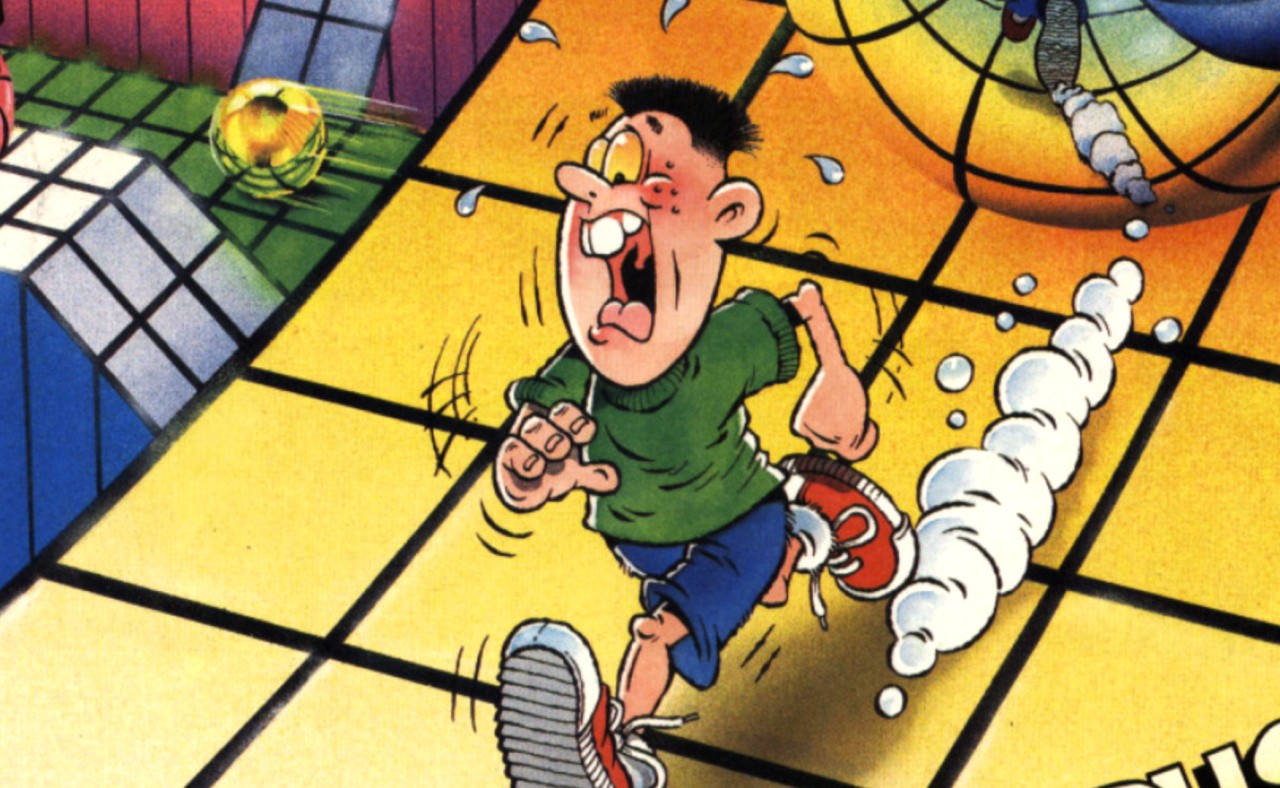
When pressed to name an "ultimate" game he would love to work on, Horii unequivocally chose Marble Madness. "Just by looking at the marble on the screen and the marble on the control panel, you can understand everything and start playing immediately. That elegance still feels unmatched to me," he explained. This statement distills his design philosophy into a single, compelling example.
Marble Madness, released by Atari in 1984, was a groundbreaking title designed by a young Mark Cerny, who would later become a renowned architect for PlayStation consoles. The game tasked players with guiding a marble through a series of increasingly complex isometric landscapes, avoiding obstacles and enemies, all while racing against a strict time limit. Its control scheme, featuring a trackball in the arcade version, provided a tactile and intuitive connection to the on-screen action, perfectly mirroring the physics of a rolling marble. The game’s vibrant pseudo-3D graphics, generated by Atari System 1 hardware, were visually striking for its era, showcasing innovative level design and challenging environmental puzzles.

Commercially and critically successful, Marble Madness was widely praised for its originality, innovative controls, and addictive gameplay. It was subsequently ported to a vast array of home systems, from the NES and Commodore 64 to the Sega Genesis, though none could fully replicate the tactile satisfaction of the arcade trackball. Its legacy endures, often cited as an early example of 3D platforming concepts and a masterclass in elegant, minimalist design. Horii’s admiration for Marble Madness underscores his appreciation for games that communicate their core mechanics instantly, offering a clear objective and a direct, unmediated path to engagement. The simplicity of its premise belies a profound depth of challenge and satisfaction, aligning perfectly with Horii’s pursuit of "sharp and well-defined interaction."
The Brilliant Simplicity of Ice Cold Beer
Beyond digital realms, Horii also revealed a fascination with a distinct category of gaming: electro-mechanical (EM) arcade games. He highlighted a Taito-made mechanical arcade game from 1983, Ice Cold Beer, as another brilliant example of compelling interaction. "It’s an electro-mechanical game, but it’s just as brilliant. The rules are simple, instantly understandable, and once you start playing, it’s incredibly stimulating. When you fail, you want to try again, and you never reach a point where you feel like stopping," Horii remarked.
Ice Cold Beer is a classic example of an EM game, a genre that predates purely digital video games and blends physical components with electrical circuits to create interactive experiences. In Ice Cold Beer, players manipulate two joysticks to control a horizontal bar that guides a metal ball through a series of holes in a vertical playfield. The objective is to navigate the ball from the bottom to the top, avoiding falling into the wrong holes, with each successfully cleared hole illuminating a light representing a "beer bottle." The game is renowned for its extreme difficulty and the precise dexterity it demands. Like Marble Madness, its appeal lies in its immediate comprehensibility and the intense, tangible feedback of its physical mechanics. The frustration of failure is quickly overridden by the desire for another attempt, embodying Horii’s ideal of a game with "no natural stopping point."
The inclusion of Ice Cold Beer in Horii’s list is particularly insightful. It demonstrates that his criteria for "ultimate" game design transcend the medium itself, extending beyond pixels and code to the fundamental principles of interaction, challenge, and player psychology. The enduring appeal of EM games like Ice Cold Beer lies in their directness and the raw, physical engagement they offer, qualities that Horii seeks to emulate and preserve in M2’s digital work. It’s a testament to his understanding that compelling gameplay is not solely about technological advancement but about the purity and elegance of the interactive loop.
Broader Implications for Game Design and Preservation
Naoki Horii’s insights offer a valuable perspective on the future of game design and the ongoing efforts in game preservation. His emphasis on "sharp and well-defined interaction" and games with "no natural stopping point" suggests a critique of overly complex or narratively bloated modern titles that might dilute the core interactive experience. It advocates for a return to fundamental principles where clarity of purpose and immediate feedback reign supreme. This philosophy resonates deeply with the work M2 undertakes, meticulously ensuring that the classics they preserve retain their original interactive integrity while being made accessible to new generations.
For the retro gaming community, Horii’s statements are both validating and inspiring. They reinforce the idea that classic games hold timeless design lessons that are still relevant today. Furthermore, his expressed desires for R-Type and a hypothetical Marble Madness project, if they were ever to materialize under M2’s banner, would undoubtedly be met with immense enthusiasm. Such projects would not only be celebrated for their technical excellence but also for representing a master developer’s homage to the purest forms of interactive entertainment.
Ultimately, Horii’s vision for an "ultimate" game is not about a specific genre or technological marvel, but about a profound connection between player and system. It’s about games that teach their rules instantly, stimulate continuously, and inspire an unyielding desire for mastery. If he can spend his life pursuing this ideal, creating or preserving experiences that embody such elegant and compelling interaction, Naoki Horii would be "satisfied." His continued pursuit of this ideal through M2’s exceptional work ensures that the legacy of gaming’s past remains vibrant, and its fundamental design truths continue to inform the future.