Cecilia Chamidah Nur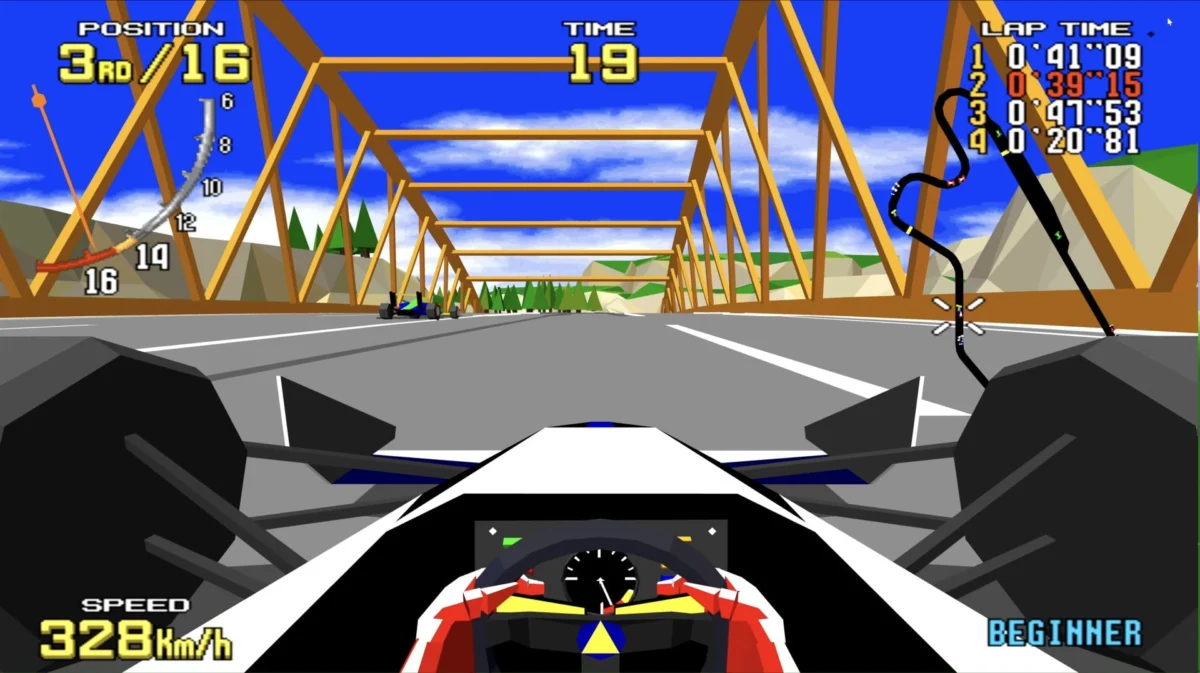
The revered arcade classic, Virtua Racing, originally launched by Sega in 1992, has found new life through the release of unofficial PC and Xbox-based emulators developed by Wanszai. These new emulators provide fans and newcomers alike with an unprecedented opportunity to experience the groundbreaking Model 1-based Formula 1 game on platforms that have historically lacked official ports: Xbox 360, Xbox One, and Windows PC. Far from mere emulations, these community-driven projects integrate a suite of modern quality-of-life enhancements, fundamentally transforming the play experience and bringing the 32-year-old title into the contemporary gaming landscape.
A New Era for Virtua Racing: Features and Accessibility
Wanszai’s emulators are not simply replicating the original arcade experience; they are enhancing it with features highly sought after by modern players. Key among these is the inclusion of online multiplayer functionality, supporting up to eight players simultaneously. This marks a significant evolution for a title primarily known for its single-player or local competitive modes in its various historical iterations. The ability to engage in competitive races against other players globally breathes new life into Virtua Racing, fostering a potentially vibrant online community around a classic game.
Beyond multiplayer, the emulators introduce substantial visual and performance improvements. Players can now enjoy the game in a crisp 16:9 widescreen aspect ratio, moving beyond the traditional 4:3 display of its arcade and early console versions. This wider field of view modernizes the game’s presentation without sacrificing its original aesthetic. Furthermore, the emulators boast smoother frame rates, addressing a common limitation of older hardware and ensuring a more fluid and responsive gameplay experience. The inclusion of various CRT filters allows players to toggle between a modernized look and a nostalgic, authentic retro visual, catering to different preferences.
Control configurations have also been meticulously integrated, offering support for standard Xbox controllers and a range of racing wheels. This flexibility ensures that players can tailor their input methods to their comfort and preference, from casual gamepad use to more immersive sim-racing setups. The combination of online play, widescreen support, enhanced frame rates, and versatile control options positions these unofficial emulators as potentially the definitive way to experience Virtua Racing on PC and Xbox platforms.
The Unofficial Porting Gap: Bridging Decades of Absence
For decades, Virtua Racing remained conspicuously absent from both Microsoft’s Xbox console lineage and the vast Windows PC gaming ecosystem. This absence is particularly notable given the game’s status as a technological marvel upon its release and its subsequent ports to numerous other platforms. Until now, PC and Xbox users who wished to play Virtua Racing typically had to resort to general-purpose arcade emulators, which often lacked the specific optimizations and modern enhancements that Wanszai’s dedicated projects now offer.
The emulators’ emergence first gained significant traction on social media, particularly via the Japanese retro news source @yoshinokentarou on Twitter/X. The initial post highlighting Wanszai’s work quickly garnered substantial online attention, accumulating over 350 retweets and 1.5k likes within a short period. This rapid spread underscores the enduring appeal of Virtua Racing and the community’s hunger for enhanced ways to experience it. Early adopters of the PC version have already voiced their enthusiastic approval, with one user describing it as "legit" and praising the surprising ease with which they found other players for online races. This immediate positive feedback from the community serves as a testament to the quality and demand for these fan-driven initiatives.
Virtua Racing’s Storied Arcade Debut and Technological Prowess
Virtua Racing holds a foundational place in the history of 3D polygonal graphics in video games. When it debuted in arcades in October 1992, it was a revelation. Developed by Sega AM2 under the direction of Yu Suzuki, the game was the flagship title for Sega’s Model 1 arcade system board. The Model 1 was Sega’s first true 3D polygon-based arcade board, designed specifically to push the boundaries of real-time 3D graphics. At a time when most arcade games still relied heavily on 2D sprites, Virtua Racing‘s smooth, colorful, and fully textured polygonal environments and vehicles were nothing short of revolutionary.
The Model 1 hardware itself was a marvel of early 90s technology, featuring a Fujitsu MB86234 graphics processor capable of rendering 180,000 polygons per second, alongside multiple digital signal processors (DSPs) for geometric calculations and effects. This allowed Virtua Racing to display impressive 3D worlds, complete with perspective-correct textures and advanced lighting effects, all at a then-unprecedented 30 frames per second. The game’s innovative camera system, allowing players to switch between multiple viewpoints including a first-person cockpit view, further immersed players in the high-speed racing action. Its success paved the way for a generation of 3D arcade games and became a benchmark against which future racing titles were measured. The game’s influence can be seen in countless subsequent titles, from its own successors like Daytona USA and Virtua Fighter (also on Model 1) to the broader landscape of 3D gaming.

A Legacy of Ports: From Mega Drive to Switch
Despite its groundbreaking nature, Virtua Racing‘s journey through various home console ports was often fraught with technical challenges and varying degrees of success, largely due to the difficulty of replicating the powerful Model 1 hardware on less capable consumer systems.
-
Sega Mega Drive/Genesis (1994): This port, developed by Sega AM2, was a remarkable technical achievement for the 16-bit console. To enable 3D graphics, Sega developed a specialized chip called the Sega Virtua Processor (SVP), a custom ASIC that functioned as a co-processor. This chip was integrated directly into the game cartridge, significantly increasing its cost (making it one of the most expensive Genesis games at launch, retailing for around $100 USD). While impressive for the hardware, the Mega Drive version featured reduced polygon counts, a smaller number of tracks and cars, and a lower frame rate compared to the arcade original. It demonstrated Sega’s ambition but also the limitations of porting complex 3D titles to 2D-focused consoles.
-
Sega 32X (1994): With the introduction of the 32X add-on for the Mega Drive/Genesis, Sega released a new port of Virtua Racing. This version leveraged the 32X’s enhanced processing power and dual SH2 CPUs to deliver a more faithful arcade experience, with improved graphics, higher frame rates, and more tracks than the Genesis version. It was generally well-received for its closer approximation to the arcade original, though the 32X itself had a short lifespan and limited market penetration.
-
Sega Saturn (1995 – as Time Warner Interactive’s VR Virtua Racing): This port is a curious anomaly. It was not developed by Sega but by Time Warner Interactive, and it faced significant criticism. The Saturn version struggled with graphical quality, frame rate issues, and a generally unpolished feel, failing to capture the essence of the arcade game. It highlighted the challenges third-party developers faced in optimizing for the Saturn’s complex hardware architecture.
-
PlayStation 2 (2004 – as Virtua Racing: Flat Out): As part of the Sega Ages 2500 Series Vol. 8 in Japan, this PS2 port aimed to provide a more accurate rendition. Developed by 3D-AGES, it offered improved visuals and performance over previous console versions, benefiting from the PS2’s more powerful hardware. While a significant step up, it remained a relatively niche release, primarily available in Japan.
-
Nintendo Switch (2019 – as Sega Ages Virtua Racing): The most recent official port, developed by M2 for the Sega Ages series, is widely regarded as the most definitive home version to date. M2, renowned for their meticulous retro game adaptations, delivered a stunning port that runs at a solid 60 frames per second, features widescreen support, and includes a challenging "Grand Prix" mode with unique rules. Crucially, this version also introduced online multiplayer for up to eight players, leveraging modern network capabilities. This Switch port set a new standard for how classic arcade titles could be faithfully and effectively brought to modern platforms, demonstrating that Virtua Racing could indeed thrive with contemporary enhancements.
The remarkable aspect of Wanszai’s new emulators is that they offer a similar level of modern enhancement, including online play and widescreen support, to platforms that Sega itself never officially supported. This fills a significant void for a substantial portion of the gaming community.
The Intricacies of Model 1 Emulation and Wanszai’s Achievement
Emulating complex, custom arcade hardware like Sega’s Model 1 is a formidable technical challenge. Unlike standard home consoles that often share common architectures, arcade boards frequently featured proprietary CPUs, GPUs, and specialized co-processors designed for specific tasks. The Model 1, with its unique Fujitsu MB86234 graphics chip and DSPs for geometric transformations, required a deep understanding of its low-level operations to be accurately replicated in software. Perfect timing, synchronization, and precise handling of floating-point arithmetic are crucial for faithful emulation, especially when considering real-time multiplayer.
Historically, arcade emulation projects like MAME have aimed for perfect accuracy, often at the cost of performance or modern features. Wanszai’s approach, however, appears to prioritize a playable, enhanced experience on specific modern consumer hardware. By targeting Xbox 360, Xbox One, and Windows PC, the developer has had to navigate the intricacies of each platform’s architecture while simultaneously reverse-engineering the Model 1’s behavior and implementing sophisticated graphical and network enhancements. The fact that these emulators run smoothly, offer improved frame rates, and integrate robust online multiplayer speaks volumes about the technical expertise involved. It represents a sophisticated blend of hardware emulation and modern software development, going beyond simple ROM loading to deliver a truly enriched experience.

Wanszai is not new to this kind of community-driven preservation and enhancement. The developer previously released a standalone emulator for Virtua Fighter, another seminal Model 1 title, for Xbox One and Windows. This prior experience likely provided a strong foundation and refined understanding of the Model 1 architecture, accelerating the development of the Virtua Racing emulators. These projects highlight a growing trend within the retro gaming community: moving beyond basic emulation to provide tailored, feature-rich experiences for beloved classics on modern systems, often surpassing what official re-releases might offer.
Broader Implications: Accessibility, Preservation, and Community
The release of Wanszai’s Virtua Racing emulators carries several significant implications for the retro gaming community and the broader landscape of video game preservation:
-
Enhanced Accessibility: By making Virtua Racing readily available on widely owned platforms like Windows PC and current/last-gen Xbox consoles with modern amenities, these emulators dramatically increase the game’s accessibility. Players who may not own a Nintendo Switch, or who prefer playing on their PC setup with high refresh rates and custom controllers, now have a viable and often superior option. This opens the game to new generations of players who might otherwise never experience this foundational title.
-
Digital Preservation: While official re-releases are ideal for game preservation, they are not always guaranteed. Many classic games, especially those tied to complex arcade hardware or licensing agreements, may never see official modern ports. Community-driven emulation efforts like Wanszai’s play a vital role in digital preservation, ensuring that these titles remain playable and enjoyable for future generations, even if the original hardware degrades or becomes obsolete. The added enhancements also ensure that the game can compete with modern expectations, making it more appealing for sustained engagement.
-
Community Empowerment and Engagement: Projects like these demonstrate the immense power and dedication of the gaming community. When official channels do not meet demand, passionate developers often step in to fill the void. This fosters strong community engagement, as players not only benefit from the work but also often contribute through feedback, bug reports, and spreading awareness. The immediate positive reaction on social media underscores the collective enthusiasm for such initiatives.
-
Legal Considerations and the "ROM" Requirement: It is crucial to note the legal framework surrounding these emulators. Wanszai, like many developers in this space, adheres to a common practice to mitigate copyright infringement concerns: the emulators themselves do not include any copyrighted game files. Users are required to provide their own ROMs, typically sourced from physical arcade boards or legally acquired backups. This places the onus on the end-user to ensure they possess the game’s copyrighted assets legally, while the emulator itself remains a piece of software designed to run those assets. This approach highlights the ongoing delicate balance between intellectual property rights and the desire for game preservation and access within the emulation scene.
The Future of Fan-Driven Preservation
Wanszai’s Virtua Racing emulators are a compelling example of how fan-driven development can not only preserve but also significantly enhance classic video games. They highlight a potential path forward for other un-ported or under-served titles. As gaming hardware continues to evolve, and the digital storefronts of older consoles inevitably shut down, community efforts will become increasingly vital for keeping gaming history alive and accessible. These projects demonstrate that with sufficient technical skill and passion, beloved classics can transcend their original hardware limitations and find new audiences, proving their timeless appeal through modern, feature-rich experiences.
Accessing the Emulators
For enthusiasts eager to dive into this enhanced version of Virtua Racing, the emulators are available for free download from GitHub. Separate repositories are maintained for different platforms: the Windows/Xbox One version can be found here, and the Xbox 360 version here. As previously stated, users must provide their own legally obtained ROM file for the game, as no copyrighted materials are included in the emulator packages. This initiative stands as a testament to the enduring legacy of Virtua Racing and the unwavering dedication of its fanbase.