Farhan hamdan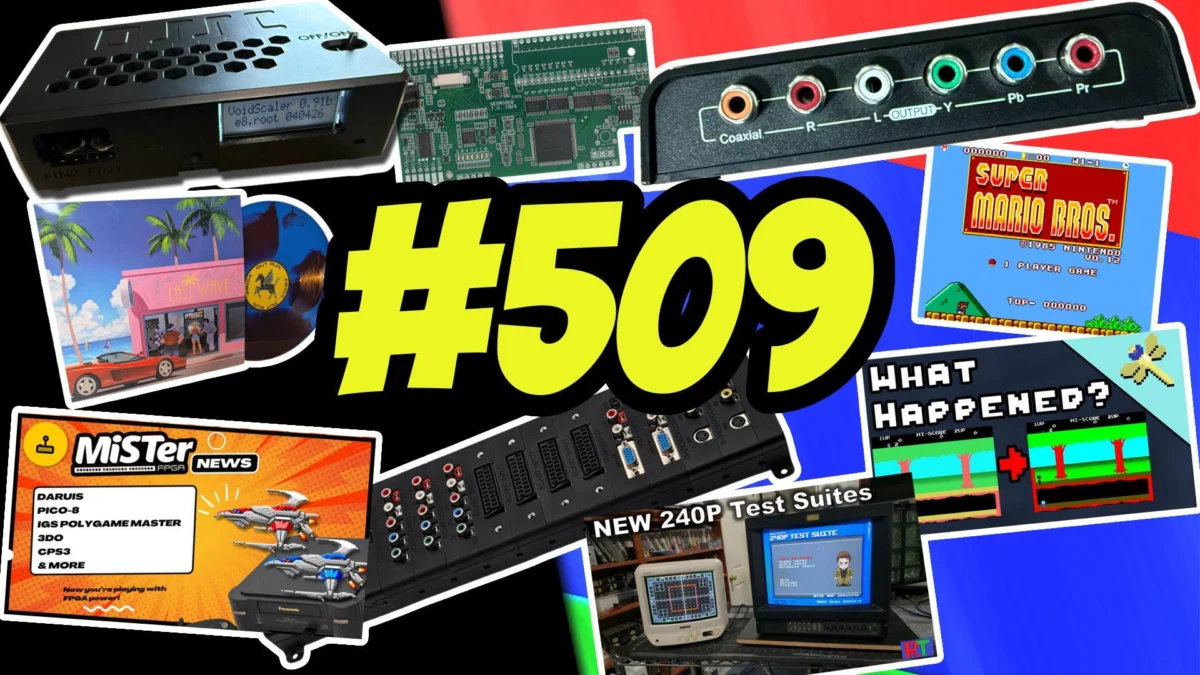
Advanced Hardware & Firmware Developments Elevate Retro Gaming Experience
The week’s updates highlighted several critical advancements in hardware and firmware that promise to refine the retro gaming experience. Among the most anticipated were significant updates to the 240p Test Suite, the Open Source Scan Converter (OSSC), and the availability of the latest NESRGB modification kit. These tools and components are cornerstones for many enthusiasts striving for optimal visual fidelity and compatibility with modern displays.
240p Test Suite Receives Major N64 Version Update
A crucial development for display calibration and signal analysis was the release of a substantial update for the 240p Test Suite, notably including a new version tailored for the Nintendo 64. The 240p Test Suite is an indispensable diagnostic tool, revered by retro gaming enthusiasts for its ability to generate precise video patterns, allowing users to accurately calibrate their displays, test signal integrity, and identify potential issues in their video chains. Its importance cannot be overstated for anyone serious about achieving the best possible picture quality from their vintage consoles. The introduction of a dedicated N64 version addresses a long-standing need within the community, given the console’s often-complex video output characteristics and the variety of modding solutions available. This update is expected to empower N64 owners to fine-tune their setups with unprecedented accuracy, ensuring that classic titles like Super Mario 64 and The Legend of Zelda: Ocarina of Time are displayed as intended, free from artifacts or improper scaling. Community reactions have been overwhelmingly positive, with many modders and content creators eager to integrate the new suite into their testing protocols.
OSSC Firmware and Profile Updates Enhance Display Compatibility
The Open Source Scan Converter (OSSC), a highly regarded device for connecting analog retro consoles to modern digital displays, also received critical firmware and profile updates. The OSSC is celebrated for its ability to convert various analog video signals (like RGB, Component, S-Video, and Composite) into a digital HDMI signal without introducing significant input lag, a common pitfall of many commercial upscalers. The updates typically include bug fixes, improved timing support for a wider array of consoles, and new video output profiles designed to optimize compatibility with specific display types or to achieve particular visual effects, such as scanlines. These continuous improvements ensure that the OSSC remains at the forefront of retro video processing, offering users greater flexibility and a more pristine image. The iterative development process, often driven by community feedback, highlights the collaborative nature of the retro hardware scene, where dedicated developers work tirelessly to address niche technical challenges.
OSSC Downscaler Firmware v0.91 Released
Complementing the main OSSC updates, the Voidscaler, an add-on board designed to provide downscaling capabilities for the OSSC, also saw a firmware update to version 0.91. While the primary OSSC excels at upscaling, the Voidscaler serves a different but equally important function: allowing users to take a high-resolution input (e.g., 480p, 720p, or even 1080p) and accurately downscale it to a lower resolution, often 240p or 480i, for output to classic Cathode Ray Tube (CRT) displays. This is particularly useful for modern systems or emulators that output higher resolutions but which enthusiasts wish to experience on CRTs for an authentic vintage feel. Version 0.91 likely brings refinements to the downscaling algorithms, improving image quality, timing accuracy, and compatibility with a broader range of input resolutions and CRT displays. The ability to precisely control the video output, whether upscaling for modern flat panels or downscaling for CRTs, provides an unparalleled level of customization for serious retro gamers.
NESRGB v5.0 Mod Kits Back in Stock, Illuminating the Console’s Visual Potential
For Nintendo Entertainment System (NES) aficionados, the news of NESRGB v5.0 mod kits being back in stock was met with considerable excitement. The original NES, a groundbreaking console, notoriously outputs only a composite video signal, which is known for its blurry image quality and color bleeding on modern displays. The NESRGB modification is a transformative upgrade, replacing the console’s native video encoder with a modern chip that outputs a crisp, vibrant RGB signal. This allows the NES to be connected to high-quality RGB monitors or upscalers like the OSSC, dramatically improving picture clarity and color accuracy.
A detailed explanation of "How RGB is possible from the NES" accompanied this announcement, delving into the technical intricacies of extracting an RGB signal from a console originally designed for composite output. This involves understanding the NES’s Picture Processing Unit (PPU), which internally generates RGB data before it’s encoded into composite. The NESRGB mod intercepts these internal signals, processing them into a standard RGB format. The v5.0 version likely incorporates refinements in design, ease of installation, or signal quality, building upon years of development. The implication of this mod is profound: it revitalizes the NES visual experience, allowing its classic pixel art to shine with unprecedented clarity, akin to how arcade machines of the era presented their graphics. This enables a new generation of players to appreciate the NES’s graphical capabilities without the limitations of its original video output.
Homebrew & Community-Driven Projects Showcase Enduring Creativity
Beyond hardware, the retro gaming community continues to thrive on creativity and passion, demonstrated through ambitious homebrew projects and organized showcases. These initiatives breathe new life into classic consoles, often pushing their technical boundaries in ways never envisioned by their original creators.
Super Mario Bros. Port to Sega Master System Demo Released
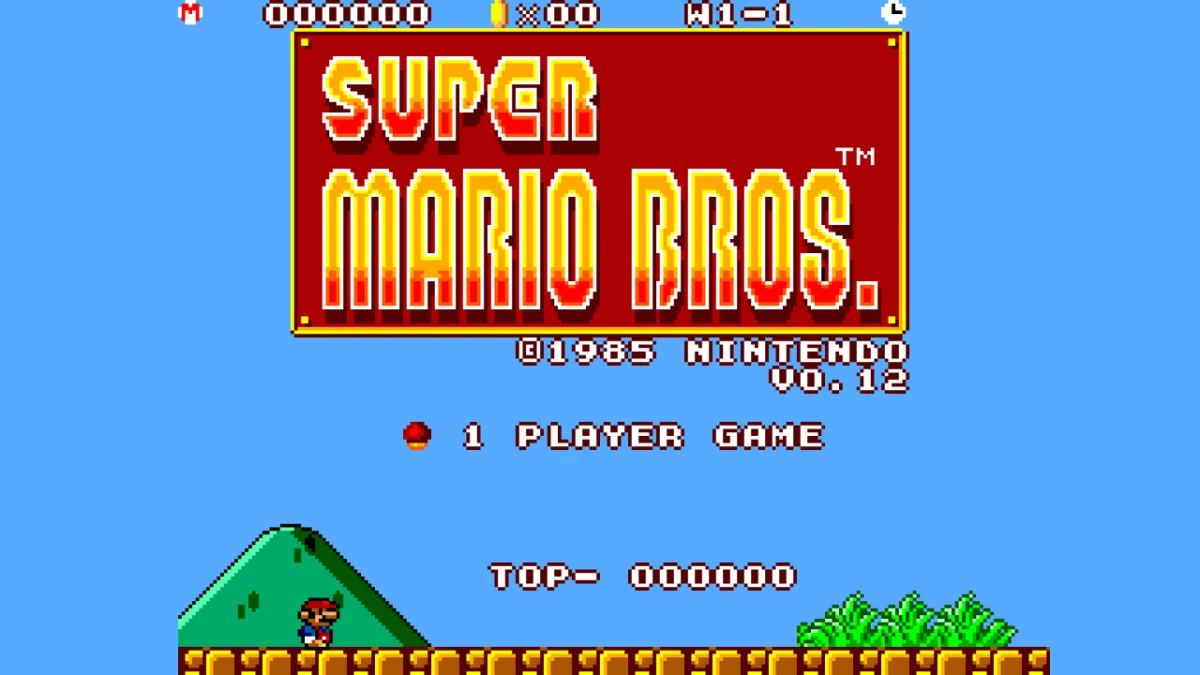
One of the most remarkable homebrew developments highlighted was a demo of Super Mario Bros., the iconic Nintendo Entertainment System title, running on the Sega Master System (SMS). This project represents a significant technical feat, given the architectural differences between the NES and SMS. Porting a game of Super Mario Bros.’s complexity, with its distinctive physics, enemy AI, and level design, from one 8-bit console to a competing one requires deep understanding of both systems’ hardware capabilities and limitations. Developers must re-engineer graphics, sound, and gameplay logic to fit the target system, often optimizing extensively to achieve a playable experience. This demonstration not only showcases the incredible talent within the homebrew community but also fosters a sense of cross-platform appreciation, challenging long-held rivalries between console manufacturers. It underscores the community’s dedication to exploring "what if" scenarios and expanding the libraries of beloved retro consoles.
SegaXtreme Homebrew Showcase Deadline Approaches
Further illustrating the vibrancy of the homebrew scene, the SegaXtreme Homebrew Showcase announced its deadline, just four weeks away. The Sega Saturn, despite its commercial struggles against the PlayStation, boasts a fiercely loyal and technically adept community. The SegaXtreme showcase is an annual or semi-regular event that encourages developers to create new games, tools, and demos for the Saturn. These showcases are vital for keeping the console’s legacy alive, providing new content for its dedicated fanbase, and demonstrating the console’s untapped potential. Submissions often range from simple tech demos to surprisingly complex games, pushing the boundaries of what was thought possible on the Saturn hardware. The impending deadline spurs a flurry of activity, as developers finalize their projects, leading to a rich display of ingenuity and passion for the platform. Such events are critical for fostering community engagement and preserving the cultural heritage of retro gaming.

MiSTer FPGA Project Continues Rapid Expansion
The MiSTer FPGA project, a hardware-based emulation platform known for its unparalleled accuracy, also saw a flurry of updates from developer Luâs. MiSTer FPGA uses Field-Programmable Gate Arrays to reconfigure hardware at a low level, effectively mimicking the original console hardware at a much more fundamental level than software emulation. This results in extremely high accuracy, minimal latency, and an experience nearly indistinguishable from playing on original hardware.
Luâs’s updates included the introduction of several new cores, significantly expanding the MiSTer’s capabilities:
- Darius: Bringing the classic arcade shoot ’em up experience to the platform.
- 3DO: A core for Panasonic’s 3DO Interactive Multiplayer, a console known for its early CD-ROM capabilities and unique library.
- Street Fighter III (SF3): Likely a port or highly accurate rendition of the arcade fighting game.
- PS2 Port: While a full PlayStation 2 core is an enormous undertaking, a "PS2 port" likely refers to a specific aspect or early stage of development, hinting at future capabilities.
- IGS PGM (PolyGame Master): An arcade system board from IGS, known for its fighting games and shoot ’em ups.
- Pico-8: A "fantasy console" designed for creating, sharing, and playing small games and other programs.
These continuous additions underscore the MiSTer project’s ambitious scope and rapid pace of development. Each new core represents countless hours of reverse-engineering and FPGA programming, providing retro gamers with access to an ever-growing library of accurately emulated systems. The implications are far-reaching, democratizing access to rare or expensive hardware and ensuring the preservation of gaming history with unparalleled fidelity. The community’s anticipation for each new core release is palpable, as it expands the horizons of playable retro content.
Essential Accessories and Technical Solutions for Modern Retro Setups
The roundup also featured several announcements concerning new and accessible hardware solutions designed to streamline and enhance modern retro gaming setups, addressing common challenges faced by enthusiasts.
Affordable Retro-Compatible HDMI to YPbPr DAC
A particularly interesting development was the spotlight on a "Cheap HDMI to YPbPr DAC" (Digital-to-Analog Converter) that boasts retro compatibility. Many modern retro gaming solutions, such as certain console mods or dedicated FPGA systems, output an HDMI signal. However, a significant portion of the retro gaming community still prefers to play on CRT displays, which often require an analog component (YPbPr) input. The challenge lies in finding DACs that can correctly convert HDMI to YPbPr while also properly handling "retro-compatible" signals like 240p, which many generic HDMI-to-component converters fail to do, often treating 240p as 480i or misinterpreting the signal entirely. The availability of an affordable DAC specifically designed to correctly handle these nuances is a boon for enthusiasts looking to integrate modern HDMI-outputting devices into their classic CRT setups without breaking the bank. This addresses a common pain point and provides a crucial bridge between digital and analog video standards.
Scalable Video Switch In Stock
Managing multiple retro consoles, each with its own unique video output requirements, can quickly lead to a tangled mess of cables and manual switching. The announcement of a "Scalable Video Switch" being back in stock was therefore welcome news. Such a device is designed to centralize multiple video inputs (e.g., RGB SCART, component, composite) and output them to a single display or upscaler. A "scalable" switch often implies not just routing capabilities but potentially built-in processing that can adapt various input signals or even provide basic upscaling or format conversion. These switches are invaluable for simplifying complex retro setups, allowing users to effortlessly switch between consoles without constantly re-cabling, thereby preserving the integrity of their connections and improving the overall user experience. The demand for such devices consistently outstrips supply, highlighting their importance in the modern retro gaming landscape.
Cultural & Community Engagement: Beyond the Pixels
The retro gaming world extends beyond just hardware and software; it encompasses a vibrant culture of appreciation, nostalgia, and community interaction.
OutRun Amiga Edition Vinyl Release
The release of an OutRun Amiga Edition Vinyl epitomizes the cultural aspect of retro gaming. OutRun is an iconic arcade racing game from Sega, celebrated not only for its groundbreaking graphics and gameplay but also for its legendary soundtrack. The Amiga port, while distinct, also holds a special place in the hearts of many European gamers. Releasing the soundtrack on vinyl taps into the resurgence of physical media and the deep appreciation for game music as an art form. It’s a testament to the enduring legacy of classic games and their ability to transcend their original medium, becoming collectible cultural artifacts. This move caters to both retro gaming enthusiasts and vinyl collectors, bridging two passionate communities.
Community Support and Future Content
The roundup concluded with a strong emphasis on community support, directing viewers and listeners to various ways to support the content creator, Bob, via monthly support services, tips, or affiliate links. This aspect is crucial for the sustainability of independent retro gaming content. Platforms like Patreon, mentioned explicitly, allow creators to dedicate time and resources to researching, testing, and producing high-quality content that benefits the entire community. Without this support, much of the detailed technical analysis, hardware reviews, and news aggregation that enthusiasts rely upon would not be possible. This call to action reinforces the symbiotic relationship between content creators and their audience, highlighting that the continued vibrancy of the retro gaming information ecosystem depends on collective effort. A tangential mention of "Water Testing?" via a YouTube link also appeared, suggesting the creator occasionally delves into other personal projects or interesting observations, further showcasing the diverse interests that can flourish within a dedicated community channel.
In summary, Weekly Roundup #509 – April 15th 2026 painted a vivid picture of a retro gaming scene that is anything but static. It is a dynamic ecosystem driven by passionate developers, innovative hardware engineers, and a dedicated community. The continuous evolution of tools like the 240p Test Suite and OSSC, coupled with the relentless expansion of platforms like MiSTer FPGA and the creative output of homebrew communities, ensures that the golden age of gaming remains vibrant, accessible, and continuously re-imagined for future generations. The integration of modern technology with vintage systems, coupled with a deep respect for historical accuracy and cultural preservation, defines the enduring appeal and ongoing relevance of retro gaming.