Cecilia Chamidah Nur
The co-founder of Robust Games, Adam Riches, has publicly disclosed that his studio, in collaboration with Bird in Sky, once presented a pitch to Red Dwarf co-creator Doug Naylor for the development of a point-and-click adventure game based on the iconic British science fiction comedy series. While the project ultimately did not receive approval, the revelation, accompanied by concept art, has ignited a fervent response from fans and industry professionals, highlighting a deep-seated desire for an interactive rendition of the beloved cult classic. The proposed game envisioned translating the distinctive humor, intricate character dynamics, and unique sci-fi premise of Red Dwarf into a genre celebrated for its narrative depth and puzzle-solving mechanics, drawing parallels to the golden age of LucasArts adventures.
The Pitch Unveiled and Its Immediate Resonance
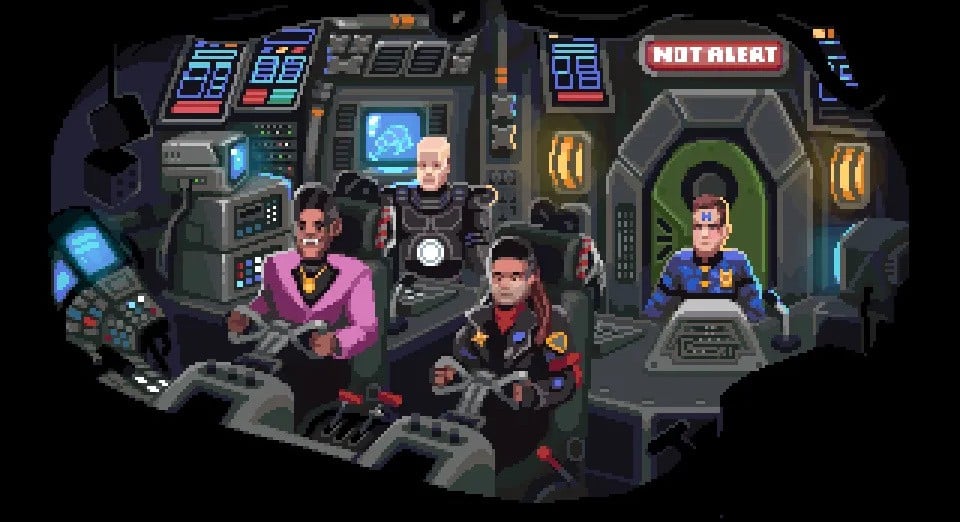
Adam Riches, whose studio Robust Games garnered critical acclaim for the indie point-and-click adventure Loco Motive, shared details of the unproduced project on BlueSky. His post included a compelling piece of concept art depicting the interior of the show’s secondary craft, Starbug, rendered in a classic pixel art style. The image featured the core crew – Dave Lister, Arnold Rimmer, Cat, and Kryten – seated within the cockpit, immediately striking a chord with long-time devotees of both the television series and the adventure game genre. Riches stated, "A while back we had the wonderful opportunity to pitch a Red Dwarf adventure game directly to Doug Naylor himself. While the project didn’t end up going ahead, we’re now free to share some of the work we produced for the pitch!"
The immediate online reaction underscored the potent combination of nostalgia and genre affinity. The artwork quickly garnered widespread praise, with many commenters expressing their enthusiasm for the aesthetic and the concept. Dave Gilbert, Chief Creative Officer of the esteemed independent game development studio Wadjet Eye Games, a company synonymous with modern classic adventure titles, commented, "Oh god damn this looks great. Need to do a dimension jump to a universe where this happened," articulating a sentiment of profound regret for the project’s unfulfilled potential. Comedian Alasdair Beckett-King also weighed in with a humorous, show-specific reference, "> CHANGE BULB," alluding to an iconic and often-quoted scene from the series, demonstrating the deep cultural penetration of Red Dwarf‘s humor. This outpouring of positive feedback suggests a significant, untapped market for such a game.
A Deep Dive into the Concept: Genre Fidelity and Artistic Vision
The choice of a point-and-click adventure game genre for Red Dwarf is, for many fans and game critics, a logical and inspired pairing. The television series thrives on character interaction, complex (if often absurd) scenarios, and a reliance on dialogue and wit to navigate its fantastical universe. These elements align seamlessly with the core tenets of the adventure game genre, which traditionally emphasizes narrative progression, environmental exploration, inventory-based puzzles, and extensive character conversations over action or reflexes.
The proposed pixel art style, reminiscent of seminal 1990s LucasArts titles such as The Secret of Monkey Island, Day of the Tentacle, and Sam & Max Hit the Road, would have provided a nostalgic yet timeless visual identity. This aesthetic choice not only appeals to a demographic familiar with that era of gaming but also offers a distinct charm that would likely complement Red Dwarf‘s blend of retro sci-fi and quirky comedy. The fidelity to a classic look would evoke a sense of authenticity for fans who grew up with both the show and the genre.
Within such a framework, potential gameplay elements are abundant. Players could have engaged in intricate dialogue trees, making choices that reflect the crew’s often-conflicting personalities. Puzzles could have involved the unique abilities or limitations of each character: Lister’s slacker ingenuity, Rimmer’s bureaucratic pedantry and hologrammatic nature, Cat’s superficiality and keen senses, and Kryten’s vast knowledge and robotic servitude. The confined, yet imaginative, settings of the Red Dwarf mining ship and Starbug, along with various alien planets and dimensional anomalies, would provide rich backdrops for exploration and item manipulation. Imagine puzzles centered around repairing the ship, outsmarting a rogue AI, or simply trying to find a working curry dispenser. The show’s signature humor, including its memorable one-liners and running gags, could have been expertly woven into the gameplay and dialogue, providing an interactive experience that feels authentically Red Dwarf.
The Enduring Legacy of Red Dwarf
To fully appreciate the significance of this proposed game, one must understand the profound cultural impact of Red Dwarf. Originating in 1988 on BBC Two, the series quickly distinguished itself with its unique premise: Dave Lister, the last human alive, marooned three million years into deep space aboard the mining vessel Red Dwarf, accompanied only by a hologram of his deceased bunkmate Arnold Rimmer, a creature evolved from his pet cat, and the ship’s increasingly senile computer, Holly.
The show, co-created by Rob Grant and Doug Naylor, masterfully blended science fiction concepts with sharp, character-driven comedy. Its early seasons, in particular, were lauded for their ingenious scripts, strong character development, and impressive practical effects, which gave the confined spaceship environments a surprising sense of scale and realism. The casting of Craig Charles as the slobbish, curry-loving Lister, Chris Barrie as the smeg-head Rimmer, Danny John-Jules as the flamboyant Cat, and Norman Lovett as the original voice of Holly, formed an iconic ensemble that delivered memorable performances.
The series evolved over its extensive run, which spanned twelve seasons (counting the three-part "Back to Earth" as season IX, as some do) and a 2020 television special, Red Dwarf: The Promised Land. A significant addition to the cast was Robert Llewellyn as Kryten, a service mechanoid introduced in the third season, who quickly became an integral part of the crew’s dynamic, adding a layer of neurotic politeness and advanced technological insight to their often chaotic adventures. The show transitioned from BBC Two to Dave in later years, demonstrating its enduring popularity and ability to attract new audiences while retaining its loyal fanbase.
Red Dwarf‘s influence extends beyond television. Its memorable catchphrases ("Smeg," "Smoke me a kipper, I’ll be back for breakfast," "We’re talking JMC here, standards, procedures, all that kind of stuff") are embedded in British pop culture. It explored complex themes of loneliness, identity, artificial intelligence, and existentialism, often masked by slapstick humor and philosophical debates. This intellectual underpinning, combined with its comedic brilliance, solidified its status as a cult phenomenon with a dedicated following that transcends generations. The idea of an interactive medium allowing fans to inhabit this universe and interact directly with these beloved characters holds immense appeal.
The Developers Behind the Dream
The credentials of the studios involved in the pitch further underscore the quality of the proposed project. Adam Riches, through Robust Games, demonstrated a clear aptitude for the adventure game genre with Loco Motive. Released to positive reviews, Loco Motive was praised for its engaging mystery, witty dialogue, and charming pixel art, proving Robust Games’ capability to deliver a high-quality, narrative-driven experience. Its success suggested that Riches and his team understood the nuances of creating compelling adventure game puzzles and characters, skills that would be directly transferable to a Red Dwarf adaptation. The critical reception of Loco Motive positioned Robust Games as a studio capable of honoring the legacy of classic adventure games while infusing them with modern sensibilities.
Matt Griffiths, co-founder of Bird in Sky, also played a crucial role in the pitch. Bird in Sky is known for 3030 Deathwar – A Space Odyssey, a unique blend of space trading, exploration, and adventure elements, and is currently developing The Passing Place, described as a "four-story narrative game." Griffiths’ involvement suggests a collaborative effort bringing diverse talents and perspectives to the table. His work on 3030 Deathwar, particularly its spacefaring setting and narrative focus, would have provided valuable experience in crafting a game set within a vast, albeit mostly empty, universe like Red Dwarf‘s. The combined expertise of Robust Games and Bird in Sky presented a formidable creative force, well-equipped to tackle the complexities of adapting such a rich and established intellectual property.
The Adventure Game Renaissance and Market Viability
The proposed Red Dwarf game arrives at a time when the point-and-click adventure genre is experiencing a notable renaissance. After a period of decline in the late 1990s and early 2000s, driven by the rise of 3D graphics and action-oriented gameplay, the genre has seen a resurgence, largely fueled by independent developers and crowdfunding. Studios like Wadjet Eye Games (responsible for Blackwell series, Unavowed), Double Fine Productions (Broken Age, Grim Fandango Remastered), and the creators of Thimbleweed Park (a spiritual successor to LucasArts classics) have successfully demonstrated that a dedicated and passionate audience still exists for well-crafted adventure games.
This modern revival is characterized by a blend of nostalgic aesthetics and contemporary design sensibilities, offering intricate puzzles, compelling narratives, and often highly polished pixel art or hand-drawn visuals. The success of these titles indicates a viable market for games that prioritize storytelling, character development, and intellectual challenge over fast-paced action. A Red Dwarf adventure game, leveraging an established and beloved IP, would have been uniquely positioned to tap into this rejuvenated market, appealing not only to existing adventure game enthusiasts but also to the vast Red Dwarf fanbase, many of whom are likely to appreciate the genre’s narrative focus. The potential for cross-pollination between these two dedicated communities could have significantly boosted the project’s commercial prospects.
Why the Project Was Not Greenlit: Inferred Analysis
The question of why such a seemingly ideal project failed to secure a green light is multifaceted, often involving a complex interplay of business, legal, and creative considerations. While the specific reasons for the rejection remain undisclosed, several common factors typically contribute to the non-progression of IP-based game pitches:
- Licensing Complexities and Costs: The primary hurdle for any game based on an established intellectual property is securing the necessary licenses. Red Dwarf is owned by Grant Naylor Productions (GNP), co-founded by Doug Naylor. Licensing agreements can be incredibly expensive, involving upfront fees, royalty payments, and often demanding creative control clauses. The cost associated with acquiring the rights to such a prominent and long-running IP could have been prohibitive, especially for independent studios. Negotiations can also be protracted and involve multiple stakeholders, including broadcasters (like BBC and Dave) who have previously aired the show, further complicating the process.
- Financial Investment and Perceived Return on Investment (ROI): Developing a high-quality adventure game, even in pixel art, requires significant financial investment in terms of development time, talent, and marketing. IP holders often seek substantial returns on their licensing fees. While the adventure game market is vibrant, it typically operates within a niche compared to blockbuster genres like action-RPGs or open-world titles. The projected sales figures for a Red Dwarf adventure game might not have met the financial benchmarks or risk assessments required by GNP or potential publishers, especially when weighed against the licensing costs.
- Creative Alignment and Vision Differences: Even with a clear vision, there can be disparities between the developers’ creative direction and the IP owner’s expectations. Doug Naylor, as a co-creator, would naturally have a vested interest in maintaining the integrity and tone of Red Dwarf. While the pitch seemed to align well with the show’s spirit, subtle differences in narrative approach, character portrayal, or even the specific type of humor could have led to a lack of complete consensus.
- Strategic Priorities of the IP Holder: GNP or Doug Naylor might have different strategic plans for the Red Dwarf IP. They might be considering other forms of media (e.g., films, new TV specials, merchandise) or alternative game genres that they perceive as having broader commercial appeal or aligning better with their long-term brand strategy. A point-and-click adventure, while beloved by a core audience, might not have been seen as the optimal vehicle for expanding the Red Dwarf brand at that particular time.
- Timing and Market Dynamics: The timing of the pitch could also have played a role. Market conditions, competing projects, or even the availability of development resources within the IP holder’s broader network could have influenced the decision.
Matt Griffiths’ accompanying post on BlueSky echoed Riches’ sentiment of disappointment, stating, "Unfortunately we won’t get a chance to make our dream Red Dwarf adventure game right now, but here’s one for all those who love the gang." The phrase "right now" leaves a glimmer of hope, suggesting that while this particular pitch did not materialize, the possibility for a Red Dwarf game in the future might not be entirely off the table.
Broader Impact and Implications
The revelation of the unproduced Red Dwarf adventure game carries several broader implications for the gaming industry, intellectual property management, and fan communities:
- Fan Engagement and Demand: The immediate and overwhelmingly positive reaction to Riches’ post unequivocally demonstrates the enduring passion of Red Dwarf fans and their strong desire for new interactive content. It highlights that niche genres, when combined with beloved IPs, can generate significant excitement and a potentially dedicated player base. This fan fervor serves as a powerful signal to IP holders about the untapped potential in specific gaming adaptations.
- Challenges of IP Adaptation: The incident underscores the inherent difficulties in bringing established intellectual properties to the gaming medium, particularly for independent studios. Even with a brilliant concept and proven development talent, the complexities of licensing, financial negotiations, and creative approvals can prove insurmountable. It serves as a stark reminder of the numerous promising projects that never see the light of day due to factors beyond creative merit.
- The "What If" Factor: For many fans, this revelation introduces a bittersweet "what if" scenario. The concept art and the caliber of the developers involved create a compelling vision of what could have been, leaving a lingering sense of loss for an experience that resonated so strongly with their collective imagination. This unfulfilled potential often fuels discussions and hopes for future endeavors.
- Future Prospects for Red Dwarf in Gaming: While this specific project did not proceed, the public enthusiasm could potentially encourage Doug Naylor and GNP to explore other avenues for Red Dwarf in the gaming space. The positive reception might highlight the commercial viability of a well-executed game, perhaps inspiring future pitches or a re-evaluation of the IP’s gaming potential, possibly in different genres or with different development partners. The strong preference for an adventure game, however, remains a clear message from the fanbase.
- The Power of Concept Art and Community: The sharing of the concept art on BlueSky demonstrates the power of visual communication and social media in generating buzz and gauging public interest. It allowed a glimpse into a potential future that captivated an audience and served as a valuable, albeit informal, market survey for the viability of the concept.
In conclusion, the disclosure of the unproduced Red Dwarf point-and-click adventure game represents more than just a missed opportunity; it is a vivid illustration of the intricate dynamics at play when beloved intellectual properties intersect with the creative ambitions of game developers. The concept, art, and the immediate, enthusiastic public response underscore the enduring appeal of Red Dwarf and the vibrant, nostalgic resurgence of the adventure game genre. While this particular voyage into the void of game development did not reach its destination, it has undoubtedly charted a course for future discussions and ignited the imaginations of countless fans who continue to dream of an interactive journey with the iconic crew of the Red Dwarf.
[Source: bsky.app]