Cecilia Chamidah Nur
Indie developer Richard Langford has launched a PC remake of Ultimate Play the Game’s seminal 1983 title, Jetpac, offering an enriched experience with multiple graphical styles and expanded gameplay features. This ambitious project breathes new life into a classic, allowing players to revisit the iconic space-themed platformer with modern sensibilities while retaining its nostalgic charm. Langford’s rendition is available for free, though a ‘name your price’ option is enabled, allowing appreciative players to contribute financially. The release prompts a renewed discussion on intellectual property rights in the gaming industry, particularly concerning beloved retro titles held by major corporations like Microsoft.
The Reimagined Jetpac Experience: Blending Tradition with Innovation
Langford’s remake is a testament to the enduring appeal of Jetpac, meticulously crafted to honor the original while introducing significant enhancements. A standout feature is the inclusion of three distinct graphical styles, switchable seamlessly during gameplay. Players can opt for the authentic "ZX Spectrum original" look, immersing themselves in the pixelated glory of the 1983 release. For those seeking a visual upgrade without departing too far from the source, a "ZX Spectrum limitless colour" option dramatically expands the palette beyond the original hardware’s technical constraints, offering a vibrant, yet familiar aesthetic. Finally, a "new HD graphics" mode provides a fully modernized visual overhaul, presenting the classic gameplay with crisp, high-definition visuals for contemporary audiences.
Beyond the graphical facelift, Langford has infused the remake with several gameplay innovations designed to challenge both veterans and newcomers. A notable addition is the option for platforms to randomly rearrange themselves with each new rocket build, ensuring that no two playthroughs are identical and demanding adaptive strategies from players. Furthermore, the introduction of destructible fuel pods adds another layer of difficulty and tactical consideration, forcing players to protect vital resources amidst alien assaults. Drawing inspiration from its acclaimed sequel, Lunar Jetman, Langford has also integrated the missile launcher, providing players with an additional offensive capability against the relentless alien hordes. Expanding the game’s universe, enemies from two other cherished Ultimate Play the Game titles, Cookie and Pssst, have been incorporated, enriching the enemy variety and paying homage to the developer’s broader legacy. These thoughtful additions demonstrate a deep understanding and appreciation for the source material, extending the game’s replayability and strategic depth.
A Nod to Gaming Royalty: The Original Jetpac’s Legacy
To fully appreciate the significance of Langford’s remake, one must understand the profound impact of the original Jetpac. Released in 1983 for the ZX Spectrum, Jetpac was more than just a game; it was a cultural phenomenon in the burgeoning British home computer market. Programmed by the brilliant Chris Stamper, with distinctive pixel art by his brother Tim, Jetpac quickly garnered critical acclaim, securing the coveted "Game of the Year" award at the Golden Joystick Awards in the year of its release. This accolade solidified its status as a landmark title, recognized for its innovative gameplay, addictive loop, and technical prowess on the then-modest ZX Spectrum hardware.

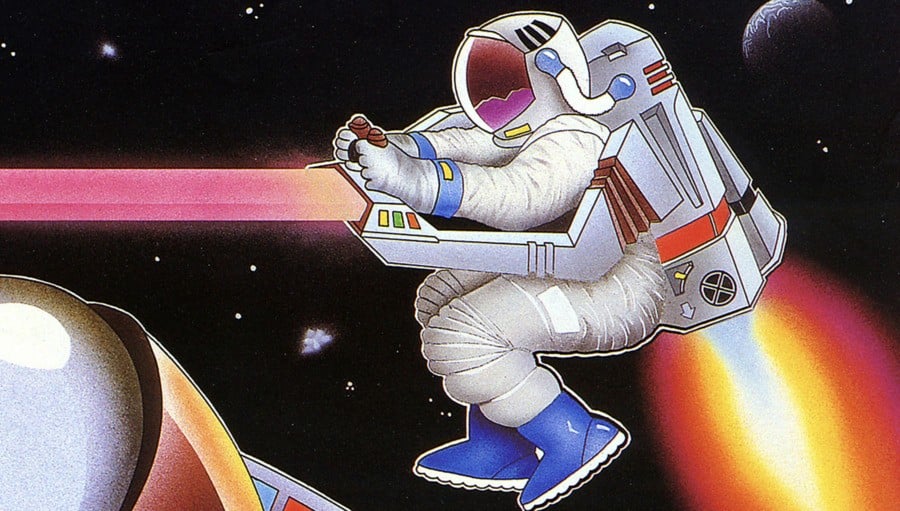
The game tasked players, as astronaut Jetman, with collecting fallen rocket pieces and assembling them on a launchpad, then fueling the rocket while fending off waves of alien attackers. Its simple yet compelling premise, combined with fast-paced action and precise controls, made it an instant classic. Jetpac‘s success was instrumental in establishing Ultimate Play the Game as a powerhouse in the British gaming industry, setting a high bar for quality and innovation that few competitors could match. It laid the groundwork for a series of successful titles and sequels, forging a legacy that continues to resonate with retro gaming enthusiasts worldwide.
Ultimate Play the Game: Pioneers of the British Gaming Industry
Ultimate Play the Game, founded by brothers Chris and Tim Stamper, was a quintessential British software house of the 1980s. Emerging from a small studio in Ashby-de-la-Zouch, Leicestershire, the company quickly became synonymous with technical excellence, creative design, and distinctive graphical styles on 8-bit home computers, particularly the ZX Spectrum. Their early catalogue, which included Jetpac, Pssst, Cookie, Lunar Jetman, and the groundbreaking isometric adventure Knight Lore, consistently pushed the boundaries of what was thought possible on these machines.
The Stamper brothers were known for their secretive development process and unparalleled technical skill, often creating custom tools and engines to extract maximum performance from limited hardware. Their games frequently featured sophisticated sprite routines, smooth scrolling, and innovative gameplay mechanics that set them apart from their contemporaries. This commitment to quality and innovation allowed Ultimate to carve out a dominant position in the competitive 1980s gaming landscape.
In 1988, Ultimate Play the Game transitioned into Rare Ltd., a move that marked a significant evolution for the company. Under the Rare banner, the Stamper brothers continued their trajectory of success, developing iconic titles for Nintendo platforms such as Donkey Kong Country, GoldenEye 007, and Banjo-Kazooie. This period cemented their reputation as one of the most talented and influential developers in the industry. In 2002, Rare Ltd. was acquired by Microsoft for a reported $375 million, bringing their extensive catalogue of intellectual property, including Jetpac, under the ownership of the tech giant. This acquisition underscored the enduring value and cultural significance of the Stamper brothers’ creations, transforming a humble British studio’s legacy into a cornerstone of a multinational corporation’s gaming portfolio.
The Technical Canvas: ZX Spectrum and its Innovations
The ZX Spectrum, released by Sinclair Research in 1982, was a pivotal home computer, especially in the UK. Known for its rubber keyboard and distinctive rainbow stripe, it brought computing and gaming into millions of homes. However, its technical specifications presented significant challenges for developers. The Spectrum featured a Z80 processor, 48KB or 128KB of RAM, and a screen resolution of 256×192 pixels. Its colour capabilities were particularly restrictive: while it could display 15 colours (seven bright, seven normal, plus black), these colours were limited to a 8×8 pixel "attribute block." This meant that within any 8×8 pixel square, only two colours (one foreground, one background) could be displayed, leading to the infamous "attribute clash" that characterized many Spectrum games.

It is against this backdrop of technical limitations that Jetpac‘s original achievements become even more remarkable. The Stamper brothers ingeniously navigated these constraints to create a fluid, graphically rich experience that captivated players. Langford’s "ZX Spectrum limitless colour" option directly addresses this historical limitation. By allowing colours to be rendered freely across the screen without the attribute block restriction, it offers a glimpse into what Jetpac might have looked like if the Spectrum’s hardware had been more advanced. This blend of authentic emulation and imaginative enhancement allows players to appreciate both the original’s ingenuity and the potential unlocked by modern computing power.
The Broader Universe of Ultimate Classics: Integrated Homages
Langford’s remake is not merely a tribute to Jetpac but also an homage to the wider creative universe of Ultimate Play the Game. By incorporating elements from other early Ultimate titles, the remake enriches the experience and acknowledges the interconnectedness of these foundational games.
- Lunar Jetman: Released in 1983 as a direct sequel to Jetpac, Lunar Jetman expanded on its predecessor’s formula by introducing a scrolling landscape, vehicles (the moon buggy), and more complex objectives. The inclusion of the missile launcher from Lunar Jetman in Langford’s remake provides players with a tactical advantage, reflecting the evolution of Jetman’s arsenal in the original series. This addition is a subtle yet meaningful nod to the franchise’s progression and offers a fresh gameplay dynamic.
- Cookie: Released in 1983, Cookie was another early Ultimate title, a charming platformer where the player, as a chef, had to collect ingredients while avoiding mischievous enemies. Incorporating enemies from Cookie into the Jetpac remake diversifies the alien roster, adding new visual flair and potentially varied attack patterns that challenge players in unexpected ways.
- Pssst: Also released in 1983, Pssst saw the player as a gardener trying to protect a plant from various insects. Like Cookie, Pssst showcased Ultimate’s ability to create engaging, character-driven arcade experiences. The integration of Pssst‘s enemies further broadens the scope of the alien encounters in Jetpac, enhancing the visual variety and reinforcing the remake’s role as a celebration of Ultimate’s early catalogue.
These inclusions not only make Langford’s Jetpac remake more robust but also serve as a loving compilation, inviting players to explore the interconnectedness of Ultimate Play the Game’s early creative output.
Community Contribution and Monetization: A Delicate Balance
Richard Langford’s decision to offer the Jetpac remake for free, while enabling a ‘name your price’ option, highlights a common approach among fan developers. This model allows enthusiasts to share their passion projects without directly profiting in a way that might immediately trigger intellectual property disputes. The ‘name your price’ model, often seen on platforms like itch.io, operates on a voluntary contribution basis, acknowledging the effort and skill invested by the developer while keeping the content accessible to all.
This approach resonates deeply within the retro gaming community, where fan-made remakes, enhancements, and ports are cherished as acts of preservation and homage. Such projects often stem from a deep personal connection to the original games, driven by a desire to introduce them to new audiences or to experience them in new ways. Langford’s transparency regarding the free nature of the game, coupled with the option for voluntary support, positions his work as a community-driven endeavor rather than a commercial exploitation of a protected IP.
Intellectual Property and the Future of Fan Tributes
The release of Langford’s Jetpac remake inevitably raises questions about intellectual property (IP) rights, especially given the current ownership of the Jetpac franchise. As previously noted, Microsoft acquired Rare Ltd. in 2002, and with it, the entire catalogue of games developed by Ultimate Play the Game and Rare, including Jetpac. This makes Microsoft the current rights holder, possessing the legal authority to control the distribution and modification of the property.
Microsoft has demonstrated its awareness of Jetpac‘s value through several official re-releases and inclusions:
- Jetpac Refuelled (2007): An official HD remake released for Xbox Live Arcade, featuring updated graphics, new gameplay modes, and online multiplayer. This demonstrated Microsoft’s willingness to modernize and monetize the classic.
- Rare Replay (2015): A compilation of 30 games from Ultimate Play the Game and Rare’s history, released for the Xbox One. Jetpac was a prominent inclusion, allowing a new generation of console players to experience the original.
- Rare Collection 1 for Evercade (2020): This cartridge brought several Rare classics, including Jetpac, to the Evercade retro gaming platform, further cementing its status as a bankable property for Microsoft across various platforms.
Given these official efforts to maintain and commercialize the Jetpac brand, the continued availability of Langford’s unofficial remake remains uncertain. Historically, large IP holders like Microsoft adopt various stances on fan-made projects. Some companies are highly protective, issuing cease-and-desist orders for any unauthorized use of their IP, regardless of monetization. Others may tolerate non-commercial fan projects, viewing them as positive community engagement or free marketing, provided they don’t directly compete with official products or misrepresent the brand. The ‘name your price’ model, while voluntary, could potentially be interpreted as a form of monetization, which might draw more scrutiny from rights holders.
The legal landscape surrounding fan games is complex and often navigated on a case-by-case basis. Factors such as direct competition with official products, the scale of distribution, and the degree of monetization often influence a rights holder’s decision to act. For now, Langford’s Jetpac remake stands as a testament to fan dedication, but its long-term online presence will ultimately depend on Microsoft’s discretion. This scenario underscores the ongoing tension between copyright protection and the vibrant culture of fan creation and preservation within the gaming community.
Preserving Gaming History Through Modern Lenses
Richard Langford’s unofficial Jetpac remake represents more than just a new way to play an old game; it is a significant contribution to the broader effort of video game preservation. As classic games age, their original hardware becomes increasingly difficult to maintain and access. Fan projects like this ensure that these foundational titles remain playable and relevant for future generations, bridging the gap between retro enthusiasts and modern gamers.

Such remakes serve as a vital form of digital archaeology, meticulously recreating and often enhancing experiences that might otherwise fade into obscurity for those without access to original systems. By offering multiple graphical options, Langford’s remake caters to a diverse audience, from purists seeking an authentic experience to those who prefer a modernized aesthetic. It exemplifies how community passion can drive innovation and extend the life of cherished intellectual properties.
Ultimately, this unofficial Jetpac remake is a celebration of gaming heritage, a loving tribute to one of the industry’s most influential pioneers, Ultimate Play the Game. While its future under the shadow of intellectual property law remains a topic of ongoing discussion, its existence undeniably enriches the discourse around game preservation, fan creativity, and the enduring legacy of classic titles in the digital age.