Ganda Hendra Perkasa
The echoes of the recent GDC 2026 have barely faded, yet the digital archives are offering a remarkable glimpse into the foundational moments of the video game industry. Today marks the official release of a newly digitized collection of lecture recordings from the 1989 Computer Game Developers’ Conference (CGDC), an event that convened at the Sunnyvale Hilton Hotel in May of that year. This release, comprising nearly every lecture from the third-ever GDC, provides an unprecedented window into the nascent world of computer game development when the industry was a burgeoning, intimate community on the cusp of explosive growth.
The survival of these audio recordings is, in itself, a minor miracle. However, their significance is amplified by the historical context of the computer game industry in 1989. This era predated the widespread adoption of the internet, the dominance of major console players, and the globalized development teams that characterize the industry today. The computer game development community in America at this time was characterized by its close-knit nature. Estimates suggest that CGDC 1989 drew approximately 300 attendees, a far cry from the thousands who now flock to the annual conference. This intimacy is palpable in the recordings, with speakers frequently addressing audience members by name, underscoring a familial atmosphere where many attendees already knew each other.
A Pantheon of Pioneers
The roster of speakers and panelists at CGDC 1989 reads like a who’s who of early computer game pioneers, individuals whose contributions would shape the trajectory of interactive entertainment for decades to come. The newly released recordings offer some of the earliest surviving audio documentation of luminaries such as:
- Danielle Bunten Berry: A groundbreaking designer known for titles like The Oregon Trail and M.U.L.E. Her insights into game design and the burgeoning industry are particularly valuable.
- Bing Gordon: Who would later become a pivotal figure at Electronic Arts, Gordon’s early perspectives on the business and creative challenges of game development offer a fascinating contrast to his later career.
- Chris Crawford: A prominent game designer and theorist, Crawford was a vocal advocate for interactive storytelling and the artistic potential of computer games. His presence at the conference highlights the intellectual underpinnings of early game development.
- Richard Garriott: The creator of the Ultima series, Garriott was already a significant figure in the burgeoning RPG genre. His participation underscores the diverse interests and expertise present at the conference.
- Steve Cartwright: Known for his work on titles like Cabal and Cherokee, Cartwright’s presence represents the action-oriented and arcade-inspired side of early computer gaming.
The presence of these and other influential figures underscores the importance of CGDC 1989 as a critical gathering point for the industry’s nascent leaders. These recordings capture not just technical discussions but also the philosophical debates and early strategic planning that were laying the groundwork for the modern video game landscape.
Key Sessions Offering a Glimpse into 1989
The collection features a variety of panels and lectures that provide distinct perspectives on the challenges and triumphs of the era. Among the highlighted sessions are:
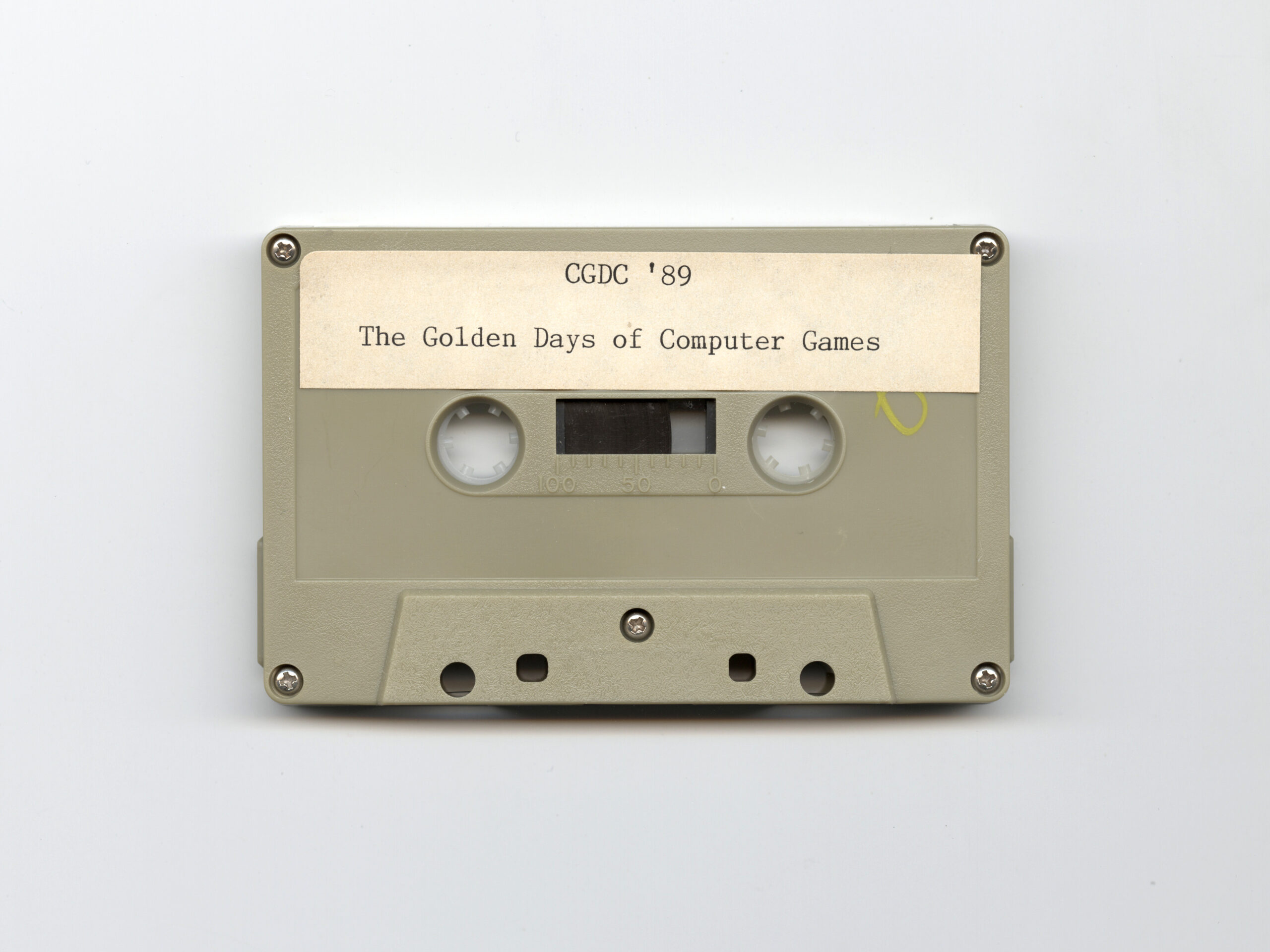
The Golden Days of Computer Games
This panel is particularly poignant, featuring developers who were already looking back with a sense of nostalgia to the early 1980s. The concept of "golden days" referring to a period as recent as 1980 highlights the rapid evolution of the industry even in its infancy. Speakers like Dani Bunten, Steve Cartwright, Chris Crawford, Jon Freeman, and Richard Garriott reminisced about a time when game development was a more artisanal pursuit, involving manual packaging of games and a general uncertainty about the industry’s future viability. This session offers a profound look at the early entrepreneurial spirit and the sheer passion that drove these pioneers.
Movies and Games: Living with a License
The complexities of intellectual property in game development were already a significant concern in 1989. This panel, featuring Steve Cartwright, Elaine Ditton, Noah Falstein, and Eric Goldberg, delved into the challenges and opportunities presented by working with licensed properties. The discussion of the Three Stooges computer game and industry gossip surrounding projects like the Barbie game for the Commodore 64 reveal the early attempts to bridge the gap between interactive entertainment and established media franchises, a trend that continues to be a dominant force in the industry today.
The Press and Games
The relationship between game developers and the media was a critical factor in shaping public perception and market success. This session brought together Johnny Wilson, an editor at Computer Gaming World, and Charlotte Taylor-Skeel, the public relations manager for Accolade, to discuss the symbiotic, and at times contentious, dynamic between publishers and the press. The fact that this topic was a focus of discussion in 1989 demonstrates an early understanding of the importance of media relations in building and sustaining a game’s audience.
Interactive Storytelling
Dave Albert’s presentation from Electronic Arts explored the burgeoning field of interactive storytelling. The lecture evolved into a Socratic dialogue with the audience, inviting deeper engagement and exploration of narrative possibilities in games. The recording highlights Albert’s interaction with attendees, including a notable exchange with "Brenda." The speculation that this "Brenda" could be either Brenda Laurel, a pioneer in interactive media, or Brenda (Garno) Romero, a highly influential game designer, underscores the caliber of individuals present and the intellectual ferment of the event. This session foreshadows the ongoing evolution of narrative design in video games.
The Publishers’ Panel
Concluding CGDC 1989, this panel featured prominent American computer game executives discussing the state of the industry from their vantage point. A significant portion of the discussion revolved around what they termed "the slump" in the US computer game market. Notably, Trip Hawkins, founder of Electronic Arts, delivered a fiery critique of Nintendo’s closed ecosystem practices for its then-dominant console, the Nintendo Entertainment System (NES). Hawkins’ assertion that the NES "is not gonna go on forever" proved prescient, as the industry would eventually shift towards more open platforms and evolving business models. This panel offers invaluable insight into the economic anxieties and strategic foresight of the era’s leading publishers.
A Foundation Laid in Tape
The collection is understood to be missing only two talks from CGDC 1989, though it remains unclear if these were ever recorded. Additionally, it is believed that 22 roundtable discussions, including one reportedly featuring counterculture icon Timothy Leary, were not preserved. While these omissions are regrettable, the existing recordings provide an unparalleled immersion into the atmosphere of the Sunnyvale Hilton with approximately 300 game designers actively shaping their craft.
The meticulous cataloging of this collection was made possible through the invaluable assistance of the Department of Special Collections at Stanford University Libraries. They provided a copy of the CGDC 1989 program from the Steve Meretzky papers, which served as a crucial reference point for identifying the content and speakers.
The Game Developers Conference has granted permission for these recordings to be shared, and particular gratitude is extended to GDC co-founder Tim Brengle. Brengle revealed at the recent GDC 2026 that he personally dubbed these analog tapes, a labor-intensive process that preserved this vital historical record. The effort, though 37 years in the making, represents a significant contribution to the preservation of game development history.
Accessibility and Future Preservation
These newly digitized recordings are now freely available as part of an expanding digital library dedicated to video game history research materials. This initiative, supported by public contributions, underscores a commitment to making these invaluable resources accessible to scholars, developers, and enthusiasts alike. The investment in new audio digitization equipment for this project signifies a dedication to ongoing preservation efforts, ensuring that future generations can learn from the pioneers who laid the groundwork for the global entertainment phenomenon that video games have become. The release of the CGDC 1989 recordings is not merely an archival act; it is an invitation to revisit the foundational principles, creative struggles, and optimistic visions that defined the early days of an industry that continues to innovate and captivate audiences worldwide.