Farhan hamdan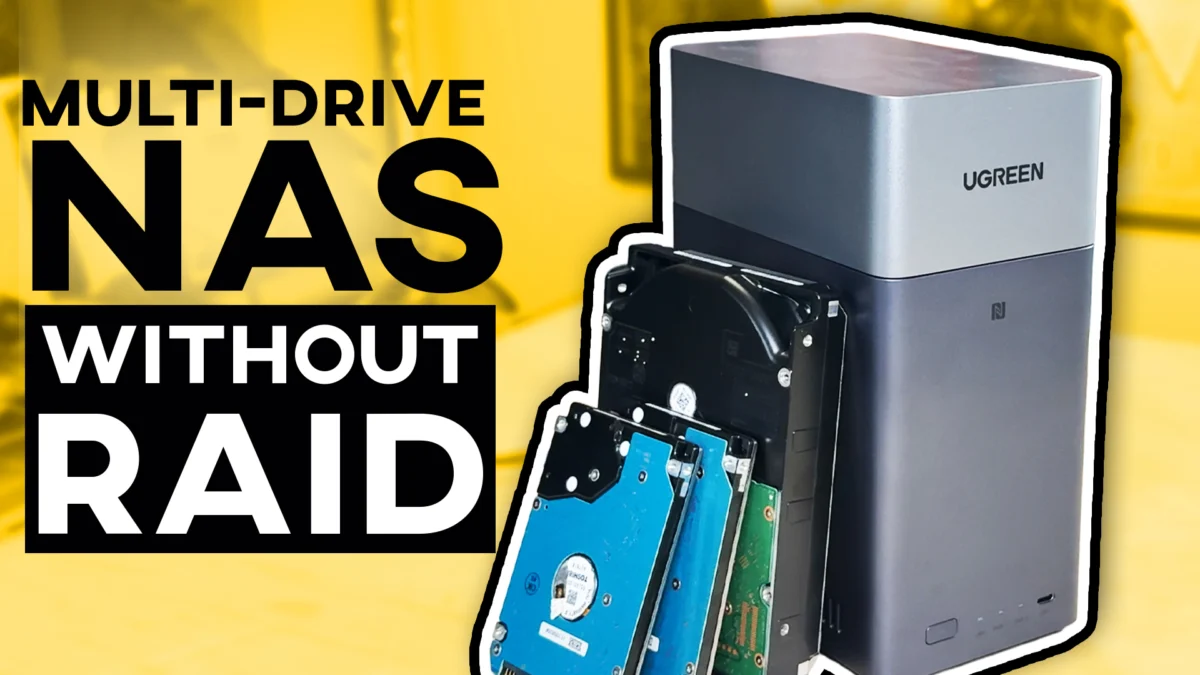
In an era marked by escalating hard drive prices and an ever-growing need for personal data management, a recent instructional video has emerged, offering a pragmatic approach to Network Attached Storage (NAS) using UGREEN devices. The guide focuses on leveraging disparate, non-matching hard drives through "basic" and JBOD (Just a Bunch Of Disks) configurations, presenting an accessible solution for both novice users and seasoned technology enthusiasts seeking cost-effective data consolidation. This initiative directly addresses a critical pain point for consumers: the prohibitive expense of acquiring multiple identical drives typically required for traditional RAID (Redundant Array of Independent Disks) setups.
The video, prominently featuring a UGREEN 2-bay NAS model (DH2300) but applicable across UGREEN’s entire NAS product line, provides a step-by-step walkthrough on integrating various hard drives individually or combining their total storage capacity. This flexibility stands in stark contrast to the stringent requirements of RAID, which often necessitates drives of matching size and type for optimal performance and data redundancy. By championing basic and JBOD configurations, the guide unlocks the potential of existing, repurposed storage, allowing users to maximize their investment in hardware they already possess.
The Evolving Landscape of Personal Data Storage and Hard Drive Economics
The context for this instructional content is rooted in significant shifts within the global data storage market. Over the past few years, the cost of hard drives, particularly high-capacity models, has experienced notable fluctuations and a general upward trend. Factors contributing to this phenomenon include disruptions in global supply chains, increased demand from enterprise data centers, and, at various points, speculative buying driven by cryptocurrency mining booms that heavily relied on storage. While solid-state drives (SSDs) have seen price declines, the cost-per-gigabyte for traditional hard disk drives (HDDs) remains a critical consideration for large-scale archival and media storage, where terabytes quickly add up.
This economic reality has placed a considerable burden on individuals and small businesses looking to establish robust local data storage solutions. Cloud storage, while convenient, often comes with recurring subscription fees and potential privacy concerns, pushing many back towards self-hosted alternatives. However, the barrier to entry for NAS, traditionally associated with complex RAID setups and the need for matching, often expensive drives, has been high. UGREEN’s approach, highlighted in the video, directly challenges this perception by offering a pathway to affordable, scalable local storage without the immediate financial outlay for a full set of new, identical drives.
Understanding Basic and JBOD Configurations: A Deep Dive
To fully appreciate the utility of the UGREEN NAS video, it’s essential to understand the technical nuances and implications of "basic" and JBOD drive configurations compared to their RAID counterparts.
Basic Configuration: In a basic setup, each hard drive installed in the NAS operates as an independent volume. This means that a 2-bay NAS with two 4TB drives would present two separate 4TB volumes to the user.
- Advantages:
- Simplicity: Easiest to set up and manage.
- Maximum Capacity: All installed storage is directly usable, without any overhead for parity or mirroring.
- Drive Flexibility: Allows for mixing and matching drives of different capacities and even types (though consistency is generally recommended for performance).
- Data Recovery: If one drive fails, data on other drives remains accessible, and data on the failed drive might be recoverable by specialists if the drive isn’t physically destroyed.
- Disadvantages:
- No Redundancy: This is the critical drawback. The failure of a single drive results in the loss of all data stored on that specific drive. There is no protection against hardware failure.
- No Performance Boost: Data is written and read from individual drives, offering no performance benefits typically associated with RAID 0 striping.
JBOD (Just a Bunch Of Disks): JBOD, in this context, refers to concatenating multiple drives into a single, larger logical volume. If a 2-bay NAS has a 2TB and a 4TB drive configured as JBOD, the user sees a single 6TB volume.
- Advantages:
- Consolidated Storage: Presents a single, large pool of storage, simplifying file management.
- Maximum Capacity: Like basic, it utilizes the full capacity of all drives without redundancy overhead.
- Drive Flexibility: Allows for mixing and matching drives of different capacities.
- Disadvantages:
- No Redundancy: Similar to basic, JBOD offers no data protection. If any drive in the JBOD array fails, the entire logical volume becomes inaccessible, and all data across all drives in that array is typically lost. This makes JBOD even riskier than basic for critical data, as a single point of failure compromises the entire aggregated volume.
- Performance: Generally no significant performance gains, as data is written sequentially across drives rather than in parallel stripes.
RAID (Redundant Array of Independent Disks) for Context:
RAID configurations, such as RAID 1 (mirroring), RAID 5 (striping with parity), or RAID 10 (striped mirrors), prioritize data redundancy and/or performance.
- RAID 1: Requires at least two drives, mirroring data across them. Provides excellent redundancy (one drive can fail without data loss) but halves the total storage capacity.
- RAID 5: Requires at least three drives, striping data and parity information across them. Offers good performance and allows for the failure of one drive without data loss, but requires dedicated capacity for parity.
- RAID 0: Stripes data across multiple drives for maximum performance, but offers no redundancy. The failure of any single drive results in complete data loss.
The video explicitly highlights the inherent risks of using basic and JBOD setups, stressing the importance of understanding that these configurations offer no protection against data loss due to drive failure. This disclaimer is crucial and aligns with responsible technological guidance, emphasizing that these solutions are best suited for non-critical data, temporary storage, or as part of a multi-tiered backup strategy where the primary copy resides elsewhere.
UGREEN’s Strategic Positioning in the NAS Market
UGREEN, a brand increasingly recognized for its range of consumer electronics, has strategically entered the NAS market with devices designed to be user-friendly and cost-effective. Their product philosophy appears to revolve around democratizing access to personal network storage, moving away from the perception that NAS is solely for power users or businesses. The 2-bay DH2300, for instance, is presented as an "inexpensive" and "quiet" option, making it suitable for home environments where noise and budget are key considerations.

This market positioning caters to a broad demographic, including:
- Home Users: Seeking centralized storage for family photos, videos, and documents without relying entirely on cloud services.
- Media Enthusiasts: Looking for a dedicated server for streaming media to various devices within their home network.
- Retro Gaming Community: As suggested by the content creator’s background (RetroRGB), these users often have extensive libraries of ROMs, ISOs, and emulation assets that require substantial, easily accessible storage. A quiet, small NAS is ideal for integration into a retro gaming setup, perhaps even serving as a backup for devices like the MiSTer FPGA.
- Budget-Conscious Individuals: Those who want to leverage existing hardware and avoid the high upfront costs of enterprise-grade NAS solutions.
UGREEN’s expansion into NAS devices, following their established presence in USB hubs, chargers, and other peripherals, indicates a broader strategy to offer complete ecosystem solutions for modern digital lifestyles. Their focus on ease of use, even with complex underlying technologies, is a clear differentiator in a market often perceived as technically daunting.
The Role of Independent Content Creation in Tech Education
The instructional video, produced by a respected independent content creator, serves a vital role in bridging the gap between manufacturer offerings and practical user application. Such content often provides a more relatable and less overtly promotional perspective than official product documentation. The creator’s willingness to include explicit disclaimers about data risks, juxtaposed with the advantages of flexibility and cost-efficiency, underscores a commitment to informed user decisions.
The mention of forthcoming DIY solutions using old PCs or laptops further highlights the creator’s dedication to providing comprehensive options for data storage, acknowledging that while dedicated NAS devices offer convenience, repurposing existing hardware can be an even more budget-friendly (albeit more complex) alternative for advanced users. This multi-faceted approach empowers consumers with choices tailored to their technical comfort level and financial constraints.
Broader Impact and Future Implications
The emergence of accessible NAS solutions like those offered by UGREEN, coupled with clear educational content on flexible configurations, carries several broader implications for the future of personal data management:
-
Democratization of Local Storage: By lowering the cost and complexity barriers, more individuals can take control of their data, reducing reliance on often expensive and sometimes less private cloud services. This shift aligns with a growing sentiment among consumers for greater data sovereignty.
-
Hybrid Storage Strategies: The flexibility of basic and JBOD setups encourages a hybrid approach. Users might store less critical media files on these configurations, while reserving RAID-protected volumes or external backups for truly irreplaceable documents and photos. This multi-tiered strategy optimizes both cost and data security.
-
Sustainability through Repurposing: The ability to utilize "any random drives you might have lying around" promotes a more sustainable approach to technology. It reduces electronic waste by giving old hardware a new lease on life, rather than necessitating the purchase of entirely new, matching components.
-
Growth of the Prosumer Market: As consumer electronics become more sophisticated, the line between consumer and professional-grade solutions blurs. Affordable and flexible NAS devices cater to the "prosumer" segment – enthusiasts and small home offices that require robust capabilities without enterprise-level pricing.
-
Educational Imperative: The video underscores the ongoing need for clear, practical education in technology. As products become more accessible, understanding their underlying principles, advantages, and inherent risks becomes paramount. The emphasis on disclaimers regarding data redundancy in basic and JBOD setups is a critical component of this educational imperative.
In conclusion, the UGREEN NAS instructional video represents more than just a guide to setting up a network storage device. It reflects a significant trend in consumer technology: the push towards more accessible, flexible, and cost-effective solutions for managing an increasingly digital life. Amidst rising hardware costs and evolving data storage needs, UGREEN’s product line, complemented by valuable educational content, offers a compelling pathway for individuals to secure and organize their digital assets without breaking the bank or navigating overly complex technical hurdles, provided they understand and mitigate the associated data redundancy risks. This strategic blend of affordable hardware and practical guidance marks a notable step forward in empowering the everyday user in the complex world of data storage.