Retno Hari Mulyono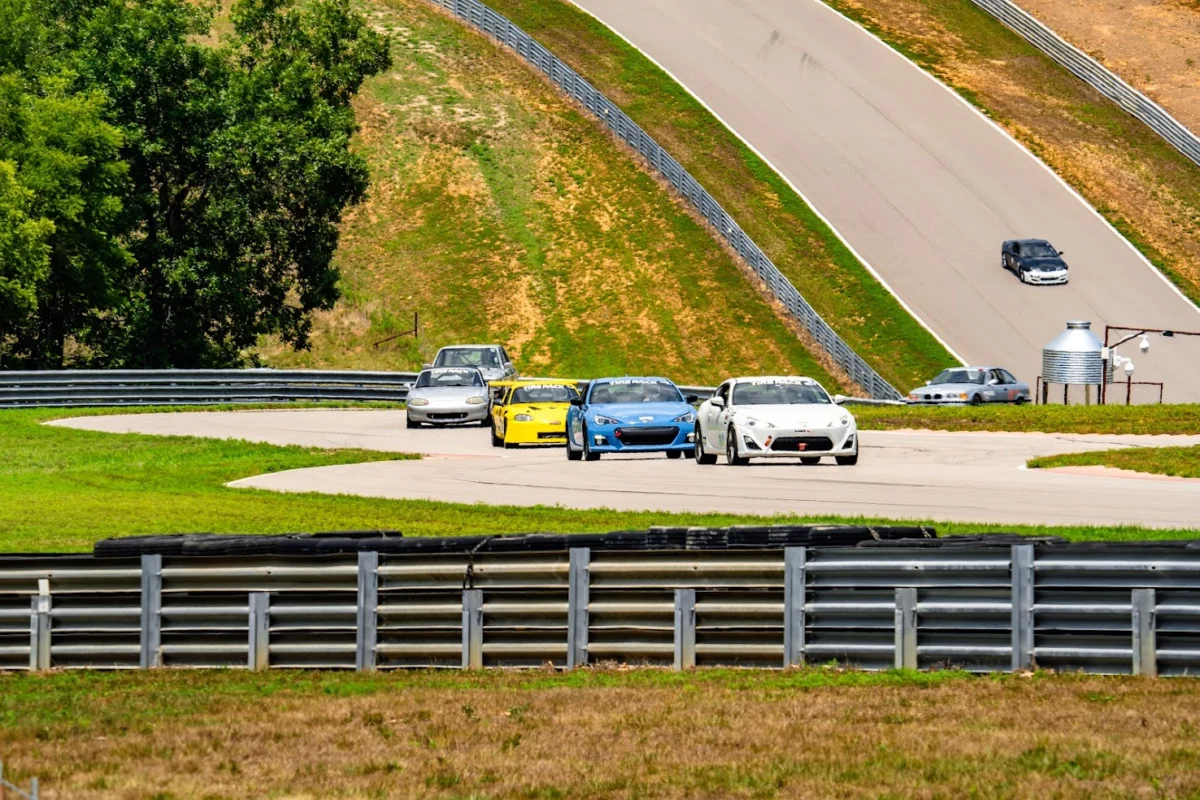
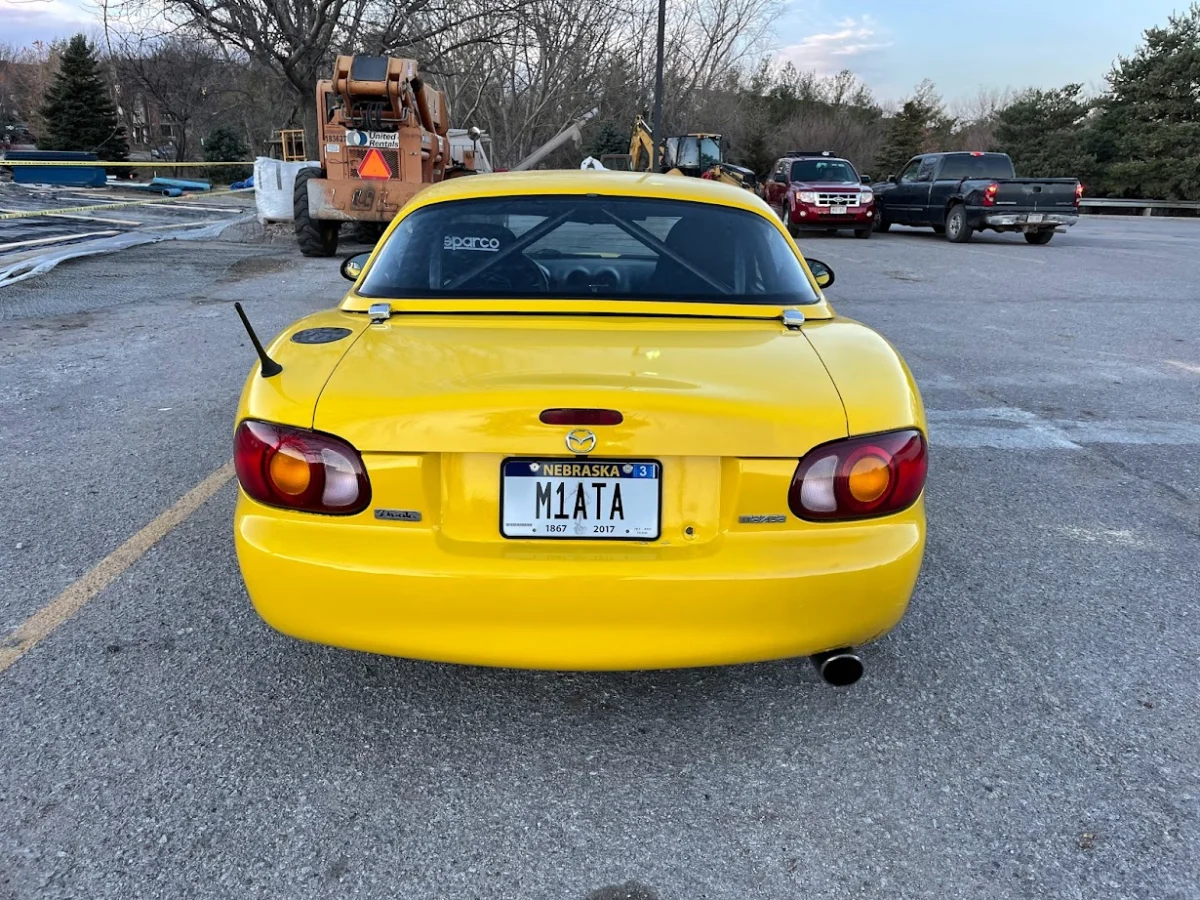
The second-generation Mazda MX-5, known internally as the NB, has long served as a cornerstone of amateur motorsports due to its balanced chassis, mechanical simplicity, and robust aftermarket support. In the third year of a dedicated ownership and development program spanning March 2023 through February 2024, a specific NB Miata underwent a series of technical refinements aimed at optimizing its performance for SCCA Time Trials and autocross competitions. This period was characterized by significant aerodynamic experimentation, logistical upgrades, and a transition toward a more dedicated track-oriented configuration, reflecting broader trends in the grassroots time-attack community.
Logistical Enhancements and Aerodynamic Trials
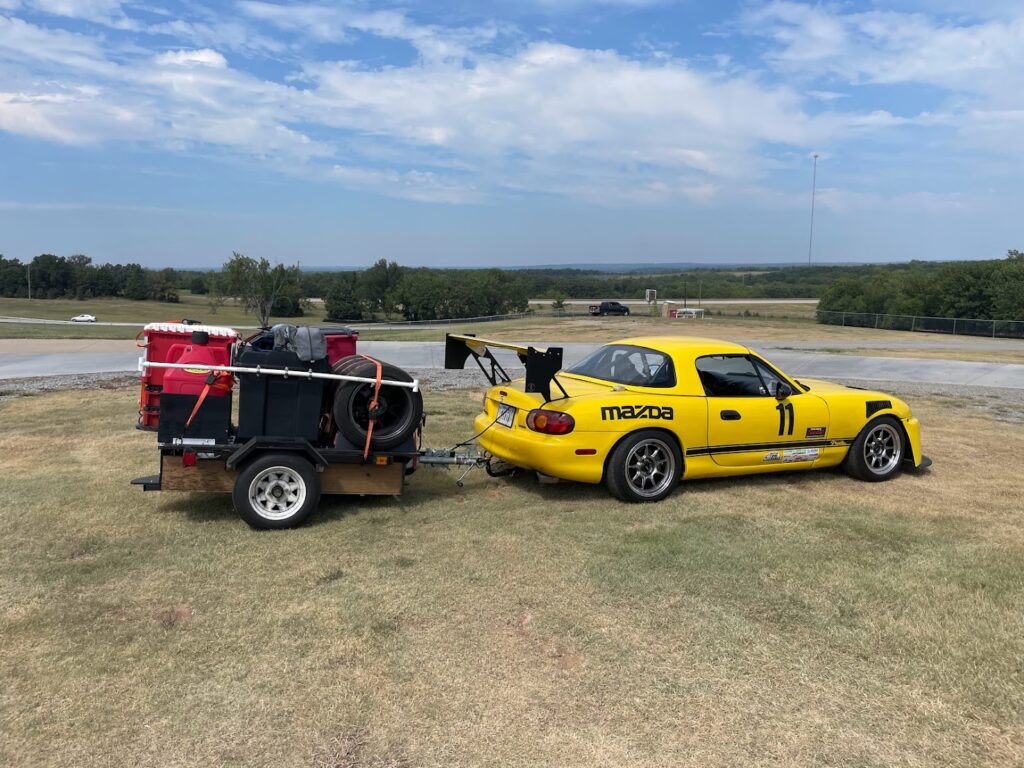
The 2023 season commenced with a focus on logistical efficiency. For amateur racers who drive their vehicles to the track, equipment transport remains a primary challenge. In March 2023, the owner implemented significant upgrades to a custom-built tire trailer. These modifications included the addition of a lower deck positioned below the axle to lower the center of gravity, the integration of a 15-gallon fuel cell to replace smaller jugs, and specialized mounts for spare aerodynamic components. The inclusion of a storage tube for Gurney flaps—small tabs placed on the trailing edge of a wing to improve lift coefficient—underscored a move toward fine-tuning the car’s aerodynamic balance.
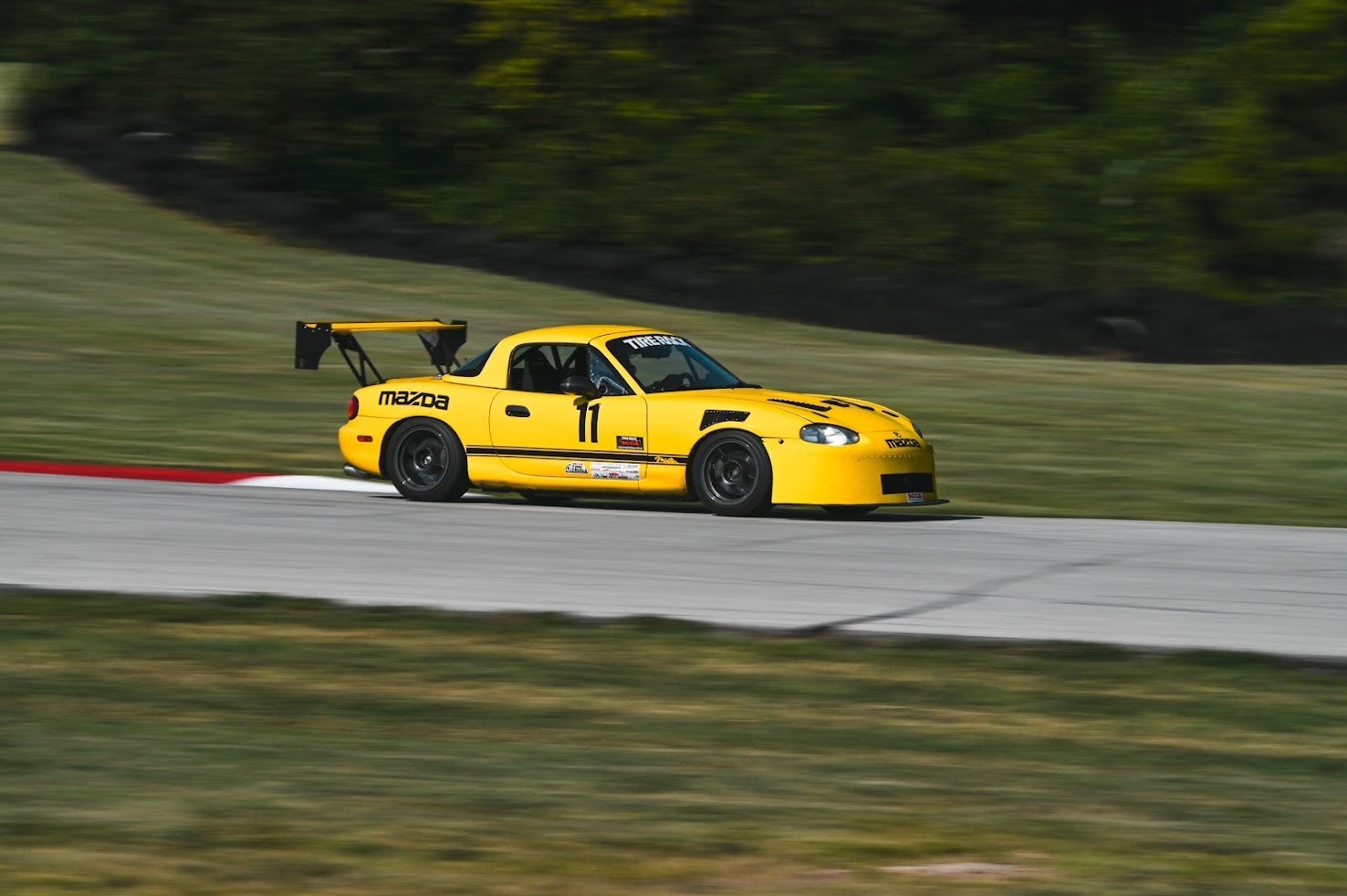
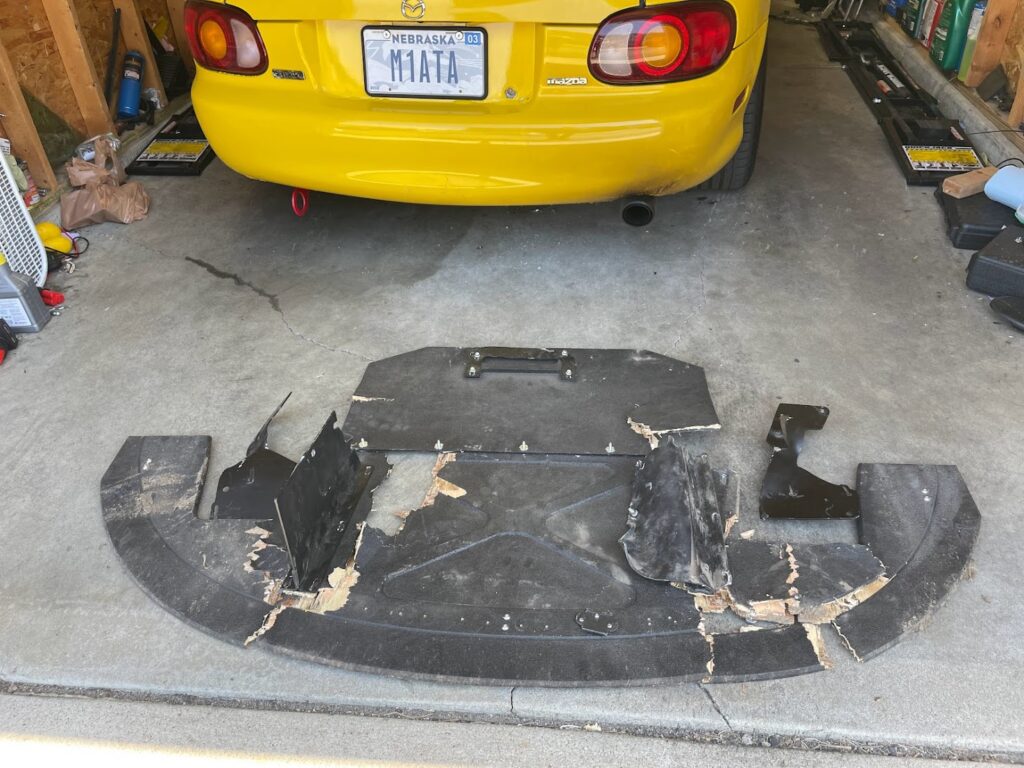
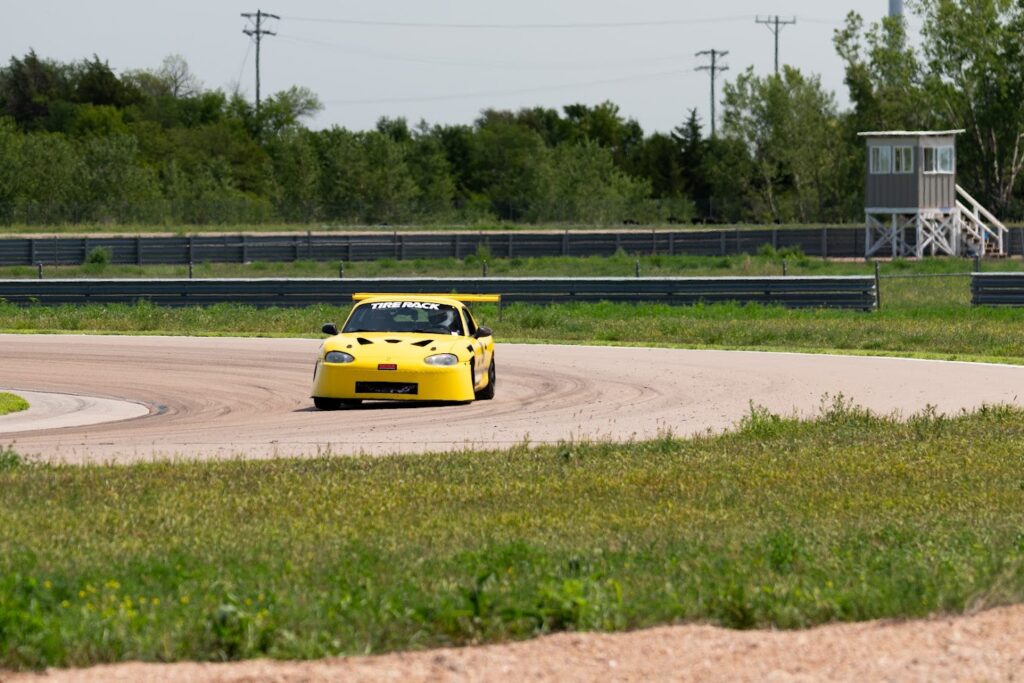
However, the pursuit of high-downforce performance encountered immediate physical limitations in April 2023. Following the installation of a Nine Lives Racing medium downforce kit, the vehicle suffered substantial damage during its first high-speed outing. An off-track excursion resulted in the destruction of the front splitter, bent mounting brackets, and damage to the radiator support. This incident highlighted the inherent risks of low-clearance aerodynamic components in a track environment. In response, the owner transitioned to a more cost-effective and durable DIY solution: 1/2-inch plywood splitters with reinforced side supports. This approach is a common practice in grassroots racing, where the "consumable" nature of splitters makes expensive carbon fiber alternatives impractical for many competitors.
Regional Track Landscape and Facility Challenges
The 2023 season also served as a backdrop for significant changes in the Midwestern racing circuit. In May, the vehicle was campaigned at Heartland Motorsports Park in Topeka, Kansas, during an SCCA Time Trials event. This facility, a staple of the region for decades, faced a permanent closure at the end of the 2023 season due to a protracted legal dispute between the track ownership and local government regarding property taxes. The loss of Heartland Motorsports Park represents a significant contraction of the racing infrastructure in the central United States, forcing enthusiasts to travel further to find comparable facilities.
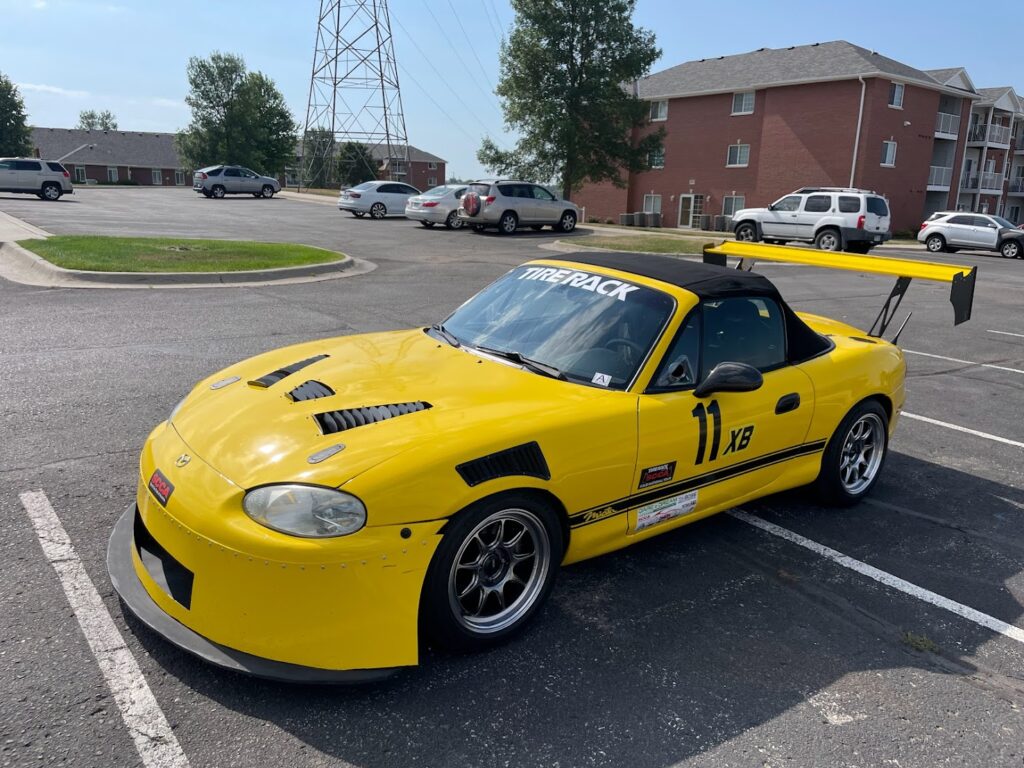
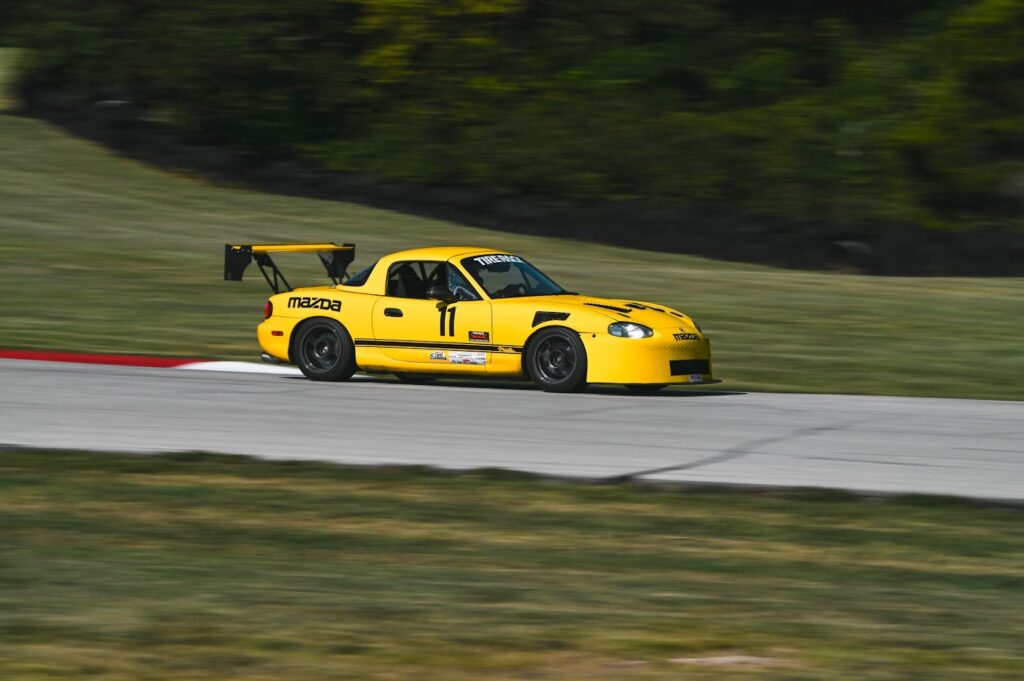
During this period, technical focus shifted to tire performance and vehicle stability. The owner utilized 225/45R15 Falken RT660 tires mounted on 15×9-inch wheels, seeking a more aggressive compound than the previous year’s Hankook RS4. Furthermore, data collected during the early season confirmed that the vehicle’s rear wing required a hardtop to function at peak efficiency. Aerodynamic studies of the Miata platform often indicate that the airflow over an open cockpit is too turbulent to effectively engage a rear spoiler. Consequently, the owner removed the factory soft top entirely in June 2023, reducing weight and committing to a permanent hardtop configuration for all competitive events.
Mechanical Endurance and Technical Setbacks
The mid-season transition to more demanding circuits, such as the Ozarks International Raceway in Missouri, exposed mechanical vulnerabilities. In July 2023, the vehicle’s clutch began to slip under the stress of autocross and track-day heat cycles. Due to immediate scheduling constraints, the owner performed an emergency replacement using a standard organic clutch.
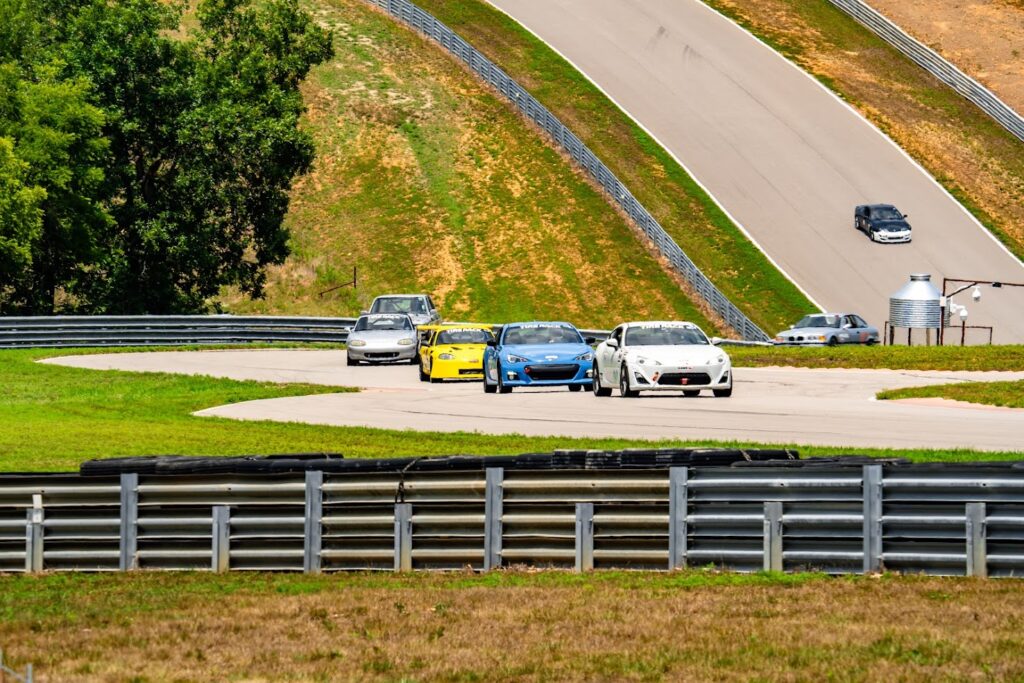
The experience at Ozarks International Raceway provided a stark contrast to more traditional tracks. Known for its extreme elevation changes and close-proximity barriers, the circuit demands high levels of driver confidence and mechanical reliability. Despite the temporary clutch solution, the vehicle demonstrated the benefits of its aerodynamic package in the technical sections of the track. This phase of ownership emphasized the importance of the "driver-vehicle interface," where the predictability of the car’s handling becomes more critical than raw horsepower on high-risk circuits.
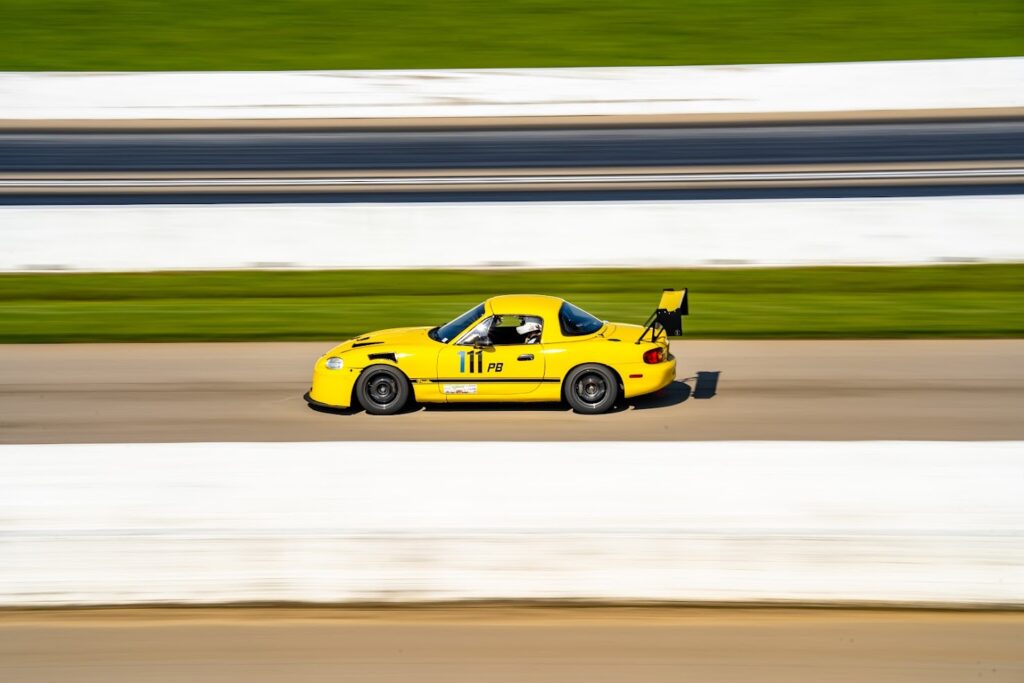
In August 2023, the focus returned to Motorsports Park Hastings in Nebraska. Here, the owner established a benchmark lap time of 1:42.78. For context, the NASA Spec Miata lap record at this facility stands at 1:40.415. While the owner’s NB Miata benefits from aerodynamic aids not allowed in Spec Miata, the comparison highlights the gap between a modified street-track car and a fully gutted, professional-grade race car. Analysis suggested that significant time could still be recovered in high-speed corners, provided the driver can overcome the psychological barrier of the previous splitter failure.
Ergonomics and Competitive Benchmarking
The late summer months focused on driver endurance and control. During the "Miatas at Hallett" event in Oklahoma in September 2023, the owner integrated a "Cool Shirt" system—a wearable cooling vest connected to an ice-water pump. In an uninsulated race car where cabin temperatures can exceed 120 degrees Fahrenheit, such systems are increasingly viewed not as luxuries, but as safety equipment that maintains driver focus and prevents heat exhaustion.
The competitive data for the year revealed a high level of activity, with 15 track days and 15 autocross events. Tire longevity data became a key takeaway for the season. The Falken RT660 tires provided approximately 8.5 hours of track time across 38 heat cycles before losing their competitive edge. In the autocross sphere, Bridgestone RE71-RS tires lasted through 17 events (approximately 70 runs). These metrics provide valuable benchmarking for other NB Miata owners planning their seasonal budgets and maintenance schedules.
Engineering the Off-Season: Weight Reduction and Engine Strategy
As the 2023 season concluded in November, the owner transitioned to an intensive winter development phase. The primary objective was to improve the vehicle’s power-to-weight ratio to remain competitive in SCCA Time Trials classes. In December 2023, a comprehensive weight reduction program was initiated, which included the removal of the dashboard, the elimination of unused wiring harnesses, and the stripping of interior sound-deadening material. These efforts resulted in a total weight saving of 50 pounds—a significant margin for a vehicle that already weighs less than 2,400 pounds.
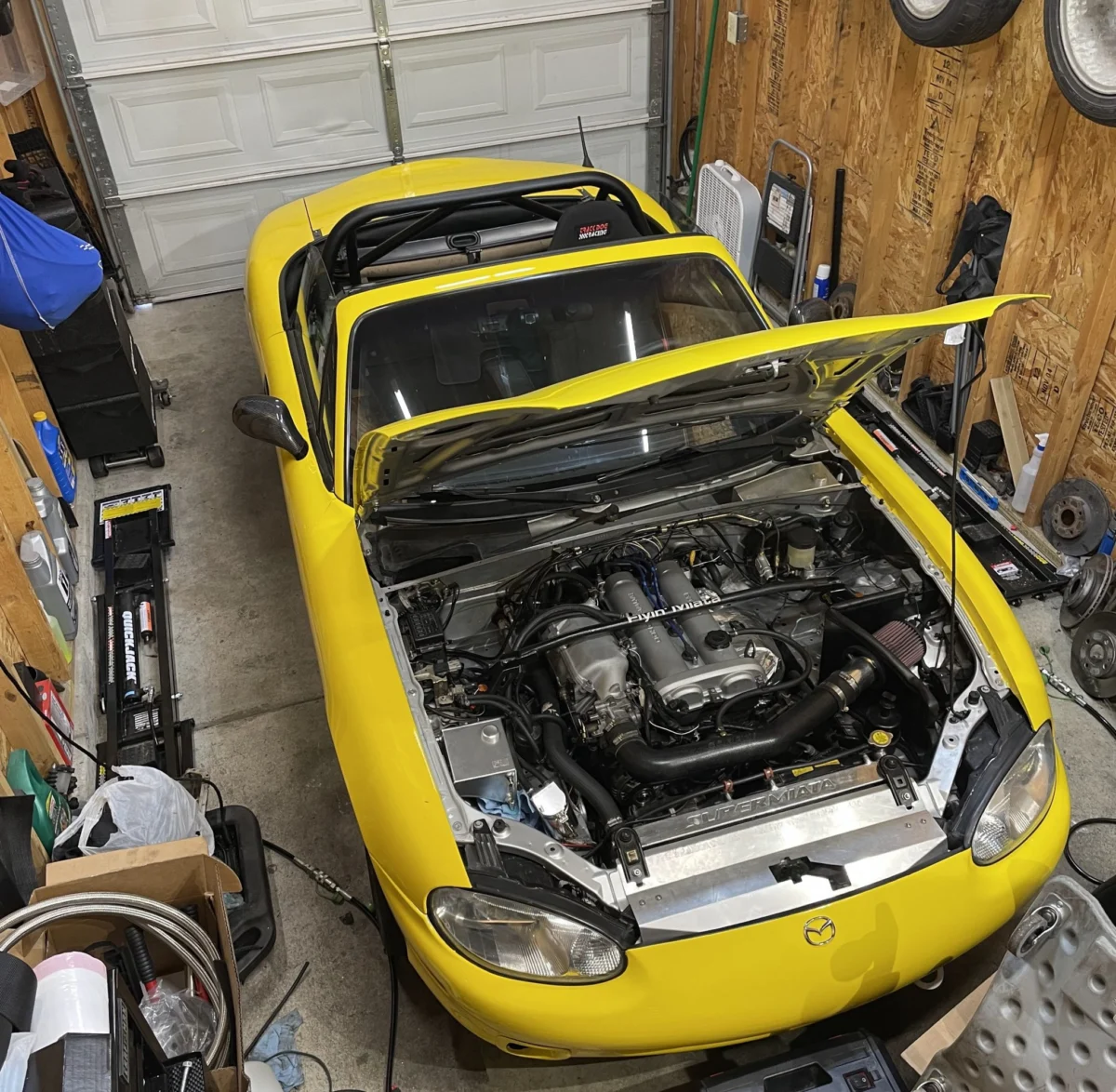
Concurrently, the owner began evaluating engine replacement options. The original factory BP4W engine had begun to show signs of wear, including oil consumption at high RPMs and smoke during deceleration. The owner’s inventory included two spare BP4W motors (1999–2000 vintage) and a BP6D motor (2001–2005 with Variable Valve Timing). A hybrid build was eventually selected, utilizing a rebuilt BP6D cylinder head on a BP4W bottom end with BP6D pistons. This configuration aims to leverage the improved airflow and compression of the later-model components while maintaining the simpler electronics of the early NB chassis.
The final modifications of the year included the installation of an OMP quick-release steering wheel in January 2024. This change was motivated by both ergonomics and safety, allowing for easier ingress and egress in a car equipped with a roll cage and fixed-back racing seats. In February 2024, the "Cool Shirt" system was permanently integrated into the vehicle’s trunk using custom-fabricated aluminum brackets, freeing up the passenger area for instructors or ride-along passengers.
Broader Implications and Future Outlook
The third year of this NB Miata’s evolution illustrates the trajectory of many modern amateur racing projects. The shift from "bolt-on" modifications to deep-system engineering—such as wiring loom thinning, custom aerodynamics, and hybrid engine builds—marks the transition of the vehicle from a dual-purpose street car to a dedicated competition tool.
The data suggests that while the NB Miata remains a formidable platform in corners, it faces increasing pressure from more modern, higher-horsepower competitors in Time Trials. The owner’s analysis indicates that the next logical step in the vehicle’s evolution will likely involve forced induction to maximize the car’s potential within its specific competition class.
Ultimately, the 2023–2024 season demonstrated that success in amateur motorsports is as much about logistical preparation and mechanical resilience as it is about raw speed. The closure of key facilities like Heartland Motorsports Park highlights the fragility of the racing ecosystem, yet the continued technical development of platforms like the NB Miata proves that the community’s drive for innovation remains robust. As the vehicle enters its fourth year of ownership, it stands as a testament to the enduring appeal of the Mazda MX-5 as a canvas for automotive engineering and driver development.