Cecilia Chamidah Nur
The Genesis of a Translation: A Three-Year Odyssey
Derek Pascarella first unveiled an English patch for Ningyou Tsukai on the FM Towns platform three years ago, a project immediately welcomed by enthusiasts of retro Japanese computing and niche gaming. The initial release provided a substantial translation, covering critical elements such as menu text, the game’s introduction, detailed fighter data sheets, in-game dialogue, and the end credits. However, certain graphical elements, particularly the stylized Japanese title screen logo and the introductory prologue sequence, remained in their original language, presenting a minor barrier to a fully immersive English experience.
The recently released version 1.0 addresses these final linguistic gaps. Pascarella’s meticulous work involved reverse-engineering the game’s code and graphics to identify, extract, and reinsert localized text and images. This process is often technically demanding, requiring expertise in assembly language, hexadecimal editing, and an understanding of the specific hardware architecture of the target platform, in this case, the Fujitsu FM Towns. The successful translation of graphical elements, like the title screen, often necessitates custom font recreation or image manipulation, adding layers of complexity beyond simple text replacement. The completion of this project signifies not only a linguistic achievement but also a testament to the perseverance and technical skill of fan translators within the retro gaming community. For many, these community-driven patches are the sole means of experiencing titles that were either never officially localized or received inadequate translations during their initial Western releases.

Metal & Lace: A Dive into 90s Controversial Gaming
Metal & Lace: The Battle of the Robo Babes, originally titled Ningyou Tsukai (which translates to "Doll Master" or "Puppeteer"), emerged from the burgeoning Japanese PC gaming scene of the early 1990s. Developed by the studio Forest, the game first debuted on the NEC PC-98 personal computer in 1992, a dominant platform in Japan known for its vast library of both mainstream and adult-oriented software. A year later, in 1993, it received an enhanced port for the Fujitsu FM Towns, a multimedia-focused computer system celebrated for its advanced graphics and sound capabilities, which often attracted visually rich and sometimes controversial titles.
The game’s narrative places players in the shoes of Rika, a skilled inventor specializing in the creation of humanoid female robots, affectionately termed ‘Silhouettes’. Upon learning of a clandestine fighting tournament where these robotic creations battle for substantial cash prizes, Rika makes the pivotal decision to enter her latest and most formidable android, Mimi. The gameplay unfolds as a fighting game, where players guide Mimi through a series of one-on-one combat scenarios against other robotic contenders, all while progressing through the overarching storyline of Rika’s quest for victory and recognition. While the core gameplay mechanics were typical of early 90s fighting games, it was the game’s explicit content that truly set it apart and cemented its controversial legacy.
The Eroge Phenomenon and Western Localization: A Cultural Clash
The term "eroge" is a portmanteau of "erotic game" and refers to a genre of Japanese video games characterized by sexual content, often incorporating nudity, suggestive themes, or explicit scenarios. Ningyou Tsukai squarely fit into this category, pushing boundaries for its time. When the game was eyed for a Western release, the cultural and regulatory landscape was vastly different from Japan. North American and European markets in the early 1990s were far less accustomed to, and significantly more sensitive about, overt sexual content in video games. This era predated the widespread establishment of standardized rating systems like the ESRB (Entertainment Software Rating Board) in North America, which was founded in 1994 in response to public outcry over games like Mortal Kombat and Night Trap. Consequently, publishers often navigated a precarious path of self-censorship or niche distribution to bring such titles to Western audiences.
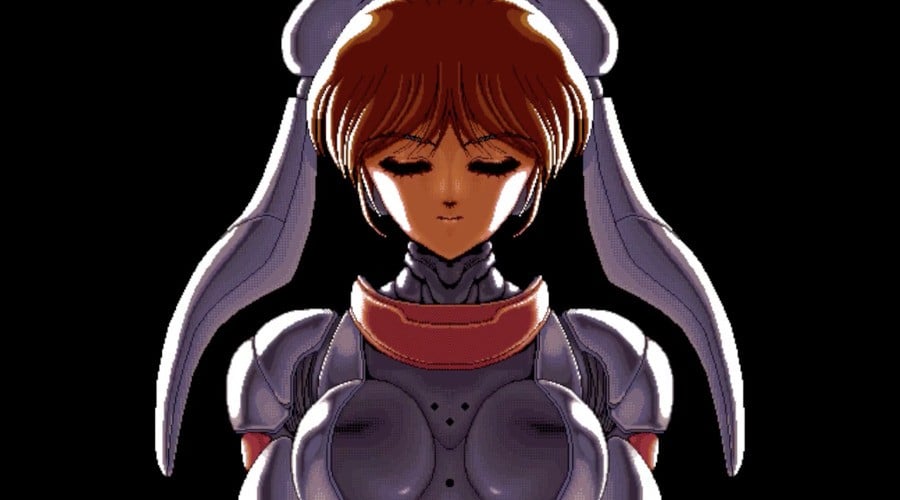
Megatech Software, the company responsible for licensing and releasing Ningyou Tsukai in the West, adopted a distinctive and somewhat audacious strategy for its 1993 MS-DOS launch under the new title, Metal & Lace: The Battle of the Robo Babes. Recognizing the game’s controversial nature, Megatech opted to release it in two distinct versions, a practice that highlights the nascent and often chaotic state of content regulation in the early PC gaming market.
The first version, marketed as suitable for players "under 13," underwent significant censorship, with all instances of nudity and overtly sexual imagery meticulously removed or altered. This version aimed to appeal to a broader market, albeit one that would experience a substantially toned-down version of the original artistic vision. The second version, explicitly designated for players "over 18," retained the partial nudity and more suggestive elements of the Japanese original. However, due to anticipated retail resistance and potential legal repercussions, this "adult" edition was not made available through conventional retail channels. Instead, it was exclusively offered via mail order, a common distribution method for adult-oriented media during that period, allowing the publisher to bypass direct store shelf placement and cater to a specific, consenting adult demographic.
This two-tiered release strategy by Megatech Software was not an isolated incident. The company employed a similar approach for another notorious Japanese "eroge" title, Dragon Knight III. Originally a saucy Japanese RPG, Dragon Knight III was also brought to the West by Megatech in 1995, rebranded as Knights of Xentar, and similarly offered in censored and uncensored forms, albeit with its own set of localization challenges and content modifications. These instances underscore the early struggles of Western publishers to reconcile the often-permissive content standards of Japanese gaming with the more conservative expectations and burgeoning regulatory pressures of Western markets.
The Fujitsu FM Towns: A Niche Platform’s Enduring Appeal
The FM Towns, a proprietary Japanese computer platform introduced by Fujitsu in 1989, holds a unique place in computing history. Designed with a strong emphasis on multimedia capabilities, it boasted advanced graphics (capable of 24-bit color), high-quality sound, and a built-in CD-ROM drive from its inception – features that were revolutionary for personal computers at the time. While never achieving widespread international success akin to the PC or consoles, the FM Towns garnered a dedicated following in Japan, particularly among those interested in cutting-edge multimedia applications and high-fidelity gaming experiences.
Its technical prowess made it an attractive platform for developers to push visual and audio boundaries, and its CD-ROM format allowed for larger game sizes and the inclusion of full-motion video (FMV) and high-quality audio tracks, distinguishing it from cartridge-based consoles or floppy disk-driven PCs. This environment fostered a diverse library of games, including many ports of arcade titles, original RPGs, adventure games, and, notably, a significant number of "eroge" titles that leveraged the system’s enhanced visual capabilities to present more detailed and engaging (and sometimes explicit) content.
For retro gaming enthusiasts and preservationists, the FM Towns represents a fascinating, albeit niche, corner of gaming history. Its unique architecture and limited Western presence mean that many of its titles remained inaccessible to non-Japanese speakers. Fan translation projects like Pascarella’s are therefore invaluable, breathing new life into these obscure yet historically significant games and allowing a global audience to appreciate the platform’s contributions to the evolution of interactive entertainment.

The Broader Impact: Preservation, Accessibility, and Digital Archiving
The completion of the Metal & Lace: The Battle of the Robo Babes English patch by Derek Pascarella is more than just a convenience for a handful of retro gaming aficionados; it represents a critical contribution to the broader field of video game preservation and digital archiving. Video games, particularly those from early computing platforms, are incredibly vulnerable to digital decay. Obsolete hardware, deteriorating physical media, and a lack of official support mean that countless titles are at risk of being lost to time.
Fan translation projects serve as a vital grassroots effort in combating this loss. By making games accessible in multiple languages, these projects broaden the potential audience, encouraging more people to engage with and thus implicitly preserve these titles through emulation, gameplay videos, and community discussion. For titles like Metal & Lace, which were controversial even in their time and existed on a niche platform, a comprehensive translation unlocks a segment of gaming history that would otherwise remain opaque to the majority of global players. It allows scholars, historians, and enthusiasts to study the evolution of game design, narrative techniques, and, importantly, the cultural contexts that shaped game content and its reception across different regions.
Furthermore, these translation efforts highlight the enduring passion within the retro gaming community. Individuals like Pascarella dedicate countless hours, often without financial compensation, to reverse-engineer complex software, overcome technical hurdles, and meticulously translate vast amounts of text and graphical elements. Their work not only preserves games but also fosters a deeper understanding and appreciation of the artistry, programming, and cultural significance embedded within these digital artifacts. As official preservation efforts often lag behind the rapid pace of technological obsolescence, community-driven initiatives remain a cornerstone of ensuring that the rich and diverse history of video games endures for future generations. The full English translation of Metal & Lace is a testament to this collaborative spirit, ensuring that a piece of challenging and controversial gaming history is now fully comprehensible and playable for a wider global audience.