Cecilia Chamidah Nur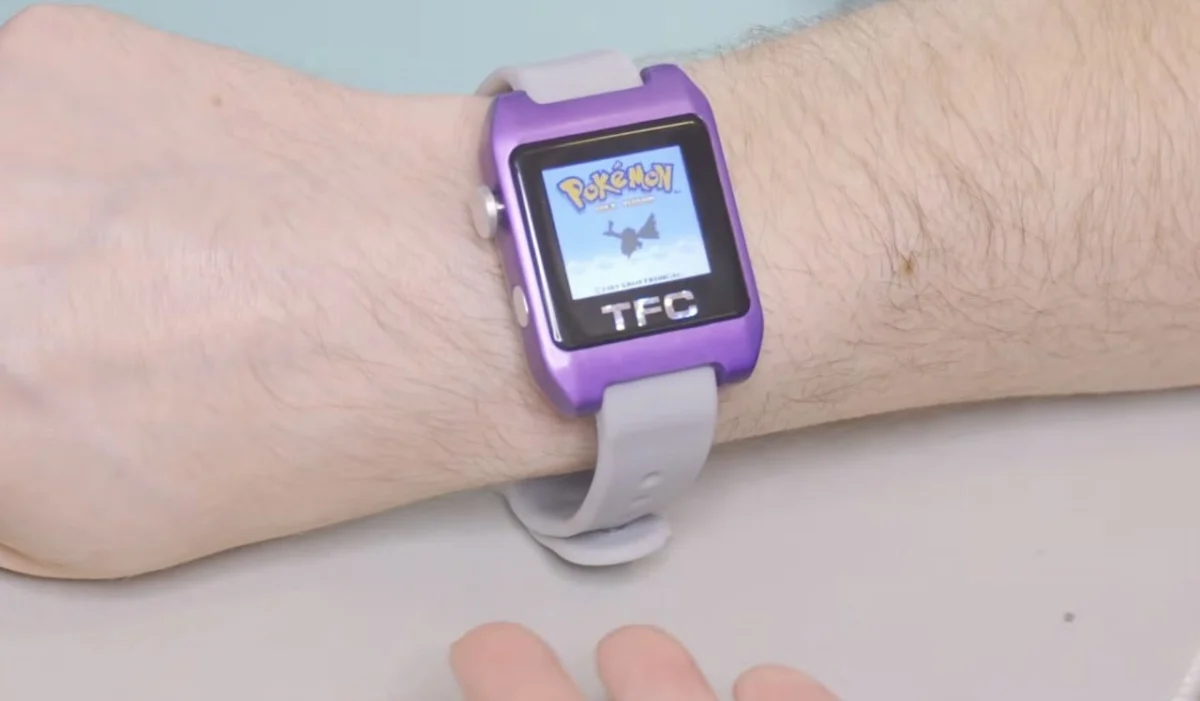
The Genesis of a Miniature Marvel: Defining the Impossible Parameters
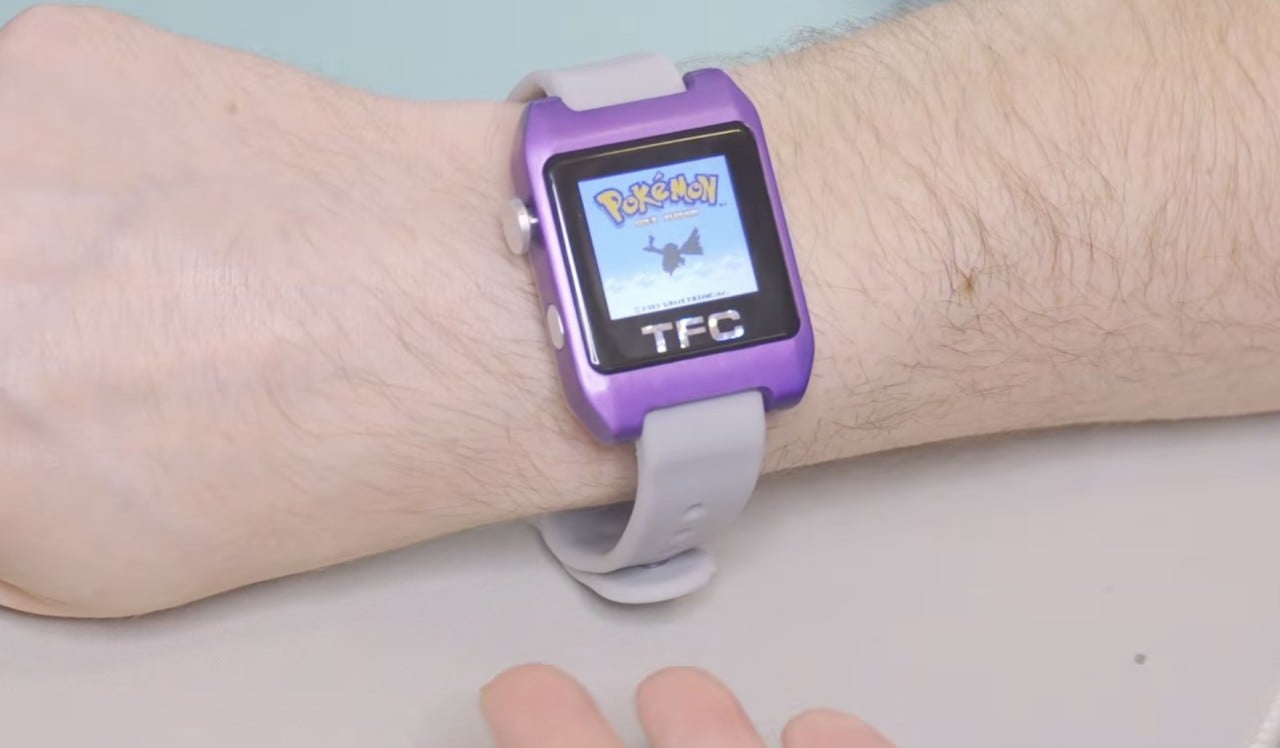
Hackmann’s latest endeavor was not merely an exercise in shrinking existing technology; it was a project driven by a set of stringent and seemingly insurmountable technical goals. As reported by Hackster.io, which initially brought attention to this remarkable project, Hackmann articulated three non-negotiable criteria that would define the success of his Game Boy Color wristwatch: "It has to use the original GBC CPU. It needs to be able to play cartridges of some kind. And to fulfill the whole ‘being a watch’ thing, it has to be able to maintain the time while turned off. Anything less and I wouldn’t consider it a true Game Boy watch." These parameters immediately set the project apart from mere emulation devices, demanding a level of hardware integration and miniaturization that few would attempt, let alone achieve.
The insistence on using the original Game Boy Color Central Processing Unit (CPU) is particularly noteworthy. The Sharp LR35902, a custom 8-bit processor running at 4.19 MHz, is the heart of the original GBC. Integrating this specific chip, along with its requisite support circuitry, into a form factor suitable for a wristwatch presents immense challenges related to space, power consumption, and thermal management. Most modern retro handhelds rely on System-on-a-Chip (SoC) solutions that emulate older hardware, allowing for compact designs and efficient power usage. Hackmann’s decision to forgo emulation for genuine hardware fidelity underscores a commitment to authenticity that resonates deeply within the retro gaming community, where the purity of the original experience is often paramount.
A Deep Dive into Miniaturization: Technical Hurdles and Ingenious Solutions
Achieving these goals required a meticulous approach to engineering and countless hours of design, prototyping, and problem-solving. The technical specifications of the original Game Boy Color, released in 1998, highlight the scale of Hackmann’s undertaking. The GBC featured a 2.3-inch (59 mm) color LCD screen with a resolution of 160×144 pixels, powered by two AA batteries providing approximately 10-20 hours of gameplay. Shrinking these components, or functional equivalents, into a device small enough to be worn on a wrist is a monumental task.
The Core: Original GBC Hardware and Circuitry
To meet the requirement of using the original GBC CPU, Hackmann likely had to desolder the chip from an original Game Boy Color motherboard or source new-old-stock components. This CPU, while relatively small by 1990s standards, still requires surrounding components such as RAM (8 KB S-RAM for working memory), VRAM (8 KB VRAM for video memory), and various support chips for input/output, timing, and power regulation. Integrating these components onto a custom-designed, multi-layered Printed Circuit Board (PCB) small enough for a watch casing demands expert-level micro-soldering and PCB layout skills. The challenge extends to managing the traces and connections within such confined spaces, preventing signal interference, and ensuring stable operation.
Powering the Past: Battery Life and Efficiency
One of the most significant compromises in miniaturization is often power. The original Game Boy Color’s reliance on two AA batteries provided a relatively long lifespan. A wristwatch, however, typically uses much smaller, lower-capacity lithium-ion batteries. Hackmann’s project would necessitate a sophisticated power management system to convert the watch battery’s voltage to the 5V required by the GBC CPU and other components, all while striving for maximum efficiency to prolong battery life. As Hackmann himself acknowledges, the device has "shorter battery life than most," which is an expected trade-off for cramming such power-hungry legacy hardware into a tiny package. The ability to "maintain the time while turned off" implies the inclusion of a real-time clock (RTC) module with its own minimal power source, a standard feature in watches, but one that further complicates the overall power architecture.
The Challenge of Cartridges: Bespoke Media
Perhaps the most visually striking and technically impressive aspect of the Time Frog Color is its ability to play games from physical cartridges. The standard Game Boy Color cartridges are relatively large, measuring approximately 5.8 cm by 6.5 cm. To accommodate physical media, Hackmann developed custom, significantly smaller cartridges. These miniature carts likely contain a flash memory chip loaded with a Game Boy Color ROM image, connected via a custom PCB and connector that interfaces with the miniaturized GBC hardware. This bespoke cartridge system is a testament to Hackmann’s commitment to the "true Game Boy watch" vision, diverging sharply from projects that simply load ROMs from an SD card. The engineering effort involved in designing, manufacturing, and ensuring reliable connectivity for these tiny, custom cartridges is immense, highlighting a meticulous attention to detail and a desire to replicate the original user experience as closely as possible, albeit on a dramatically reduced scale.
Visuals and Sound: Compromises in Miniaturization
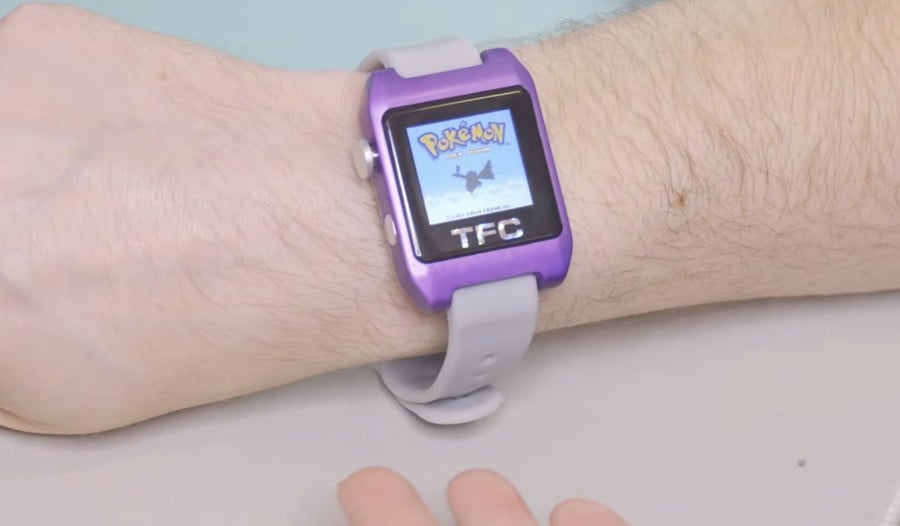
The visual experience on the Time Frog Color is inherently constrained by its form factor. The small screen, significantly smaller than the original GBC’s 2.3 inches, renders games in a format that Hackmann himself describes as "less-than-optimal playing experience." Viewing game details and navigating menus would undoubtedly require intense focus, making prolonged gameplay challenging. The absence of audio, a direct consequence of space and power limitations, further impacts the immersion. While the GBC’s sound chip was rudimentary by today’s standards, it was integral to the gaming experience, providing iconic chiptune soundtracks and sound effects. Sacrificing audio is a pragmatic decision, prioritizing core functionality and miniaturization over a complete sensory experience. This compromise underlines the project’s primary goal: to prove the possibility of a wearable, hardware-driven Game Boy Color, rather than to create a perfectly playable device.

Chris Hackmann: A Legacy of Innovation in Retro Modding
Chris Hackmann, operating under the moniker "LeggoMyFroggo," has cultivated a formidable reputation within the retro gaming hardware modification community. His previous projects, the Frog Boy Color and the Tad Boy Color, showcased his talent for creating bespoke, often whimsical, yet highly functional Game Boy clones.
The "Frog Boy" Precedent
The Frog Boy Color, his earlier well-known creation, was a custom-built Game Boy Color clone encased in a distinctive frog-themed shell. It garnered significant attention for its charming aesthetic and the underlying technical prowess required to build a fully functional gaming device from scratch, albeit one that leveraged modern components for efficiency and display. The Tad Boy Color was an even smaller, more portable version, demonstrating Hackmann’s continuous drive towards miniaturization and custom hardware integration. These projects established his credentials not just as a modder, but as a hardware designer capable of bringing novel interpretations of classic gaming systems to life. They demonstrated his deep understanding of Game Boy architecture and his skill in fabricating custom PCBs and enclosures.
The Development Journey of the Time Frog Color
While a precise timeline for the Time Frog Color’s development isn’t fully detailed, such an ambitious project would undoubtedly span many months, if not over a year. It would involve multiple design iterations, component sourcing, PCB fabrication, countless hours of soldering, debugging, and testing. The iterative process would likely see several prototypes, each refining the design, addressing technical glitches, and pushing the limits of miniaturization. The project’s progression from concept to a tangible, working device speaks volumes about Hackmann’s persistence, technical expertise, and vision. The retro modding community, often following such projects through online forums and video platforms, would have witnessed the gradual unveiling of challenges and breakthroughs, building anticipation for the final product.
Implications for Retro Gaming and Wearable Technology
The Time Frog Color is more than just a novelty; it carries significant implications for both the retro gaming community and the broader field of wearable technology.
Pushing the Boundaries of Hardware Engineering
From an engineering perspective, Hackmann’s creation is a tour de force in microelectronics. It demonstrates the feasibility of integrating complex, legacy hardware into extremely compact form factors, challenging conventional notions of device size and functionality. This project could inspire other engineers and modders to explore similar extreme miniaturization projects, potentially leading to new techniques or solutions for packing high functionality into small spaces. It highlights the continued relevance of hands-on hardware design and fabrication skills in an era often dominated by software development and off-the-shelf components. The meticulous planning required for power delivery, signal integrity, and mechanical integration in such a small device provides valuable lessons for micro-device design.
The Philosophy of "Why Not?"
At its core, the Time Frog Color embodies a spirit of relentless innovation and a playful defiance of practical limitations. Hackmann himself encapsulates this sentiment, stating at the close of his reveal video, "If this all sounds needlessly complicated, have you even thought about this? It’s a Game Boy Color with a less-than-optimal playing experience, shorter battery life than most, and a right to exist just ahead of macaroni and cheese with ketchup. But in the end, I’m still shocked that I have a real playable Game Boy Color, in at least a technical sense, on my wrist." This quote perfectly articulates the project’s ethos: it’s not about creating the most practical or user-friendly device, but about demonstrating what is technically possible when ingenuity meets determination. It is a testament to the "why not?" mentality that drives many groundbreaking innovations, often pushing boundaries simply for the sake of discovery and achievement. The joy and satisfaction derived from achieving such a seemingly impossible feat are palpable, and they resonate with anyone who appreciates technical mastery.
Community Reception and Future Outlook
The retro gaming community has reacted to the Time Frog Color with a mix of awe, amusement, and admiration. For many, it’s a nostalgic trip combined with a marvel of modern modding. The technical achievement is widely recognized, and Hackmann’s status as a leading innovator is further solidified. While the device is unlikely to become a mass-market product due to its inherent compromises in playability and battery life, its impact as a proof-of-concept is undeniable. It could spark further discussions and experiments within the modding scene regarding ultra-miniaturized retro consoles, custom wearable tech, or even alternative forms of physical media for compact devices. Experts in microelectronics and consumer electronics might view this as a significant challenge overcome, offering insights into thermal management and power optimization for future wearable computing devices. The broader implications for wearable technology are subtle but present: if an entire 1998 gaming console can be crammed into a watch, what other complex functions might become feasible in similar form factors with continued advancements in chip design and battery technology?
Conclusion: A Testament to Ingenuity
The Time Frog Color stands as a remarkable testament to Chris "LeggoMyFroggo" Hackmann’s exceptional skill, vision, and dedication. By successfully integrating an original Game Boy Color CPU, a custom cartridge system, and time-keeping functionality into a wearable wristwatch, Hackmann has not only created a unique piece of retro gaming hardware but has also pushed the very limits of microelectronics and hardware modification. Despite the inherent compromises in playability and battery life, the project’s significance lies in its audacious ambition and the sheer technical achievement it represents. It is a powerful reminder that with enough ingenuity and perseverance, even the most formidable engineering challenges can be overcome, transforming what once seemed impossible into a tangible reality, and leaving an indelible mark on the landscape of retro technology.