Johny Imanuel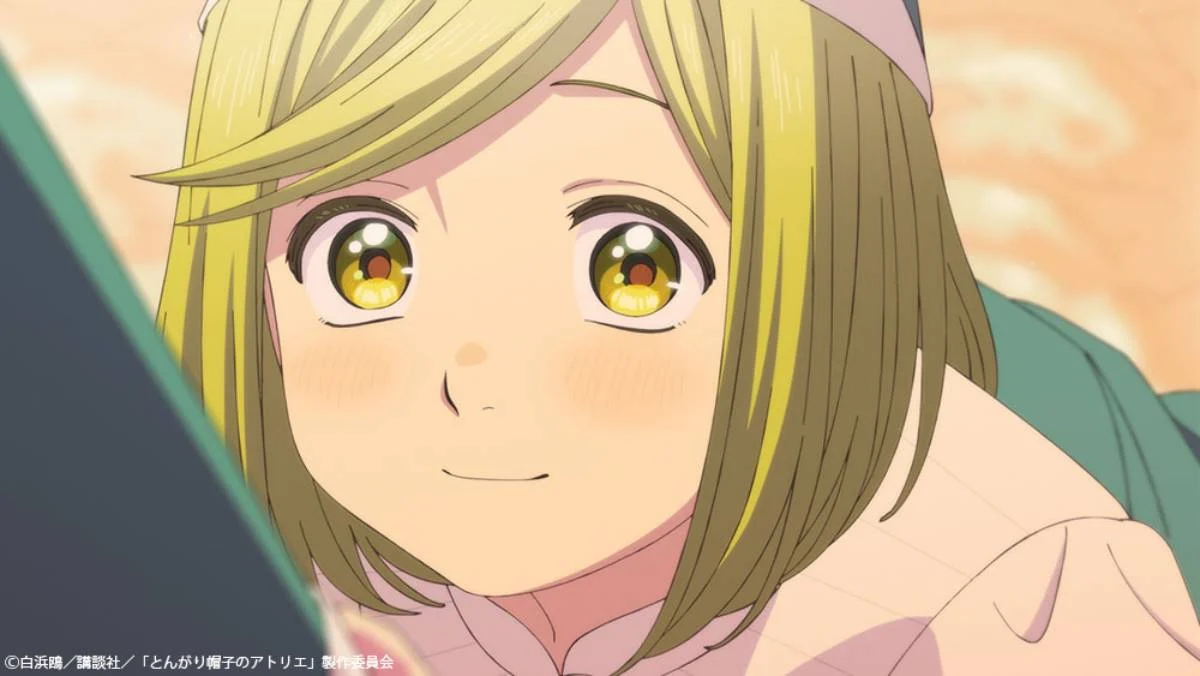
The debut of the Witch Hat Atelier anime adaptation on Crunchyroll marks a significant milestone for the acclaimed fantasy franchise, bringing Kamome Shirahama’s intricate world-building and distinct visual style to a global television audience. While the series initially presents the aesthetic of a "cozy" fantasy—replete with pastoral landscapes, whimsical character designs, and the wonder of a young girl discovering a hidden world—the narrative quickly establishes a more complex and often harrowing tone. The adaptation, produced by Bug Films, has garnered attention for its commitment to maintaining the delicate equilibrium between the series’ moments of profound joy and its undercurrents of trauma and systemic conflict.
The Foundation of a Dual Narrative
Witch Hat Atelier follows the story of Coco, a young girl born without magical abilities in a world where magic is a strictly guarded secret. The premise hinges on a fundamental revelation: magic is not an innate biological trait but a craft performed through the precise application of magical ink and geometric seals. This democratization of magic, however, is countered by a rigid social and legal structure designed to prevent the "wrong" people from accessing such power.
The inciting incident of the series serves as the primary example of the "highs and lows" mentioned by critics and fans alike. Coco’s journey begins with a moment of pure aspirational wonder when she observes the sorcerer Qifrey performing magic in secret. This discovery empowers her to attempt a spell from a mysterious book gifted to her by an anonymous figure in a "Brimmed Cap." The initial success of the spell is a narrative "high," representing the fulfillment of a lifelong dream. However, this is immediately followed by a devastating "low" when the spell—revealed to be forbidden "forbidden magic"—encases Coco’s mother and her home in indestructible crystal.
This sequence establishes the stakes of the series: magic is not merely a tool for convenience or wonder, but a volatile force that carries permanent consequences. The anime adaptation meticulously recreates this transition from hope to horror, ensuring that the emotional weight of Coco’s loss remains the driving force behind her subsequent apprenticeship under Qifrey.
Chronology of the Witch Hat Atelier Franchise
To understand the impact of the anime, it is essential to trace the development of the property from its inception to its current status as a cornerstone of modern seinen fantasy:
- 2016: Kamome Shirahama begins serializing Witch Hat Atelier (Tongari Bōshi no Atorie) in Kodansha’s Monthly Morning Two magazine. The series immediately gains traction for its unique art style, which blends traditional manga aesthetics with European engraving influences.
- 2018–2020: The manga receives international acclaim, winning the 2020 Eisner Award for Best U.S. Edition of International Material—Asia and the 2020 Harvey Award for Best Manga. These accolades solidify its reputation as a premiere literary work in the medium.
- April 2022: An anime adaptation is officially announced, sparking significant discussion regarding which studio could possibly replicate Shirahama’s dense, detailed linework.
- 2024: The anime premieres, with Bug Films handling the production. The studio, despite being relatively new, becomes the focus of industry scrutiny as they attempt to translate the "still-life" beauty of the manga into fluid animation.
- Current Status: The first season is streaming on Crunchyroll, covering the foundational arcs of the manga, including the introduction of the Knights Moralis and the internal rivalries within Qifrey’s atelier.
Technical Execution and Visual Fidelity
One of the primary challenges in adapting Witch Hat Atelier lies in its visual language. Kamome Shirahama’s background as a cover artist for DC and Marvel Comics is evident in the manga’s layout and character designs. The anime adaptation addresses this by utilizing a color palette that emphasizes the "storybook" quality of the world while using lighting and shadow to punctuate the darker thematic elements.
Industry analysts have noted that the pacing of the first few episodes mirrors the manga’s deliberate approach to world-building. Rather than rushing toward action sequences, the show spends considerable time on the mechanics of magic. By focusing on the physical act of drawing—the steady hand required, the specific types of ink, and the geometry of the circles—the anime reinforces the theme that magic is a discipline of the mind and spirit, not just a flashy superpower.
Supporting Data: The Global Reach of the Series
The success of Witch Hat Atelier is reflected in its commercial performance and critical standing. As of 2024, the manga has over 5.5 million copies in circulation globally. It has been translated into over 18 languages, illustrating a universal appeal that transcends cultural boundaries.
The anime’s performance on streaming platforms like Crunchyroll further validates this reach. Early viewership data suggests that the series is performing particularly well in North American and European markets, where the "dark fairy tale" genre has a dedicated following. The partnership between Kodansha and Crunchyroll has allowed for a simultaneous release strategy, ensuring that the global fan base can engage with the content in real-time, thereby reducing piracy and fostering a unified community discussion.
Institutional Responses and Character Dynamics
The narrative of Witch Hat Atelier is deeply concerned with institutional power and the ethics of secrecy. The introduction of the Knights Moralis—a magical police force tasked with erasing the memories of anyone who discovers the secret of magic—adds a layer of political tension.
The character of Qifrey serves as the bridge between the protagonist’s innocence and the world’s harsh realities. While he is presented as a kind and supportive mentor, his motivations are shown to be complex. His decision to take Coco as an apprentice rather than erasing her memories is not purely altruistic; it is a calculated move to use her connection to the Brimmed Caps to further his own investigations. This moral ambiguity is a hallmark of the series and is handled with nuance in the anime.
Furthermore, the social dynamics within the atelier, particularly the friction between Coco and her fellow student Agott, provide a grounded look at the pressures of academic and professional excellence. Agott’s initial hostility toward Coco represents the "low" of social isolation and bullying, which is eventually balanced by moments of mutual respect and collaborative problem-solving. This "purposeful balance of emotions," as described by critics, prevents the series from becoming overly bleak or excessively saccharine.
Broader Impact and Implications for the Anime Industry
The adaptation of Witch Hat Atelier carries broader implications for the anime industry, particularly regarding the adaptation of "high-art" manga. For years, certain series were deemed "un-adaptable" due to the complexity of their source material’s art. The success of this adaptation suggests that with the right production committee and a commitment to stylistic fidelity, even the most intricate manga can be successfully brought to the screen.
Moreover, the series challenges the prevailing tropes of the "Isekai" or "Magic School" genres. Unlike many contemporary fantasies that focus on power scaling and escapism, Witch Hat Atelier focuses on the burden of knowledge and the ethical responsibility of the creator. It posits that magic is a form of art, and like art, it has the power to both heal and destroy.
Conclusion and Future Outlook
As the first season of the Witch Hat Atelier anime continues to air, the focus remains on whether the production can maintain its high standard of execution. The balance of tone—matching the manga’s highs and lows—is essential for the story’s integrity. Future story arcs are expected to delve deeper into the origins of the Forbidden Magic and the true nature of the "Brimmed Caps," which will undoubtedly introduce even more significant challenges for Coco and her companions.
For now, the series stands as a testament to the power of faithful adaptation. By respecting the source material’s complex emotional landscape and its unique visual identity, Bug Films and Kodansha have produced a work that appeals to long-time readers while capturing the imagination of a new audience. The journey of Coco is more than a simple quest to save her mother; it is a sophisticated exploration of the human condition, framed within a world where every stroke of a pen carries the weight of destiny.