Chalid Lutfie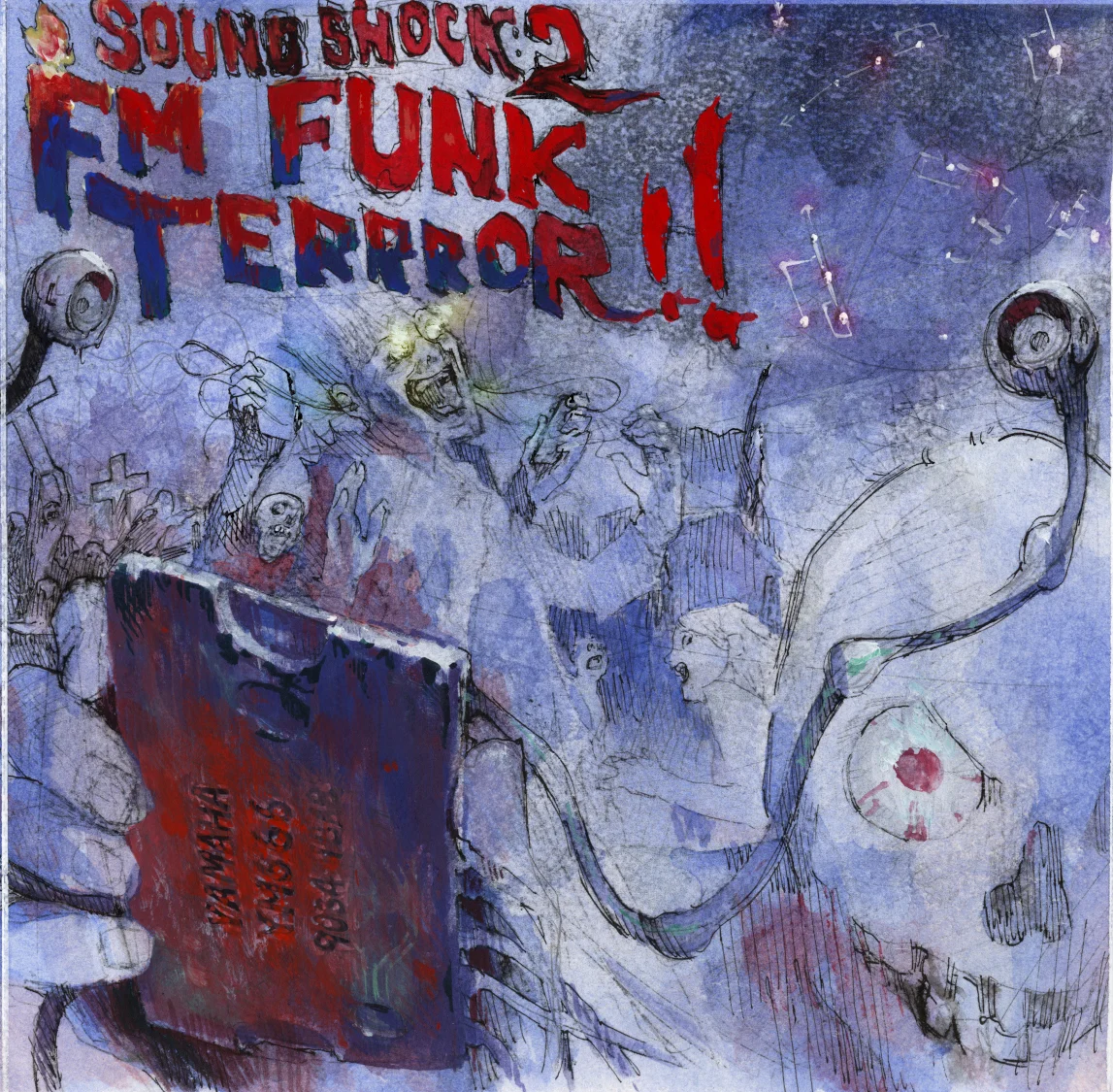
The SOUNDSHOCK music series, a definitive collection of modern compositions utilizing Frequency Modulation (FM) synthesis, has concluded its trilogy, leaving behind a legacy that is as much visual as it is auditory. Central to this identity are the hand-painted album covers created by Tsuyoshi Shimokura, a professional artist with a background in manga and a profound technical understanding of vintage computer hardware. As the series reached its final installment on April 15, 2017, the creative history behind these artworks reveals a meticulous fusion of retro-gaming aesthetics, 1980s horror tropes, and Buddhist spiritualism, all centered around the worship of the FM sound chip.
The collaboration began when the series curator, known in the community as "zinger," was introduced to Shimokura through the artist hex125. Initially recruited to contribute a musical track to the first volume, Shimokura’s extensive portfolio of digital and traditional art quickly shifted the nature of his involvement. His dual expertise as a musician and a visual storyteller allowed for a unique synergy, where the technical limitations of FM synthesis—characterized by the mathematical "algorithms" used to create sound—were translated into a complex visual mythology.
The Chronological Evolution of the SOUNDSHOCK Trilogy
The development of the SOUNDSHOCK visual identity occurred in three distinct phases, each corresponding to the thematic shift of the compilation albums. This chronology tracks the transition from heroic action to psychological horror, and finally to spiritual transcendence.
Phase I: FM FUNK MADDNESS!! and the Heroic Paradigm
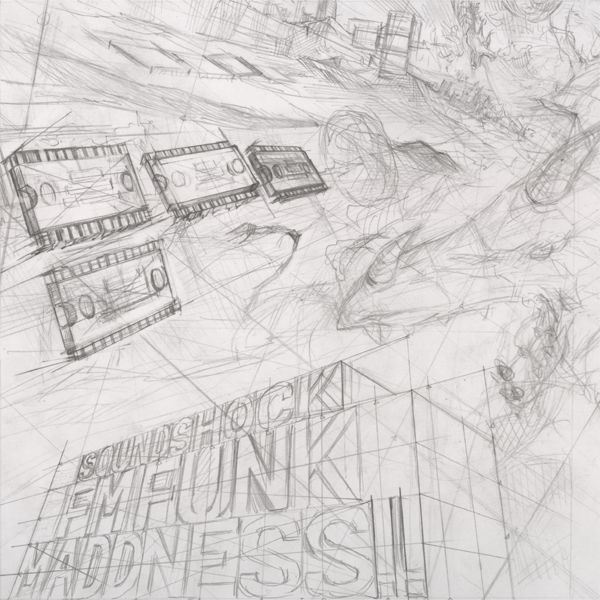
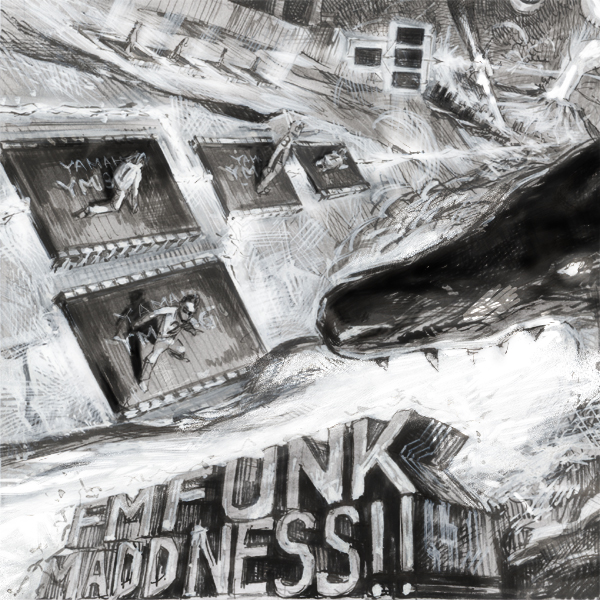
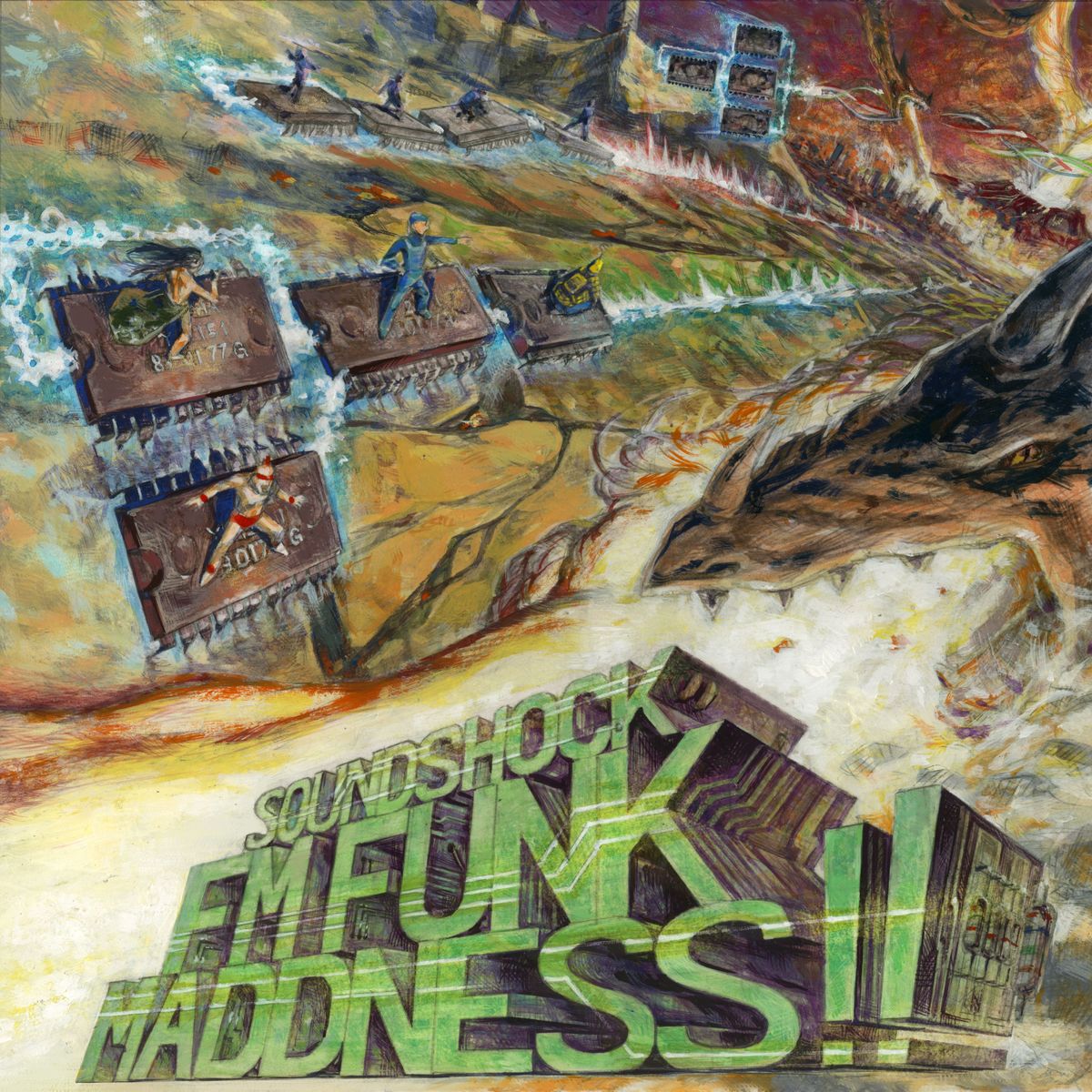
The first installment, FM FUNK MADDNESS!!, established the foundational tropes of the series. The collaboration for this cover was characterized by a high degree of mutual exchange between zinger and Shimokura. Drawing inspiration from 1990s arcade flyers, specifically the artwork for Taito’s Metal Black and Darius II, Shimokura developed a concept centered on the "power of FM."
The resulting artwork depicts a group of heroes—representative of the musicians themselves—utilizing the energy of FM synthesis to combat monstrous entities. A defining characteristic of this piece is the integration of technical diagrams. Shimokura arranged the FM chips within the illustration to mirror the algorithm charts found in Yamaha synthesizer manuals. In a whimsical yet technical touch, the pins of the integrated circuits (ICs) were rendered to resemble caterpillar legs, suggesting that the hardware itself was a living, mobile force in the battle for the world’s salvation.
Phase II: FM FUNK TERRROR!! and the Horror Aesthetic
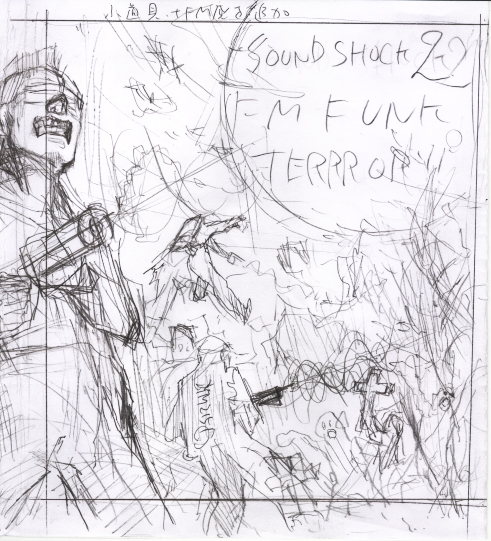
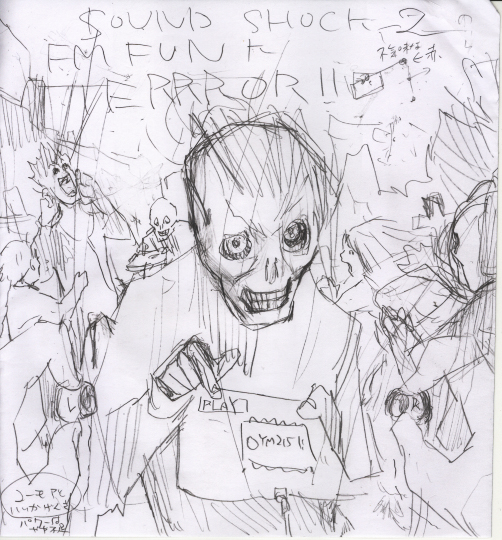
For the second volume, the series moved into darker territory. The creative brief provided by zinger shifted toward 1980s horror cinema and cult video games. Reference materials included posters from the A Nightmare on Elm Street series, The Evil Dead, and the Namco arcade classic Splatterhouse.
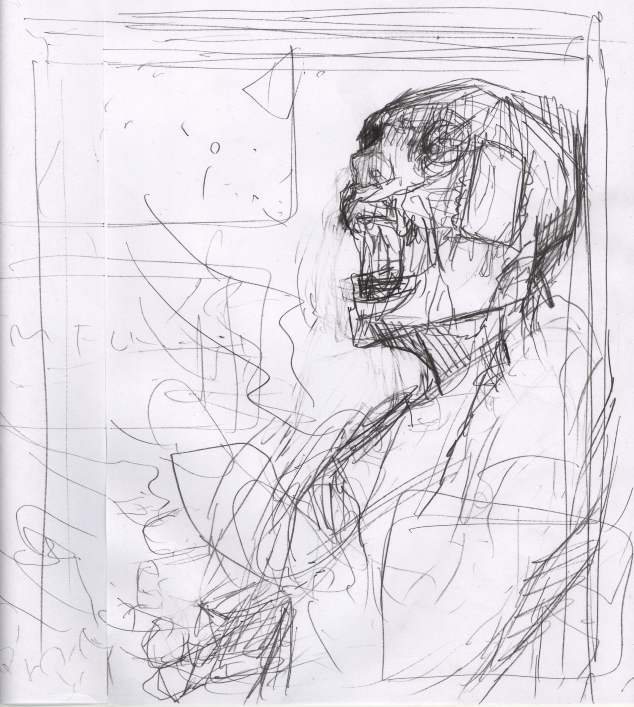
The artwork for FM FUNK TERRROR!! features a central ghoul wielding a stylized "YM666" device—a fictionalized, demonic version of the Yamaha YM series chips—designed to look like a gravestone-themed portable media player. The narrative accompanying the art, written by Shimokura, describes a supernatural event on April 5th where "Algorithm constellations" align, allowing zombies to enthrall humanity through the "magical power of FM sound." This installment reinforced the series’ lore, suggesting that the music possessed a transformative, albeit terrifying, influence on the listener’s soul.
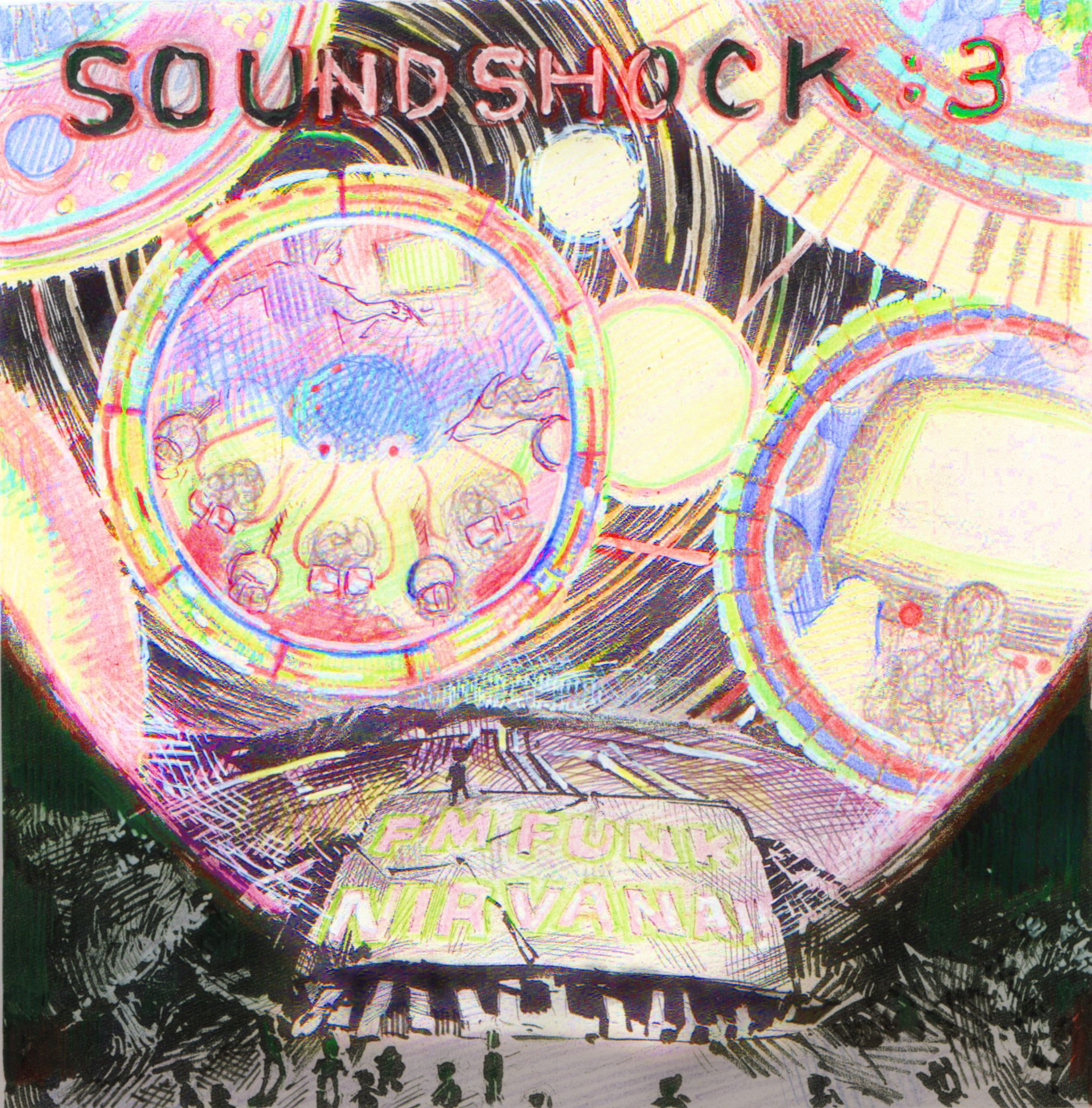
Phase III: FM FUNK NIRVANA!! and Spiritual Transcendence
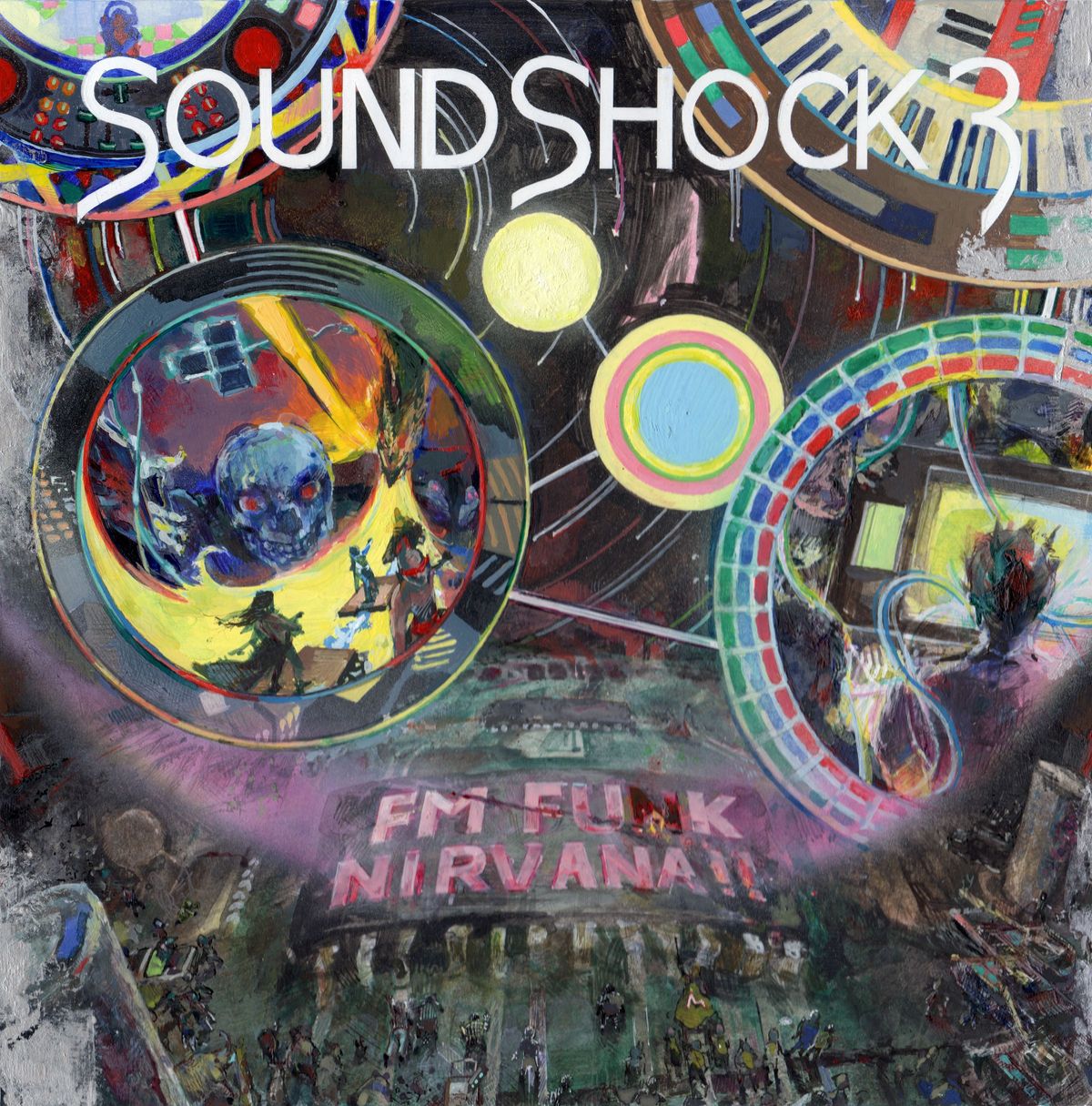
The final chapter, FM FUNK NIRVANA!!, represented the "ultimate" state of the series. The title itself was inspired by a prophetic YouTube comment from the release period of the second album, which predicted a third volume of even greater intensity. While the previous titles utilized intentional misspellings (MADDNESS and TERRROR) to convey "extra power," the term "Nirvana" was left in its standard form to signify a state of perfection that could not be further amplified.
Visually, Shimokura moved away from direct collaboration, following his intuition to create a piece inspired by Buddhist mandalas and the soundtrack art of Darius Gaiden. The cover depicts a massive FM chip mounted on a circuit board, serving as an object of religious veneration for a vast congregation of disciples. Above them, a celestial pattern of spheres represents a vision of the universe. This imagery aligns with the artist’s concluding message: that the end of the series is not a death, but a "seeding" of future stars, positioning FM synthesis as a timeless spiritual lineage.
Technical Context: The Influence of FM Synthesis
To understand the depth of Shimokura’s artwork, one must consider the technical history of FM synthesis. Popularized in the 1980s by the Yamaha DX7 keyboard and subsequently the sound chips found in the Sega Genesis (Mega Drive) and various arcade boards, FM synthesis relies on "operators" (oscillators) that modulate one another in specific configurations known as algorithms.
The SOUNDSHOCK series was a tribute to this specific era of sound design, which is often characterized by metallic textures, slap basses, and complex harmonic overtones. By incorporating these algorithm charts directly into the character designs and star patterns of the album covers, Shimokura bridged the gap between the abstract mathematical nature of the music and the visceral, imaginative world of the listener. The "YM666" and "YM2612" references found in the art are direct nods to the Yamaha hardware that defined the 16-bit era.
Artist Philosophy and Official Statements
In a final message to the SOUNDSHOCK community, Tsuyoshi Shimokura addressed the conclusion of the series with a philosophical outlook. He argued that the termination of the project should not be viewed with sadness, but as a necessary step in a larger cycle of creative evolution.
"Supposing SOUNDSHOCK really has struck a chord in its listeners’ hearts, then our work could be thought of as a seed for future stars that have yet to be born," Shimokura stated. He further emphasized the concept of "spiritual offshoots," suggesting that modern FM composers are the progeny of the pioneers who first mastered the Yamaha chips in the 1980s. This sentiment is reflected in the final album art, where the FM chip is no longer just a component in a machine, but a divine icon representing a shared cultural faith.
Zinger, reflecting on the years of collaboration, expressed a deep gratitude for Shimokura’s ability to imbue the project with a sense of "over-the-top" energy. The curator noted that Shimokura’s background in manga was instrumental in capturing the specific "cool" factor required for a series that celebrated both technical precision and funk-driven chaos.
Broader Impact and Implications for the Chiptune Scene
The SOUNDSHOCK trilogy stands as a landmark in the independent electronic music scene, specifically within the "chiptune" and "retrowave" subcultures. While many projects in these genres rely on purely digital or minimalist aesthetics, the SOUNDSHOCK series distinguished itself through high-effort, hand-painted physical and digital media.
The impact of this visual-auditory synergy is twofold:
- Preservation of Niche Culture: By referencing specific arcade titles like Metal Black and technical hardware specifications, the series acted as a cultural archive, introducing a younger generation of listeners to the aesthetic and technical history of 20th-century Japanese game development.
- Elevation of the Medium: The transition from "funk" to "terror" to "nirvana" provided a thematic weight rarely seen in compilation albums. It framed FM synthesis not just as a tool for nostalgia, but as a legitimate medium for complex storytelling and artistic expression.
As the series concludes, the "seeds" mentioned by Shimokura continue to grow within the global netlabel community. The collaboration between zinger and Shimokura serves as a blueprint for how independent music projects can build a comprehensive brand identity that transcends the audio files themselves. The SOUNDSHOCK series remains a testament to the era of the "FM Believer," a community united by the jagged, vibrant, and undeniably funky sounds of a silicon revolution.
The legacy of these three albums is secured by their refusal to be "coherent" in a traditional sense, opting instead for a trajectory that pushed the boundaries of the "over-the-top" until it reached a state of ultimate resolution. For the fans and creators involved, the finality of the project is merely the beginning of its influence on the "future stars" of the FM synthesis world.