Retno Hari Mulyono
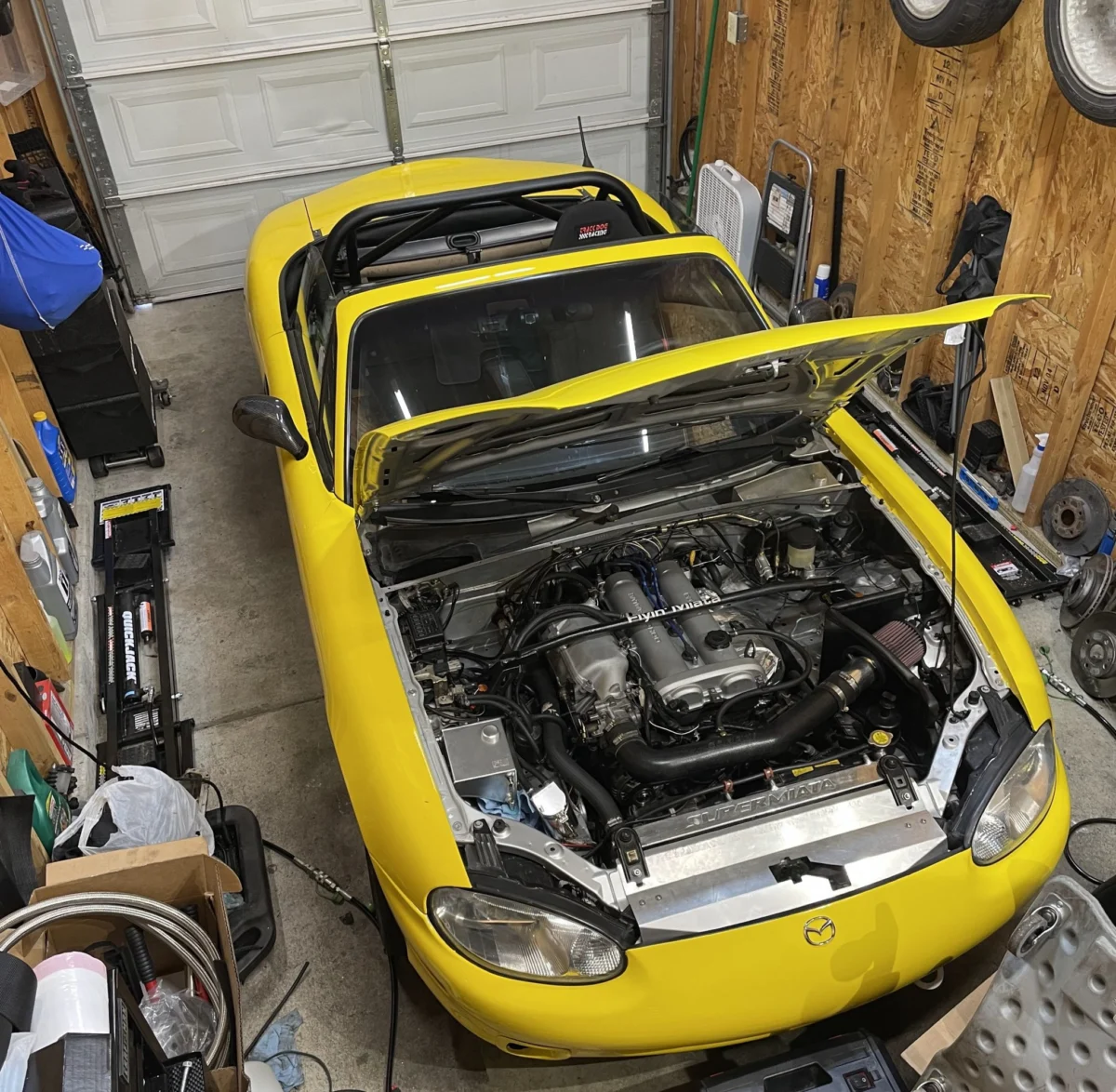
The evolution of a performance driving enthusiast often reaches a critical juncture where the limitations of dual-purpose equipment become a barrier to progress. In the realms of track days and autocross, the transition from standard high-performance street tires to dedicated competition rubber—specifically those within the 200 Treadwear (TW) category—represents a significant leap in lateral grip and lap time consistency. However, this advancement introduces a complex logistical challenge: the preservation of expensive, heat-sensitive rubber during transit to and from the circuit. For operators of compact sports cars, such as the Mazda Miata or Toyota GR86, the inability to transport a secondary wheel set internally has necessitated the development of the tire trailer, a specialized utility solution designed to bridge the gap between street driven and track-ready configurations.

The Technical Conflict of Competition Tires on Public Infrastructure
The primary motivation for utilizing a tire trailer stems from the inherent physical properties of competition-grade tires. Tires categorized with a 200TW rating, such as the Hankook Ventus RS4, Nankang CR-S, or Falken Azenis RT660, are engineered with soft compounds designed to provide maximum adhesion at high operating temperatures. When subjected to the mundane rigors of highway transit, these tires suffer from two primary forms of degradation: mechanical wear and thermal cycling.
Mechanical wear is accelerated on the street due to the high silica or carbon black content in the tread, which is optimized for the smooth surface of a race track rather than the abrasive, debris-strewn nature of public roads. Furthermore, every mile driven on the street contributes to the "heat cycling" of the tire. A heat cycle occurs when the tire’s internal temperature rises to operating levels and then cools. Over time, this process causes the rubber to harden and lose its "grip" characteristics, even if significant tread depth remains. For a competitive driver, wasting these finite cycles on a three-hour highway commute is economically and performance-inefficient.
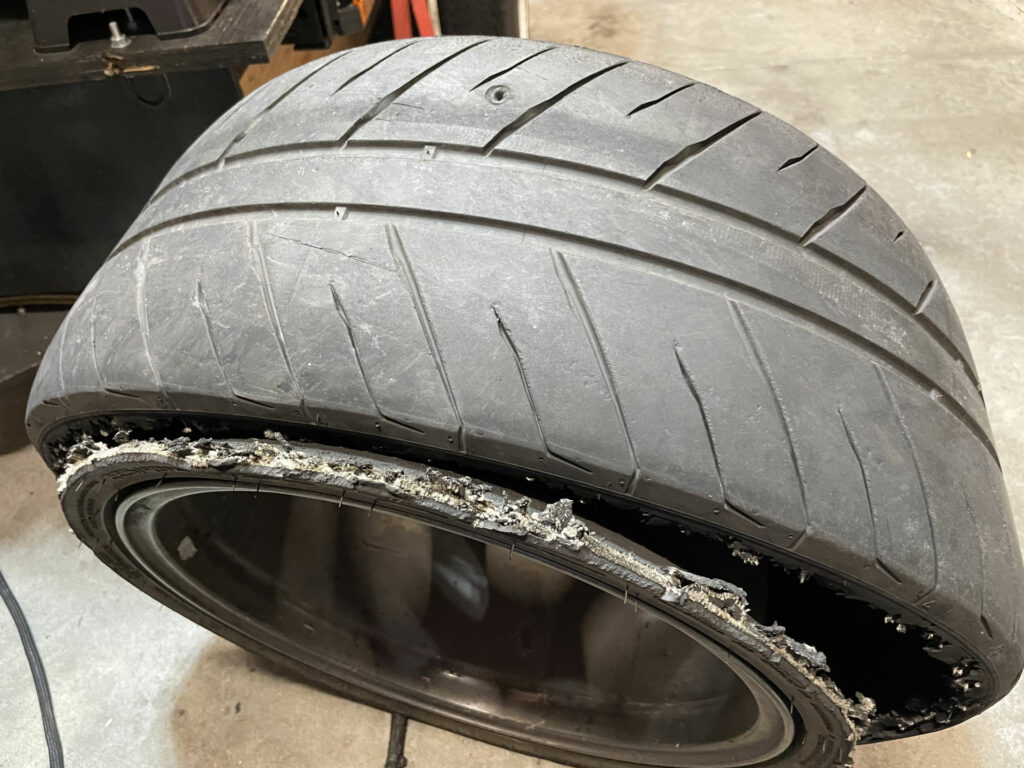
Safety concerns also dictate the need for a secondary set of tires. Many track-oriented tires feature minimal tread patterns and specialized compounds that offer negligible traction in temperatures below 50 degrees Fahrenheit or in standing water. The risk of hydroplaning is significantly higher with competition tires compared to standard ultra-high-performance (UHP) street tires. Data from automotive safety tests indicates that at highway speeds, a tire with reduced groove depth can lose contact with the road surface in as little as 1/10th of an inch of water, a condition frequently encountered during unpredictable weather transitions between home and the track.
Engineering the Solution: The Tire Trailer Framework
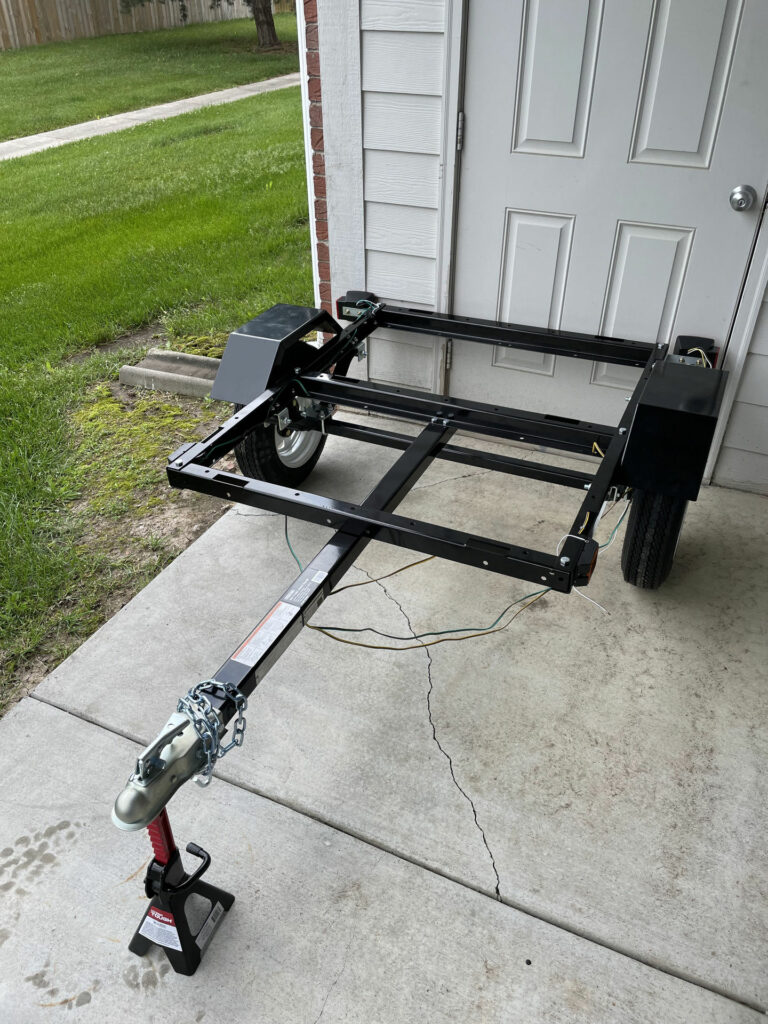
For drivers of small-displacement, short-wheelbase vehicles, the tire trailer offers a modular and cost-effective alternative to purchasing a dedicated tow vehicle and a full-size car hauler. The foundation of these builds typically utilizes a lightweight utility frame, such as the 40-inch by 48-inch steel frames provided by industrial suppliers like Northern Tool or Harbor Freight. These frames, which often arrive in a knock-down kit for consumer assembly, provide a gross vehicle weight rating (GVWR) that far exceeds the requirements of four wheels and basic tools, yet remain light enough to be towed by vehicles with modest towing capacities.

While the 40×48 frame is the industry standard for tire trailers, some builders opt for 4-foot by 8-foot folding variants. The larger footprint allows for more sophisticated weight distribution, reducing the "tongue weight" on the tow vehicle’s rear suspension. Proper weight distribution is critical in this application; industry standards suggest that 10% to 15% of the trailer’s total weight should rest on the hitch to prevent dangerous trailer sway at highway speeds.
Structural Design and Component Integration
The construction of a high-functioning tire trailer requires a focus on durability, weatherproofing, and center-of-gravity management. A common deck material is 3/4-inch marine-grade or Sande plywood, often treated with weather-resistant paint or bedliner material. The deck is typically secured to the steel frame using recessed carriage bolts to create a flush mounting surface.
Tire Retention Systems
The primary payload—the wheel and tire set—is most effectively mounted over or slightly forward of the trailer axle. This placement ensures that the majority of the weight is supported by the trailer’s own suspension rather than the tow vehicle. Common retention methods include a central vertical or horizontal mounting rod (often constructed from galvanized steel conduit or heavy-duty threaded rod) secured with locking plates and high-tension ratchet straps. This triple-redundancy system prevents the wheels from shifting during high-speed cornering or emergency braking maneuvers.
Tool and Equipment Storage
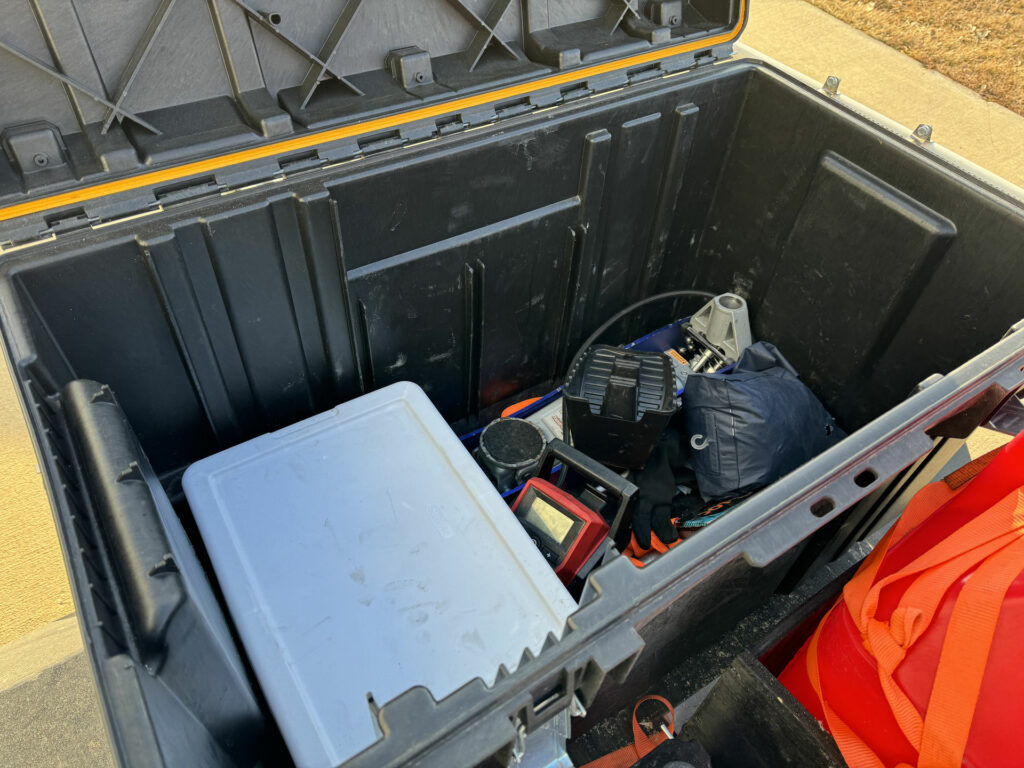
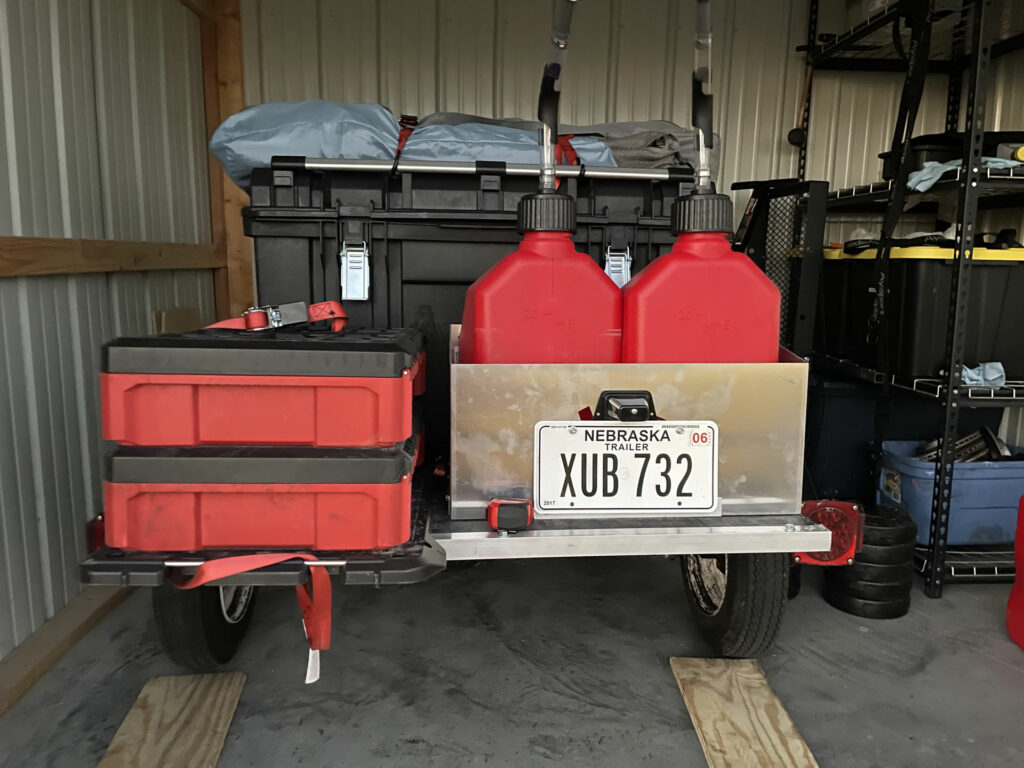
To maximize the utility of the trailer, enthusiasts often integrate modular storage systems. The use of weathertight toolboxes, such as those from the DeWalt ToughSystem or Milwaukee Packout lines, allows for the organized transport of track-side essentials. These include:

- High-lift floor jacks and jack stands.
- Torque wrenches and impact drivers.
- Portable air compressors and digital tire pressure gauges.
- Fluids (engine oil, brake fluid, and coolant).
- Spare components (brake pads, sensors, and fasteners).
The integration of these systems effectively turns the trailer into a mobile pit bay, allowing the driver to perform necessary maintenance or repairs at the track without relying on the limited storage capacity of a sports car’s trunk.
Advanced Logistics: Fuel Management and Extended Range
A significant challenge for track-day participants is the availability of high-quality or specialized fuels, such as E85 or high-octane racing gasoline. Many race tracks are located in rural areas where such fuels are either unavailable or sold at a significant premium. The tire trailer provides a platform for auxiliary fuel storage.
Standard configurations often involve mounting 5-gallon VP Racing fuel jugs using dedicated steel mounts. For those participating in multi-day events or endurance sessions, larger solutions like the 15-gallon Flo-Fast fuel container system are utilized. These systems often include integrated hand-crank pumps, allowing for rapid refueling in the paddock. By carrying their own fuel supply, drivers can ensure consistent octane levels and avoid the logistical stress of locating specialized fueling stations in unfamiliar territory.
Evolution and Performance Upgrades
The longevity and safety of a tire trailer are heavily dependent on its rolling hardware. Most entry-level utility trailers are equipped with bias-ply tires, which are adequate for low-speed, short-distance hauling but are prone to overheating and rapid wear during sustained highway use.
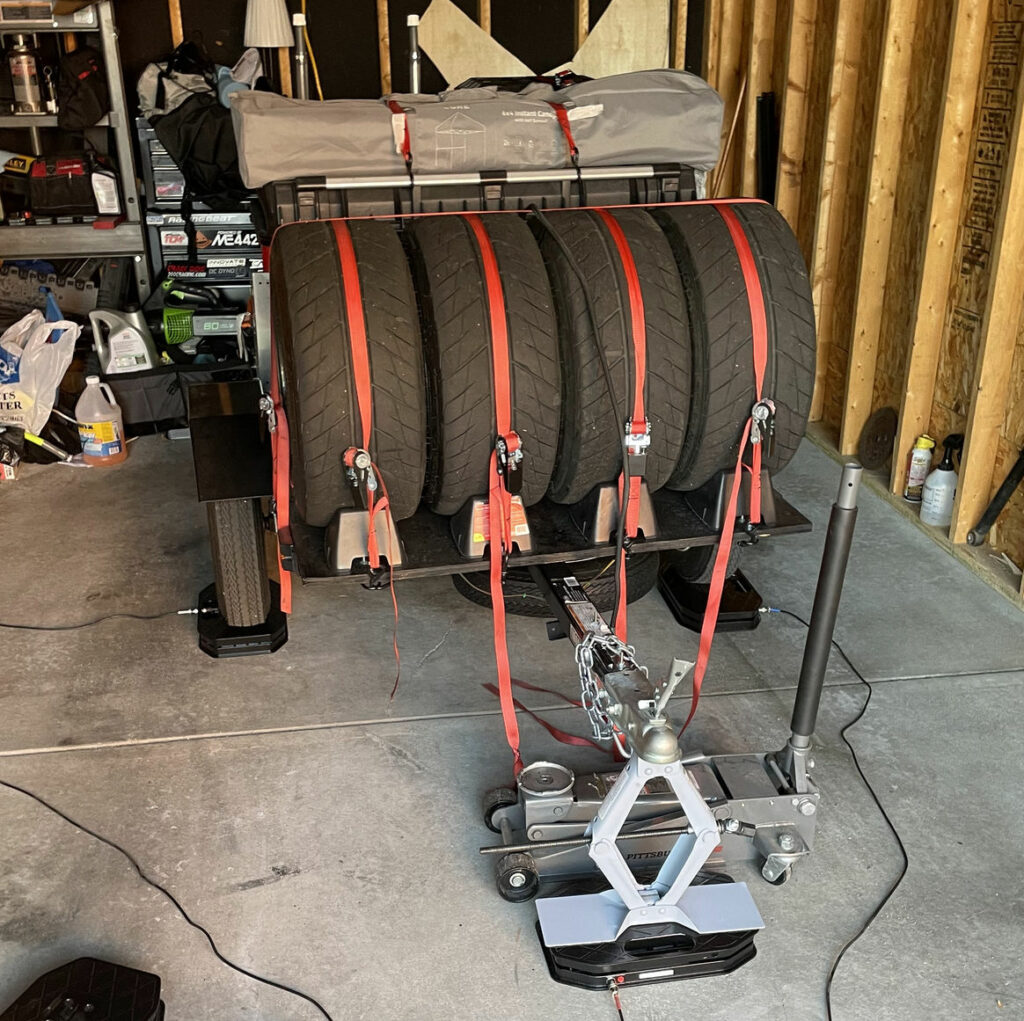
A common upgrade within the community is the transition to radial tires, such as the 145R12 specification. Radial tires offer several advantages for long-distance towing:
- Reduced Heat Generation: The radial ply construction allows the sidewall to flex more efficiently, resulting in lower operating temperatures.
- Increased Speed Ratings: Radial trailer tires are often rated for higher sustained speeds (up to 81 mph / M-rating), aligning better with modern highway traffic flows.
- Improved Tracking: The stiffer tread face of a radial tire provides better stability and reduces the tendency of the trailer to "wander" behind the tow vehicle.
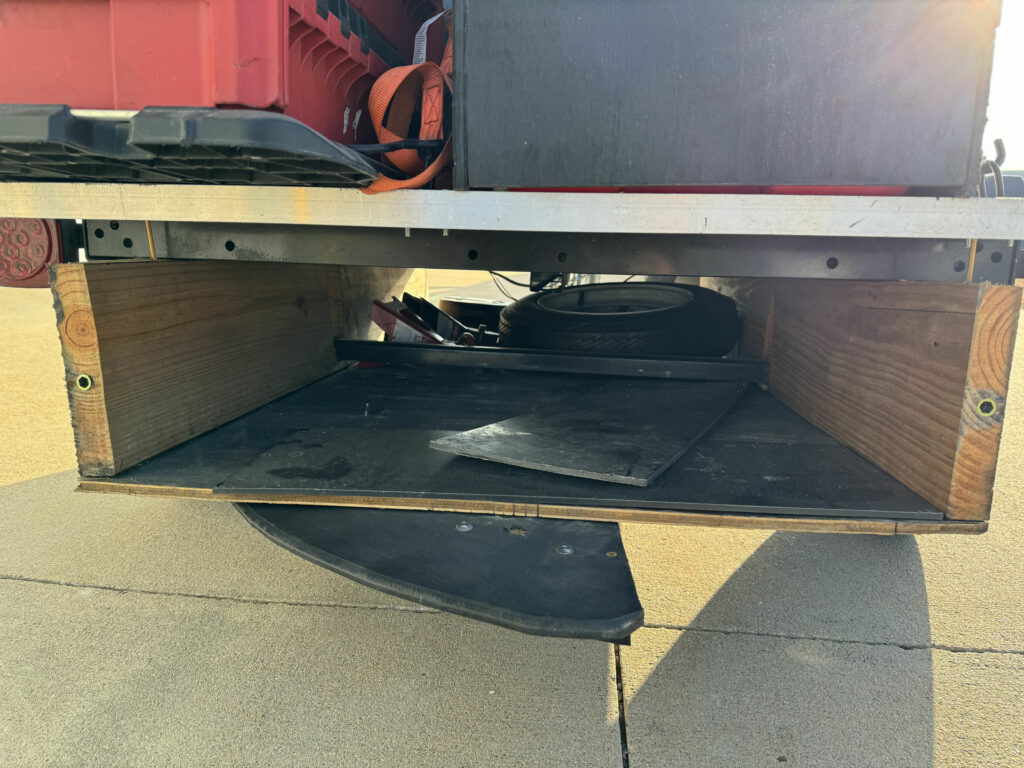
Additionally, advanced builders often implement a "lower deck" or sub-chassis storage area. By mounting plywood panels below the main frame rails, drivers can store flat items such as spare aerodynamic splitters, folding canopies, or canopy weights. This lowers the overall center of gravity and utilizes otherwise dead space between the axle and the frame.
Broader Implications and Economic Analysis
The adoption of tire trailers reflects a broader trend in the automotive hobby toward self-sufficiency and economic pragmatism. When compared to the costs associated with full-scale towing, the tire trailer is a remarkably efficient solution.
A full-size pickup truck and an open car hauler represent a capital investment often exceeding $40,000, plus ongoing costs for registration, insurance, and maintenance of a second vehicle. Conversely, a custom-built tire trailer can be completed for between $500 and $1,500, depending on the quality of the storage boxes and accessories. For the amateur racer, the savings realized by using a tire trailer can be redirected toward entry fees, professional instruction, and consumables like brake pads and tires.

Furthermore, the tire trailer maintains the "spirit" of grassroots motorsports, where the challenge includes not just the driving, but the logistical puzzle of getting to the event. The ability to drive a sports car to a venue, swap tires, compete at a high level, and drive home—all while being prepared for mechanical contingencies—remains a hallmark of the dedicated enthusiast.
Conclusion: The Future of the Portable Paddock
While some drivers eventually graduate to enclosed trailers and heavy-duty tow rigs as their involvement in motorsports deepens, the tire trailer remains a staple of the track-day community. It represents a refined engineering response to the physical limitations of high-performance vehicles and the demanding requirements of competition rubber.
As vehicle designs continue to prioritize aerodynamics and weight reduction at the expense of internal storage, and as tire technology continues to push the boundaries of grip at the expense of street durability, the reliance on specialized transport solutions will likely increase. The tire trailer stands as a testament to the ingenuity of the racing community, providing a scalable, efficient, and professional-grade method for pursuing automotive excellence on the track without compromising safety or mechanical integrity on the journey there.