Retno Hari Mulyono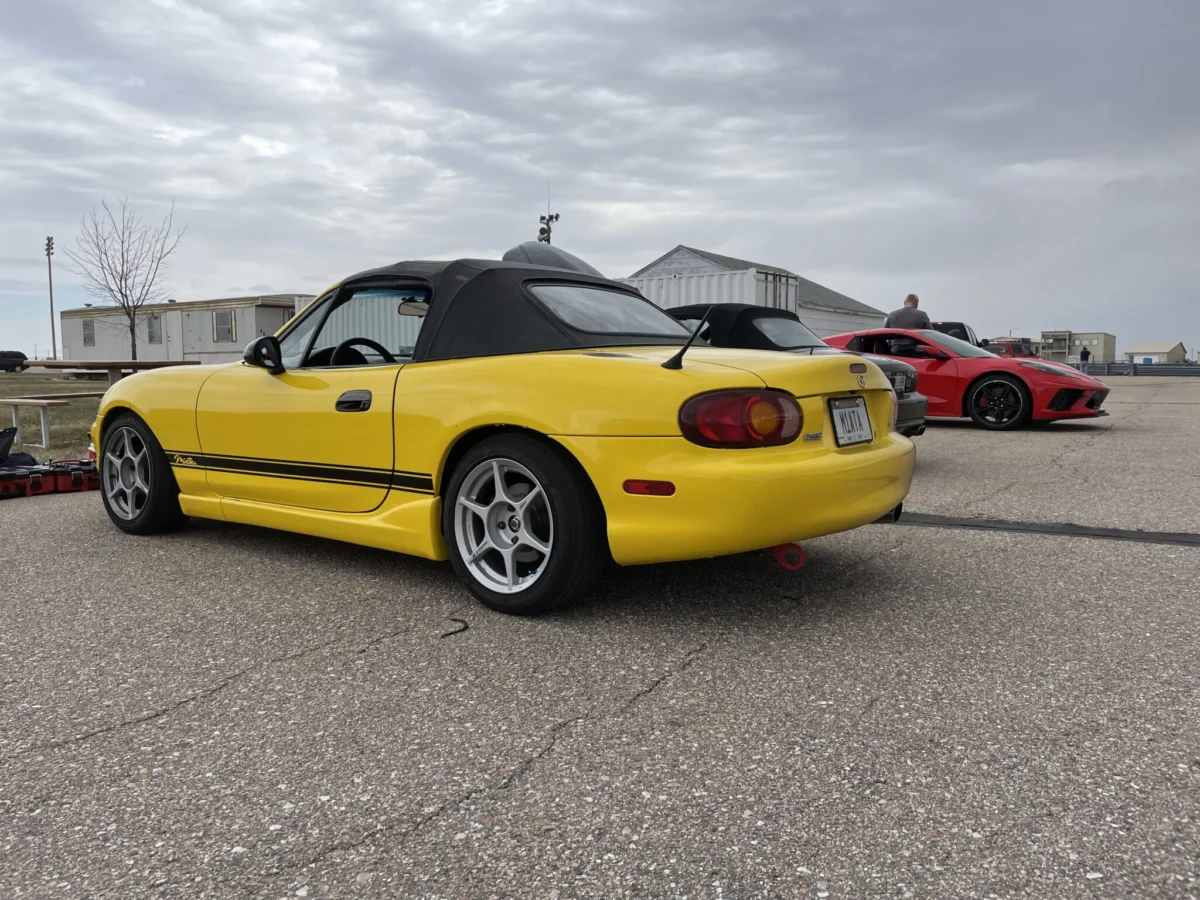
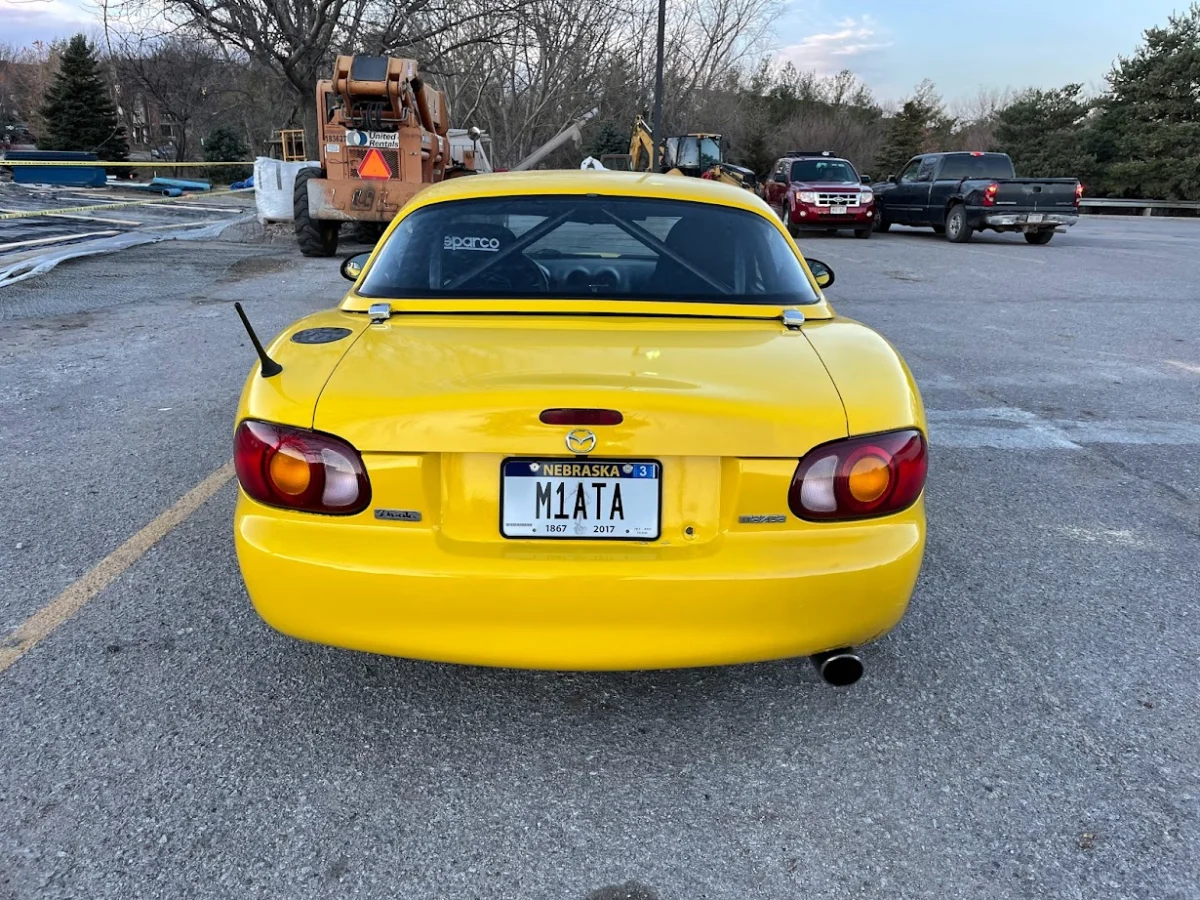
The second-generation Mazda Miata, known internally as the NB chassis, continues to serve as a primary benchmark for grassroots motorsports development, as evidenced by a comprehensive two-year performance study concluding in February 2023. This longitudinal evaluation tracks the mechanical progression and driver-development arc of a 1999 NB1 model, highlighting the platform’s adaptability across road course racing, autocross, and rallycross disciplines. Through a series of iterative upgrades—ranging from electronic control unit (ECU) tuning to advanced aerodynamic implementations—the project demonstrates a significant quantifiable increase in both mechanical efficiency and track-side performance metrics.
Performance Benchmarking and Power Extraction
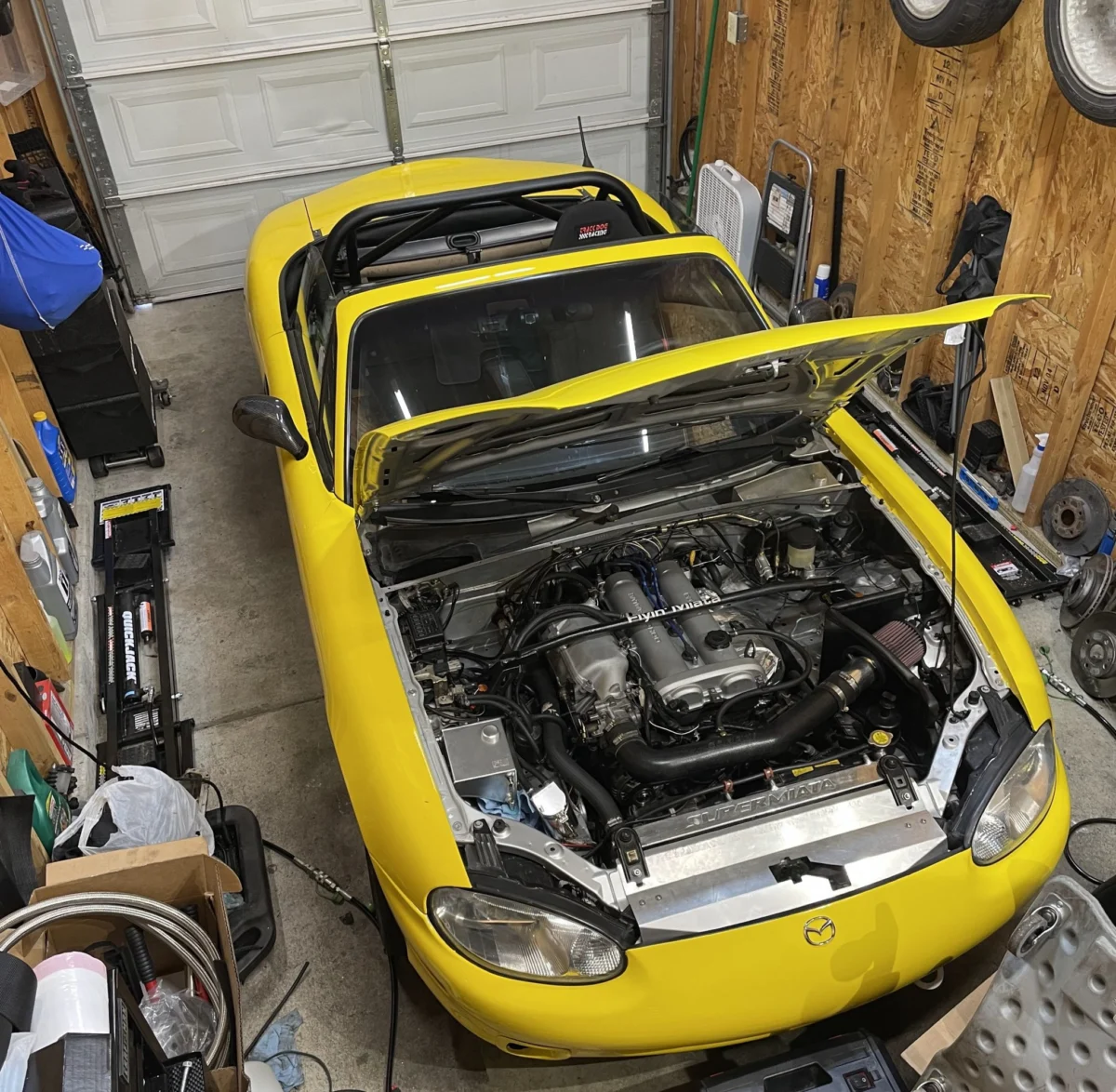
A critical component of the NB Miata’s second-year development focused on maximizing the power output of the 1.8-liter BP4W engine. In the preceding year of ownership, the vehicle produced a baseline of 115 wheel-horsepower (whp) and 106 lb-ft of torque using standard bolt-on modifications, including a performance intake, headers, and an upgraded exhaust system. By July 2022, following the integration of a Megasquirt standalone ECU and a transition to E85 ethanol fuel, dynamometer testing confirmed an increase to 136 whp and 119 lb-ft of torque.
This 18.2% increase in horsepower is attributed to the synergistic effect of the "squaretop" intake manifold—a component originally sourced from European and Japanese markets known for superior airflow—and the ability of the Megasquirt ECU to optimize ignition timing for the higher octane rating of E85. Industry analysts note that while 136 whp remains modest by modern standards, the Miata’s power-to-weight ratio allows these gains to translate into substantial reductions in lap times. Technical experts suggest that further gains may be achievable through aggressive camshaft profiles and professional-grade mapping of the fuel-air ratios.
Chronological Development and Track Logistics
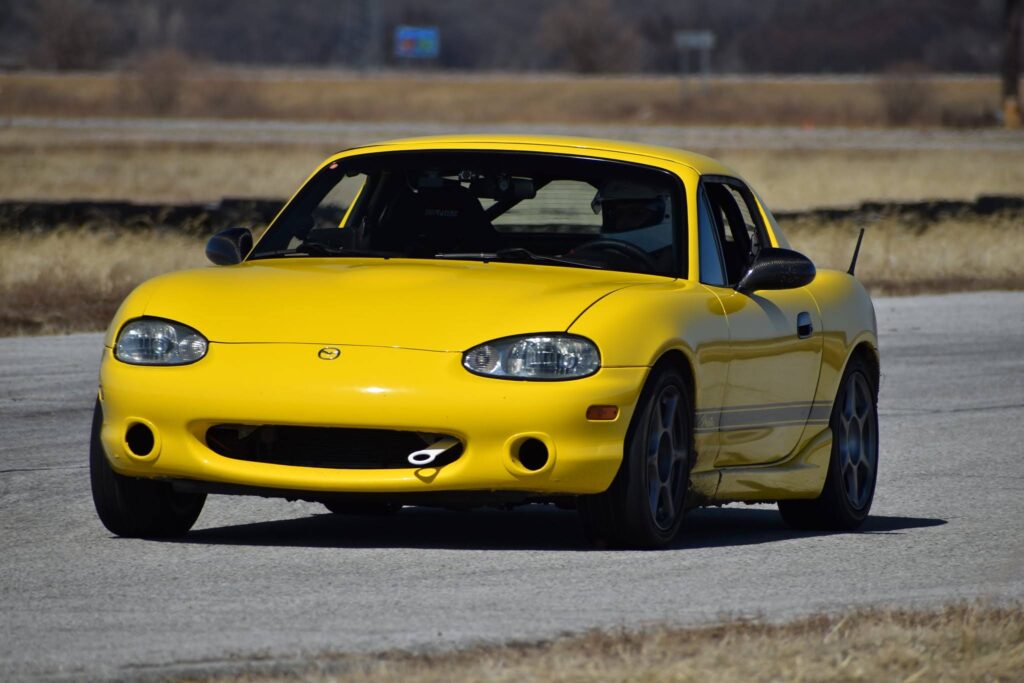
The driving season commenced in March 2022 at Raceway Park of the Midlands (RPM), a facility characterized by a demanding, high-friction surface. Over a seven-month period, consistent track attendance facilitated a driver-skill progression that yielded an 11.29-second improvement in lap times. This advancement highlights the dual nature of motorsports development: the refinement of the machine and the education of the operator.
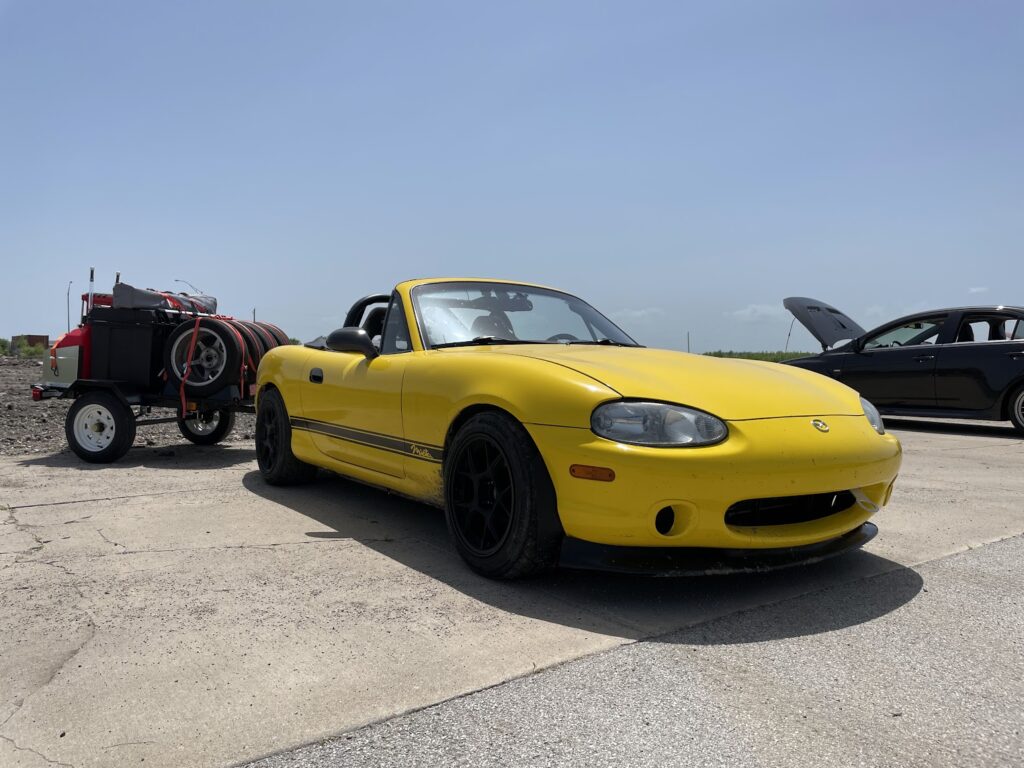
Logistical challenges inherent to the Miata’s compact dimensions were addressed in June 2022 with the construction of a bespoke tire trailer. Utilizing a 40×48-inch Northern Tool chassis with an extended plywood deck, the 700-pound trailer allows for the transport of four spare tires, tools, fuel jugs, and paddock supplies. This modification effectively transitioned the vehicle from a limited-range track day participant to a self-contained racing operation capable of traveling over 1,000 miles to various regional circuits without external support vehicles.
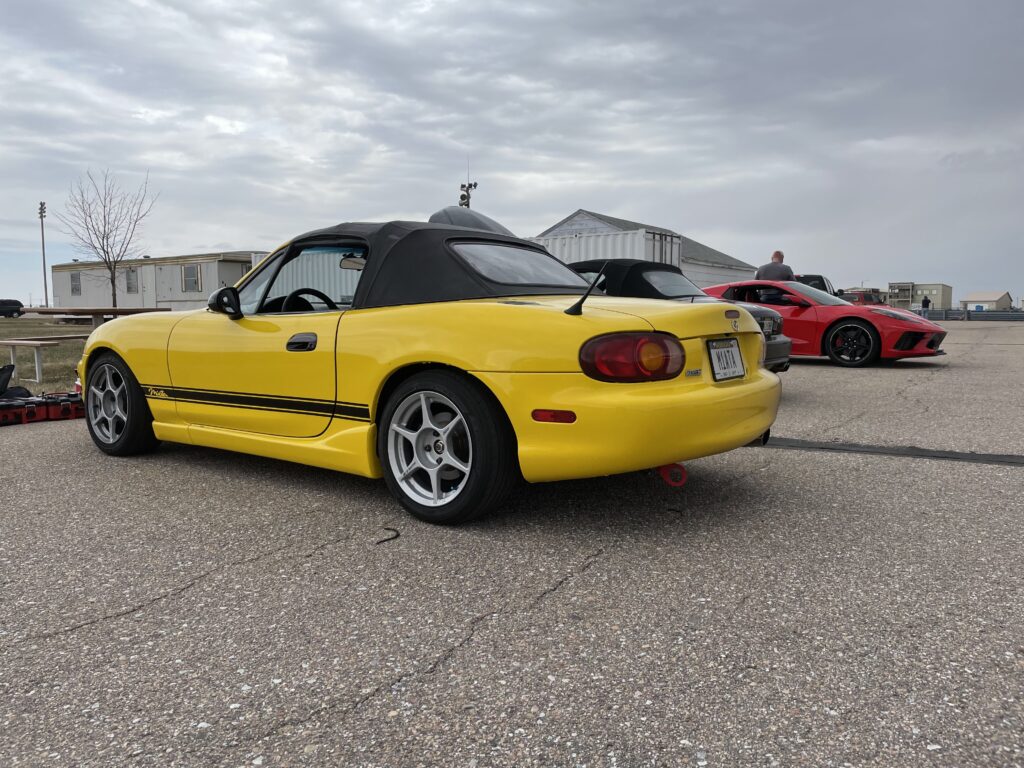
The diversity of the testing environments played a significant role in the vehicle’s evaluation. In April, the project moved to Motorsports Park Hastings (MPH), which features a freshly repaved asphalt surface, providing a stark contrast to the rougher terrain of RPM. By August, the vehicle was tested at Heartland Motorsports Park in Topeka, Kansas. The Topeka circuit, known for its significant elevation changes and high-speed banking, pushed the NB1’s suspension and cooling systems to their operational limits, providing data that would inform the winter maintenance schedule.
Multi-Discipline Competitiveness and Driver Progression
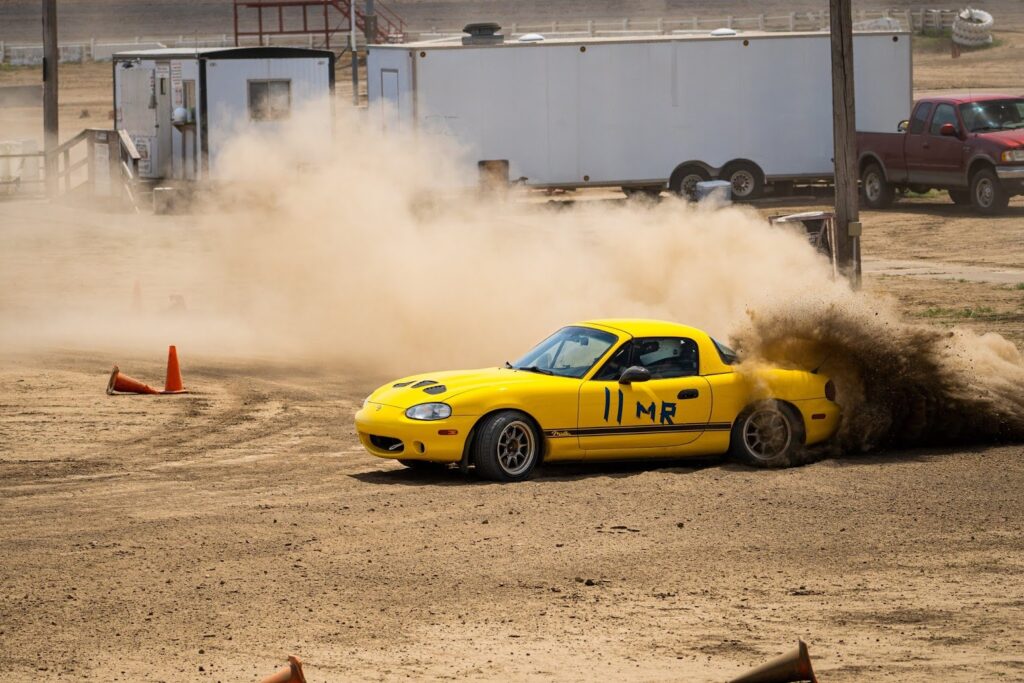
In late 2022, the project expanded beyond traditional road courses to include SCCA Rallycross and Autocross. At I80 Speedway in Nebraska, the Miata was subjected to low-traction dirt surfaces. Despite the loss of a front lip spoiler due to the rugged terrain, the experiment provided valuable data on car control and weight transfer at lower speeds.
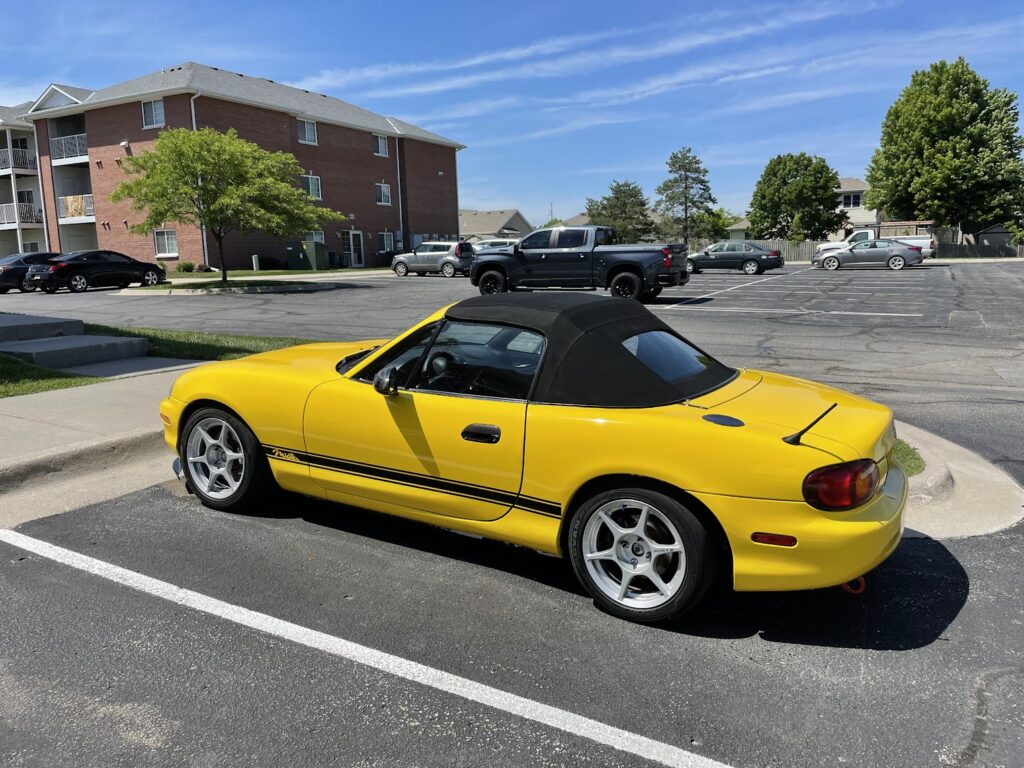
The Nebraska Region SCCA Autocross season served as the primary venue for measuring driver reaction times and precision. Utilizing the same site as the SCCA Solo Nationals, the project saw a dramatic rise in competitive standing. Initially ranking in the bottom 8% of participants, the driver concluded the season in the top 50th percentile. This improvement is largely credited to the high-frequency nature of autocross, which demands immediate feedback and rewards technical accuracy in steering and braking inputs.
Incident Report and Structural Resilience
The limits of the NB platform were reached on October 29, 2022, during a high-speed session at Raceway Park of the Midlands. While navigating the transition between Turn 10 and Turn 11, the vehicle experienced a loss of rear-end traction. A subsequent overcorrection led to an understeer event, resulting in a 60-mph impact with a tire wall.
A post-incident technical inspection revealed that the tire wall functioned as a highly effective energy attenuation system. Although the vehicle suffered cosmetic damage—including a crumpled fender, a bent hood, a dented bumper, and a shattered headlight—the structural integrity of the chassis remained intact. The mechanical components, including the radiator and suspension pick-up points, were unaffected, allowing the vehicle to be driven from the track. This incident underscores the inherent safety and repairability of the Miata platform, as the owner was able to replace the damaged panels and return the vehicle to an autocross event within one week.
Advanced Engineering: Suspension and Aerodynamics
The winter of 2022-2023 was dedicated to high-level chassis refinement. Moving away from the IL Motorsports rubber bushings installed in 2021, the project shifted toward A1 Ground Control Nylatron bushings and Paco Motorsports adjustable rear upper control arms. Nylatron, a self-lubricating thermoplastic, offers lower friction and less binding than traditional polyurethane alternatives. While this upgrade significantly increased Noise, Vibration, and Harshness (NVH) levels—a common trade-off in racing applications—it provided a more stable and predictable suspension geometry under heavy lateral loads.
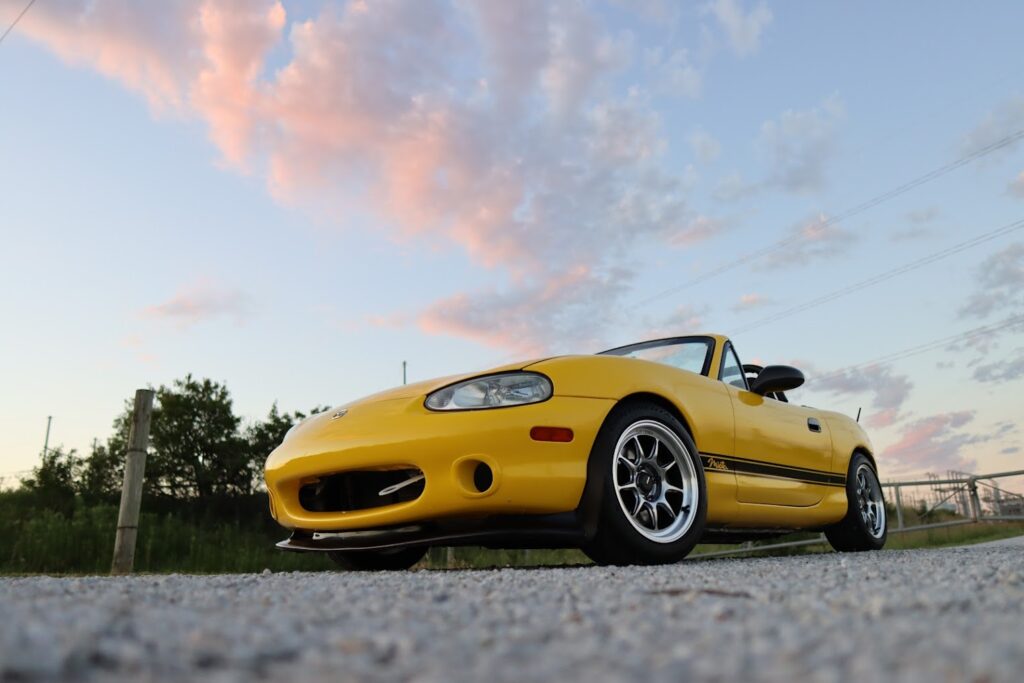
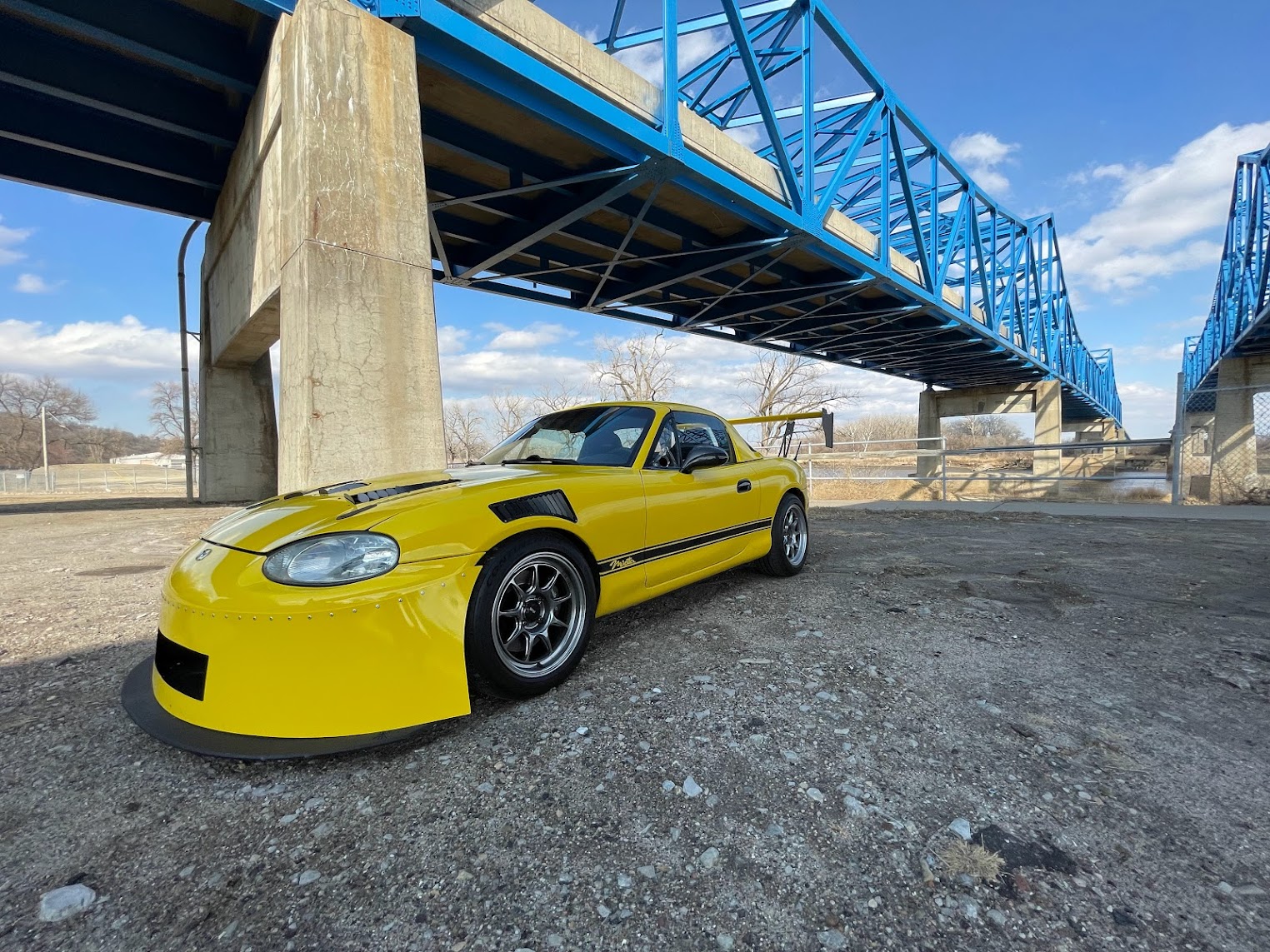
In February 2023, the vehicle underwent a major aerodynamic overhaul with the installation of a Nine Lives Racing medium downforce kit. The package includes a chassis-mounted aluminum rear wing and a front air dam. Aerodynamic analysis of the NB chassis indicates significant natural lift at high speeds, which can lead to instability. The addition of the Nine Lives Racing kit utilizes Bernoulli’s principle to create low pressure under the vehicle and high pressure above the rear wing, effectively "pinning" the car to the track. Early road testing suggests that the kit has eliminated high-speed "float," resulting in a vehicle that feels increasingly planted as velocity increases, without a discernible penalty in straight-line acceleration.
Technical Specifications and Future Outlook
As the project enters its third year, the vehicle has been prepared for the SCCA "XS-B" class, which allows for off-the-shelf aerodynamic packages and significant engine modifications. The current configuration includes:
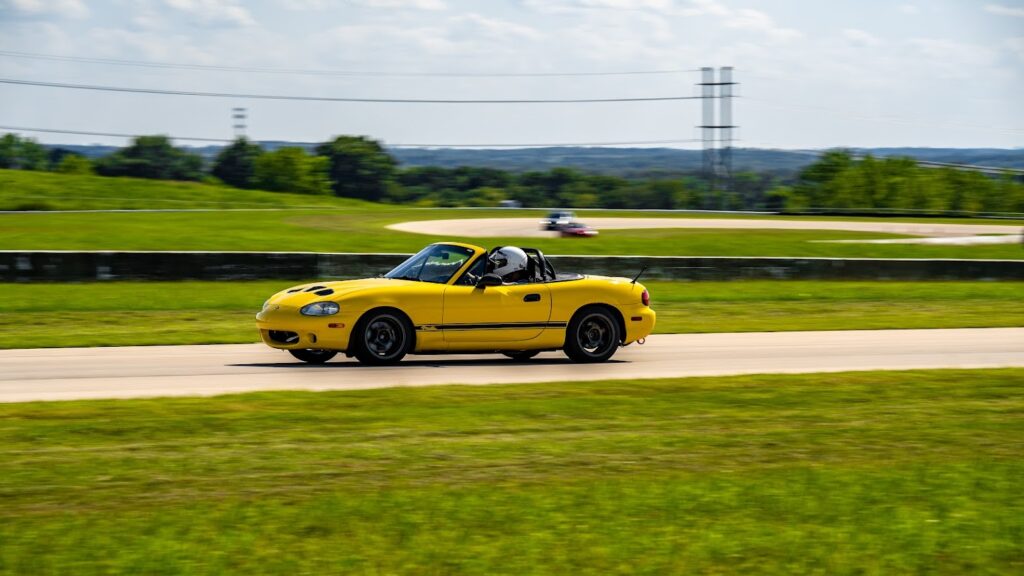
- Engine: 1.8L BP4W with Squaretop Manifold and E85 Fuel System.
- Management: Megasquirt Standalone ECU.
- Suspension: Nylatron Bushings, Paco Motorsports Adjustable Arms, and high-rate coilovers.
- Aero: Nine Lives Racing Medium Downforce Kit.
- Support: Custom 700-lb capacity tire trailer.
Additionally, the acquisition of a BP6D Variable Valve Timing (VVT) motor and a 6-speed manual transmission in early 2023 suggests a future phase of powertrain development aimed at broadening the torque curve and improving gear-ratio spacing for technical circuits.
Broader Implications for the Motorsports Community
The evolution of this NB Miata serves as a case study for the "spec-lite" approach to amateur racing. By documenting the incremental gains provided by specific components—such as the transition from vinyl to canvas soft tops for maintenance ease, or the jump from rubber to Nylatron for suspension precision—the project provides a roadmap for other enthusiasts.
The data suggests that the Mazda Miata remains one of the most cost-effective platforms for comprehensive driver education and mechanical experimentation. The ability to repair a 60-mph impact with junkyard parts and vinyl wrap for a fraction of the cost of modern sports car repairs ensures that the barrier to entry for competitive driving remains accessible. As aerodynamic and electronic tuning become more prevalent in grassroots tiers, the lessons learned from this two-year technical journey highlight the enduring relevance of the "lightweight, rear-wheel-drive" philosophy in an increasingly complex automotive landscape.