Cecilia Chamidah Nur
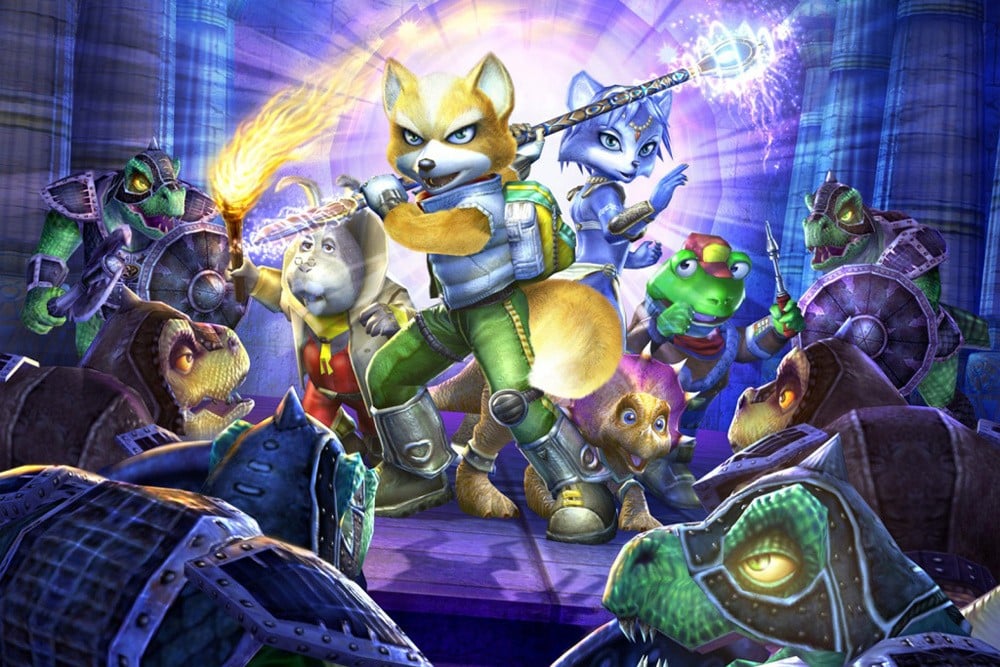
Amidst the recent, exhilarating surprise announcement of a new Star Fox installment slated for a June 2026 release exclusively on the forthcoming Switch 2, the gaming community finds itself reflecting on the storied legacy of Fox McCloud and his intergalactic adventures. This momentous news provides a timely opportunity to delve into the archives and re-examine one of the most unique and often debated entries in the franchise: Star Fox Adventures. Released in 2002, this GameCube title stands as a pivotal, if sometimes misunderstood, chapter in both Nintendo’s and legendary developer Rare’s histories, marking the bittersweet conclusion of their astonishingly fruitful partnership.
Rare’s Golden Age and the Seismic Microsoft Acquisition
The story of Star Fox Adventures is inextricably linked to the meteoric rise and eventual corporate shift of Rare, a UK-based studio renowned for its innovative and technically impressive contributions to Nintendo’s platforms. For over a decade, Rare had cultivated an unparalleled reputation, delivering a string of critically acclaimed and commercially successful titles that defined the Nintendo 64 era. From the groundbreaking first-person shooter GoldenEye 007 (1997), which redefined console multiplayer, to the vibrant kart racer Diddy Kong Racing (1997), the expansive platformer Banjo-Kazooie (1998), the ambitious third-person shooter Jet Force Gemini (1999), and the darkly comedic Conker’s Bad Fur Day (2001), Rare’s output was synonymous with quality, creativity, and technical prowess. This golden era was built on a unique second-party relationship where Nintendo held a significant stake (49%) in Rare, allowing for close collaboration while preserving a degree of creative independence for the Stamper brothers, Rare’s founders.
However, this era drew to a dramatic close in 2001. That year, Microsoft, seeking to bolster its nascent Xbox console’s software lineup and establish a foothold in the competitive console market, acquired 100% of Rare for a staggering $375 million. This acquisition sent shockwaves through the industry, effectively ending one of gaming’s most cherished development partnerships. Star Fox Adventures, which was deep in development at the time, was destined to become Rare’s final game released under the Nintendo banner, a poignant swan song that would be remembered not just for its gameplay but for the monumental corporate shift it represented.
From Dinosaur Planet to Corneria: The Game’s Transformative Origin
The unique nature of Star Fox Adventures stems directly from its convoluted genesis. It famously began life not as a Star Fox game, but as an entirely separate intellectual property titled Dinosaur Planet, originally conceived for the Nintendo 64. Lead Software Engineer Phil Tossell, who joined Rare in 1997 and contributed to Diddy Kong Racing before moving directly onto Dinosaur Planet, recalls the project’s early days. Work commenced immediately after Diddy Kong Racing‘s completion, with the programming team splitting into two, one group tackling Jet Force Gemini and the other initiating Dinosaur Planet.
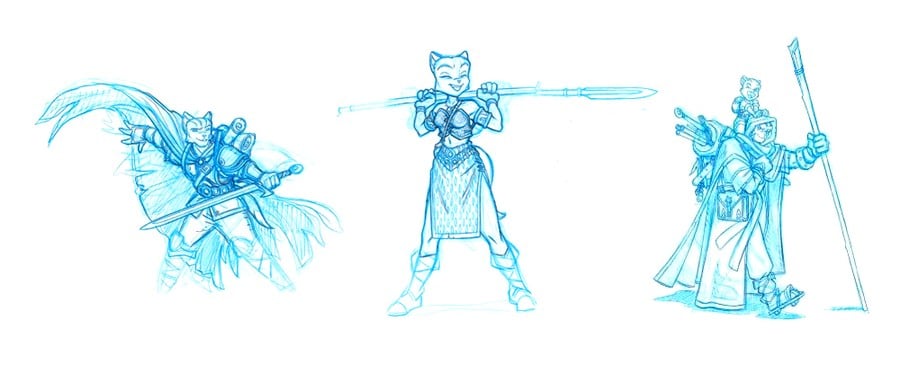
Lee Schuneman, the game’s designer, spearheaded a creative deluge of ideas and sketches. Early concepts for Dinosaur Planet were far removed from the Star Fox universe. It was envisioned as a sprawling, continuous world adventure game featuring two interweaving narratives centered around distinct protagonists: Sabre and Krystal. Players could, at any time, swap between these characters using "Swapstone" characters scattered across the world. Krystal was also accompanied by a pterodactyl sidekick named Kyte, a precursor to Tricky in the final Star Fox Adventures, capable of flight and offering assistance. The narrative itself was reportedly vastly different, focusing on its own original lore and characters.
The pivotal moment in the game’s development arrived when Nintendo’s legendary game designer, Shigeru Miyamoto, reportedly saw footage of Dinosaur Planet. According to persistent industry lore, Miyamoto-san suggested that the ambitious N64 title be re-tooled to incorporate Fox McCloud and his team, transforming it into a Star Fox entry. While some members of the Dinosaur Planet team reportedly harbored reservations, having grown attached to their original creation, the potential of leveraging the established Star Fox license for marketability and brand recognition was undeniable. This rebranding decision coincided with another significant shift: the move from the aging Nintendo 64 hardware to the more powerful, disc-based GameCube console, a transition that brought both opportunities for enhanced visuals and new technical challenges.
Navigating Development Under Nintendo’s Guiding Hand
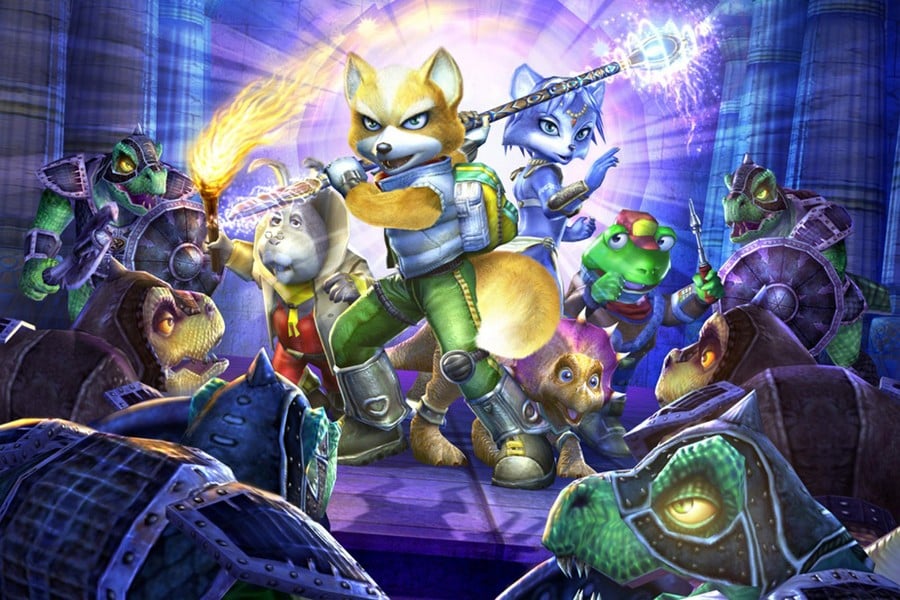
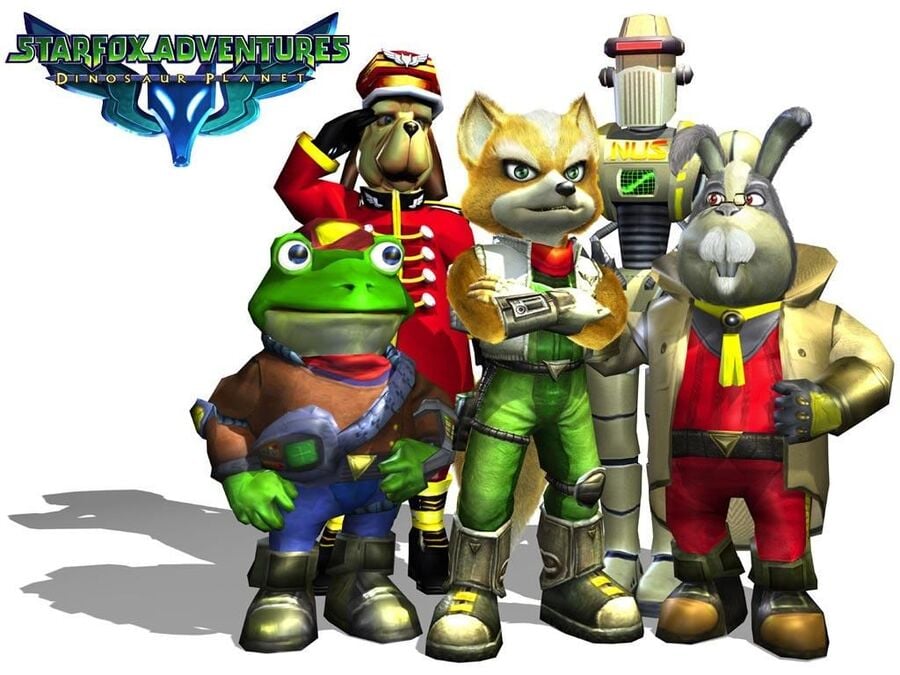
Despite the mid-development upheaval, the team at Rare continued to work on the game, now officially titled Star Fox Adventures. Phil Tossell’s recollections paint a picture of a remarkably trusting and independent development environment, a hallmark of Rare’s relationship with Nintendo. "On the whole, we worked very independently," Tossell explains, highlighting the unique nature of Nintendo’s oversight.
Early in this transition phase, the Rare team made a crucial trip to Nintendo’s headquarters in Kyoto, Japan. This visit facilitated direct discussions about the necessary changes to integrate the game seamlessly into the Star Fox universe. Tossell fondly recalls sitting with Shigeru Miyamoto, discussing gameplay ideas, an experience he considers a career highlight. He even possesses Miyamoto’s business card, a tangible memento of that era. Further emphasizing the close collaboration, Takaya Imamura, the creative mind behind the original Star Fox, spent approximately a month at Rare’s UK studios, working alongside designer Lee Schuneman to oversee the integration of Star Fox elements. This direct involvement from key Nintendo figures, rather than strict control, underscored Nintendo’s confidence in Rare’s development capabilities. The relationship was characterized by mutual respect, with Nintendo understanding when to offer guidance and when to allow creative freedom, a delicate balance that Tossell notes "Nintendo made look easy." This contrasted sharply with the more traditional publisher-developer dynamics, particularly in the wake of the Microsoft acquisition where Rare would eventually lose its independent stake.
Technical Ambition Meets Constrained Resources
Developing Star Fox Adventures was not without its formidable technical and creative hurdles. The ambitious decision to create a "fully streaming world" on a console with relatively limited memory, the GameCube, presented a significant engineering challenge. This approach, designed to eliminate loading screens and foster a seamless player experience, was more straightforward on the N64’s cartridge-based system. However, the move to the GameCube’s disc-based medium introduced new complexities, requiring ingenious solutions to manage data loading and asset streaming without hitches. Tossell proudly notes that, despite these challenges, the team managed to create what he still considers "one of the most beautiful-looking GameCube games."
Another major influence, particularly in the latter stages of development, was The Legend of Zelda: Ocarina of Time. Released in 1998, Ocarina of Time had set an unprecedented benchmark for 3D adventure games, inspiring designers worldwide. Tossell admits that Rare’s designers were "really inspired and amazed by it," leading them to emulate a number of its features. This conscious design choice, while leveraging a proven formula, inadvertently invited comparisons that would later contribute to Star Fox Adventures‘ mixed critical reception, with some critics viewing it as too derivative.
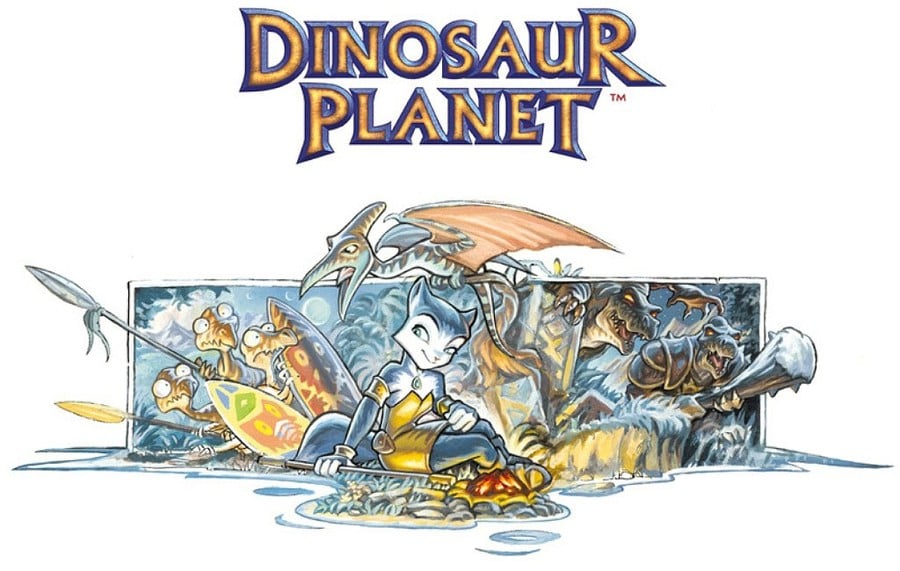
The development was further complicated by a remarkably small team size for a game of such scope. For much of the project, only five programmers were working on Star Fox Adventures, a number almost unheard of for a major console release today. "I don’t think anyone would even attempt such a large game with such a small team nowadays," Tossell remarks, highlighting the intense workload and dedication required. The late integration of the iconic Arwing space combat sections, a necessary addition for the Star Fox branding, stretched their existing tools beyond their intended limits, leading to limitations in their scope and refinement. Even the game’s charming sidekick, Tricky, a young dinosaur, proved a constant source of programming headaches, requiring extensive setup to ensure he consistently stayed with Fox and avoided getting lost or trapped in the intricate environments.
The Acquisition’s Shadow: Development Under Duress
The final stretch of Star Fox Adventures‘ development unfolded under the looming shadow of Microsoft’s acquisition of Rare. This period of corporate transition introduced significant uncertainty across the company. The Stamper brothers were commendably open with their employees about the unfolding situation, though details remained necessarily confidential. For many Rare teams, the acquisition created a period of distraction and anxiety, impacting focus and morale.
However, the Star Fox Adventures team found themselves in a unique, almost paradoxical, position. With a clear, non-negotiable deadline for completing the game before the sale was finalized, the looming corporate change inadvertently served as a powerful catalyst. "It really just spurred us on to get Star Fox Adventures finished," Tossell recounts. The imperative to deliver their final Nintendo game, combined with the underlying uncertainty, fostered an intense period of dedicated effort, allowing the team to push through and complete the project despite the monumental shifts occurring around them. It was a testament to their professionalism and commitment to the game, ensuring that Rare’s last Nintendo title would see the light of day.
A Mixed Legacy: Critical Reception and Enduring Appeal
Upon its release in 2002, Star Fox Adventures garnered largely positive reviews, selling over 200,000 copies in Japan alone and quickly becoming one of the GameCube’s early successes in its native region. Critics praised its stunning visuals, expansive world, and engaging adventure gameplay. However, over time, the game’s reputation began to crumble. Many dedicated Nintendo fans, particularly those loyal to the Star Fox series’ traditional rail-shooter mechanics, grew to view it as a deviation from the franchise’s core identity and one of Rare’s less essential titles.
Phil Tossell acknowledges this shift in perception. He understood the "lukewarm critical reception" in some quarters, admitting that the game had its flaws, borrowed perhaps "too heavily from Zelda," and that the Star Fox elements felt "tacked on – which of course they were!" The primary criticisms often revolved around its departure from the classic Star Fox flight combat, its perceived similarity to The Legend of Zelda formula, and a reliance on "collecting things," a design choice Tossell himself was "not especially a fan" of, despite it being a common feature in many Rare games of the era.
Despite these criticisms, Tossell remains "incredibly proud" of what the team achieved, particularly given the limited time and resources. He argues that some criticisms were "unjustified" and stemmed from a preconceived notion of what a Star Fox game "should" be, rather than judging Adventures on its own merits as an action-adventure title. Indeed, a quiet but growing contingent of players has continued to champion Star Fox Adventures, appreciating its unique blend of exploration, puzzle-solving, and combat. Tossell notes, "I’ve had plenty of people come up to me in subsequent years and say that they loved the game and didn’t understand why it received so much criticism." This enduring affection highlights its unexpected cult status, proving that its distinctive approach resonated with a significant portion of the gaming audience, even if it alienated some purists.
Beyond Rare: Phil Tossell’s Post-Adventure Journey
Following his work on Star Fox Adventures, Phil Tossell continued his career at Rare, assuming the significant role of Director of Gameplay and Human-Computer Interaction. During this period under Microsoft ownership, he contributed to projects like Kameo: Elements of Power (2005) and Kinect Sports (2010), titles that showcased Rare’s evolving design philosophy. However, in 2010, Tossell made the decision to depart from Rare, doing so on "positive terms." His departure was a mutual recognition that his personal goals no longer aligned with the company’s new direction under Microsoft.
He subsequently co-founded Nyamyam with fellow ex-Rare employees Jennifer Schneidereit and Ryo Agarie. Their independent studio went on to develop Tengami, a distinctive adventure game set within a pop-up book world, demonstrating Tossell’s continued commitment to innovative game design. His career since has included roles at Blockplay Limited, Mochimocha Ltd, and AccelByte Inc., underscoring a versatile and ongoing contribution to the video game industry.
Tossell’s reflection on his former employer is poignant: "In many ways, for me, Rare doesn’t exist anymore." He refers to the Rare he knew and loved, the one that inspired such excitement and dedication, where his friends worked, many of whom have also moved on. He acknowledges that the current Rare is "a new Rare, an evolved Rare with different goals and different aims," expressing hope for its continued success. This sentiment encapsulates the profound impact of the Microsoft acquisition, not just on the company’s output but on the personal connections and shared history of its original talent.
Conclusion: A Singular Chapter in Gaming History
Star Fox Adventures remains a singular and often debated chapter in the annals of video game history. It is a game born of ambition, corporate shifts, and creative compromise, representing a unique intersection of Rare’s distinctive development prowess and Nintendo’s beloved Star Fox universe. While its legacy has been complex, oscillating between initial praise, later critique, and eventual re-appraisal, its story offers invaluable insights into the intricacies of game development, the power of brand, and the often-turbulent landscape of corporate acquisitions.
As the Star Fox franchise embarks on a new journey with its recently announced installment, Star Fox Adventures stands as a testament to the dedication of its development team, particularly individuals like Phil Tossell and his colleagues. Their hard work, ingenuity, and passion brought to life a game that, despite its tumultuous origins and unconventional nature, carved out a unique place in the hearts of many players, proving that even a "tacked-on" adventure can possess a charm and artistry all its own. The enduring discussions around Star Fox Adventures ensure its continued relevance, solidifying its status as a fascinating and unforgettable anomaly in both Rare’s and Nintendo’s illustrious legacies.