Cecilia Chamidah Nur
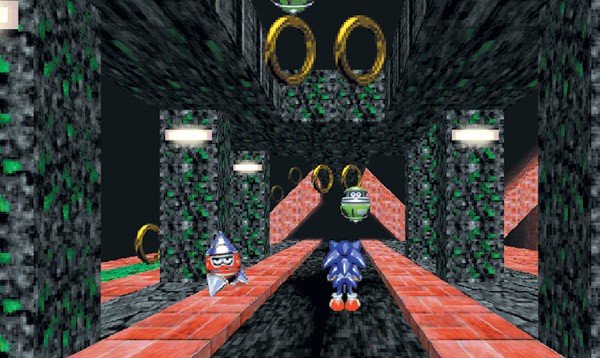
The narrative surrounding Sonic X-treme, Sega Saturn’s most fabled unreleased title, has been extensively documented over the decades. Often cited as the potential savior for the Sega Saturn’s fortunes in Western markets, its abrupt cancellation instead cemented its place as one of the most significant "what-ifs" in video game history. Recent revelations from designer Chris Senn, in a comprehensive interview with Sega Retro, shed new light on the precise moment internal corporate dynamics culminated in the project’s demise, a moment Senn describes as "the fork in the road."
The Genesis of Ambition: Sonic X-treme’s Troubled Beginnings
The journey of Sonic X-treme began in 1994, originally conceived for Sega’s 32X add-on, a stopgap measure intended to bridge the gap between the Genesis and the upcoming 32-bit era. However, with the rapid evolution of console technology and the looming launch of the Sega Saturn, the project swiftly transitioned its target platform. The pressure on Sega to deliver a compelling 3D Sonic experience for the Saturn was immense. The mid-1990s marked a pivotal shift in the gaming industry, with the advent of powerful 3D graphics accelerating consumer expectations. Sega’s primary rival, Nintendo, was preparing its own 3D mascot platformer, Super Mario 64, which would ultimately redefine the genre and set a new standard for console launches. Simultaneously, Sony’s PlayStation, launched in late 1994 in Japan and September 1995 in North America, was rapidly gaining market share with its aggressive pricing and strong third-party support, quickly outpacing the Saturn.
The Saturn, launched in late 1994 in Japan and May 1995 in North America, faced an uphill battle. While technically powerful, its complex dual-CPU architecture made 3D development challenging, particularly for Western developers less accustomed to its intricacies. A flagship 3D Sonic title was not merely a desirable asset; it was perceived as an existential necessity to compete effectively, especially against the PlayStation’s growing library and Nintendo’s anticipated 3D Mario. The absence of a definitive 3D Sonic at launch, or even within the Saturn’s crucial early years, left a gaping void in its software lineup, which many analysts retrospectively argue contributed significantly to its struggles against Sony’s dominant console.
A House Divided: Internal Strife and Dual Development Paths
The development of Sonic X-treme was plagued by internal organizational turmoil, a common characteristic of Sega’s corporate structure during this period, particularly the often-strained relationship between Sega of America (SoA) and Sega of Japan (SoJ). Chris Senn’s account highlights how the project effectively splintered into two distinct development efforts, each utilizing a different game engine. This division was exacerbated by the restructuring within SoA’s product development division. Sega Technical Institute (STI), a renowned development house responsible for classics like Sonic the Hedgehog 2 and Sonic & Knuckles, had undergone significant changes, leading to its effective dissolution and replacement by a more generalized "Sega of America Product Development" structure.
Within this fragmented environment, Senn and programmer Ofer Alon found themselves increasingly isolated. While the main body of SoA Product Development was working with a company named Point of View – which was led by a technical director who had been brought in as a potential solution to expedite the Sonic game for the critical Christmas sales season – Senn and Alon continued their own, more advanced development in parallel. This situation created a precarious and ultimately unsustainable scenario where vital resources and corporate focus were diluted across competing visions and technical approaches. Senn’s description paints a picture of two distinct realities: one, a politically sanctioned, but arguably less mature, version being pushed by the wider corporate structure, and the other, a more technically advanced and polished version being developed by a smaller, ostracized team.
The Fateful March 1996 Review
The culmination of this internal division arrived in March 1996, a date etched into the memory of Chris Senn. Sega executives from Japan, led by the formidable Sega president Hayao Nakayama, made a critical visit to Sega of America to assess the progress of Sonic X-treme. Nakayama was known for his direct and often uncompromising leadership style, and his visits were always high-stakes affairs for SoA. The purpose of this review was to evaluate which version of the game, if any, could be salvaged and accelerated for a release, preferably by the upcoming holiday season – a period critical for console sales.
However, the presentation to Nakayama did not showcase the most current or promising work. Instead, Senn recounts that what was demonstrated was "like a really old version of Sonic’s editor – or Ofer’s editor – basically just blocks, brick-making, no pads…" This rudimentary demonstration, a stark contrast to the more advanced progress made by Senn and Alon, immediately drew Nakayama’s ire. The political machinations within SoA Product Development meant that Senn and Alon’s more polished build was never presented. Senn explicitly states that Nakayama "hated" what he was shown, and due to "politics," and the presence of "all of his entourage… and all the executives and Sega of America PD," the more developed version was effectively sidelined. Nakayama’s furious reaction to the outdated demo was unequivocal, interpreted by those present as a definitive statement: "’Anything related to this gets no more money,’ or, ‘Just stop.’" The critical holiday window was slipping away, and the project, in its current state, was deemed utterly unacceptable by Sega’s highest authority.
A Moment of Missed Opportunity: Chris Senn’s Enduring Regret
The immediate aftermath of Nakayama’s explosive rejection forms the core of Senn’s enduring regret. He vividly recalls the tense moments leading up to the meeting. As the critical presentation time approached, he and Ofer Alon were still in Alon’s office, with Alon meticulously "coding something just to tweak some part to polish it." Senn, sensing the urgency, urged Alon to move, stating, "It doesn’t matter. Nobody’s going to care. Let’s go. We’re going to miss our meeting."
Despite Senn’s plea, Alon continued typing. Senn, deciding he couldn’t wait, ran off to try and make it to the conference room. He arrived just outside the door only to be met by a chaotic scene: an "explosion – pissed-off executives and the entourage walking down the hallway." The meeting, it seemed, had already concluded, and not favorably. When Senn questioned Manny Granillo, the executive producer, about the meeting, Granillo’s dismissive response – "I dunno, dude, we’ll figure it out later" – confirmed Senn’s worst fears. It was, as Senn described, "a huge bomb that had gone off."
Moments later, Alon arrived, "huffing and puffing, sweating with his PC under his arm," only to be told, "We missed it." The profound disappointment and the weight of the missed opportunity clearly resonate with Senn to this day. His greatest regret, however, was not the delay itself, but his personal failure to act decisively in that critical moment. "I did see Nakayama coming out of the door," Senn recounted. He possessed the ability to speak Japanese, a rare asset among Western developers interacting directly with SoJ leadership. He contemplated interjecting, to say, "We have something to show you." Yet, he hesitated. "That was just me being too timid," he reflects. The intensely negative energy, the visible fury of the executives, and the political complexities of the situation overwhelmed him. He questioned the potential outcome, considering that Nakayama might have dismissed him as an unauthorized presenter, or that his interjection might have been perceived as disrespectful or disruptive. "But that was a clincher moment. That was the fork in the road – meaning we (Senn and Alon) could no longer continue developing Sonic X-treme for the Saturn or anything else."
The Aftermath and the ‘Fork in the Road’
The events of March 1996 spelled the definitive end for Sonic X-treme as envisioned by Senn and Alon. Following Nakayama’s unequivocal disapproval, all momentum and corporate backing for their version of the project evaporated. While other attempts to salvage a 3D Sonic for the Saturn were briefly explored, including a disastrous attempt to port a PC version of Sonic 3D Blast into a 3D platformer, none came to fruition. The project was ultimately canceled, leaving the Sega Saturn without its much-needed flagship 3D platformer.
The cancellation had profound implications for the development team. The immense pressure, the internal conflicts, and the ultimate failure of the project led to burnout and disillusionment among many involved. The "fork in the road" moment, as described by Senn, was not merely a decision point for a game but a critical juncture for the careers of many talented individuals and for the trajectory of Sega’s console business.
Broader Implications for Sega and the Saturn
The absence of Sonic X-treme on the Sega Saturn is widely regarded by industry historians and fans as a significant contributing factor to the console’s commercial struggles, particularly in Western markets. While the Saturn found some success in Japan, it was comprehensively outsold by the PlayStation and later the Nintendo 64 elsewhere. The PlayStation capitalized on its strong third-party relationships and a burgeoning library of 3D games, including its own mascot platformer, Crash Bandicoot, which launched in 1996 and proved immensely popular. Nintendo 64, with Super Mario 64, demonstrated the power of a well-executed 3D platformer as a system seller.
Sega, without a compelling 3D Sonic to anchor the Saturn’s library, struggled to define its identity in the new 3D era. The perception that Sega had failed to transition its most iconic franchise into the third dimension effectively undermined consumer confidence in the Saturn. This strategic blunder, combined with inconsistent marketing, high initial pricing, and the aforementioned developer challenges, contributed to the Saturn’s rapid decline.
The lessons learned from the Sonic X-treme debacle would profoundly influence Sega’s future. The company’s next console, the Dreamcast, launched in 1998 in Japan and 1999 in North America, featured Sonic Adventure as a launch title. This critically acclaimed 3D Sonic game, developed internally by Sonic Team in Japan, finally delivered the experience fans had long awaited, albeit on a different console. The success of Sonic Adventure underscored what Sonic X-treme could have been for the Saturn, highlighting the missed opportunity of 1996. Ultimately, the Dreamcast, despite its innovations and strong launch, could not reverse Sega’s fortunes in the long term, leading to the company’s exit from the hardware market in 2001.
The Legacy of the Unreleased
Today, Sonic X-treme remains one of gaming’s most compelling historical curiosities, a phantom limb in the Sega Saturn’s legacy. Its cancellation has fueled decades of speculation, fan projects, and historical analysis, turning it into a legendary "what if" game. Chris Senn’s candid interview provides a rare and personal glimpse into the intense pressures, corporate politics, and human elements that shape game development, particularly at a time of such rapid technological and market shifts.
His account serves as a powerful reminder of how individual moments – a missed opportunity to speak, a delayed arrival at a crucial meeting – can cascade into monumental consequences for entire projects and, in this case, a console platform. The saga of Sonic X-treme is more than just the story of an unreleased game; it is a critical chapter in Sega’s history, a testament to the challenges of innovation, the complexities of corporate synergy, and the enduring impact of a single "fork in the road" moment.