Chalid Lutfie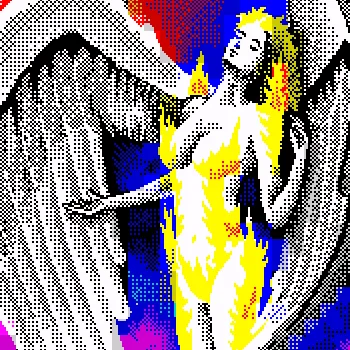
The debut studio album by the electronic composer known as C-Jeff, titled Still Flying, represents a significant milestone in the preservation and evolution of 8-bit synthesis. Originally composed throughout 2002, the project serves as a technical and artistic testament to the capabilities of the ZX Spectrum, a home computer that defined a generation of European and Soviet-era computing. Utilizing the Pro Tracker 3 music editor on native hardware, C-Jeff constructed a collection of tracks that he categorized as "lyric music novels," a term intended to describe the narrative depth and melodic complexity rarely seen in the constraints of three-channel PSG (Programmable Sound Generator) audio.
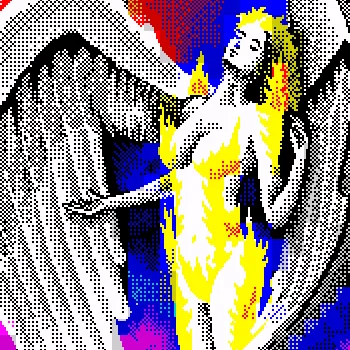
The album’s inception and subsequent distribution reflect the unique culture of the demoscene—an international computer art subculture focused on producing self-contained programs that display real-time graphics and music. While the audio was finalized in 2002, the project underwent a secondary release approximately eighteen months later as an executable musicdisk. This version was a collaborative software effort, featuring code by Vortex, visual aesthetics by Schafft, and digital packaging by Poisoned CyberJack. This multi-tiered release strategy highlights the transition of chiptune from mere background accompaniment for software into a standalone medium of professional musical expression.
Technical Architecture and the Pro Tracker 3 Environment
To understand the complexity of Still Flying, one must examine the hardware constraints of the ZX Spectrum. The machine, powered by the Zilog Z80 microprocessor, did not possess native high-fidelity audio capabilities in its original 48K iteration. However, the later 128K models integrated the General Instrument AY-3-8910 (or the Yamaha YM2149 equivalent) sound chip. This chip provided three channels of square-wave synthesis and a single noise generator, which served as the palette for C-Jeff’s compositions.
Pro Tracker 3, the software utilized for the album, was a sophisticated "tracker" program that allowed composers to sequence notes, volume changes, and hardware-level effects (such as arpeggios and vibrato) using a vertical timeline. Composing on a real ZX Spectrum in 2002—two decades after the machine’s initial launch—required a profound understanding of machine-code timing and the physical limitations of the hardware. The "lyric music novel" tagline suggests an emphasis on phrasing and melodic development that pushed past the rhythmic, loop-based structures common in early video game music. By manipulating the AY-3-8910’s envelope generators and frequency registers, C-Jeff achieved a warmth and resonance that helped define the "Russian style" of chiptune, characterized by its melancholic melodies and intricate harmonies.
Chronology of Composition and Competitive Milestones
The timeline of Still Flying is inextricably linked to the demoparty circuit of the early 2000s. These events served as the primary venue for artists to showcase their work and receive peer validation through competitive voting.
In 2002, the track "My Mind is Free" was entered into the CAFe 2002 demoparty, held in Kazan, Russia. Due to the artist’s self-admitted limited proficiency in English at the time, the track was initially registered under the title "My mind free." Despite the minor grammatical discrepancy, the composition resonated with the audience and jury, securing 13th place in the ZX Spectrum AY Music competition. Following the event, the track was integrated into the Still Flying tracklist, serving as a cornerstone of the album’s thematic identity.
Another critical component of the album’s history is the track "Lonely Soul." Although not part of the initial conceptualization of the album, it was composed during the same 2002 period using identical hardware and software parameters. "Lonely Soul" was entered into the Paradox 2002 demoparty, a prominent event in the scene. The track achieved significant critical success, earning 2nd place in the ZX Spectrum AY Music category. Its inclusion in the broader Still Flying collection was a logical progression, as it shared the same "lyric novel" aesthetic and technical DNA as the primary tracks.
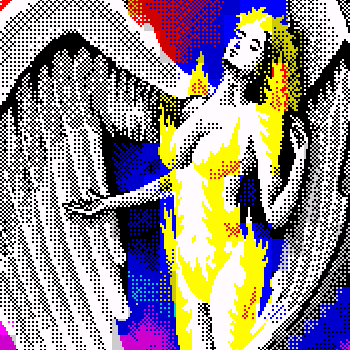
The final stage of the project’s initial lifecycle occurred in 2004 with the release of the Still Flying musicdisk. In the demoscene, a musicdisk is a piece of software designed specifically to play an artist’s tracks within a custom-coded interface, often featuring synchronized graphics. This release allowed the album to be distributed as a single "TAP" or "SCL" file, compatible with ZX Spectrum emulators and original hardware, ensuring its accessibility to the global community.
Collaboration and Production Credits
While C-Jeff served as the primary composer and producer, the polished nature of the Still Flying project was the result of a coordinated effort among several specialists within the scene. The involvement of these parties indicates the professional standards applied to what was ostensibly a hobbyist platform.
- C-Jeff (Composer/Producer): Responsible for the core melodic structures, sequencing, and the overarching creative vision of the "lyric music novel."
- Schafft (Artwork/Graphics): Provided the visual identity for the project. In the 2004 musicdisk, Schafft’s graphics were essential in creating an immersive atmosphere that complemented the 8-bit audio.
- Vortex (Coding): Developed the executable engine for the musicdisk. The code had to manage memory efficiently to ensure that the visual elements did not interfere with the precise timing required for the Pro Tracker 3 engine to play the music without distortion.
- MmcM (Mastering): A legendary figure in the ZX Spectrum music community, MmcM provided mastering services. In the context of chiptune, mastering involves balancing the levels of the three AY-chip channels and ensuring that the output remains clear across various playback systems, from vintage television sets to modern studio monitors.
- Poisoned CyberJack (Packing): Handled the compression and final assembly of the digital files, a crucial step in ensuring the software could fit within the limited memory footprint of the ZX Spectrum.
Supporting Data and Technical Specifications
The release of Still Flying provides a data point for the longevity of 8-bit hardware. At the time of the album’s creation in 2002, the ZX Spectrum was 20 years old, yet it remained a vibrant platform for artistic innovation.
- Platform: ZX Spectrum 128K / Pentagon 128.
- Audio Chip: AY-3-8910 / YM2149F.
- Clock Speed: 3.5 MHz (approximate).
- Audio Resolution: 3-channel square wave, 1-channel noise, 4-bit volume per channel.
- Software Version: Pro Tracker 3.x.
- Competition Results: 2nd Place (Paradox 2002), 13th Place (CAFe 2002).
These statistics underscore the "minimalist" challenge inherent in the project. The composer had to convey complex emotions and "novelistic" structures using a total of 16 volume levels and three monophonic channels. The success of tracks like "Lonely Soul" suggests that the technical limitations did not hinder, but rather focused, the creative output.
Broader Impact and Implications for the Chiptune Genre
The release and enduring legacy of Still Flying have broader implications for the study of computer music and digital preservation. Firstly, it demonstrates the viability of "legacy" hardware as a legitimate contemporary instrument. By choosing a real ZX Spectrum over modern software emulators or VST plugins, C-Jeff maintained an authentic connection to the hardware’s unique timbral characteristics—such as the specific aliasing and hardware-envelope quirks that are difficult to replicate perfectly in a digital environment.
Secondly, the album helped solidify the reputation of the Eastern European chiptune scene. During the late 1990s and early 2000s, composers from Russia, Ukraine, and neighboring regions pushed the ZX Spectrum to its absolute limits, favoring complex, minor-key melodies and sophisticated multi-part arrangements. C-Jeff’s work is a primary example of this movement, moving away from the "bleepy" and repetitive nature of early 1980s game music toward something more akin to progressive electronic music.
Finally, the transition of Still Flying to modern platforms like Bandcamp serves as a bridge between the niche demoscene and the wider independent music market. It allows a new generation of listeners to experience 8-bit music not as a nostalgic novelty, but as a serious form of composition. The "lyric music novel" approach proved that even with the most rudimentary of sound chips, an artist could evoke a sense of narrative and emotional depth.
In conclusion, Still Flying is more than a collection of tracks; it is a historical document that captures a specific moment in the evolution of computer art. Through its competitive success, collaborative execution, and technical rigor, the album remains a definitive work in the C-Jeff discography and a cornerstone of the ZX Spectrum’s musical legacy. The project stands as a reminder that the quality of art is not dictated by the power of the processor, but by the vision of the composer working within those constraints.