Cecilia Chamidah Nur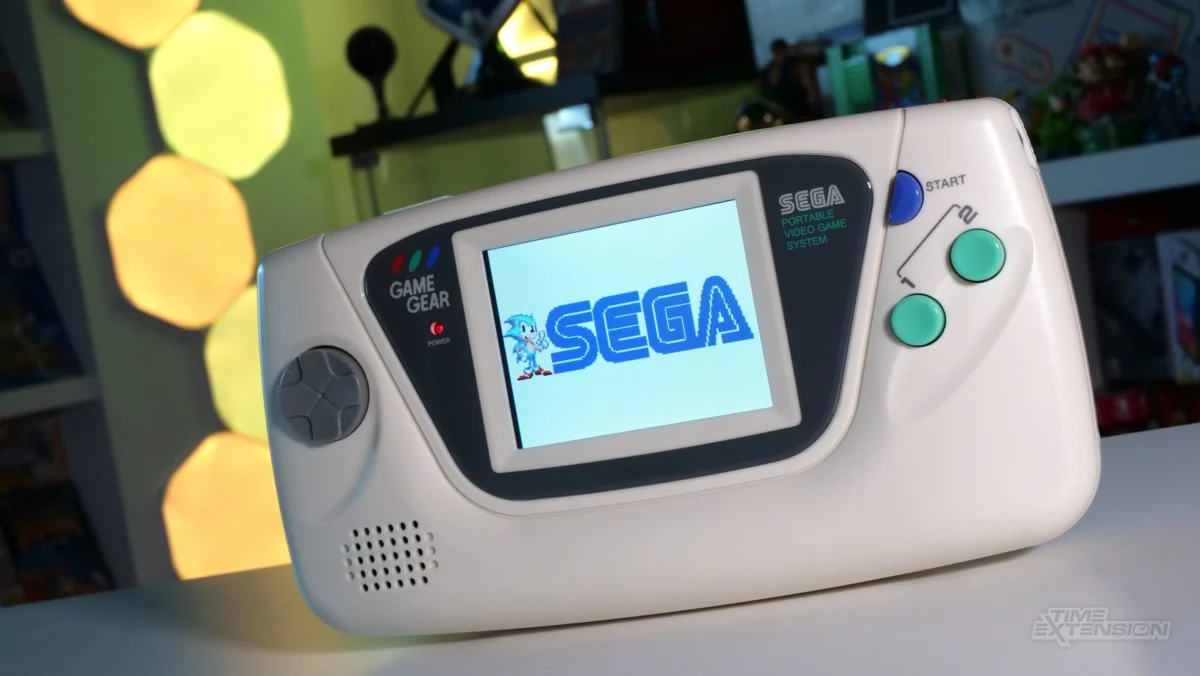
A recent posting on Reddit by an individual identifying as an employee of a specialized electronics manufacturer has ignited significant discussion within the gaming community, suggesting that Sega, or one of its prominent hardware licensees, may be developing a new low-cost handheld gaming console. The purported device is described as focusing on modern 2D titles and utilizing a unique physical media format, diverging significantly from current high-powered portable systems.
Unpacking the Initial Leak: A Glimpse into Sega’s Potential Hardware Ambitions
The revelation emerged from Reddit user SeraphHS, who detailed receiving a quotation request from a company with a documented history of producing licensed Sega hardware. While not directly from Sega, the client is described as operating "in that orbit," with examples such as Tectoy and AtGames cited – entities known for their licensed renditions of Sega’s classic consoles, including the Genesis/Mega Drive Mini. This indirect approach is not uncommon for major publishers leveraging third-party expertise for specialized hardware ventures.
According to SeraphHS, the details of the quotation request were "extremely interesting and seemingly significant," outlining a device built around a specific set of technical and design principles. Key among these specifications are:
- Low-cost handheld gaming device: Indicating an aggressive price point as a primary design objective.
- Low-power ARM processor, not x86: A choice that prioritizes energy efficiency and cost over raw computational power, aligning with a focus on less demanding software.
- 5-inch OLED panel: A premium display technology known for vibrant colors and deep blacks, specified to be in a form factor comparable to the PlayStation Vita, despite aggressive cost-cutting in other areas.
- Seemingly limited internal storage: Suggesting a reliance on external media or minimal onboard capacity.
- Removable game cartridges: A distinct feature in an era dominated by digital downloads and internal storage.
- No mention of 3D acceleration beyond basic UI/compositing: Reinforcing the device’s specific graphical capabilities.
- References to being designed for "modern 2D titles" and "pixel art presentation": Clearly defining the target software aesthetic and performance envelope.
The emphasis on an OLED screen, a technology typically associated with higher-end devices, alongside a "low-cost" mandate and "aggressive cost-cutting elsewhere," points to a strategic design decision to prioritize visual fidelity for 2D content while economizing on components less critical to that core experience.
The Cartridge Conundrum: A Return to Physical Media
Perhaps the most compelling and intriguing aspect of the leaked pitch is the design of its removable game cartridges. SeraphHS noted that these are "not the usual high-capacity consumer NAND you’d expect of a modern handheld." Instead, they appear to utilize "low-capacity industrial eMMC modules," which are reportedly "readily available and not caught up in the AI memory price inflation." This technical detail suggests a pragmatic approach to manufacturing and supply chain stability, potentially offering a cost-effective solution for physical game distribution.
The use of eMMC modules, while offering lower capacity compared to modern flash storage, would be entirely suitable for the types of "modern 2D titles" and "pixel art presentation" explicitly mentioned in the pitch. Many contemporary indie 2D games, even those with intricate visuals and extensive content, often have relatively small file sizes, making low-capacity cartridges a viable and economical option. This design choice strongly supports SeraphHS’s speculation that the device is intended less as a retro emulation machine and more as a dedicated platform for new 2D games distributed via physical media.
Sega’s History in Handhelds: A Rocky Road to Reinvention
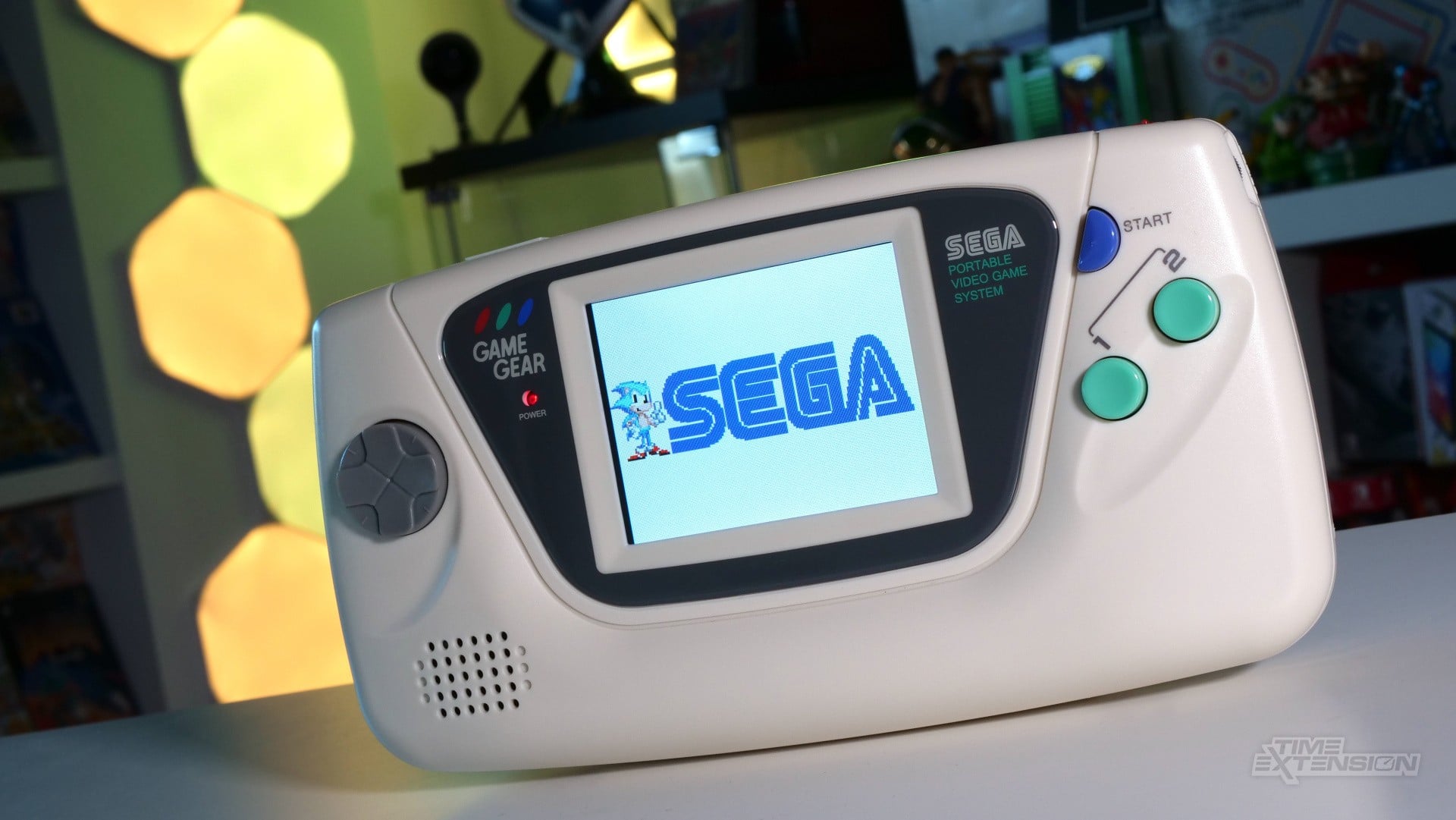
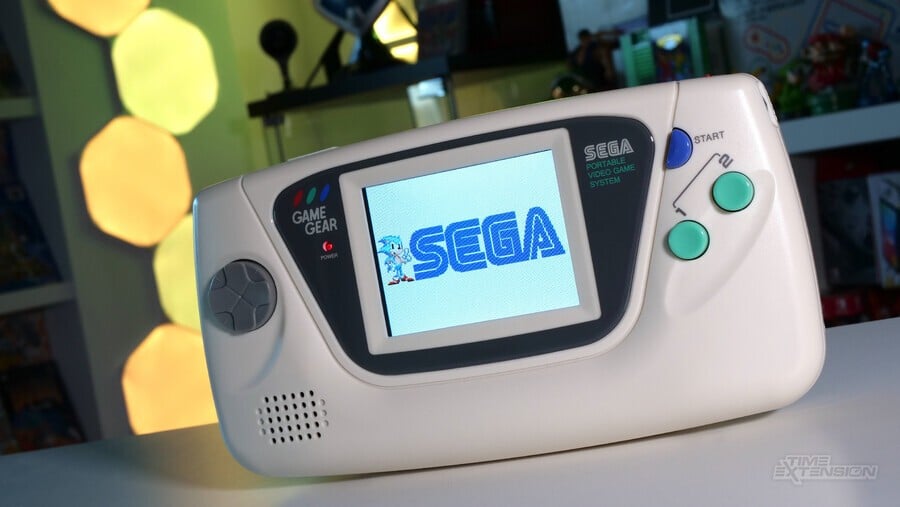
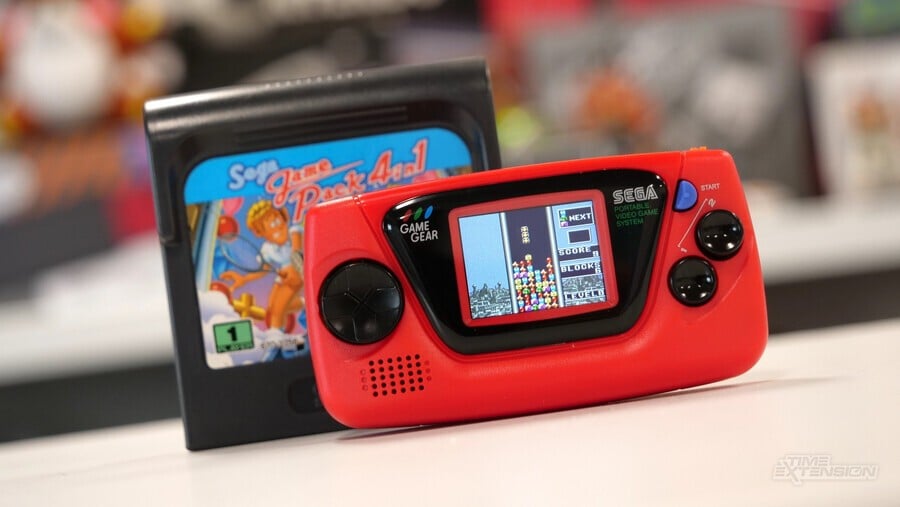
Sega’s history in the portable gaming market is storied but marked by mixed success, making any rumor of a new handheld particularly noteworthy. The company’s most iconic portable venture was the Game Gear, launched in 1990 in Japan and 1991 in North America and Europe. Positioned as a direct competitor to Nintendo’s monochromatic Game Boy, the Game Gear boasted a full-color backlit screen, a significant technological advantage at the time. However, its battery life was notoriously short (consuming six AA batteries in 3-5 hours), and its bulkier form factor ultimately hampered its long-term market penetration despite a respectable library of games and strong technical capabilities. It sold approximately 10.62 million units worldwide, far behind the Game Boy’s over 118 million.
Following the Game Gear, Sega experimented with the Sega Nomad in 1995, essentially a portable version of the Genesis/Mega Drive. While offering the ability to play full Genesis cartridges on the go, its high price point ($179.99 at launch), extremely poor battery life (around 2 hours on six AA batteries), and limited availability led to its rapid discontinuation and commercial failure.
In recent years, Sega’s engagement with dedicated hardware has largely shifted towards licensing its intellectual property to third-party manufacturers for retro-themed mini-consoles. The Sega Genesis Mini (Mega Drive Mini in other regions), released in 2019, was a critically acclaimed success. Developed by M2, it offered a curated collection of classic games with excellent emulation quality, demonstrating the potential for well-executed licensed hardware. This success stands in contrast to less favorably received products, such as some of the Sega-licensed handhelds produced by AtGames, which have occasionally drawn criticism for their build quality and emulation performance, like the "extremely disappointing" Mega Drive Ultimate Portable mentioned in the original report.
Sega’s most recent direct foray into portable gaming was the Game Gear Micro in 2020, a series of four minuscule handhelds, each pre-loaded with four specific Game Gear titles. While a charming novelty, its impractical screen size (1.15 inches) made it more of a collector’s item than a functional gaming device, widely perceived as a puzzling and ultimately disappointing product. This history underscores Sega’s cautious approach to hardware, often preferring a licensing model that mitigates direct financial risk.
The Rise of the Indie 2D Market and the Evercade Parallel
The rumored device’s focus on "modern 2D titles" and "pixel art presentation" taps into a vibrant and growing segment of the gaming industry. The past decade has seen a resurgence of critically acclaimed and commercially successful independent 2D games, many of which utilize pixel art aesthetics (e.g., Stardew Valley, Hollow Knight, Celeste, Shovel Knight). These titles often prioritize intricate gameplay mechanics, compelling narratives, and artistic design over cutting-edge 3D graphics, making them ideal candidates for a dedicated, lower-cost platform.
This strategic niche finds a strong parallel in Blaze Entertainment’s Evercade line of handhelds and home consoles. Launched in 2020, the Evercade ecosystem is built around the concept of physical game cartridges, each containing a curated collection of retro and independent games. The Evercade EXP and Super Pocket handhelds, in particular, offer a dedicated platform for experiencing these titles with a focus on collectibility and a traditional gaming experience. Blaze has successfully secured licensing agreements with numerous publishers, both large and small, to release physical compilations of their back catalogs and new indie titles.
The Evercade model demonstrates that there is a viable market for a handheld device that prioritizes physical media and a specific type of gaming content, eschewing the general-purpose, high-performance approach of devices like the Nintendo Switch or Steam Deck. The fact that Sega has yet to collaborate with Blaze on an Evercade collection is noteworthy, leading some to speculate if Sega might be considering a similar, albeit self-branded (or licensee-branded), venture.
Technical Analysis: Why These Specifications Matter
The technical specifications outlined in the leak offer a clear picture of the device’s intended performance and market positioning:
- Low-power ARM processor: This is a fundamental choice for battery life and cost efficiency. Unlike x86 architecture, which powers most desktop PCs and high-end handhelds (like the Steam Deck or ROG Ally), ARM processors are renowned for their excellent performance-per-watt, making them ideal for mobile devices where battery life is paramount. This choice limits the device’s ability to run complex 3D graphics but is perfectly suited for sophisticated 2D rendering.
- 5-inch OLED panel (Vita form factor): The PlayStation Vita, launched in 2011, featured a 5-inch OLED screen, widely praised for its visual quality. Adopting a similar form factor suggests a comfortable, pocketable device. OLED technology delivers superior contrast, true blacks, and vibrant colors compared to LCDs, enhancing the visual appeal of pixel art and detailed 2D environments. This premium display choice, alongside aggressive cost-cutting elsewhere, highlights a focused design philosophy: deliver an excellent visual experience for 2D games, even if other components are more basic.
- Limited internal storage and eMMC cartridges: This combination speaks volumes about the device’s design intent. By minimizing onboard storage, manufacturing costs are reduced. Relying on low-capacity eMMC modules for physical cartridges provides a cost-effective, readily available solution for distributing games. This contrasts sharply with the high-capacity, proprietary cartridges used by Nintendo Switch, which contribute significantly to game media costs. For 2D games, file sizes are generally small enough that these lower-capacity carts would not be a limitation, making them an efficient medium for distribution.
- No 3D acceleration beyond basic UI: This explicitly confirms the device’s specialization. While modern System-on-Chips (SoCs) typically include some level of 3D graphics capability, explicitly downplaying it suggests that the hardware is not designed to run demanding 3D titles. Its focus is entirely on optimizing the 2D experience, including smooth UI navigation and complex sprite rendering.
Implications and Market Positioning
Should this rumor prove true, Sega (or its licensee) would be entering a market segment distinct from the current console giants. This device would not compete directly with the Nintendo Switch (which offers both 2D and 3D experiences at a higher price point), nor with the high-performance PC handhelds like the Steam Deck. Instead, it would carve out a niche for consumers who:
- Appreciate physical media and collectibility: The return of cartridges offers a tangible sense of ownership and the joy of collecting.
- Are fans of 2D gaming and pixel art: Catering specifically to the rich ecosystem of modern indie 2D titles and classic retro experiences.
- Seek an affordable, dedicated gaming device: A low-cost entry point into a curated gaming experience, free from the complexities and cost of multi-purpose devices.
This strategy could potentially tap into a market segment that feels underserved by the current landscape, offering a focused, uncompromised 2D gaming experience. For Sega, it represents a low-risk opportunity (given the licensed hardware model) to re-engage with hardware in a meaningful way, build brand presence, and potentially foster a new ecosystem for 2D game developers. It could also provide a platform for new Sega 2D titles or modern re-imaginings of classic franchises.
Reactions and the "Pinch of Salt" Mandate
As with all rumors originating from anonymous sources, a significant degree of skepticism is warranted. Sega has not issued any official statement regarding these claims, which is standard practice for companies addressing unconfirmed leaks. The "pinch of salt" advised by SeraphHS is crucial; many such pitches and concepts never materialize into actual products. The competitive nature of the electronics industry means companies constantly explore various product ideas, and only a fraction ever reach the manufacturing stage.
However, the specificity of the details, particularly concerning the cartridge technology and the explicit focus on "modern 2D titles" and "pixel art presentation," lends a degree of credibility to the leak. It outlines a coherent product vision that aligns with current market trends and addresses a potential gap in the hardware landscape.
If the rumor holds true, this potential Sega-affiliated handheld could represent a fascinating pivot towards a more niche, yet potentially highly passionate, segment of the gaming market. It would signal a thoughtful consideration of design, cost, and target audience, aiming to deliver a specific, high-quality experience rather than attempting to compete across the board with more powerful, general-purpose devices. The gaming community will undoubtedly be watching closely for any further developments, hoping that this intriguing possibility might one day become a tangible reality.