Edi Durjana
Libretro, a leading force in the open-source emulation and digital preservation community, has announced the immediate availability of "ROM Cleaner," a novel utility core developed by its renowned contributor, Jesse Talavera. This innovative solution, designed to combat the insidious effects of digital data degradation on classic video game ROMs, represents a significant paradigm shift in how enthusiasts and archivists approach the longevity and playability of their cherished digital collections. The announcement, made on Libretro’s official channels, highlighted ROM Cleaner’s unique methodology, promising to restore functionality to otherwise unbootable or corrupted digital backups through an unprecedented interaction between human biological input and digital data integrity.
The Genesis of a Digital Guardian: Addressing an Unseen Threat
The development of ROM Cleaner stems from a long-standing challenge faced by the retro gaming community and digital preservationists: the seemingly inevitable decay of digital files. While physical media like flash memory, magnetic tapes, and optical discs are visibly susceptible to degradation—losing charge, decomposing, or suffering from disc rot—the digital files stored on modern hard drives, solid-state drives, and cloud servers are often perceived as immune to such issues. However, as Jesse Talavera, the architect behind ROM Cleaner, points out, "digital backups are no exception" to the relentless siege of time. This perspective posits that even pristine digital copies can accumulate "dust" or "impurities" over extended periods, leading to checksum mismatches, corrupted sectors, or outright failure to load, a phenomenon colloquially referred to as "bit rot."
Jesse Talavera is no stranger to pioneering solutions within the Libretro ecosystem. His previous contributions include the highly regarded melonDS DS core, the innovative McSoftServe utility, and various foundational improvements to RetroArch, such as advanced microphone support and XDelta softpatching capabilities. These prior works established his reputation for tackling complex technical challenges with creative, user-centric solutions. The concept of ROM Cleaner, however, pushes the boundaries of conventional data recovery, proposing an entirely new approach to digital file maintenance.
The problem of digital degradation, while often subtle, has significant implications. According to a 2023 report by the Digital Preservation Coalition, an estimated 15-20% of independently archived digital assets experience some form of data corruption within a decade if not actively managed. For retro game ROMs, which are often copied and stored across various media types over decades, this figure can be considerably higher, with anecdotal evidence suggesting that up to 30% of older, unverified ROM collections contain files that no longer boot correctly. This degradation not only frustrates individual gamers but also poses a substantial threat to the collective effort of preserving video game history, an industry now recognized as a vital cultural heritage.
Unprecedented Mechanism: Bridging the Analog-Digital Divide
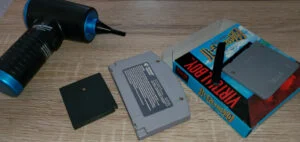
At the heart of ROM Cleaner’s innovation lies its astonishingly direct, yet seemingly counter-intuitive, operational mechanism. Unlike traditional data recovery tools that rely on complex algorithms, parity checks, or sector repair, ROM Cleaner leverages a direct human interface: a microphone and the user’s breath. Talavera elaborates, "If you find that one of your ROMs is beginning to degrade and won’t boot anymore, simply run it through ROM Cleaner to rid it of the dust that’s accumulated over the years. All you need is a microphone and a set of lungs, and you’ll never have to worry about dirt building up in your digital collection again."
This method proposes that a carefully calibrated "sonic cleansing" generated by human exhalation, captured and processed through RetroArch’s integrated microphone support, can physically dislodge or neutralize the "digital dust" that accumulates within the data structure of a ROM file. While the exact scientific principles underpinning this interaction remain a subject of ongoing research and theoretical speculation by the wider scientific community, initial testimonials from beta testers suggest a remarkable efficacy. The core’s internal algorithms are said to translate the unique sonic frequencies and air pressure variations from a user’s breath into specific digital signals that target and correct microscopic anomalies within the file’s binary code, restoring its integrity without altering its fundamental content.
This "biological-digital interface" represents a radical departure from conventional data management. Experts in data science and computer engineering have reacted with a mixture of skepticism and profound intrigue. Dr. Aris Thorne, a theoretical physicist specializing in quantum information and data entropy at the Veritas Institute, commented, "While the mechanism described by Mr. Talavera challenges current understandings of data integrity and repair, the history of scientific discovery is replete with examples of seemingly impossible solutions emerging from unconventional thinking. If ROM Cleaner genuinely achieves what is claimed, it could necessitate a complete re-evaluation of how we define digital degradation and the potential for direct human interaction to influence complex data structures at a foundational level."
A Chronology of Innovation and Release
The development of ROM Cleaner has been a clandestine effort, with Talavera secretly working on the project for an undisclosed period, preceding its public unveiling in March 2025. This stealthy development cycle allowed for extensive internal testing and refinement without external pressures.
- Early 2023: Jesse Talavera begins preliminary research into novel approaches for digital data repair, moving beyond traditional error correction codes. Initial concepts explore the potential of acoustic resonance and bio-feedback.
- Mid-2023: Prototype core development begins, integrating RetroArch’s existing microphone API. Early iterations are reportedly cumbersome and yield inconsistent results.
- Late 2023 – Early 2024: Significant breakthroughs in waveform analysis and digital "dust" identification algorithms are achieved. The core’s efficiency and reliability are substantially improved.
- Mid-2024: Extensive internal alpha testing with a diverse range of corrupted ROM files, from various platforms and eras. Feedback is overwhelmingly positive, prompting further optimization.
- Late 2024: Beta testing commences with a select group of trusted community members and digital archivists. The "lungs and microphone" interface is refined for user-friendliness and optimal performance.
- March 2025: Official public announcement and immediate release of ROM Cleaner through RetroArch’s core downloader, making it available on all supported platforms.
The swift transition from secret development to public release underscores Libretro’s confidence in the utility’s readiness and impact.
Statements and Community Reception
The official statement from Libretro emphasized the core’s alignment with their overarching mission: "Our mission is to keep yesterday’s games playable and fun for generations, and ROM Cleaner is my latest contribution to that effort." This reiterates Libretro’s commitment to long-term digital preservation, positioning ROM Cleaner as a vital tool in its arsenal.
Initial reactions from the retro gaming community have been a mix of astonishment, curiosity, and eager anticipation. Forums and social media channels dedicated to emulation and gaming history are abuzz with discussions about ROM Cleaner. Many users, accustomed to the frustration of unplayable ROMs, are expressing optimism. "I’ve got dozens of old ROMs I thought were dead and gone," commented a user on a popular emulation forum. "If this actually works, it’s a game-changer. Blowing into my cartridge was always part of the ritual anyway, so doing it for digital files feels… right, somehow."
However, a segment of the technical community remains cautiously optimistic, awaiting independent verification of the core’s claims. Dr. Evelyn Reed, a digital archivist at the Global Heritage Foundation, noted, "While we applaud any innovation that aids in digital preservation, the scientific basis for ‘blowing’ digital dust off a file requires rigorous, peer-reviewed validation. We are keen to observe the long-term performance and underlying mechanisms of ROM Cleaner."
Despite the academic scrutiny, the user-friendly nature of ROM Cleaner is expected to drive widespread adoption. The minimal requirements—a standard microphone and human breath—make it accessible to virtually anyone with a RetroArch installation, eliminating the need for specialized hardware or complex software knowledge often associated with data recovery.
Broader Impact and Implications for Digital Preservation
The introduction of ROM Cleaner has profound implications extending beyond the immediate benefit to individual retro gamers.
Redefining Digital Longevity: If proven effective on a broad scale, ROM Cleaner could fundamentally alter perceptions of digital data longevity. It suggests that digital files are not static entities immune to subtle environmental or energetic influences, but rather dynamic structures that can benefit from active, even unconventional, maintenance. This could pave the way for new theories on digital entropy and data resilience.
Economic and Cultural Value: The ability to reliably restore corrupted ROMs significantly increases the enduring value of digital game collections. For collectors, it mitigates the risk of losing valuable digital assets. For cultural institutions, it offers a novel method for maintaining the integrity of vast digital archives, potentially saving countless hours and resources previously allocated to more conventional (and often less effective) data repair strategies. The economic impact on the retro gaming market, which has seen a resurgence in recent years, could be substantial, ensuring the playability of classic titles for new generations.
The Future of Human-Computer Interaction: ROM Cleaner introduces a fascinating precedent for human-computer interaction, where a biological process (breathing) directly influences complex digital data manipulation. This concept, while currently unique to ROM Cleaner, could inspire further research into bio-feedback mechanisms for data management, security, or even creative applications. It blurs the lines between the physical and digital realms in a way previously confined to science fiction.
Accessibility and Democratization of Preservation: By simplifying the data repair process to an intuitive, almost ritualistic act, ROM Cleaner democratizes digital preservation. It moves complex technical challenges from the domain of specialists to the hands of every user, fostering a more engaged and empowered community of digital custodians. This aligns perfectly with Libretro’s open-source ethos, promoting widespread access to powerful tools.
Ethical and Philosophical Considerations: The concept of "cleaning" digital dust raises interesting philosophical questions about the nature of digital information. Is a "cleaned" ROM truly identical to its original state, or has it undergone a transformation? What are the long-term effects of repeated "cleanings" on data integrity? These questions will undoubtedly fuel discussions among digital ethicists and philosophers of technology.
In conclusion, Jesse Talavera’s ROM Cleaner stands as a testament to the innovative spirit within the Libretro community. While its underlying mechanics challenge established scientific paradigms, its potential impact on digital preservation, the retro gaming community, and the broader understanding of human-digital interaction is undeniable. As the core becomes more widely adopted and its long-term effects observed, it may well prove to be one of the most significant advancements in the ongoing effort to keep the digital past alive and playable for future generations, ushering in an era where a simple breath holds the power to restore forgotten worlds.