Johny Imanuel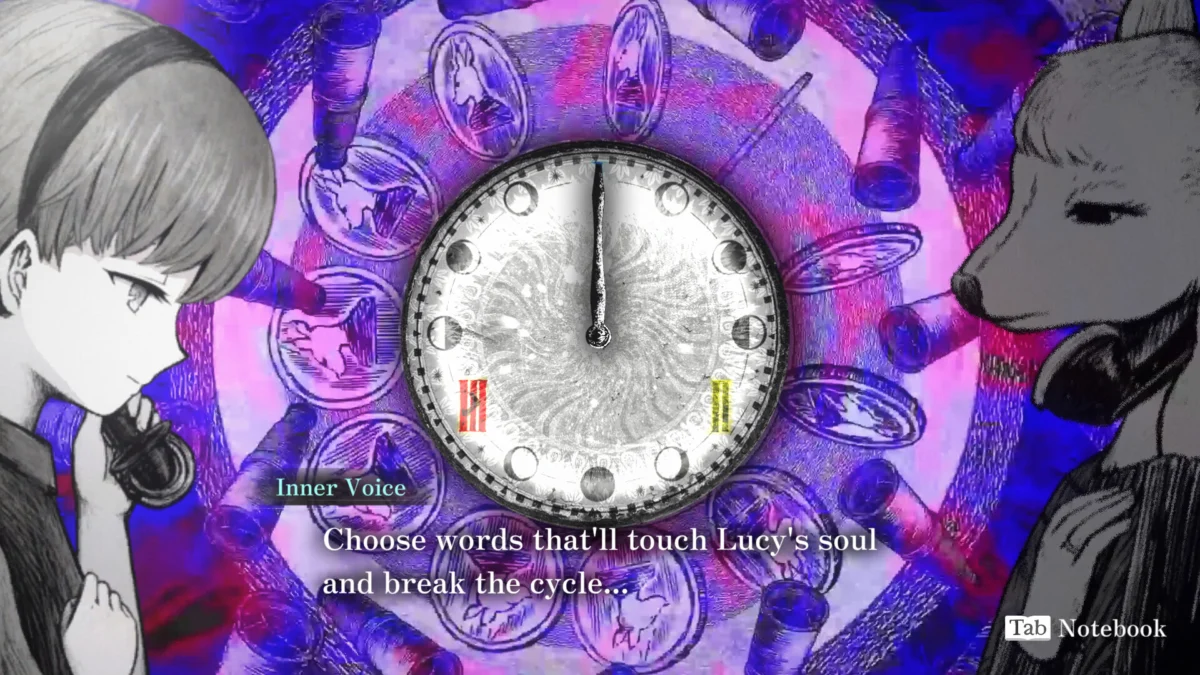
Narrative Framework and the Liminal Setting
The story of Schrodinger’s Call centers on a young woman named Mary, who awakens in a state of total amnesia. Her surroundings are characterized by a pervasive darkness—a liminal space existing between the boundaries of life and death. Mary is not alone in this void; she is accompanied by a mysterious, talking cat that serves as both a guide and a catalyst for her duties. This setting functions as a metaphysical hub where the laws of the physical world no longer apply, allowing for a narrative that focuses entirely on psychological and emotional resonance rather than survival mechanics.
Mary’s primary objective is to act as a listener. As the world ends, she receives phone calls from various individuals who are spending their final moments in isolation. These callers share their life stories, their unfulfilled desires, and the burdens they carry. By engaging with these individuals, Mary acts as a repository for their experiences. The game posits that by remembering these people, Mary grants them a form of salvation, allowing them to find closure and move on from their earthly existence. This mechanic ties directly into the title’s reference to Schrödinger’s cat—a state of being where individuals are neither fully gone nor fully present until they are "observed" or, in this case, remembered by the protagonist.
Kinetic Storytelling and Gameplay Mechanics
While Schrodinger’s Call is categorized as a visual novel, it incorporates elements typically found in adventure games to enhance player immersion. The gameplay is structured around "kinetic" storytelling, a subgenre of visual novels where the narrative follows a largely linear path. This design choice ensures that the developer’s specific thematic message remains focused and impactful, rather than being diluted by multiple branching endings that might contradict the game’s core philosophy regarding the inevitability of the end.

Player interaction is primarily handled through dialogue choices and environmental cues. Mary can respond to questions and events on-screen, though many of these choices are designed to build atmosphere rather than alter the plot. In certain sequences, the game requires the player to wait for the "correct" emotional response to appear, emphasizing the importance of patience and empathy in Mary’s role.
A central mechanic in the game is Mary’s notebook. As she listens to callers, key details about their lives, personalities, and social contexts are recorded. This notebook serves as a visual aid for the player, helping them piece together the broader mystery of Mary’s identity and the nature of the apocalypse. By chronicling these details, the game encourages players to think critically about the characters and the societal structures that existed before the world fell into darkness.
Artistic Direction and Auditory Atmosphere
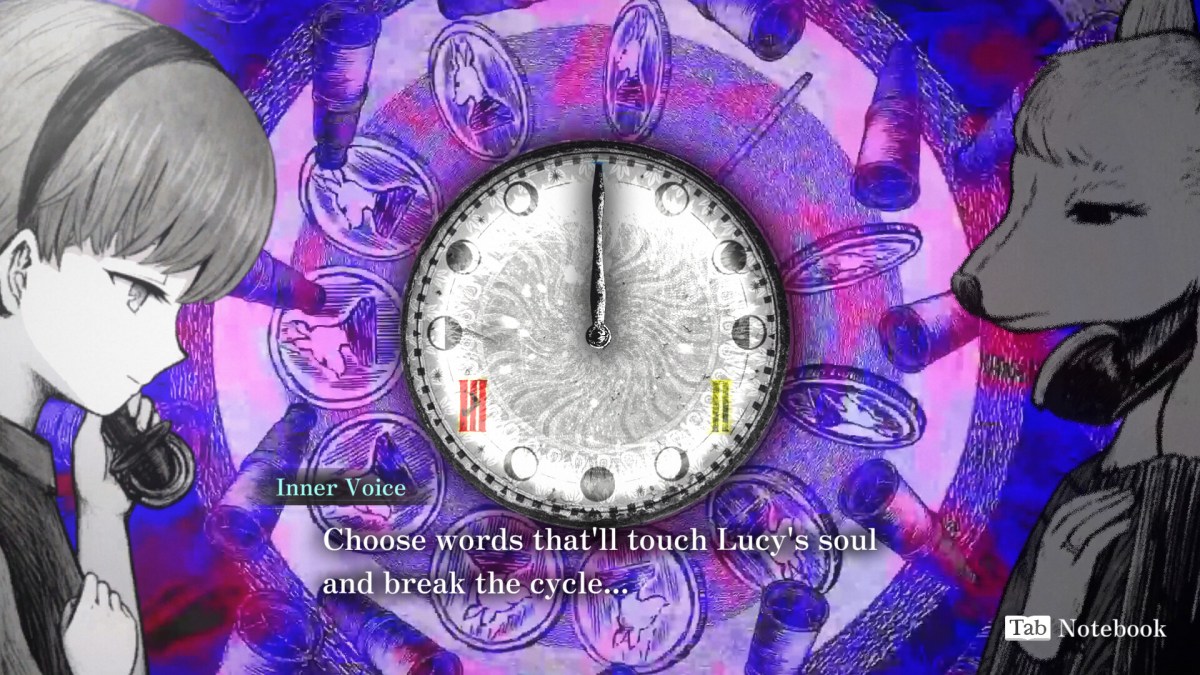
One of the most frequently cited aspects of Schrodinger’s Call is its striking visual style. Acrobatic Chirimenjako utilizes a surrealist art direction that emphasizes the "otherworldly" nature of the setting. The imagery is often evocative and abstract, using high-contrast colors and unusual character designs to represent the fragmented memories of the callers. This visual approach is intended to reflect the emotional state of the characters—often distorted by grief, fear, or nostalgia.
Complementing the visuals is a soundtrack designed to heighten the "emotional tug" of the narrative. The music alternates between somber, minimalist tracks during moments of quiet reflection and more intense compositions during the climax of a caller’s story. The synergy between the art and audio creates an engulfing atmosphere that has become a hallmark of Acrobatic Chirimenjako’s development style. This focus on sensory immersion is critical for a game that relies so heavily on the player’s ability to empathize with unseen characters.

Chronology of Development and Release
The journey of Schrodinger’s Call from concept to full release reflects the growing prominence of indie titles within the Japanese gaming industry. The game was first introduced to a wider audience through various indie showcases, where it garnered attention for its unique premise and art style.
- Initial Announcement: The project was unveiled as part of a collaboration with Shueisha Games, a publishing arm of the massive Japanese media conglomerate Shueisha. This partnership provided the indie developer with the resources and platform necessary to reach a global market.
- Demo Release: A playable demo was released on Steam, featuring the "Episode 1: Parent and Child" arc. This episode, focusing on a character named Lucy and her son, served as a proof-of-concept for the game’s emotional weight and mechanical structure.
- Full Launch: Following positive feedback from the demo, the full version of Schrodinger’s Call was launched on both PC (via Steam) and the Nintendo Switch. The dual-platform release was a strategic move to capture both the traditional visual novel audience on PC and the "cozy gaming" demographic on the Switch.
- Post-Launch Support: Since its release, the game has been updated to support multiple languages, ensuring that its message of universal human connection is accessible to a worldwide audience.
Thematic Analysis: Connection and Closure
At its core, Schrodinger’s Call is a meditation on the human desire for contact. Even in the face of total annihilation, the characters seek a witness to their existence. The game explores several complex themes:
- The Weight of Memory: The game suggests that an individual’s life only has meaning if it is acknowledged by another. Mary’s amnesia serves as a blank slate, making her the perfect vessel for these memories, as she has no preconceived notions or biases.
- The Ethics of the Listener: By forcing the player into a passive role—listening rather than intervening—the game challenges the traditional "hero" trope in video games. Mary cannot stop the apocalypse; she can only mitigate the emotional suffering of those caught in it.
- Societal Reflection: Through the various callers, the game touches on themes of family dynamics, social isolation, and the regrets of a modern society. The "Parent and Child" arc, in particular, has been noted for its realistic portrayal of maternal love and the fear of leaving a legacy behind in a dying world.
Market Reception and Industry Impact
The release of Schrodinger’s Call comes at a time when the visual novel genre is undergoing a period of experimentation. Traditionally associated with dating simulators or static mysteries, the genre has expanded to include "emotional simulators" and philosophical inquiries. Schrodinger’s Call fits into this new wave of titles, joining the ranks of games that prioritize mood and thematic depth over complex gameplay loops.
Industry analysts have noted that the success of such titles on platforms like the Nintendo Switch indicates a strong appetite for narrative-driven experiences that can be consumed in shorter sessions. While the game is linear, its "thought-provoking" nature encourages replayability as players seek to understand the nuances of the dialogue and the notebook entries.
The involvement of Shueisha Games is also significant. As a publisher, Shueisha has traditionally been known for its manga dominance (via Shonen Jump). Its move into the indie gaming space with titles like Schrodinger’s Call suggests a shift in how major Japanese media entities are looking to diversify their portfolios by supporting auteur-driven, niche projects that offer high artistic value.
Technical Specifications and Accessibility
For players interested in experiencing the title, Schrodinger’s Call maintains relatively low system requirements, making it accessible to a wide range of hardware configurations. On PC, the game is optimized for Windows 10/11 and requires minimal GPU power, focusing instead on processing the high-quality 2D assets and audio files. The Nintendo Switch version is optimized for both handheld and docked play, with the touch screen functionality of the Switch being utilized for menu navigation and notebook interaction in some regions.
The game is currently available for purchase on the Nintendo eShop and Steam. For those uncertain if the "kinetic" and emotional nature of the game suits their preferences, the demo remains available on Steam, offering a full chapter of gameplay that accurately represents the final product’s tone and mechanics.
Schrodinger’s Call stands as a testament to the power of minimalist storytelling. By stripping away the distractions of traditional combat or complex branching paths, Acrobatic Chirimenjako has created a space where the player can reflect on the nature of existence and the importance of being heard. As Mary continues to take calls in the darkness, the game serves as a reminder that even at the very end, the act of listening remains one of the most profound human gestures.