Edi Durjana
The digital preservation and emulation landscape has witnessed a significant leap forward with the release of RetroArch 1.20.0, an update poised to redefine the user experience for retro gaming enthusiasts worldwide. This latest iteration introduces a suite of advanced features, most notably a revolutionary CRT beam simulation shader leveraging "subframe" capabilities and pioneering illuminance sensor support for Linux, allowing for unprecedented levels of authentic gameplay and visual fidelity. Available for download immediately, this update reinforces RetroArch’s long-standing commitment to delivering a free, open-source, and ad-free platform dedicated to the end-user.
A Deep Dive into RetroArch’s Foundational Philosophy
RetroArch, as the flagship frontend for the Libretro API, has solidified its position as a cornerstone in the realm of video game emulation and digital preservation. Since its inception, the project has championed an unwavering philosophy centered on user experience, accessibility, and the principle of open-source development. Unlike many commercial software ventures that increasingly rely on in-app advertisements, monetization SDKs, or paywalled features, RetroArch has steadfastly resisted these common industry practices. This commitment ensures that its extensive library of cores—which encapsulate emulators, game engines, and media players—remains freely accessible and unencumbered by commercial distractions. This ethical stance has cultivated a deeply loyal community, fostering an environment where innovation is driven purely by the desire to enhance the preservation and enjoyment of classic games. The project’s longevity and continuous evolution, marked by regular updates that introduce significant new features and refinements, are a testament to the efficacy of this community-driven model. The developers frequently reiterate that the project’s existence and progress are directly attributed to the unwavering support and belief from its user base, highlighting a symbiotic relationship rarely seen in the tech world.
Revolutionizing Visuals: The Subframe Shader Technology
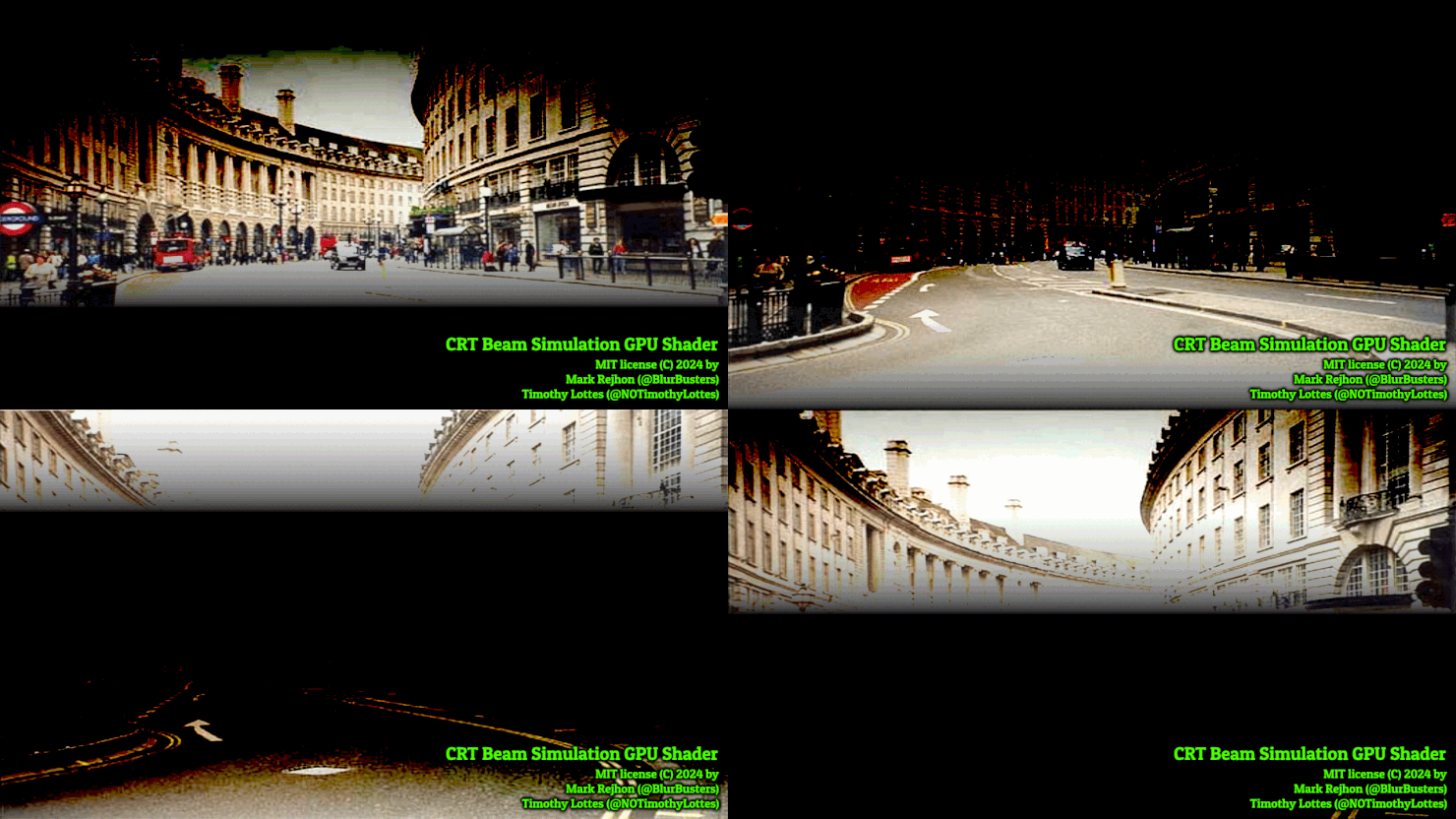
One of the most anticipated and technically impressive additions in RetroArch 1.20.0 is the new CRT beam simulation shader, a collaborative masterpiece developed by Mark Rejhon of BlurBusters and Timothy Lottes, renowned for his contributions to graphics rendering, including the original FXAA shader and the highly regarded crt-lottes shaders. This innovative shader is engineered to address one of the most persistent challenges in retro emulation on modern displays: accurately replicating the visual characteristics of cathode ray tube (CRT) monitors.
Traditional methods of enhancing motion clarity on contemporary LCD, LED, and OLED displays, such as black-frame insertion (BFI), often come with significant drawbacks. While BFI can reduce perceived motion blur by inserting dark frames between rendered frames, it typically results in a noticeable reduction in overall screen brightness, a dulling of colors, and in some cases, an increased risk of image persistence—a temporary form of "burn-in" particularly concerning for OLED panels and certain LCD types. The new shader sidesteps these limitations by leveraging RetroArch’s recently integrated "subframe" shader capabilities.
At its core, subframe rendering allows the graphics pipeline to process and display visual information at a granularity finer than the display’s native refresh rate. Instead of simply inserting black frames, this technology intelligently modulates the display output within the duration of a single frame, simulating the precise scanline behavior and phosphor decay characteristics of a CRT. This technique effectively "tricks" the human visual system into perceiving smoother motion and sharper images without the detrimental side effects associated with BFI. The result is a stunningly authentic CRT experience, complete with nuanced beam dynamics and scanline effects, that maintains the original brightness and vibrant color palette of the emulated content. For retro gaming purists, this represents a monumental achievement, bridging the gap between historical display technology and modern high-refresh-rate panels, delivering an unparalleled level of visual immersion previously thought unattainable without specialized hardware. The implications extend beyond mere aesthetics, offering a deeper connection to the original artistic intent behind classic game design.
The Minds Behind the Motion Clarity: Mark Rejhon and Timothy Lottes
The collaboration behind the groundbreaking CRT beam simulation shader brings together two titans in display technology and graphics. Mark Rejhon, the visionary behind BlurBusters.com, is globally recognized for his extensive research and advocacy for high refresh rate displays and motion clarity. His work has significantly influenced the gaming monitor industry, pushing for innovations that reduce motion blur and enhance visual responsiveness. Rejhon’s deep understanding of human perception and display technology has been instrumental in conceptualizing and refining the subframe-based CRT simulation.
Timothy Lottes, another pivotal figure, brings a wealth of experience from his illustrious career in game development and graphics programming. Credited with creating the original Fast Approximate Anti-Aliasing (FXAA) shader, a widely adopted technique for improving image quality, and the highly acclaimed crt-lottes shaders, Lottes has consistently demonstrated an exceptional ability to craft elegant and performant visual solutions. His expertise in shader development and real-time graphics rendering was crucial in translating the complex principles of CRT behavior into an efficient and visually stunning shader within the RetroArch framework. The synergy between Rejhon’s theoretical insights into motion clarity and Lottes’ practical mastery of shader implementation has culminated in a feature that stands as a testament to cutting-edge graphics engineering applied to the niche, yet passionate, world of retro gaming. This partnership underscores the collaborative spirit that often drives significant advancements in open-source projects, harnessing diverse expertise to achieve common goals.
Bringing Authentic Gameplay to Modern Systems: Linux Illuminance Sensor Support
Beyond visual enhancements, RetroArch 1.20.0 also pushes the boundaries of hardware integration with the introduction of illuminance sensor support for Linux, a pioneering effort led by developer Jesse Talavera. This feature is particularly exciting for fans of games that originally leveraged unique hardware functionalities, most notably the Nintendo DS title Boktai: The Sun is in Your Hand (and its sequels, including Lunar Knights), which famously incorporated a solar sensor into its game cartridges. In Boktai, sunlight was not merely a thematic element but a core gameplay mechanic, dictating everything from weapon power to puzzle solutions. Emulating such an intrinsic feature has historically posed a significant challenge, often requiring players to manually adjust in-game light levels or resort to less immersive workarounds.
Jesse Talavera’s ingenious integration now allows Linux users, particularly those on devices like the Steam Deck equipped with ambient light sensors, to experience Boktai and similar titles with real-world light detection. This means that adjusting the physical lights in a room can directly influence the gameplay, providing an unprecedented level of authenticity to the emulation experience. A compelling video demonstration showcases Lunar Knights running on a Steam Deck, with the game dynamically responding as Talavera manipulates ambient light levels. This capability is not just a novelty; it represents a significant step forward in preserving the full fidelity of retro gaming experiences, ensuring that unique hardware-dependent mechanics are not lost to time or technological obsolescence.
The technical implementation of this feature involved interfacing with Linux’s sensor frameworks, likely utilizing system calls and device drivers (e.g., via udev rules and iio subsystem) to read real-time data from integrated illuminance sensors. This robust integration paves the way for future hardware interactions, as hinted by the developers. The announcement indicates that the melonDS DS core’s next update will include solar sensor support, directly benefiting from this RetroArch-level integration. Furthermore, the project plans to introduce camera support for more platforms soon after the 1.20.0 release, suggesting a broader strategy to enable a wider array of unique gameplay mechanics that relied on external peripherals or sensors in their original incarnations. This move signifies RetroArch’s ambition to go beyond mere software emulation, striving for a holistic recreation of the original gaming environment, encompassing both visual and interactive elements.
Beyond the Marquee Features: A Suite of Enhancements
While the shader subframes and illuminance sensor support are the headline features of RetroArch 1.20.0, a comprehensive update of this magnitude invariably includes a plethora of other improvements that enhance performance, stability, and user experience across the board. Although a detailed changelog was not fully provided in the initial announcement, typical RetroArch releases feature:
- Core Updates: Continuous integration of the latest versions of various emulation cores (e.g., for NES, SNES, Sega Genesis, PlayStation, Arcade, N64, Game Boy Advance, etc.). These updates often bring improved accuracy, better performance, and compatibility with a wider range of games.
- Performance Optimizations: General code optimizations that lead to reduced latency, smoother frame rates, and more efficient resource utilization, benefiting all users regardless of their hardware.
- Bug Fixes: Addressing various bugs and glitches reported by the community, ranging from minor UI inconsistencies to critical issues affecting specific cores or platforms, ensuring a more stable and reliable experience.
- UI/UX Refinements: Enhancements to the user interface, such as improved menu navigation, clearer settings, and better accessibility options, making the powerful software more intuitive for new and experienced users alike.
- Platform-Specific Improvements: Beyond the Linux illuminance sensor, releases often include optimizations for specific operating systems or hardware configurations, ensuring RetroArch runs optimally across its vast array of supported platforms, including Windows, macOS, Android, iOS, and various gaming consoles.
- Shader System Enhancements: Ongoing development of the shader system, which allows for advanced post-processing effects, often includes new parameters, improved performance, and expanded compatibility.
These incremental yet crucial updates contribute significantly to RetroArch’s reputation as a robust and continuously evolving emulation platform, ensuring it remains at the forefront of digital game preservation.
The Lifeline of Open-Source: Community Support and Sustainability
RetroArch’s journey from a niche project to a globally recognized emulation powerhouse is intrinsically linked to its community-driven, open-source model. The developers explicitly state that the project’s very existence hinges on the support and belief of its users. In an era where many software projects succumb to commercial pressures, RetroArch proudly maintains its commitment to being free, open-source, and entirely devoid of intrusive monetization strategies like in-app ads, monetization SDKs, or paywalled features. This principled stance, while lauded by its user base, necessitates alternative funding mechanisms to sustain its development, infrastructure, and the dedicated efforts of its volunteer developers.
To this end, RetroArch offers several avenues for community members to contribute financially. These include:
- Patreon: A popular platform for creators to receive recurring support from their audience. Patrons typically pledge a small monthly amount, providing a stable income stream for ongoing development.
- GitHub Sponsors: GitHub’s native sponsorship program allows individuals and organizations to financially support developers and projects directly on the platform, often offering tiered benefits or recognition.
- Teespring Merch Store: Offering official RetroArch merchandise, such as t-shirts, hoodies, and accessories, allows fans to show their support while also contributing to the project’s funds. This also serves as a subtle form of branding and community identity.
These diverse funding models are critical for the project’s sustainability, enabling developers to dedicate time and resources to research, coding, debugging, and maintaining the extensive Libretro ecosystem. This reliance on community goodwill underscores the unique challenges and triumphs of large-scale open-source initiatives, demonstrating that a shared passion for digital preservation can indeed fuel continuous innovation outside traditional commercial frameworks. The transparency in their funding appeal further solidifies the trust between the developers and their global user base.
Looking Ahead: The Future Trajectory of RetroArch and Emulation
The release of RetroArch 1.20.0 is not merely an update; it is a significant indicator of the project’s ambitious trajectory and its unwavering commitment to pushing the boundaries of what is possible in emulation. The innovative shader subframes technology sets a new benchmark for visual authenticity, demonstrating that modern displays can indeed replicate the nuanced aesthetics of classic CRT monitors without compromise. This advancement has profound implications for the preservation of visual experiences, ensuring that future generations can appreciate retro games as they were originally intended to be seen.
Simultaneously, the introduction of illuminance sensor support for Linux heralds a new era of hardware integration within emulation. By actively seeking to replicate unique, real-world interactions that were once proprietary to original hardware, RetroArch is bridging the gap between digital simulation and tangible experience. The promise of expanded camera support and other sensor integrations suggests a future where emulation is not just about running old code, but about fully immersing players in the original context of games, regardless of their reliance on external peripherals.
The ongoing dedication to an open-source, ad-free model, sustained by a passionate community, positions RetroArch as a vanguard in the digital preservation movement. It serves as a powerful testament to the idea that technological advancement, ethical development, and user-centric design can coexist and thrive. As RetroArch continues to evolve, its impact will extend beyond individual gamers, contributing significantly to the broader academic and cultural efforts to archive and make accessible the rich history of video games. This latest release firmly establishes RetroArch’s role not just as an emulator, but as a critical platform for interactive digital heritage.
Conclusion: Setting New Benchmarks in Digital Preservation
RetroArch 1.20.0 represents a landmark release that significantly elevates the standard for retro game emulation. By delivering groundbreaking visual enhancements through its subframe shader technology and pioneering hardware integration with Linux illuminance sensor support, the project continues to demonstrate its leadership in digital preservation. These advancements, coupled with RetroArch’s steadfast commitment to an open-source, ad-free, and user-centric philosophy, underscore its vital role in making gaming history accessible and enjoyable for a global audience. The continued reliance on community support highlights a sustainable model for innovation, ensuring that the future of emulation remains bright and focused on the player experience.