Edi Durjana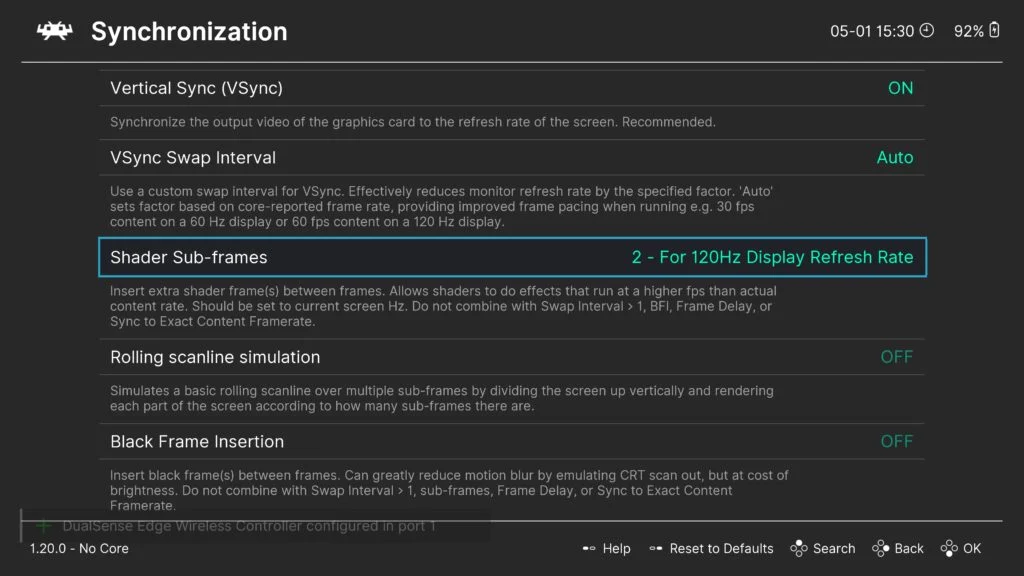
The landscape of retro gaming emulation and display technology has taken a significant leap forward with the official release of a groundbreaking shader designed to drastically enhance motion clarity on modern flat-panel displays. Developed collaboratively by Mark Rejhon, founder of the renowned display performance authority Blur Busters, and Timothy Lottes, the industry veteran celebrated for creating the original Fast Approximate Anti-Aliasing (FXAA) shader and the acclaimed crt-lottes shaders, this new tool bridges the historical gap between vintage cathode-ray tube (CRT) monitors and contemporary high-refresh-rate panels.
Integrated natively into the newly launched RetroArch 1.20.0 ecosystem, the shader leverages innovative "subframe" capabilities to operate at precise multiples of standard content framerates. This technical achievement allows users running high-refresh-rate monitors of 120 Hz and above to experience unprecedented motion sharpness. Crucially, it accomplishes this feat while bypassing the traditional drawbacks historically associated with conventional black-frame insertion (BFI) implementations, such as excessive panel flicker and severe luminance degradation.
Background Context and the Evolution of Motion Clarity
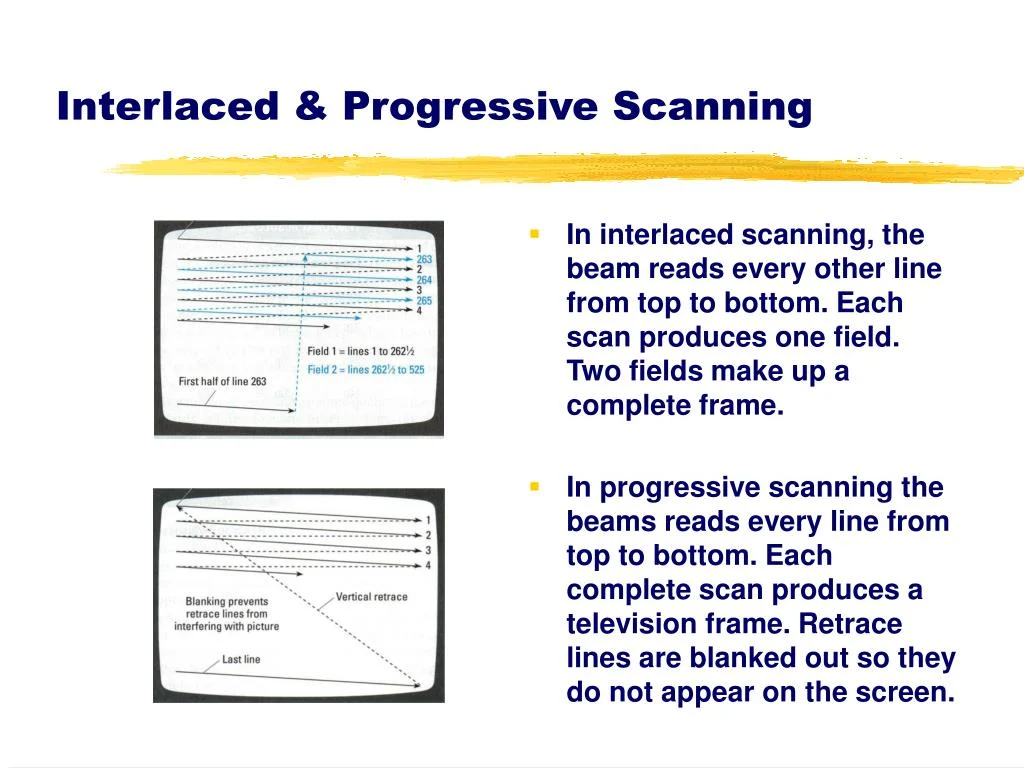
To understand the magnitude of this release, one must examine the historical shift in display technology over the past three decades. Traditional CRT monitors relied on impulse-type emission, where a physical electron beam scanned across phosphor coatings, illuminating pixels momentarily before they faded rapidly. This natural sample-and-hold behavior prevented motion blur because the human eye tracked moving objects across discrete, brief flashes of light.
With the advent of flat-panel displays—including Liquid Crystal Displays (LCDs) and Organic Light-Emitting Diodes (OLEDs)—the industry shifted entirely to a sample-and-hold methodology. In this paradigm, pixels remain continuously illuminated for the duration of an entire frame until the next image is rendered. While this eliminated geometric distortion and physical bulk, it introduced a persistent visual artifact: sample-and-hold motion blur. As the human eye pursues a moving object smoothly across a continuously lit screen, the eye moves continuously while the image updates discretely in steps, resulting in perceived retinal blur.
For years, display engineers attempted to mitigate this issue through Black-Frame Insertion (BFI), a technique that artificially injects blank black frames between rendered content frames to mimic the impulse behavior of CRTs. However, conventional hardware and software BFI implementations frequently suffer from critical flaws, including drastic reductions in peak brightness, uneven frame pacing, and a fatiguing, low-frequency flicker that causes eye strain for many users.
The collaboration between Mark Rejhon and Timothy Lottes directly addresses these structural limitations. By utilizing RetroArch’s newly introduced Shader Sub-frames architecture—first made available in version 1.20.0 and subsequent nightly builds—the shader can execute multiple subframe passes within a single content frame window. This enables a simulated, high-frequency raster scanning effect, often referred to as CRT beam-racing, which successfully restores vintage motion clarity without sacrificing the structural integrity of modern panel hardware.
Technical Implementation and Setup Procedures
Deploying the new shader requires specific hardware prerequisites and software configurations to ensure optimal performance. The implementation is formally hosted and documented via its official Shadertoy demonstration (accessible at www.shadertoy.com/view/XfKfWd), and the pre-made presets can be readily accessed within the RetroArch environment under the directory shaders_slang/presets/crt-beam-simulator.
To achieve seamless integration, users must operate RetroArch version 1.20.0 or a later nightly build, as legacy iterations lack the foundational Shader Sub-frames infrastructure required to process multi-pass timing sequences. Once the software environment is prepared, the CRT beam-racing preset can be loaded directly or prepended to existing shader chains, allowing enthusiasts to combine the motion-clarity benefits of the new tool with their preferred traditional CRT curvature, mask, and color-glow shaders.
Because display hardware varies wildly across different manufacturers, panel types, and refresh rates, the shader includes several adjustable runtime parameters. Proper calibration is essential to achieve a balanced visual presentation. Users must fine-tune the gamma correction parameters to eliminate anomalous dark scanline artifacts and establish a stable equilibrium between peak panel brightness and motion sharpness.
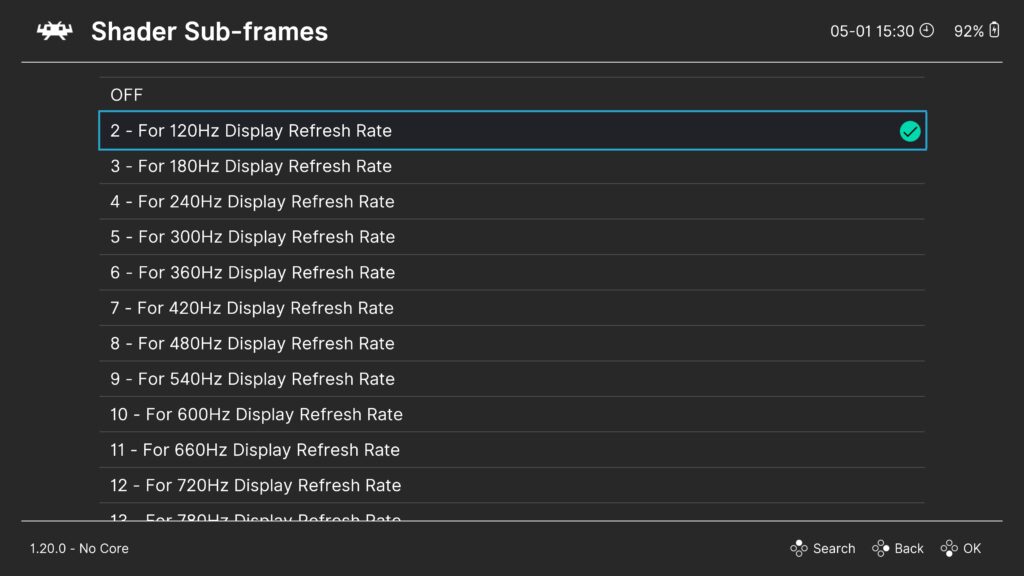
According to development benchmarks, specific target values yield optimal results depending on the hardware’s refresh capacity. For standard 120 Hz monitors, which process two subframes per content frame, a gamma and intensity parameter value of approximately 0.5 delivers ideal performance. Conversely, for ultra-high-refresh-rate 240 Hz displays capable of executing four subframes, a value of approximately 0.7 is recommended to maintain proper luminance distribution.
Key Advantages Over Conventional Black-Frame Insertion
The introduction of the Blur Busters and Timothy Lottes collaborative shader marks a distinct departure from older motion-enhancement techniques. Industry analysts and display calibration experts have highlighted several core advantages that set this implementation apart from legacy BFI software:
- Minimized Luminance Loss: Traditional software BFI often cuts overall image brightness in half or worse by dedicating fifty percent of the refresh cycle entirely to black frames. The subframe shader utilizes sophisticated timing algorithms that optimize photon emission windows, preserving significantly more visual punch and dynamic range.
- Elimination of High-Amplitude Flicker: By staggering the raster simulation across multiple high-frequency subframes rather than globally flashing the entire backlight or display canvas at content frame rates, the perceived flicker is shifted to much higher frequencies, rendering it virtually imperceptible to the human eye.
- Universal Preset Compatibility: Unlike proprietary hardware BFI solutions locked to specific monitor firmware or manufacturer-specific OSD settings, this shader functions entirely within the software pipeline, offering granular user control and compatibility with existing slang shader chains.
- Custom Raster Positioning and Timing Offsets: The inclusion of runtime parameters allows users to manually adjust the physical positioning of the simulated scanning beam, ensuring that any minor artifacting can be shifted to the least obtrusive section of the viewing area.
Hardware-Specific Considerations for OLED and LCD Panels
A critical consideration in the deployment of CRT simulation shaders is the physical behavior of modern display panels under rapid impulse stimulation. While Liquid Crystal Displays frequently suffer from image persistence—a phenomenon caused by DC voltage accumulation across liquid crystal molecules when subjected to continuous on/off flickering—OLED panels are fundamentally immune to this specific degradation vector due to their self-emissive organic pixel architecture.
Furthermore, display refresh rates play a vital role in how the simulated raster line behaves visually. Monitors operating at odd integer multiples of standard 60 Hz content, such as specialized 180 Hz configurations, can experience visual scrolling anomalies if the scanning cycle does not align evenly with the display’s native refresh interval. To accommodate these diverse hardware configurations, the development team integrated a dedicated runtime parameter designed to disable the cycle timing offset. This control effectively stops the simulated raster line from drifting or rolling vertically across the screen, ensuring a rock-solid presentation regardless of the host monitor’s native refresh ceiling.
Community Support and Troubleshooting Resources
Given the complex interplay between emulator configurations, graphics application programming interfaces (APIs), and modern GPU drivers, the Libretro development team and Mark Rejhon have established robust support pipelines to assist users during the adoption phase.
Mark Rejhon has published a comprehensive Frequently Asked Questions (FAQ) and troubleshooting repository hosted on GitHub (available at github.com/blurbusters/crt-beam-simulator/issues/4), which addresses common edge cases, performance bottlenecks, and compatibility questions. In addition, users seeking real-time assistance can leverage the established Libretro community channels, including the official Discord server, the Reddit community, and the primary Libretro support forums.
Broader Impact and Implications for the Emulation Community
The release of the CRT beam-racing subframe shader represents more than a mere visual enhancement for retro gaming enthusiasts; it signifies a maturing synergy between display science and software emulation. For decades, preserving the authentic feel of arcade cabinets and classic home consoles was hampered by the physical disappearance of CRT monitors and the inherent motion-handling deficiencies of early flat panels.
As high-refresh-rate gaming monitors and high-luminance OLED televisions continue to saturate the consumer market, software-based solutions like those engineered by Rejhon and Lottes provide a sustainable, highly customizable bridge to the past. By unlocking the latent potential of modern panel refresh rates, this development ensures that future generations of digital preservationists and gamers can experience classic titles with the exact motion fidelity, responsiveness, and visual clarity intended by their original developers, all without the environmental and spatial burdens of maintaining aging cathode-ray hardware.