Cecilia Chamidah Nur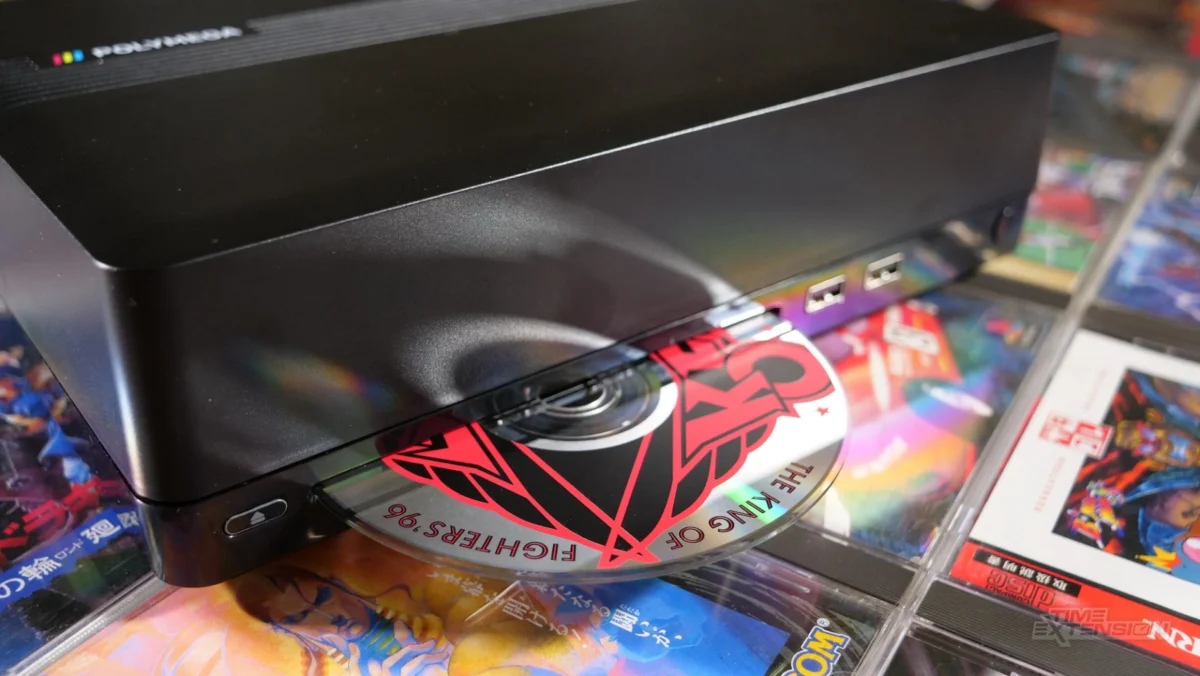
The modular retro gaming system, Polymega, is set to significantly expand its capabilities, with manufacturer Playmaji confirming that two new, as-yet-unnamed, vintage CD-based systems will soon receive official support. This announcement, made via the official Polymega Twitter account, signals a positive trajectory for the system, following a period marked by developmental hurdles and supply chain challenges. The new support will extend to both the Polymega Base Unit and the recently announced Polymega App, solidifying the system’s role as a comprehensive platform for digital and physical retro game preservation.
This development arrives in 2026, a year Playmaji has previously indicated as a turning point for the Polymega ecosystem. Earlier in the year, the company confirmed a significant power upgrade for the system, alongside the highly anticipated launch of the Polymega Remix, a more compact, digital-focused variant, and the Polymega App, designed to extend the system’s functionality to other devices. The addition of new CD system compatibility underscores Playmaji’s commitment to continuously enhancing the Polymega’s value proposition for retro gaming enthusiasts worldwide.
The Polymega Ecosystem: A Hybrid Approach to Retro Gaming
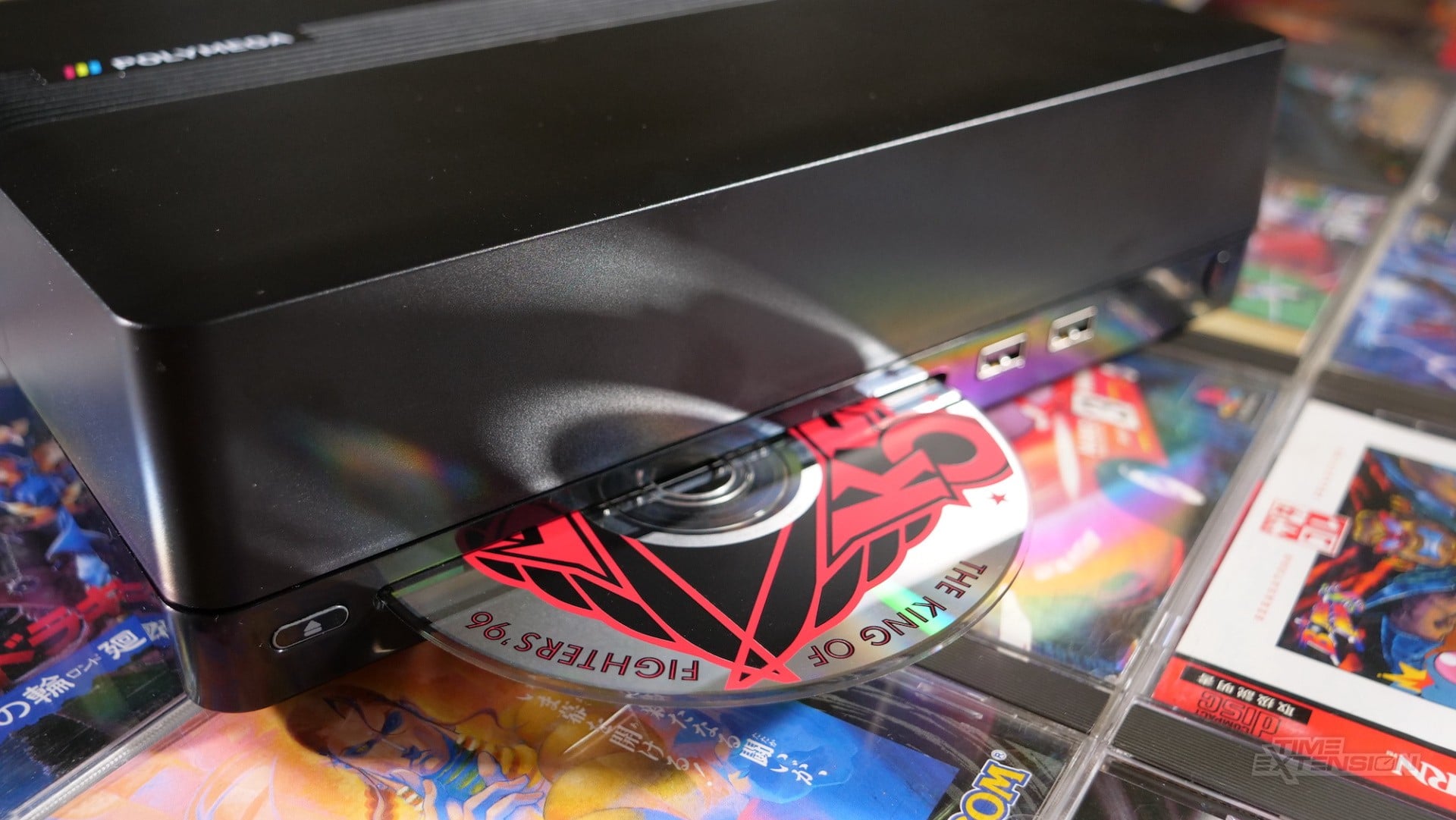
At its core, the Polymega is an emulation-based system distinguished by its unique modular design. It offers a hybrid solution for playing classic video games, catering to both purists who prefer original physical media and modern gamers seeking convenience and digital organization. The central component, the Base Unit, features a CD-ROM drive and internal storage, capable of running games from supported disc-based consoles. Complementing this are Element Modules, which are cartridge-based adapters that allow users to play games from various classic cartridge systems, such as the NES, SNES, Genesis, and N64.
A key feature of the Polymega is its ability to install games directly from original cartridges and CDs onto the system’s internal storage. This process not only preserves the user’s physical media but also creates a curated digital library accessible through Polymega’s intuitive interface. This interface automatically matches installed titles with high-resolution box art, detailed screenshots, and comprehensive game descriptions, offering a modern, streamlined experience reminiscent of contemporary digital storefronts. This approach addresses common frustrations in retro gaming, such as managing bulky physical collections, dealing with aging hardware, and the complexities of setting up multiple consoles.
The system’s appeal lies in its promise to simplify retro gaming without sacrificing the authenticity of playing original media. By leveraging advanced emulation technology, Polymega aims to provide accurate reproductions of classic gaming experiences, often with enhancements like save states, cheat codes, and modern display options, while still allowing users to "dump" their physical media.
A Journey Through Development: Polymega’s Chronology and Challenges
The path to Polymega’s current standing has been anything but smooth. First announced several years prior to its initial launch, the system quickly garnered significant attention from the retro gaming community, promising an all-in-one solution that many had dreamed of. Pre-orders commenced with considerable enthusiasm, fueled by the vision of a single device capable of playing a vast library of classic games across multiple platforms.
However, Playmaji, like many hardware startups, encountered substantial obstacles. Production was severely hampered by global component shortages, particularly evident in 2022, which led to significant delays in manufacturing and shipping. These delays tested the patience of early adopters and led to a period of uncertainty and skepticism surrounding the project’s viability. Distribution issues further compounded these problems, creating bottlenecks in getting the finished units into the hands of eager customers.
Despite these setbacks, Playmaji has continued to communicate updates and demonstrate progress. The year 2026 appears to be a pivotal moment, with the company aggressively moving to fulfill long-standing commitments and introduce new product lines. The announced power upgrade addresses a common request for improved performance, potentially allowing for more demanding emulation or future enhancements. The introduction of the Polymega Remix suggests a strategy to broaden market appeal with a potentially more affordable or streamlined digital-only option, while the Polymega App aims to integrate the system’s library and features into a wider digital ecosystem, offering greater flexibility and accessibility for users. This recent expansion of CD support is a direct outcome of this renewed focus and improved operational capacity.
Expanding the CD-ROM Catalogue: The Announcement Details
The official confirmation of new CD system support came directly from Playmaji’s social media channels. In a concise statement, the Polymega Twitter account declared: "This isn’t Remix specific but we do have two brand new vintage CD systems locked and loaded that will be supported on both Base Unit and App. More details forthcoming." This statement, while brief, generated immediate excitement and speculation within the retro gaming community.
The phrasing "locked and loaded" suggests that the development work for these systems is well underway, if not already completed, indicating an imminent reveal. The emphasis on "vintage CD systems" further narrows the scope, confirming that Playmaji is focusing on platforms from the 1990s and early 2000s that relied on optical media. Crucially, the support for both the Base Unit and the App means that existing Polymega owners will benefit from the update, and users of the new digital App will also gain access to these expanded libraries without needing the physical console.
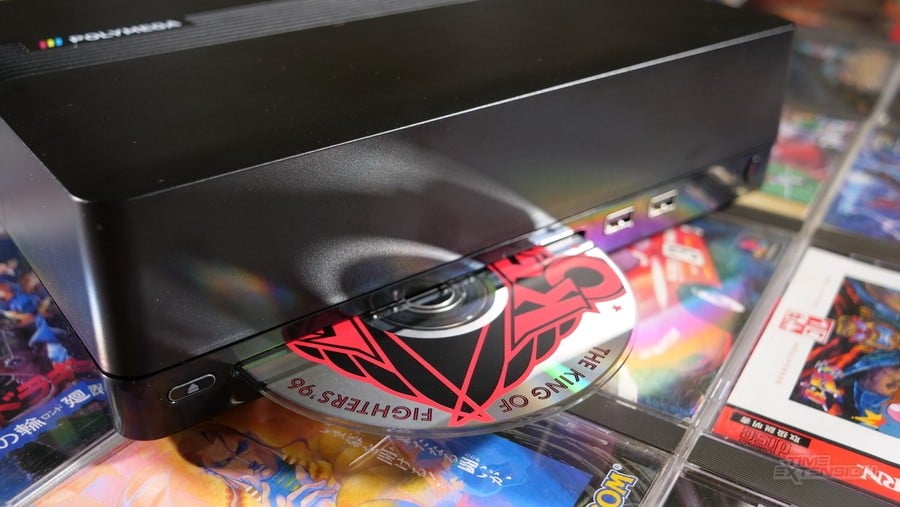
Currently, the Polymega boasts an impressive roster of supported CD-ROM systems, including the Sega CD/Mega CD, TG-16 CD/PCE-CD (TurboGrafx-16 CD/PC Engine CD), Sony PlayStation 1, Sega Saturn, and Neo Geo CD. These systems represent some of the most iconic and influential CD-based consoles of their era, offering vast and diverse game libraries that are now easily accessible through the Polymega. The upcoming addition of two more systems will further cement Polymega’s position as a leading platform for disc-based retro gaming.
Decoding the Candidates: A Deep Dive into Potential New Systems
Given the existing lineup, the retro gaming community has already begun speculating on which two "vintage" CD-based systems Playmaji might be preparing to support. The pool of potential candidates represents some of the more niche, technologically ambitious, or commercially challenging platforms from the CD-ROM era.
-
3DO Interactive Multiplayer: Launched in 1993, the 3DO was a highly ambitious multimedia console developed by The 3DO Company and manufactured by partners like Panasonic, Sanyo, and GoldStar. It boasted impressive hardware specifications for its time, with a focus on CD-ROM technology for storage and full-motion video (FMV) capabilities. Despite a strong initial buzz and a notable library featuring titles like Gex, Road Rash, and Myst, its exorbitant launch price (around $700) and the rise of more affordable and focused competitors like the PlayStation and Saturn ultimately led to its commercial struggles. Emulating the 3DO can be complex due to its unique architecture, making it a prime candidate for a dedicated emulation system like Polymega. Its inclusion would open up a significant and often overlooked library of games.
-
Commodore CD32 & CDTV: These systems represent Commodore’s forays into multimedia and console gaming. The Commodore CDTV (Commodore Dynamic Total Vision), launched in 1991, was an early attempt at a multimedia home entertainment system, essentially an Amiga 500 in a VCR-like case with a CD-ROM drive. Its successor, the CD32, released in 1993, was a more focused game console based on the Amiga 1200 hardware. The CD32 achieved some success, particularly in Europe, leveraging the Amiga’s established software base and offering a compelling 32-bit experience before the PlayStation era truly began. Its library includes many Amiga classics adapted for CD, alongside original titles. Both systems are highly sought after by collectors and present interesting emulation challenges due to their Amiga roots and unique CD-ROM formats.
-
FM Towns Marty: Released exclusively in Japan by Fujitsu in 1993, the FM Towns Marty was marketed as the world’s first 32-bit multimedia console with a built-in CD-ROM drive. It was essentially a consumer version of Fujitsu’s FM Towns line of personal computers, renowned for their graphical capabilities and extensive software library, including many arcade ports and unique Japanese titles. The Marty was technically advanced for its time but suffered from a high price and limited availability outside Japan. Its rarity and the quality of its exclusive software make it a highly desirable system for preservation and emulation. Polymega’s support would make its obscure but rich library accessible to a global audience.
-
NEC PC-FX: NEC’s 32-bit console, launched in Japan in 1994, was the successor to the highly successful PC Engine (TurboGrafx-16). Unlike its competitors, the PlayStation and Saturn, which embraced 3D polygon graphics, the PC-FX focused heavily on 2D animation and full-motion video (FMV). Its distinctive tower design and unique architecture, featuring three V810 RISC CPUs, made it powerful for its intended purpose but limited its 3D capabilities. This niche focus and its release during a period dominated by 3D gaming led to its commercial failure. However, it boasts a unique library of anime-style adventure games, visual novels, and shmups that are highly regarded by fans of Japanese retro gaming. Emulating its specific hardware and video capabilities would be a significant technical achievement for Polymega.
-
Atari Jaguar CD: An add-on for the Atari Jaguar console, released in 1995, the Jaguar CD aimed to extend the life and capabilities of Atari’s struggling 64-bit system. It featured a double-speed CD-ROM drive and 6 MB of RAM, enhancing the Jaguar’s multimedia potential. Despite its technical ambition, the Jaguar CD suffered from a minuscule library of games, many of which were ports or FMV titles that failed to impress. The commercial failure of the base Jaguar console meant the add-on never gained significant traction. However, its rarity and historical significance as Atari’s final console-related hardware make it a valuable target for preservation efforts.
-
Apple Pippin: A largely forgotten chapter in Apple’s history, the Pippin was a multimedia console developed by Apple and licensed to Bandai, released in 1996 primarily in Japan and briefly in the U.S. Based on a stripped-down version of Mac OS, it was designed as an "internet appliance" with gaming capabilities. Its high price, limited software library, and the general confusion about its market positioning led to its rapid demise. The Pippin represents a unique and somewhat bizarre footnote in console history, and its inclusion on Polymega would be a significant historical and technical achievement, making its extremely rare software accessible.
-
Bandai Playdia: Another Japan-exclusive system from 1994, the Playdia was Bandai’s entry into the CD-ROM console market. Targeted primarily at a younger audience, it focused on interactive educational software and full-motion video (FMV) games featuring popular anime characters. The console was relatively low-powered and simplistic, offering a distinct experience from its more graphically intensive competitors. While not a powerhouse, its unique library and target demographic make it an interesting piece of retro gaming history that would broaden Polymega’s already diverse offerings.
Each of these systems presents distinct challenges and opportunities for emulation, from their unique hardware architectures and custom chips to the nuances of their CD-ROM drives and BIOS implementations. Successfully adding support for any two of these would demonstrate Polymega’s advanced emulation capabilities and dedication to comprehensive retro game preservation.
Technical and Emulation Considerations
Emulating CD-ROM based systems is inherently more complex than cartridge-based ones. It requires not only precise simulation of the console’s CPU, GPU, and sound chips but also accurate replication of the optical drive’s behavior, including seek times, data transfer rates, and error handling. BIOS files, which are proprietary to each console and essential for booting games, also need to be correctly handled. For systems like the 3DO or FM Towns Marty, which had intricate multimedia capabilities, or the PC-FX, with its specific 2D acceleration, the emulation task becomes even more demanding.
Polymega’s reliance on software-based emulation, as opposed to hardware-level FPGA (Field-Programmable Gate Array) solutions favored by some competitors, means that the accuracy and performance are heavily dependent on its internal processing power and the sophistication of its emulation software. The "power upgrade" announced for 2026 is therefore a critical factor, potentially providing the necessary computational headroom to handle the intricacies of these more challenging CD-based systems with high fidelity.

Furthermore, the introduction of the Polymega App suggests a multi-platform strategy. This App will likely leverage the same core emulation engines as the Base Unit, but its performance will depend on the host device’s capabilities. This broadens the reach of Polymega’s software library, allowing users to play their installed games on PCs, mobile devices, or other compatible platforms, further enhancing the system’s value proposition.
Implications for the Retro Gaming Community and Preservation
The expansion of Polymega’s CD-ROM library carries significant implications for the retro gaming community and the broader field of video game preservation:
- Enhanced Accessibility: Many of the potential candidate systems (e.g., FM Towns Marty, Apple Pippin) are incredibly rare and expensive on the secondary market. Physical hardware can be prone to failure, and finding working units and games can be a daunting task. Polymega’s support makes these historically significant libraries accessible to a much wider audience, democratizing access to obscure gaming history.
- Digital Preservation: By allowing users to install games from original CDs onto its internal storage, Polymega facilitates the digital preservation of these titles. This process creates accessible digital backups, reducing reliance on fragile physical media and ensuring that these games can be enjoyed for generations to come, even if original discs degrade.
- Streamlined User Experience: For collectors with diverse physical libraries, Polymega offers a unified, modern interface. Instead of juggling multiple consoles, cables, and power supplies, users can access their entire collection from a single system, complete with modern display options and quality-of-life features. This significantly reduces the friction associated with retro gaming.
- Solidifying Market Position: In a competitive retro hardware market that includes FPGA-based solutions like Analogue’s consoles and the MiSTer project, Polymega carves out its niche by offering a user-friendly, all-in-one, physical-media-compatible emulation solution. Expanding its library, especially with unique CD-based systems, strengthens its appeal to those who prioritize convenience, a curated interface, and broad multi-platform support.
- Future Growth Potential: This move signals Playmaji’s ongoing commitment to the platform and suggests potential for future expansions, either through more obscure console support or possibly even integration with digital storefronts for legally available retro titles. The community’s active participation in suggesting desired systems also indicates a healthy feedback loop that could guide future development.
Conclusion
The announcement of forthcoming support for two additional vintage CD-based systems marks another significant milestone in Polymega’s journey. Despite its turbulent development history, Playmaji appears to have successfully navigated past challenges, positioning 2026 as a year of substantial growth and renewed focus for the modular retro gaming system. With a power upgrade, the introduction of the Polymega Remix, and the Polymega App, the platform is evolving to offer greater accessibility and functionality than ever before.
The anticipation surrounding the reveal of these two new CD-ROM consoles is palpable within the retro gaming community. Whether it’s the multimedia prowess of the 3DO, the Amiga-powered charm of the CD32, or the obscure Japanese treasures of the FM Towns Marty or PC-FX, their inclusion will undoubtedly enrich Polymega’s already extensive library and further solidify its reputation as a premier solution for playing and preserving the rich history of video games. As Playmaji prepares to unveil the specifics, the retro gaming world watches with keen interest, eager to welcome more beloved (and often forgotten) classics into the modern era.