Indra Gunadi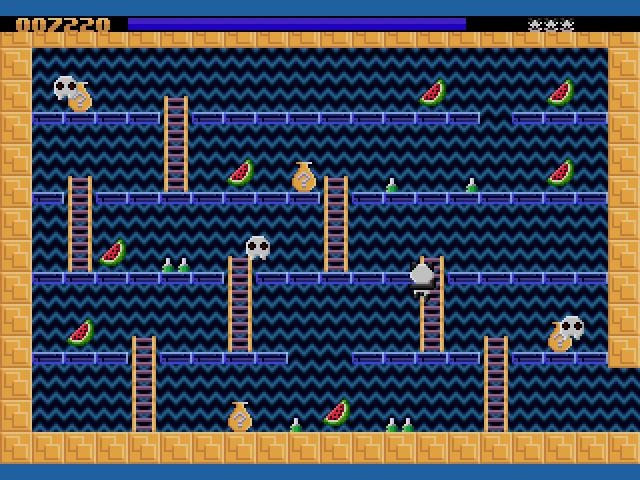
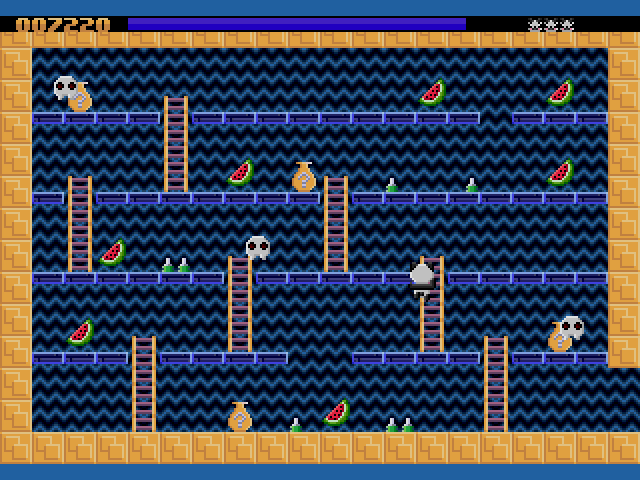
The vibrant and enduring homebrew scene for classic video game consoles has once again delivered a compelling new experience, with the official release of "Panda Jump" for the Sega Genesis/Mega Drive on June 25, 2026. Developed by abadede919302 and distributed via itch.io, this latest addition to the Genesis library is a meticulously crafted tribute to "Ponpoko," an often-overlooked arcade platformer originally released by Sigma Enterprises in 1982. "Panda Jump" invites players to navigate 12 distinct levels, collecting all designated food items while deftly avoiding traps and enemies, all under the pressure of a ticking clock. This release underscores the sustained creative energy within the retro gaming community and highlights a unique trend of reviving forgotten arcade gems on beloved, decades-old hardware.
A Resurgence on Classic Hardware: The Genesis Homebrew Phenomenon
The Sega Genesis, known as the Mega Drive in many parts of the world, celebrated its initial launch in 1988 in Japan and 1989 in North America. Despite its commercial lifecycle concluding in the mid-1990s, the 16-bit console has fostered an unexpectedly robust and continually expanding community of independent developers. This phenomenon, often referred to as the "homebrew scene," sees programmers, artists, and musicians creating entirely new games for the hardware, leveraging its distinctive capabilities and pushing its perceived limitations. The motivation behind this dedication is multifaceted, encompassing a deep nostalgia for the era, a fascination with the technical challenge of developing for fixed, constrained hardware, and a desire to contribute to the console’s legacy.
Developing for the Sega Genesis involves a unique set of challenges and triumphs. Unlike modern game development environments with sophisticated engines and vast memory resources, Genesis developers must work within the confines of Motorola 68000 and Zilog Z80 processors, limited RAM, and a specific palette of 64 colors drawn from 512. Sound design, often a hallmark of the Genesis due to its Yamaha YM2612 FM synthesis chip, requires specialized knowledge to create memorable chiptunes. The process often involves assembly language programming or C with custom toolchains, demanding a level of low-level optimization and hardware understanding rarely encountered in contemporary game production. Yet, it is precisely these constraints that foster incredible creativity, leading to games that often feel authentic to the console’s golden age while offering fresh experiences. The success of games like "Panda Jump" is a testament to this enduring passion, demonstrating that the appetite for new content on classic systems is far from sated. The homebrew community often shares resources, tools, and knowledge, creating a collaborative environment that allows projects to flourish, culminating in releases that are sometimes digital ROMs, and other times full-fledged physical cartridges complete with period-appropriate packaging and manuals.
Unearthing a Forgotten Gem: The Legacy of Ponpoko
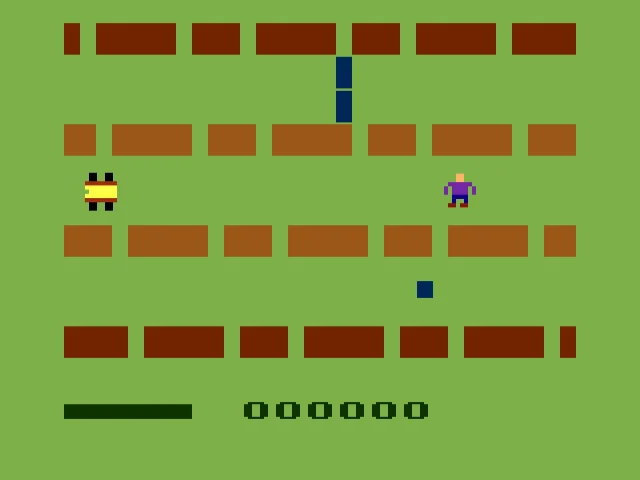
"Panda Jump"’s inspiration, "Ponpoko," holds a peculiar place in arcade history. Released by Sigma Enterprises in 1982, it emerged during a highly fertile period for arcade gaming, sandwiched between the groundbreaking successes of "Donkey Kong" (1981) and the impending arrival of "Pac-Man" successors and early beat ’em ups. Sigma Enterprises, while not a household name like Atari, Namco, or Taito, contributed several titles to the early 1980s arcade landscape. "Ponpoko" itself featured a unique take on the platformer genre, which was rapidly evolving at the time. Players controlled a character, often depicted as a monkey or similar creature, tasked with collecting items—typically food or treasures—across multi-tiered, scrolling levels, all while avoiding various enemies and hazards. The game’s mechanics often involved precise jumping, climbing, and sometimes rudimentary attack or evasion maneuvers.
"Ponpoko" never achieved the widespread fame or commercial success of its contemporaries, largely remaining an obscure title outside of dedicated arcade historians and enthusiasts. Its relative anonymity can be attributed to several factors: intense competition in a crowded market, limited distribution, or perhaps a gameplay loop that, while innovative for its time, didn’t capture the public imagination as powerfully as other titles. However, the game’s obscurity makes it a prime candidate for rediscovery and reinterpretation by modern developers. The appeal lies in its distinct mechanics and aesthetic, offering a fresh foundation for a tribute that avoids merely replicating more famous games. For many, uncovering and playing these "lost" arcade games provides a window into the diverse and experimental nature of early video game design, highlighting ideas that might have been ahead of their time or simply overshadowed. "Panda Jump" therefore not only pays homage to a specific game but also contributes to the broader effort of video game preservation and historical recognition, ensuring that even the lesser-known entries in the arcade canon are not entirely forgotten.
Crafting a Modern Tribute: Panda Jump’s Design Philosophy
The descriptor "faithful tribute" for "Panda Jump" is key to understanding its design philosophy. It implies a deep respect for the source material, "Ponpoko," extending beyond mere aesthetic imitation. A faithful tribute typically seeks to capture the core gameplay mechanics, the specific feel of character movement, the enemy patterns, and even the general difficulty curve of the original, while adapting it to the target platform. For the Sega Genesis, this means not just replicating 80s arcade sensibilities but doing so within the graphical and audio capabilities of the 16-bit console. The pixel art style evident in the game’s promotional images suggests a deliberate effort to evoke the visual language of both early 80s arcade games and early 90s console titles, creating a bridge between two distinct eras of gaming.
The choice of a panda as the protagonist in "Panda Jump" is an interesting design decision. While the original "Ponpoko" might have featured a different creature, the panda motif is universally recognized for its charm and appeal, fitting well within the tradition of cute, animal-led platformers that were popular across various gaming generations. This choice likely aims to make the game immediately engaging and accessible while maintaining a classic feel. The game’s core loop—collecting food, dodging traps and enemies, and racing against a timer across 12 levels—is a direct nod to arcade principles of high-score chasing and replayability. Each of the 12 levels is likely designed to introduce new challenges, enemy types, or environmental hazards, requiring players to adapt their strategies. The "time runs out" mechanic adds an urgent layer of tension, pushing players towards efficient movement and quick decision-making, a hallmark of many classic arcade experiences designed to keep players feeding quarters into the machine. This blend of precise platforming, pattern recognition, and time management creates a compelling challenge that resonates with both old-school gamers and those new to the retro genre.
The Developer’s Vision: abadede919302’s Contribution
The development of "Panda Jump" by abadede919302, distributed through itch.io, exemplifies the modern independent game development model, particularly within the niche of retro homebrew. Itch.io serves as an invaluable platform for such projects, offering developers a direct channel to their audience, circumventing traditional publishing hurdles. This allows for passion projects like "Panda Jump" to find their audience without significant financial backing or extensive marketing campaigns. The developer’s choice to remain relatively low-profile, indicated by the handle "abadede919302" rather than a formal studio name, is common in the homebrew scene, where individual passion often drives creation.
While specific statements from abadede919302 are not provided in the original announcement, one can infer the motivations: a deep appreciation for "Ponpoko," a desire to test their technical prowess on the Sega Genesis hardware, and an ambition to contribute something meaningful to the retro gaming community. Developing for a console like the Genesis is not merely an act of programming; it is an act of historical engagement, requiring a thorough understanding of the console’s architecture, its common programming idioms, and the stylistic conventions of its era. The successful completion and release of "Panda Jump" suggest a dedicated development cycle, involving careful planning, sprite design, level construction, sound composition, and rigorous testing to ensure compatibility and performance on actual Genesis hardware and emulators. This kind of independent creation is a vital part of keeping retro gaming vibrant, demonstrating that the past can continue to inspire new works and new forms of creative expression.
Navigating the Levels: Gameplay Mechanics and Challenges
"Panda Jump" presents a seemingly straightforward premise: collect all food items across 12 levels within a time limit, while avoiding enemies and traps. However, the execution of such a premise in a "faithful tribute" to a 1982 arcade game implies a particular brand of challenge. Arcade games of that era were designed to be difficult, encouraging repeated plays and mastery. This often translates to precise hitboxes, unforgiving enemy patterns, and environmental hazards that require split-second reactions. The 12 levels, while perhaps not expansive in the modern sense, are likely tightly designed stages, each introducing new elements that gradually increase the complexity and difficulty.
Players can anticipate a steep but fair learning curve. The "traps" could range from disappearing platforms to environmental hazards like spikes or falling objects, demanding careful navigation. Enemies will likely follow predictable patterns, requiring players to learn their movements and find optimal paths to collect food without taking damage. The time limit adds another layer of pressure, forcing players to optimize their routes and minimize hesitation. Success in "Panda Jump" will hinge on a combination of muscle memory, pattern recognition, and strategic planning. The game’s rhythm, as alluded to in the original blurb, is crucial. This refers to the flow of gameplay, the timing of jumps, the pacing of enemy encounters, and the overall tempo of a level. Capturing this rhythm authentically is what truly makes a tribute "faithful" and ensures that the game feels genuinely like a product of its intended era, even if developed decades later.
The Digital Frontier: itch.io and the Retro Game Market
The choice of itch.io as the distribution platform for "Panda Jump" highlights a significant shift in how indie and homebrew games reach their audience. Unlike the traditional console market, which requires licensing agreements and often substantial investment, itch.io provides an open, flexible marketplace. Developers can upload their projects, set their own pricing (including "pay what you want" models), and directly engage with their community. For retro homebrew, this platform is particularly beneficial, as it allows for the easy distribution of ROM files that can be played on emulators or flash carts on original hardware.
The market for retro games and new retro experiences is a fascinating segment of the broader gaming industry. It caters to a diverse audience, including veteran gamers seeking nostalgia, collectors valuing unique physical releases, and younger players discovering the roots of gaming. "Panda Jump" fits perfectly into this ecosystem, offering a new piece of content for a beloved console that appeals to all these demographics. The discussion around such releases often extends to the potential for physical editions. While "Panda Jump" is initially a digital ROM, the vibrant homebrew community frequently sees successful digital-only titles eventually receive limited physical cartridge runs, complete with custom artwork and packaging designed to mimic official releases from the Genesis era. This blend of digital accessibility and physical collectibility ensures that these passion projects can thrive and reach a dedicated, appreciative audience worldwide.
A Timeline of Nostalgia: From Arcade Cabinets to Homebrew Cartridges
The journey that culminates in "Panda Jump" is a fascinating chronology that spans over four decades of gaming history:
- 1982: Sigma Enterprises releases "Ponpoko" to arcades. This marks the initial entry of the game’s core concept into the gaming consciousness, albeit in a limited capacity. The early 80s arcade scene is a crucible of innovation, with many companies experimenting with new genres and mechanics.
- 1988-1989: The Sega Genesis (Mega Drive) launches, ushering in the 16-bit era of home consoles and laying the groundwork for a console that would later become a homebrew favorite.
- 1990s-2010s: "Ponpoko" largely fades into obscurity, remembered by a niche group of arcade enthusiasts and preservationists. The Sega Genesis transitions from a leading console to a retro classic, with a dedicated fanbase growing over the decades. The early seeds of the homebrew scene begin to germinate as enthusiasts reverse-engineer the hardware and develop tools.
- Early 2020s (Inferred): The developer, abadede919302, likely discovers "Ponpoko" through emulation or historical research, recognizing its potential for a modern revival on a classic platform. Development of "Panda Jump" begins, a labor of love that involves understanding both the original arcade game’s mechanics and the intricacies of Genesis hardware. This period involves extensive coding, pixel art creation, sound design, and rigorous testing.
- June 25, 2026: "Panda Jump" is officially released on itch.io, marking its debut as a new game for the Sega Genesis. This release represents the culmination of the developer’s efforts and adds a new chapter to the console’s storied history.
This timeline highlights the enduring power of classic games to inspire new creations and the commitment of the homebrew community to keep retro hardware alive and relevant in the modern era.
Community Reception and Broader Implications
While immediate, specific reactions to "Panda Jump" are not yet documented in the provided information, the broader implications for the retro gaming community and the industry at large are significant. Upon release, games like "Panda Jump" typically generate considerable buzz within online forums, social media groups, and dedicated retro gaming websites. Players eager for new experiences on their beloved consoles will likely share impressions on gameplay, graphical fidelity, sound design, and how well the game captures the spirit of "Ponpoko" and the Genesis era. Discussions often revolve around the game’s difficulty, replayability, and potential for inclusion in flash cart collections or even future physical releases.
The success and continued emergence of titles like "Panda Jump" carry several broader implications:
- Preservation and Rediscovery: Homebrew development actively contributes to the preservation of gaming history by bringing forgotten titles like "Ponpoko" back into the spotlight and by pushing the boundaries of what older hardware can achieve.
- Validation of Niche Markets: It demonstrates that there is a viable and enthusiastic market for new games on classic consoles, encouraging more developers to explore this unique creative space.
- Educational Value: The process of developing for retro hardware serves as an invaluable educational experience, teaching fundamental programming, hardware architecture, and game design principles in a constrained environment.
- Blurring of Lines: These releases continue to blur the lines between "retro" and "new," showcasing that innovation isn’t solely confined to cutting-edge graphics and processing power.
- Community Empowerment: Platforms like itch.io empower independent developers to bypass traditional gatekeepers, fostering a more diverse and democratic game development landscape.
Conclusion: A Nod to the Past, a Leap into the Future
"Panda Jump" for the Sega Genesis is more than just a new game; it is a cultural artifact that encapsulates the ongoing dialogue between gaming’s past and present. By resurrecting the spirit of "Ponpoko" on a 16-bit console, abadede919302 has not only delivered a fresh gameplay experience but has also reinforced the vitality of the homebrew community. This release stands as a testament to the enduring appeal of classic gaming mechanics, the technical artistry involved in retro development, and the unwavering passion of a global community dedicated to celebrating and extending the lives of iconic hardware. As players embark on their panda’s quest for food, dodging enemies and beating the clock, they are not just playing a game; they are participating in a living history, where the echoes of a 1982 arcade obscure classic resonate anew on a console from 1988, proving that good game design, like cherished memories, never truly fades.