Farhan hamdan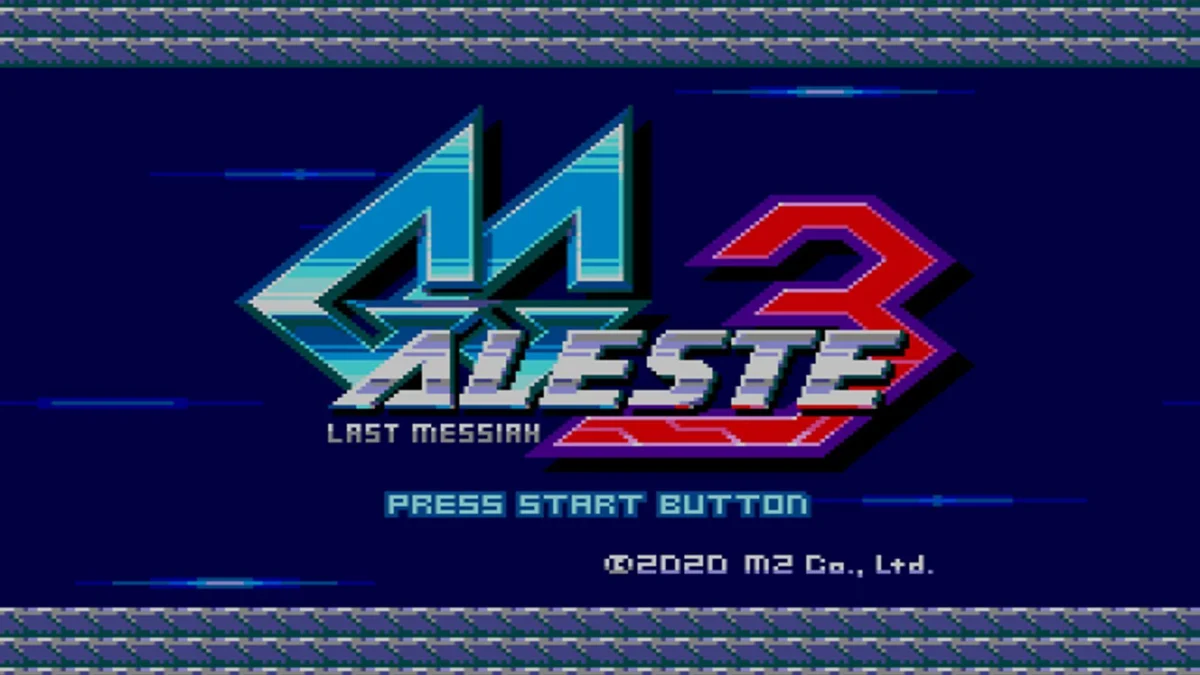
In a significant development for retro gaming enthusiasts and preservationists, a dedicated fan developer known as morb has successfully created a patch enabling M2’s critically acclaimed title, GG Aleste 3, to run natively on Sega Master System hardware. This achievement marks a new chapter in the game’s evolving accessibility, allowing a title originally designed for the handheld Game Gear to be experienced on its 8-bit console sibling, often on a television screen, through conversion methods previously established within the retro community. The patch, which requires users to apply it to a legally obtained ROM of the game, subsequently renamed with a ".sms" extension, opens up new avenues for players to enjoy this modern classic on vintage platforms.
The Journey to Cross-Platform Playability
The story of GG Aleste 3‘s journey across hardware platforms began in 2020 when M2, a Japanese developer renowned for its meticulous retro game ports and emulations, announced this new sequel to the beloved Aleste series. Uniquely, GG Aleste 3 was developed specifically for the Sega Game Gear, a handheld console originally released in 1990, and was included as part of the Aleste Collection. This decision by M2 to create a brand-new title for an antiquated system was met with widespread enthusiasm, demonstrating a commitment to the legacy of the platform and the genre.
Initially, the game was available digitally and as part of a physical cartridge bundle for the Aleste Collection, primarily playable on modern consoles via emulation. However, the retro gaming community, driven by a desire to experience games on original hardware, soon sought ways to port it back. A few years following its initial release, a crucial patch emerged, allowing individuals who had legally purchased the game to extract its ROM and run it on authentic Game Gear hardware. This step was vital, establishing the game’s compatibility with its intended native platform outside of modern emulation.
The latest development, spearheaded by morb, extends this accessibility even further, bridging the gap between the Game Gear and the Master System. This cross-compatibility is particularly noteworthy given the close technical lineage between the two Sega 8-bit systems. The Game Gear, while portable, shared much of its core architecture with the Master System, including a similar Zilog Z80 CPU. However, key differences, such as the Game Gear’s wider color palette (4,096 colors, 32 on screen) compared to the Master System’s more limited palette (64 colors, 32 on screen), and its different screen resolution (160×144 pixels vs. Master System’s 256×192 or 256×224 pixels), present significant challenges for direct porting. Morb’s patch addresses these discrepancies, primarily through color palette swaps and handling screen resolution adjustments, to ensure a playable experience on the Master System.
Technical Nuances of the Conversion
The conversion process, while seemingly straightforward for the end-user (patching a ROM and renaming it), involves intricate technical modifications. One of the primary challenges for morb, as with all GG2SMS (Game Gear to Sega Master System) conversions, was adapting the game’s visuals to the Master System’s more constrained color capabilities. The Game Gear could display 32 colors simultaneously from a palette of 4,096, offering a richer visual experience than the Master System, which could also display 32 colors but from a much smaller palette of 64. Morb’s solution involved carefully mapping the Game Gear’s colors to the closest available Master System equivalents, a process that requires a deep understanding of both systems’ graphics hardware and artistic judgment to minimize visual degradation. Early reports suggest that the resulting color palette is "fine" with "minimal video glitching," a testament to the quality of the conversion.
Another critical aspect of the conversion pertains to input mapping. The Sega Master System features a unique "Pause" button located directly on the console unit, rather than on the controller itself. In morb’s patch, the "Start" function for GG Aleste 3 has been intelligently mapped to this console-based "Pause" button. This design choice has specific implications for users playing on different setups. For those utilizing an Everdrive or similar flash cart on a Sega Genesis/Mega Drive console (which can play Master System games via a power base converter or built-in compatibility), the "Start" button will typically correspond to a button on the flash cart itself. Emulation users, likewise, will need to configure their emulators to map the Master System’s "Pause" function to their desired input. This attention to detail in input mapping highlights the converter’s thorough understanding of the nuances of Master System hardware and its various playback environments.
Regarding screen real estate, a common expectation with GG2SMS conversions is the possibility of "unlocking" additional screen area, as the Game Gear’s native display was a cropped view of what the hardware could render. While some screens, such as the title screen, reportedly benefit from an expanded gameplay area, most in-game visuals remain roughly the same size as the original Game Gear screen. This outcome is logical, as GG Aleste 3 was designed from its inception specifically for the Game Gear’s resolution, meaning there isn’t extensive hidden content beyond its original viewport to reveal. Nevertheless, for players accustomed to the Game Gear’s smaller screen, any additional visual information, however minor, on a larger television display is a welcome enhancement.
The Enduring Legacy of Aleste and M2’s Role
To fully appreciate the significance of this patch, it is essential to delve into the legacy of the Aleste series and the pivotal role of M2 in its modern resurgence. The Aleste series, known as Power Strike in some Western markets, is a venerable line of vertical-scrolling shoot ’em ups (shmups) that originated in the late 1980s. Developed primarily by Compile, these games were celebrated for their fast-paced action, intricate weapon systems, and challenging gameplay. Titles like Aleste (Master System), Space Megaforce (SNES), and MUSHA Aleste (Mega Drive/Genesis) cemented its reputation as a cornerstone of the genre. The series’ influence is profound, having set benchmarks for technical prowess and gameplay design within the shmup landscape.

M2’s involvement with the Aleste series is a testament to their dedication to preserving and celebrating classic games. Known for their "M2 ShotTriggers" series, M2 has earned a stellar reputation for producing exceptionally high-quality ports and remasters of arcade and console classics, particularly shmups. Their work is characterized by pixel-perfect emulation, minimal input lag, and often includes extensive supplementary features, such as save states, display options, and deep dive historical content. The decision to commission a new Aleste game for the Game Gear—a system often overlooked in mainstream retro gaming—demonstrates M2’s deep respect for gaming history and their willingness to invest in niche but passionate communities. GG Aleste 3, a true technical marvel for the Game Gear, showcased M2’s ability to push the boundaries of 8-bit hardware, delivering a game that felt both authentically retro and surprisingly modern in its execution. Its inclusion in the Aleste Collection (released for PlayStation 4 and Nintendo Switch) further solidified M2’s commitment to making these classic and new-classic titles accessible to a broader audience.
The Broader Context: Game Gear and Master System Interoperability
The Sega Game Gear and Master System represent two facets of Sega’s 8-bit console strategy. The Master System, launched in 1985 (Japan) and 1986 (North America/Europe), was Sega’s primary competitor to Nintendo’s dominant Famicom/NES. While it found considerable success in Europe and Brazil, it struggled against Nintendo in North America and Japan. Its hardware, though capable, was often overshadowed.
The Game Gear, released in 1990, was Sega’s response to Nintendo’s Game Boy. Unlike the monochrome Game Boy, the Game Gear boasted a full-color backlit screen, a significant technical advantage at the time. However, this came at the cost of battery life and a larger form factor. Architecturally, the Game Gear was essentially a portable Master System, featuring an almost identical CPU (Z80) and sound chip (SN76489), but with an enhanced video display processor (VDP) that supported a much larger color palette and a different resolution. This inherent compatibility has historically made GG2SMS conversions a popular pursuit within the retro gaming modding scene.
The history of GG2SMS conversions dates back decades, driven by enthusiasts seeking to play their handheld games on a larger screen or to simply expand the Master System’s library. These conversions are not merely a matter of transferring data; they require specific code modifications to address the hardware differences. Color palette remapping is paramount, as is adjusting for the differing screen resolutions. While the Game Gear’s internal resolution capabilities were often higher than its physical screen, mapping these to the Master System’s fixed resolutions requires careful scaling and often compromises, such as black borders or minor visual adjustments. Morb’s patch for GG Aleste 3 stands as a recent and prominent example of this ongoing community effort, demonstrating the sustained interest in these classic systems.
Community Reaction and Implications for Retro Preservation
The release of morb’s patch has been met with significant enthusiasm within the retro gaming community. For many, the ability to play a high-quality, modern-retro title like GG Aleste 3 on original Master System hardware is a dream come true. It offers an authentic, tactile experience that even the best emulation cannot fully replicate, connecting players directly to the hardware of a bygone era. The "legally purchased" caveat is crucial here, as it underscores the community’s commitment to respecting intellectual property while simultaneously pushing the boundaries of hardware interoperability and game accessibility. This type of fan-driven development often complements the work of official developers like M2, extending the lifespan and enjoyment of games beyond their original commercial intent.
This development also carries broader implications for retro game preservation. While official re-releases and emulated collections (like M2’s own Aleste Collection) are vital for bringing classic titles to new audiences, fan efforts like morb’s patch contribute to a different facet of preservation: maintaining the playability of games on their original or closely related hardware. It ensures that even newly created retro games can be integrated into the existing ecosystem of classic consoles, enriching the libraries of systems long out of production. It also highlights the power of open-source principles and collaborative knowledge-sharing within the retro community, where individuals contribute their technical expertise to enhance the collective gaming experience.
Furthermore, this patch emphasizes the growing trend of "demakes" or cross-platform conversions within the retro scene. While GG Aleste 3 was designed for an 8-bit system, its conversion to a slightly different 8-bit system underscores the technical ingenuity required. Such projects not only breathe new life into older hardware but also serve as educational tools, allowing enthusiasts to delve into the intricacies of vintage console architectures.
Conclusion: A Testament to Enduring Passion
The successful patching of GG Aleste 3 for Sega Master System hardware by morb is more than just a technical achievement; it is a vibrant testament to the enduring passion of the retro gaming community. It showcases how dedicated individuals can extend the life and playability of games, bridging gaps between systems and generations of technology. From M2’s innovative decision to create a new game for a vintage handheld to the subsequent community efforts to bring it to its console cousin, GG Aleste 3 continues to evolve in its accessibility.
This latest development not only provides a fun shmup experience for Master System owners but also reinforces the collaborative spirit of retro preservation. As long as there are enthusiasts willing to delve into the code and hardware of classic systems, the boundaries of what is possible with vintage gaming will continue to expand, ensuring that beloved titles, both old and new, remain playable and cherished for years to come. The ability to simply "patch the rom, rename it ‘.sms’ and start playing" encapsulates the elegance of this solution, inviting a wider audience to experience GG Aleste 3 in a fresh, yet authentically retro, context.