Johny Imanuel
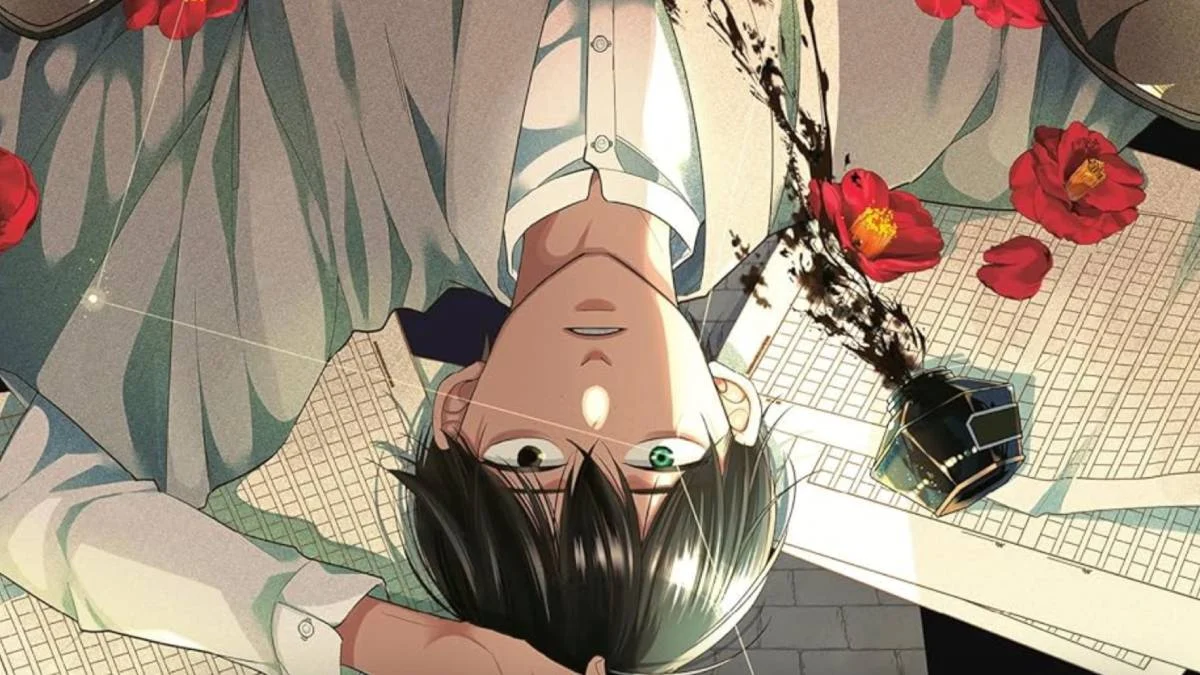
The North American manga market has recently seen a surge in titles that blend domestic tragedy with supernatural unease, a trend exemplified by the recent localization and release of Mad Miniscape by Yen Press. This new series enters a competitive landscape of "uncanny valley" horror, following in the footsteps of critically acclaimed titles such as The Summer Hikaru Died. However, Mad Miniscape distinguishes itself by presenting a narrative where the psychological instability of the human protagonist rivals the overt terror of the supernatural entity she encounters. The first volume introduces a complex web of trauma, grief, and obsessive behavior that challenges traditional horror tropes by blurring the lines between victim and predator.
Narrative Framework and Character Dynamics
The core of Mad Miniscape centers on Asahi, a young woman whose life has been defined by a singular, tragic event from her adolescence. Years prior, her childhood friend Minoru was killed at the age of 15 in a vehicular accident involving a truck. This event did not only claim Minoru’s life but also fractured the social and emotional foundations of those he left behind, including his younger brother, Wataru, and Asahi herself. In the present day, Asahi’s environment is characterized by profound isolation; her father is perpetually absent due to work commitments, leaving her to navigate her late teenage years in a state of functional solitude.
The catalyst for the story occurs during a summer night following a school closing ceremony. An entity, initially formless and violent, breaches the sanctuary of Asahi’s home. This being eventually manifests a physical countenance that mimics the deceased Minoru as he appeared before his death. Despite the inherently threatening nature of this intrusion—which includes an initial attempt on Asahi’s life—the entity eventually manages to articulate her name and claim its identity as the returned Minoru. This sets the stage for a domestic arrangement that is as disturbing as it is tragic, as Asahi chooses to harbor the creature rather than flee from it.
A Chronology of Trauma and Return
The timeline of Mad Miniscape is essential to understanding the depth of the characters’ desperation. The narrative oscillates between the present-day haunting and flashbacks to the trio’s childhood.
- The Childhood Period: Asahi, Minoru, and Wataru shared a close, seemingly idyllic bond. However, subtle narrative cues in Volume 1 suggest that the dynamics between the three may have contained underlying tensions or "broken" elements even before the accident.
- The Accident: At age 15, Minoru is killed instantly by a truck. This event serves as the "ground zero" for the psychological decay of the remaining characters.
- The Interval: Years of grieving follow, during which Asahi’s isolation worsens, and Wataru grows up in the shadow of his brother’s death.
- The Resurgence: The entity appears at Asahi’s home, displaying a rudimentary understanding of Minoru’s memories but failing to comprehend basic human biology.
- The Current Conflict: Asahi establishes a dangerous status quo, keeping the entity in her room while grappling with its volatile, often murderous impulses.
The Psychological Profile of the "Broken Heroine"
One of the most striking elements of Mad Miniscape, as noted by early readers and critics, is the characterization of Asahi. In traditional horror, the human protagonist serves as the audience surrogate, reacting with rational fear to irrational threats. Asahi, however, exhibits a level of obsession that matches the supernatural entity’s own single-mindedness. She is fully cognizant of the creature’s lethality; she witnesses its horrifying physical transformations and its inability to replicate human anatomy—such as the absence of a throat or tongue during certain "glitches" in its form.
Rather than seeking help, Asahi demands the entity remain with her. This behavior suggests a pathological form of grief where the presence of a dangerous facsimile is preferable to the vacuum left by the original person. The narrative implies that Asahi’s own capacity for violence and her disregard for her personal safety make her a "scary" protagonist. She does not merely endure the entity; she attempts to control it, ordering it to stay and effectively domesticating a predatory force. This subversion of the "final girl" trope provides a deeper look into how extreme trauma can erode the instinct for self-preservation.
Comparative Industry Analysis: The Rise of "Eerie Romanticism"
The release of Mad Miniscape follows a broader industry trend that publishers like Yen Press have successfully tapped into. This genre, often referred to as "Eerie Romanticism" or "Trauma Horror," utilizes supernatural entities as metaphors for the lingering effects of loss.
A primary comparison point is The Summer Hikaru Died, also published by Yen Press. Both series involve a young protagonist who realizes that their "returned" friend is an imposter. However, the tonal shift between the two is significant. While The Summer Hikaru Died focuses on an entity that attempts to integrate into human society and genuinely cares for the protagonist, Mad Miniscape leans into a more primal, visceral horror. The entity in Mad Miniscape is portrayed as more overtly alien and hostile, making Asahi’s attachment to it all the more disturbing to the reader.
Market data suggests that these titles appeal to a demographic interested in "Seinen" (young adult male) and "Josei" (young adult female) horror, which prioritizes psychological depth and atmospheric dread over simple jump scares. The success of these titles indicates a shift in the North American market toward manga that explores the darker, more "toxic" aspects of human relationships and the refusal to let go of the deceased.
Technical Execution and Localization
Yen Press has localized the first volume with an emphasis on maintaining the atmospheric tension of the original Japanese release. The visual storytelling in Mad Miniscape relies heavily on high-contrast blacks and detailed, body-horror-inflected transformations. The "Minoru-entity" is often depicted in states of physical flux, emphasizing its non-human nature.
The localization of the dialogue is crucial in portraying the entity’s struggle with language. In the first volume, the creature’s speech is often fragmented, reflecting its incomplete mimicry of human behavior. This linguistic "uncanny valley" serves to heighten the sense of unease, reminding both Asahi and the reader that despite the familiar face, the consciousness behind it is entirely foreign.
Implications and Future Narrative Directions
The conclusion of Volume 1 leaves the narrative on a significant cliffhanger, suggesting that the "fresh horrors" mentioned by early reviewers will involve the broader community, specifically Minoru’s brother, Wataru. The introduction of Wataru into the current timeline threatens the fragile, isolated world Asahi has built with the entity.
From a thematic standpoint, Mad Miniscape poses a difficult question: Is it possible for a human to be more "monstrous" than a literal monster? By positioning Asahi as an equally unstable force, the series explores the "madness" inherent in the title. The "miniscape" may refer to the small, controlled, yet chaotic environment of Asahi’s room, where she attempts to reconstruct a dead relationship using a dangerous, supernatural surrogate.
As of this report, Yen Press has not yet confirmed a specific release date for Volume 2. However, the initial reception suggests that the series will be a significant addition to the publisher’s horror catalog. The series’ exploration of grief not as a process to be overcome, but as a dwelling place to be inhabited—no matter how dangerous—ensures that Mad Miniscape will remain a subject of discussion among fans of psychological horror.
Conclusion
Mad Miniscape stands as a stark exploration of the darker side of human devotion. By intertwining the visceral elements of supernatural horror with the quiet, devastating reality of domestic isolation, the series offers a unique perspective on the genre. Asahi’s character serves as a chilling reminder that the human mind, when pushed by loss, is capable of embracing the very things that should inspire terror. As the series progresses, the true nature of the entity and the dark history of the original trio are expected to come to light, further complicating a story where no character is truly "safe" or "innocent." For readers seeking a horror experience that prioritizes psychological complexity and thematic weight, Mad Miniscape Volume 1 provides a compelling, if deeply unsettling, introduction.