Hartono Sudibyo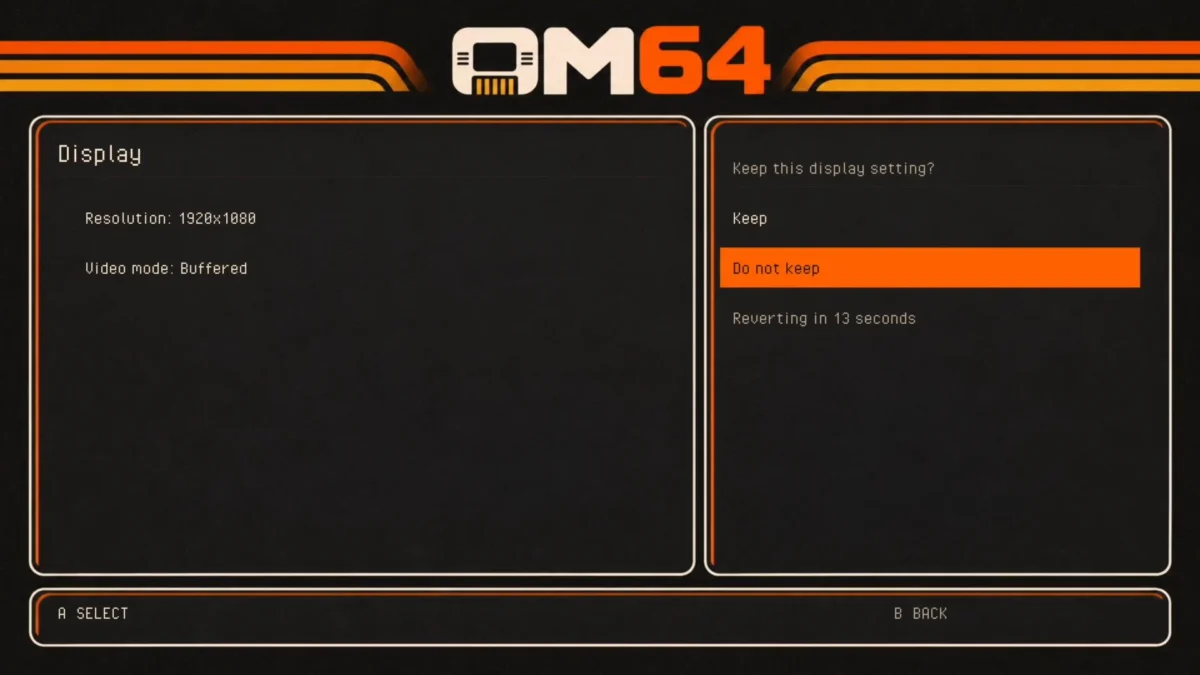
The retro gaming community is witnessing an unprecedented wave of ingenuity following the hardware release of the ModRetro M64 console. While ModRetro has committed to a fully open-source ecosystem—releasing the system’s underlying hardware schematics to encourage grassroots modification—the official firmware source code remains under wraps, pending a formal corporate release. Rather than waiting idly for official documentation, an independent developer operating under the Reddit pseudonym fulviov has engineered "OM64," the first fan-made custom firmware designed specifically to replace the stock software suite on the ModRetro M64.
Constructed entirely through reverse engineering based on ModRetro’s publicly available schematics, OM64 represents a significant milestone for open-source console modding. The project aims to provide a comprehensive, modular, and enhanced operating experience that expands the hardware’s capabilities beyond its stock limitations. Although the software remains in an experimental development phase and lacks a fully operational Nintendo 64 emulation core, the emergence of OM64 highlights the intense demand for user-level customizability in modern retro-inspired hardware.
The Genesis and Context of ModRetro M64 Open-Source Philosophy
When ModRetro initially announced the M64, company executives emphasized a commitment to the consumer right-to-repair and hardware hacking culture. Modern retro handhelds and home consoles typically operate on closed ecosystems, locking users into manufacturer-approved software updates, restricted user interfaces, and curated game libraries. ModRetro sought to differentiate its product by promising eventual complete open-sourcing, enabling end-users to modify, optimize, and personalize their gaming devices down to the circuit board level.
In alignment with this promise, ModRetro released the complete electronic schematics for the M64 hardware via their official GitHub repositories. These schematics provided hardware enthusiasts with the precise electrical pathways, chip pinouts, and architectural layouts needed to understand how the console communicates internally. However, hardware schematics only tell half the story. Without the accompanying firmware—the low-level software that instructs the hardware how to execute operations, manage inputs, and boot software—tinkering is severely limited.
Recognizing this gap, developer fulviov initiated the OM64 project. By analyzing the published schematics, the developer began reverse-engineering the software environment required to interface directly with the M64’s processors and memory controllers. The result is a nascent, independent firmware framework designed to bypass the factory-installed operating system entirely.
Core Features and Current Development Status of OM64
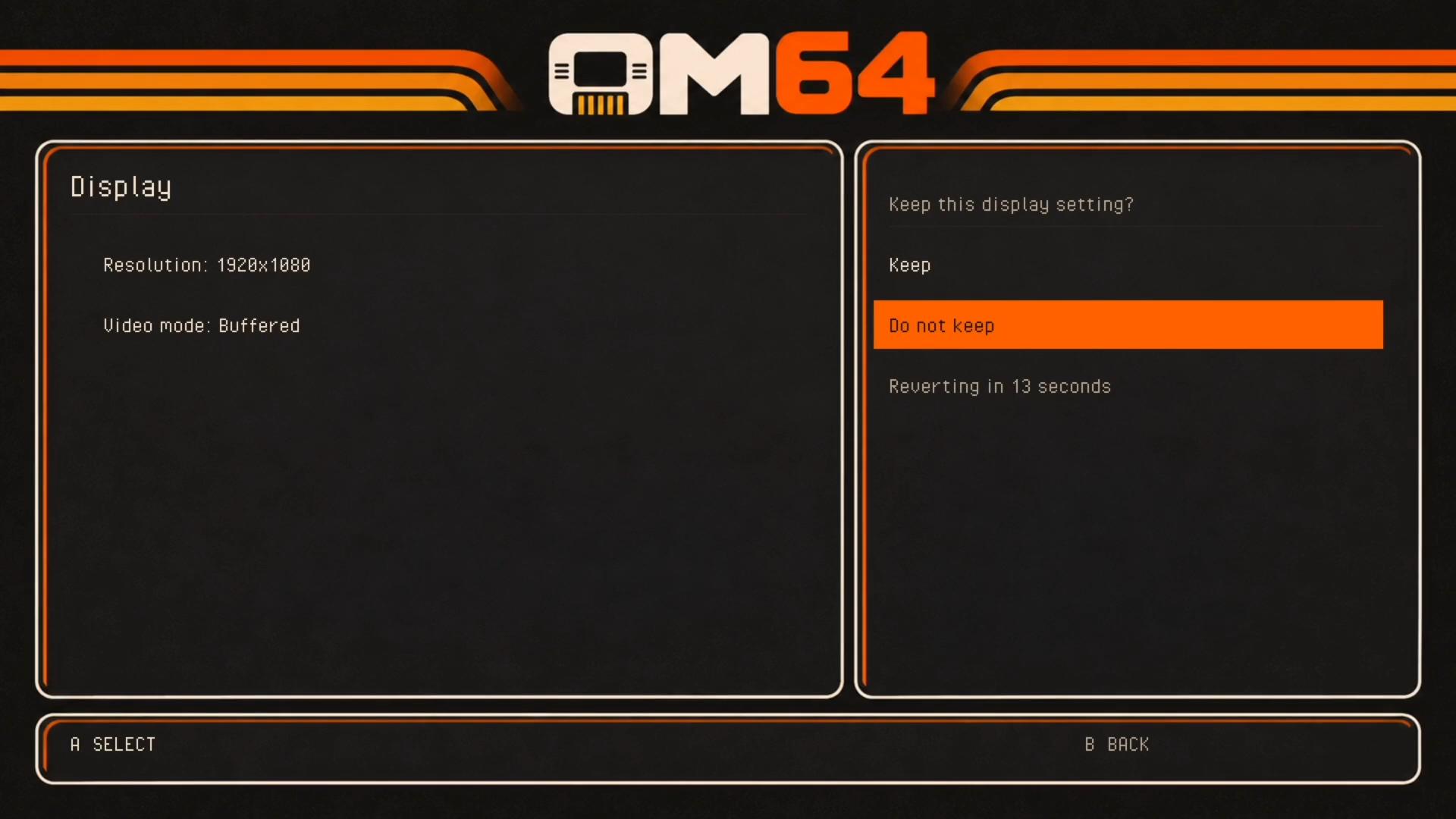
OM64 is envisioned as a full-featured, drop-in replacement for the stock M64 firmware. The developer’s primary objective is to streamline the user interface, optimize system performance, and introduce advanced configuration options that are absent from the factory software. Early demonstrations shared via social media and community forums showcase a lightweight, highly responsive menu system that interacts natively with the M64 hardware architecture.
Despite its promising trajectory, OM64 is far from a finished product. The most notable omission in the current build is a functional Nintendo 64 emulation core. Without this core, the console cannot yet execute native N64 game ROMs under the OM64 environment. The developer has confirmed that work on integrating and refining the N64 core is actively underway, with a preliminary version slated for release soon.

Once the emulation core reaches a stable baseline, fulviov plans to distribute the firmware publicly through their official Ko-Fi page. However, prospective users are being met with strong cautionary advisories. Because OM64 interacts with the core boot sectors of the M64 hardware, installing experimental, unofficial firmware carries an inherent risk of rendering the console permanently inoperable, commonly referred to as "bricking." While the developer has built safety recovery mechanisms into the FAQ documentation allowing users to revert to the stock firmware under normal circumstances, the flashing process demands technical competence and caution from the end-user.
The Integration of AI in Open-Source Firmware Development
A notable and transparent aspect of the OM64 development process is the heavy reliance on artificial intelligence coding assistants. Developer fulviov has openly acknowledged utilizing advanced generative AI tools, specifically Codex and Claude, to accelerate the writing, debugging, and structuring of the firmware code.
In public statements regarding the project, fulviov addressed the use of AI directly, noting that these tools significantly reduced development time by automating routine coding tasks and helping troubleshoot complex low-level hardware interactions. Recognizing that the integration of artificial intelligence remains a polarizing topic within software engineering and open-source communities, the developer provided clear transparency: those who are fundamentally opposed to the use of AI in software development may choose to opt out of utilizing OM64.
This disclosure touches upon a broader, evolving conversation within the tech and gaming industries. As AI coding assistants become more sophisticated, independent developers—who often work as single-person operations rather than large engineering teams—are increasingly leveraging these tools to bridge resource gaps, execute ambitious projects, and rival development speeds previously reserved for well-funded enterprises.
Community Reception and Risks Associated with Unofficial Firmware
The retro gaming community has greeted the announcement of OM64 with a mixture of intense enthusiasm and pragmatic caution. Enthusiasts who champion the ethos of open-source hardware view unauthorized custom firmware as the ultimate validation of a console’s potential. By breaking free from manufacturer constraints, users gain the freedom to implement custom shaders, overclocking profiles, alternative audio drivers, and streamlined user interfaces tailored to individual preferences.
At the same time, industry analysts and hardware preservationists frequently warn of the risks inherent in third-party firmware flashing. Consoles like the M64 utilize specialized flash memory chips and bootloaders. Incorrectly written firmware, interrupted data transfers, or incompatible hardware revisions can permanently corrupt the device’s boot sequence, transforming an expensive gaming console into an inert paperweight.
Furthermore, the deployment of third-party firmware often complicates customer support and warranty coverage. Manufacturers typically do not assume liability for hardware damage resulting from the installation of unverified, third-party system software. Consequently, early adopters of OM64 will largely be charting unchartered territory, relying on peer-to-peer community support channels rather than official manufacturer troubleshooting pathways.
Broader Industry Implications and Future Outlook
The emergence of OM64 before ModRetro has even released its own official firmware source code underscores a growing consumer expectation in the retro hardware market: openness cannot merely be a marketing promise; it must be executed swiftly and comprehensively. Modern gamers and hardware hackers expect immediate access to source code, empowering them to extend the lifespan and versatility of their devices independently.
As development on OM64 continues, several key milestones remain on the horizon. The primary focus for fulviov is the successful integration of the N64 emulation core, followed by rigorous stability testing to minimize the risk of bricking during the installation process. Once these hurdles are cleared, the public release of the firmware via the project’s Ko-Fi page will serve as a critical test case for community-driven software development on the M64 platform.
Whether OM64 ultimately becomes a widely adopted alternative to ModRetro’s stock software or remains a niche tool for hardcore hardware hackers, its creation marks a fascinating chapter in the ongoing convergence of vintage gaming hardware, modern open-source philosophy, and artificial intelligence-assisted software engineering. As ModRetro moves closer to releasing its own official firmware source code, the interplay between official corporate development and grassroots innovation will undoubtedly shape the long-term legacy of the M64 console.