Ganda Hendra Perkasa
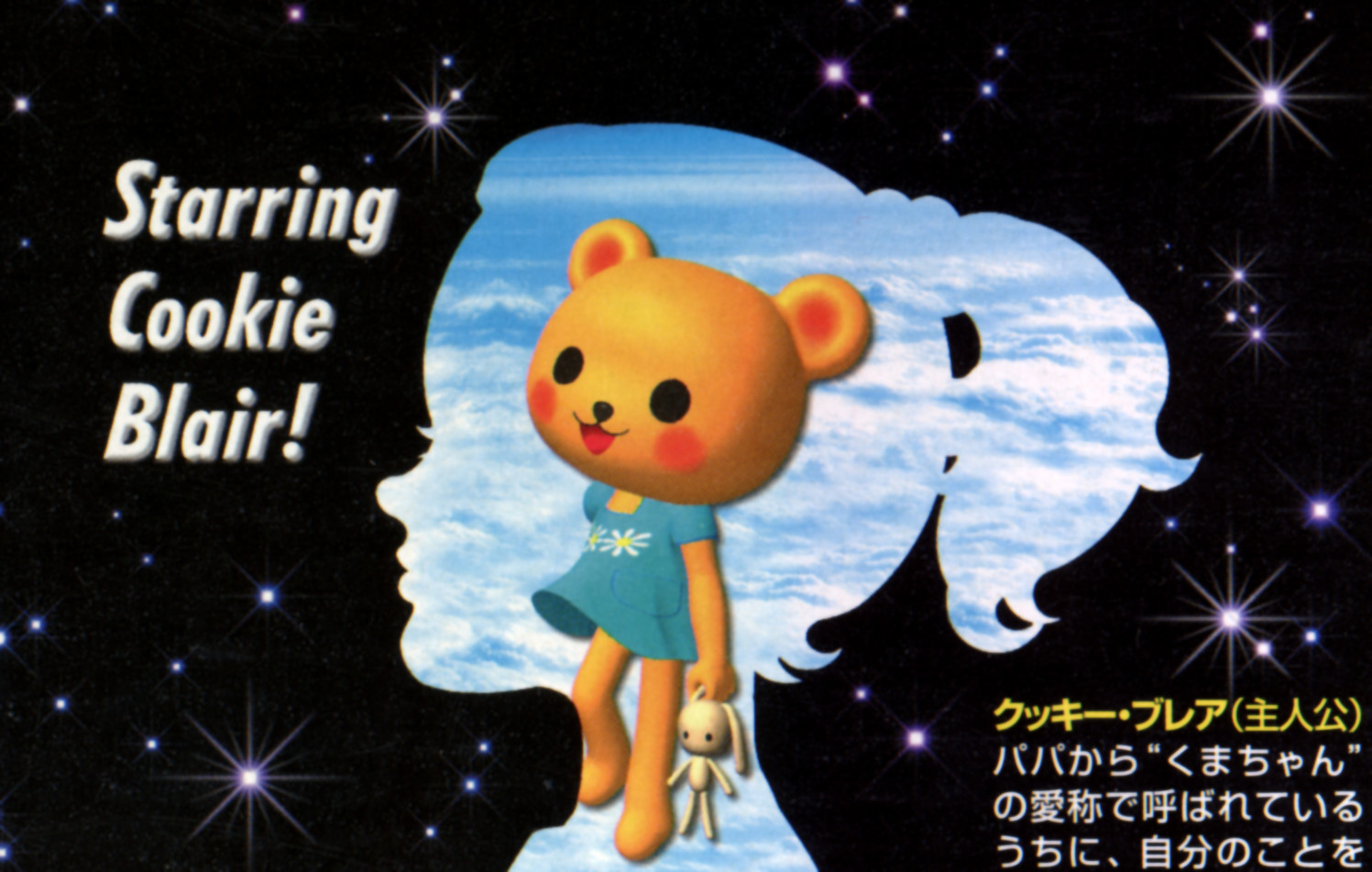
A peculiar computer game from 1999, known as Cookie’s Bustle, developed by Japanese entity RODIK, Inc., has become the unlikely focal point of a protracted legal and ethical battle over intellectual property rights and the preservation of digital history. What began as a niche title with a reputation for its eccentric, genre-bending narrative—a story involving a five-year-old girl from New Jersey thrust into an international sports competition embroiled in civil war and intergalactic intrigue—has escalated into a significant case study of copyright troll behavior and the challenges faced by cultural heritage institutions. The Video Game History Foundation (VGHF), dedicated to preserving the legacy of video games, recently detailed its experiences with aggressive DMCA takedown notices targeting its archival efforts, uncovering a complex web of questionable ownership claims and automated legal processes.
The VGHF’s involvement began when multimedia researcher Misty De Méo donated a rare physical copy of Cookie’s Bustle to their collection. Recognizing the game’s artistic uniqueness and cult status, the foundation sought to document and preserve it. Given that the game has been out of print for nearly three decades and access to the game itself is restricted due to copyright concerns, the VGHF meticulously documented the game’s packaging and physical materials, making them available in their digital archive for research purposes. They also provided access to a community-recorded gameplay demonstration, acknowledging the limitations imposed by copyright law on direct access to the game’s digital assets.
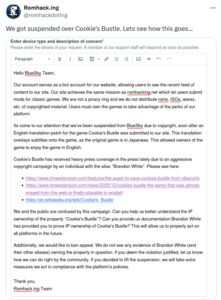
However, these preservation efforts were met with a barrage of Digital Millennium Copyright Act (DMCA) takedown notices. The notices originated from an individual identified as Brandon White, operating under the corporate banner of Graceware, SL. These requests, channeled through the trade association Ukie (the Association for UK Interactive Entertainment), targeted the VGHF’s legal and ethical use of materials related to Cookie’s Bustle. This was not an isolated incident; since 2022, numerous websites and individual creators have reportedly received similar, often frivolous, takedown requests from Graceware. These requests have encompassed a wide range of content, including "Let’s Play" videos, fan art, and even mere mentions of the game’s title.
The Genesis of the Dispute: Ownership Claims and Dubious Registrations
The core of the conflict lies in Brandon White’s assertion of ownership over Cookie’s Bustle. According to the VGHF’s investigation, conducted in consultation with their legal counsel, Albert Sellars LLP, White has consistently failed to produce any legally meaningful evidence to substantiate his claims of owning enforceable rights to the game.
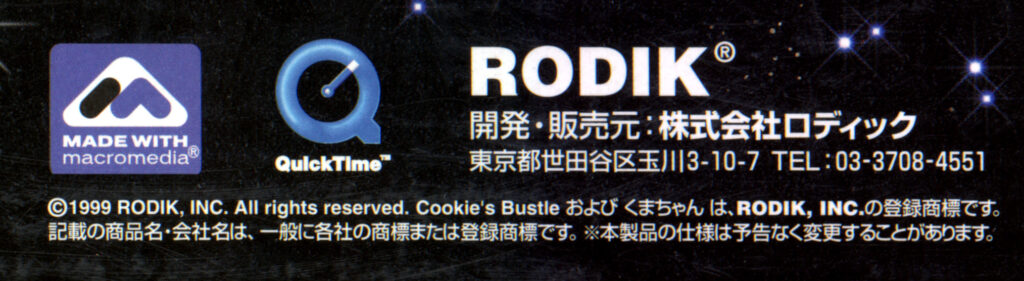
Cookie’s Bustle was originally published in 1999 by RODIK, Inc. and was copyrighted exclusively in Japan. To the VGHF’s knowledge, the game has remained out of print since its initial release. The current status of RODIK, Inc. and the ownership of its intellectual property rights are unclear, suggesting that Cookie’s Bustle likely qualifies as an "orphan work"—a copyrighted work whose owner is unknown or cannot be located.
Brandon White’s engagement with the game’s intellectual property began around 2021. His claims have been advanced through personal name filings and through the corporate entity Graceware, SL. While a direct link between these two is not explicitly stated in all filings, takedown notices issued on behalf of Graceware consistently cite Brandon White as the copyright owner. The VGHF notes significant inconsistencies in White’s purported locations, with some documents suggesting a Japanese base while Graceware, SL’s business information points to a potentially fabricated address in Andorra. Graceware, SL itself appears to have no substantial online or offline presence, leading the VGHF to conclude it is likely a shell company.
The Role of INTEROCO and Questionable "Copyright Registrations"
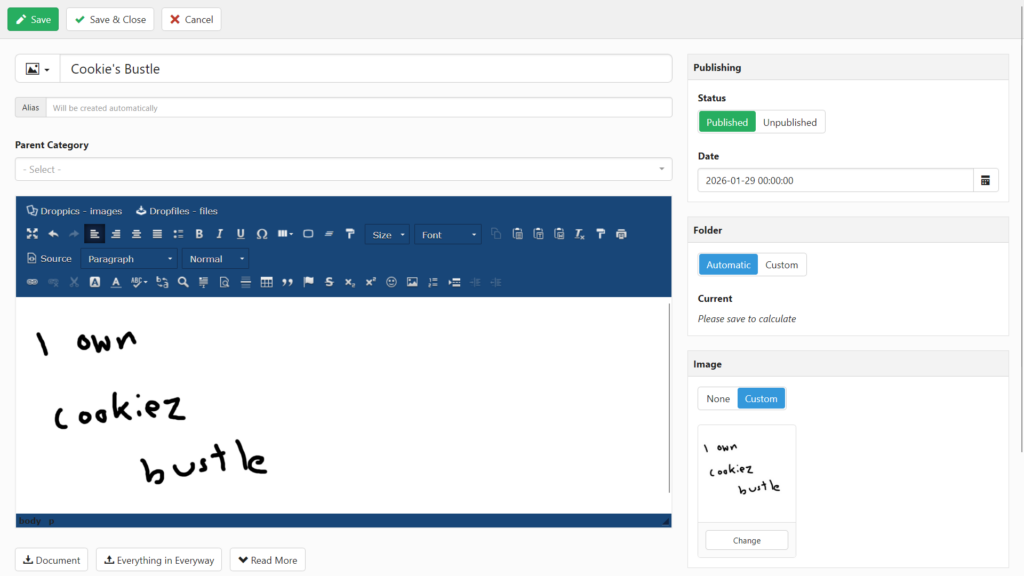
A primary piece of evidence cited by Graceware in its takedown notices are a series of "registrations" filed by Brandon White through INTEROCO—"Copyright Office" in 2021. These filings purport to claim ownership of various aspects of Cookie’s Bustle, including its source code, game concept, and character designs.
However, the VGHF’s legal analysis reveals these INTEROCO "registrations" to be legally meaningless. INTEROCO is identified as a private company in Germany that operates as a "full-automated electronic depository." The VGHF likens its function to a digital version of mailing oneself a letter for a postmark, a comparison INTEROCO itself makes. Crucially, copyright protection exists from the moment a work is created in countries party to the Berne Convention, such as Japan, the United States, and the United Kingdom. Formal registration, while conferring additional rights in some jurisdictions like the US (required before filing an infringement lawsuit and serving as proof of ownership), is not the source of copyright itself.
The VGHF’s investigation into INTEROCO found that it lacks robust oversight. They were able to create an account and gain editing privileges on the INTEROCO website, suggesting a lax verification process. Furthermore, an attempt to obtain more information about their registration process connected them to a third party in Dubai, who quoted a prohibitive fee and deflected questions about verification to law enforcement. This experience, coupled with INTEROCO’s absence of an abuse policy and failure to respond to inquiries, indicates that INTEROCO is an unreliable and potentially exploitable platform for establishing copyright claims. While White’s INTEROCO deposits may contain game assets, this does not equate to copyright ownership, analogous to an archive possessing game development assets without owning the copyright to the game itself.
Trademark Applications: Another Unsubstantiated Claim
In addition to copyright claims, Graceware, SL has filed trademark applications in the United States for the name "Cookie’s Bustle." These applications, filed under an "intent to use" basis in December 2022, propose the name for a range of products including computer games, board games, and merchandise.
The VGHF’s legal team clarifies that these trademark applications are currently unenforceable and do not confer ownership rights to the game. An "intent to use" application signifies a future intention to use the mark in commerce, not current usage. The United States Patent and Trademark Office (USPTO) considers these applications "pending." Graceware has repeatedly sought extensions to demonstrate actual use, suggesting they have not yet brought products to market under the "Cookie’s Bustle" name.
Moreover, trademark rights are distinct from copyright. While the original trademark for "Cookie’s Bustle" by RODIK, Inc. expired in 2001, Graceware’s subsequent application does not grant them ownership of the game’s copyright. This is illustrated by a recent case where a homebrew developer acquired the Tengen trademark, enabling them to use the name for their business but not granting them ownership of the intellectual property associated with Warner Communications’ former publishing brand.
The Mechanics of Abuse: Automated Takedowns and Trade Association Exploitation
The VGHF details how Brandon White and Graceware have leveraged low-cost and easily abusable legal resources to facilitate a campaign of nuisance takedown requests. Their primary conduit for issuing these notices has been Ukie, the UK’s largest video game trade organization. Ukie offers its members, including Graceware, free DMCA takedown request services, managed by its IP coordinator Mumith (Mo) Ali and his company, Web Capio (now operating as Obviously).
The VGHF highlights that the barrier to entry for Ukie membership and its legal services is surprisingly low, costing less than £1000 annually for small companies. This accessibility, combined with potential oversight weaknesses, allows entities like Graceware to utilize these services for mass takedown requests. Peculiarities in Graceware’s Ukie membership, such as a misspelled company name ("Gracewear") and a defunct website, further raise questions about their legitimacy.
A critical element of this abusive strategy is the automated nature of Web Capio’s takedown services. According to their marketing materials, Web Capio scrapes the web for infringing content and sends "automated takedown notices" without requiring manual verification for a significant portion of these requests. This automated process, which has been used to send hundreds, if not thousands, of notices, bypasses human legal review, potentially leading to erroneous claims being advanced. The VGHF argues that such an approach is not only irresponsible but could expose Web Capio and its clients to liability under the DMCA, particularly for failing to consider fair use. Notably, neither White nor Web Capio have initiated any formal legal action, suggesting a lack of substantive legal backing for their claims.
Exploiting DMCA Weaknesses: Targeting Platforms, Not Creators
Web Capio and Graceware appear to strategically target platforms and service providers rather than the direct creators of content. This approach exploits a fundamental weakness in the DMCA process: platforms are often compelled to remove content upon receiving a takedown notice to avoid potential liability, regardless of the notice’s validity. This is particularly true for large platforms where evaluating every request is impractical.
The VGHF experienced this firsthand when a takedown notice was not sent to them directly, but to Vercel, their web host. Rather than engaging with the VGHF’s established procedures for rightsholder requests, Web Capio’s automated system queried their DNS and directed the notice to their web provider. While Vercel ultimately did not remove the content or suspend the VGHF’s account, this roundabout method allowed Graceware and Web Capio to attempt to suppress content with minimal direct confrontation.
The Turning Point: Ukie Suspends Services for Graceware
The VGHF’s persistence in challenging Graceware’s claims eventually led to a significant development. In December 2025, Mumith Ali directly contacted the VGHF regarding a takedown request for a Cookie’s Bustle longplay video. When pressed for substantiation of Graceware’s ownership, Ali reiterated the INTEROCO claims. The VGHF’s counsel then requested clarification on the link between Brandon White’s 2021 "registrations" and the game’s 1999 publication. Graceware failed to respond.
This lack of response, coupled with the VGHF’s presentation of their findings, prompted Ukie to re-evaluate their involvement. After discussions between the VGHF and Ukie, including CEO Nick Poole and Mumith Ali, Ukie acknowledged the need for further clarification from Graceware regarding their copyright claims. Ultimately, as a result of Graceware’s inability to provide sufficient proof of ownership, Ukie has suspended its DMCA takedown services for Graceware, SL.

Implications and the Future of Cookie’s Bustle Archival
The suspension of Ukie’s services for Graceware represents a significant victory for the VGHF and the broader gaming community. It effectively halts Graceware’s ability to issue widespread, automated takedown notices for Cookie’s Bustle through this channel.
The true owner of Cookie’s Bustle remains unknown, solidifying its status as an orphan work. While this doesn’t place the game in the public domain, it significantly reduces the likelihood of legal action or further takedown notices from a proven owner. The most immediate implication is that fair uses of Cookie’s Bustle, such as gameplay clips, streams, commentary, and documentation, should now be free from the threat of automated takedowns. While previously removed content may not be automatically restored, future uploads and streams are expected to proceed without interference.
However, underlying issues persist. INTEROCO continues to offer potentially misleading copyright registration services, and automated takedown systems like Web Capio’s remain susceptible to abuse. Web Capio has reportedly implemented measures to escalate counterclaims, which may offer some recourse for users facing similar situations.
An update on April 20 revealed that Ukie had resumed sending takedowns for Cookie’s Bustle, despite the VGHF’s findings. Ukie confirmed this action but offered no evidence to dispute the VGHF’s research or address concerns about fair use and takedown verification. The VGHF maintains that users’ rights remain intact and encourages them to dispute inappropriate DMCA notices, asserting that Graceware is unlikely to successfully counter such disputes given their demonstrated lack of evidence.

The Broader Fight for Game History
While this battle over a single obscure game might seem disproportionate, the VGHF emphasizes its broader significance. Their 2023 survey revealed that approximately half of game and software titles released before 1995 are now considered orphan works due to poor ownership documentation. Video games, often treated as ephemeral commodities, are particularly vulnerable. This situation creates fertile ground for bad actors to manipulate historical records, spread disinformation about ownership, and impede the crucial work of historians, documentarians, and archivists seeking to preserve and understand video game history.
The VGHF’s stance against Graceware is a stand for the legal right to document out-of-print orphan games and to confront those who exploit copyright law for harassment. By refusing to comply with spurious DMCA notices and by actively challenging baseless claims, the VGHF aims to protect not only the legacy of Cookie’s Bustle but also the integrity of video game historical preservation efforts for generations to come. The foundation has not removed any material related to Cookie’s Bustle from its digital archive, underscoring its commitment to accessibility and preservation in the face of such challenges.