Cecilia Chamidah Nur
The venerable Japanese gaming giant, Sega, a company long celebrated for its rich arcade heritage and innovative console ventures, finds itself at the center of a burgeoning controversy following the launch of its ambitious "Sega Universe" project. While initially hailed as a promising endeavor to re-engage with its extensive catalog of classic intellectual properties (IPs), the initiative has quickly drawn significant criticism from its most dedicated Japanese fanbase, who allege that the promotional content accompanying the project exhibits hallmarks of generative Artificial Intelligence (AI) authorship, rather than human-crafted passion.
A Legacy of Classics and Recent Stumbles
Sega’s history is a tapestry woven with iconic titles and groundbreaking hardware, fostering a deep and loyal community worldwide. The company has, for the most part, maintained a commendable commitment to preserving its past, often revisiting beloved franchises and making classic titles accessible to new generations. This dedication has been crucial for a company that, despite experiencing periods of immense success, also navigated significant transitions in the late 20th and early 21st centuries, including its departure from the console hardware market.
However, this commitment has not been without its recent inconsistencies. As recently as September 2023, Sega faced a minor backlash when numerous retro games under its "Sega Forever" banner were unexpectedly delisted from iOS and Android digital storefronts without clear explanations. This move, while not catastrophic, created a ripple of concern among fans who rely on digital platforms for access to historical titles, hinting at potential underlying shifts in the company’s digital strategy or IP management. The "Sega Forever" initiative itself, launched in 2017, aimed to offer free, ad-supported mobile versions of classic Sega games, demonstrating a clear intent to celebrate its heritage, albeit with varying degrees of execution and ongoing support.
Introducing the "Sega Universe"
Against this backdrop, the announcement and subsequent launch of the "Sega Universe" project were met with considerable anticipation. Positioned as a comprehensive initiative designed to revive and highlight more of Sega’s classic franchises, the project promised to delve deeper than its predecessors, touching upon cult favorites and niche titles that resonate particularly strongly with long-standing fans. Early promotional materials referenced beloved, though sometimes overlooked, gems such as the action-RPG Guardian Heroes (Sega Saturn, 1996), the unique meta-game Segagaga (Dreamcast, 2001), and the quirky action-RPG Rent A Hero (Mega Drive, 1991; Dreamcast, 2000). The inclusion of such titles signaled to many that Sega was indeed listening to its hardcore audience, recognizing the depth and breadth of its storied history beyond the most globally recognized franchises like Sonic the Hedgehog.
The project’s initial rollout, which included a series of informational posts and descriptions of classic games, was intended to build excitement and educate both veteran players and newcomers about Sega’s illustrious portfolio. However, what was intended to be a celebratory ode to its past quickly devolved into a contentious debate, centered on the authenticity and quality of the descriptive text accompanying these revered titles.

The Spark of Controversy: AI-Generated Text Allegations
The controversy ignited swiftly on Japanese social media platforms, particularly X (formerly Twitter), shortly after the release of promotional materials for the "Sega Universe." Fans began scrutinizing the accompanying text, specifically the descriptions for iconic arcade titles like Fantasy Zone and OutRun. The prevailing sentiment among the Japanese fanbase was one of profound disappointment and, more pointedly, suspicion that the text had been generated by artificial intelligence rather than crafted by human writers with a genuine understanding and appreciation of Sega’s legacy.
The core of the concern stemmed from the perceived generic, superficial, and somewhat detached nature of the language used. While technically accurate in its listing of features, the descriptions lacked the characteristic nuance, passion, and specific cultural context that dedicated fans or experienced gaming journalists would typically infuse into such content. This perceived lack of genuine human touch immediately raised red flags for a community deeply invested in the historical and emotional significance of these games.
Dissecting the Content: "Fantasy Zone" and "OutRun" Descriptions
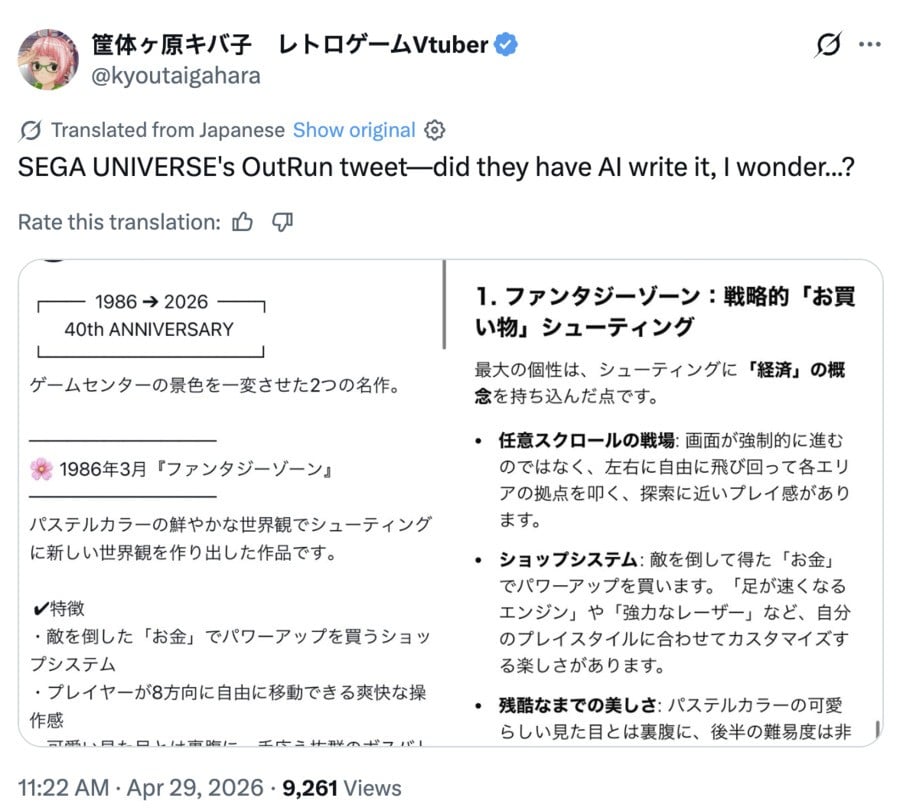
To illustrate the point, the problematic text, translated from Japanese social media posts, provided concise summaries of Fantasy Zone and OutRun.
For Fantasy Zone, released in March 1986, the description read:
"Two masterpieces that completely transformed the arcade scene.
March 1986 ‘Fantasy Zone’
A work that created a new worldview for the shooting genre with its vibrant pastel-colored world.
Features
- A shop system where you buy power-ups with ‘money’ earned from defeating enemies
- Thrilling controls allowing free 8-directional movement
- Boss battles with satisfying challenge, belying their cute appearance"
Critics argued that while these points are factually correct, they represent a very basic, almost clinical, summary. A human writer, steeped in Sega lore, might have emphasized the game’s revolutionary aesthetic for the time, its unique charm, the distinctive personality of its protagonist Opa-Opa, or even its enduring influence on the "cute ’em up" subgenre. The phrase "created a new worldview" is broad and lacks specific examples or emotional resonance. The feature list, while accurate, could be pulled from any database and lacks the descriptive flair expected from a passionate tribute.
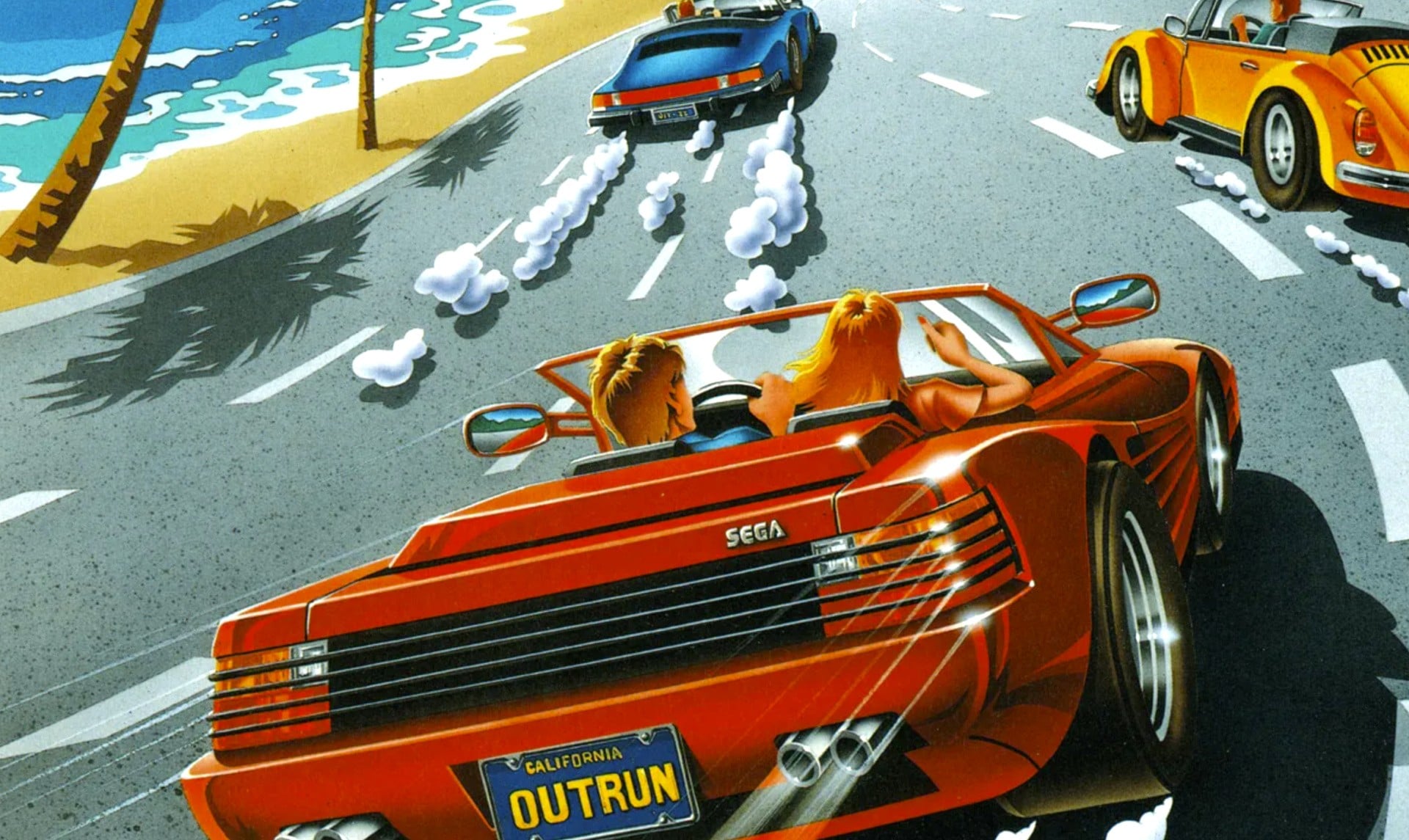
Similarly, the description for OutRun, released in September 1986, faced scrutiny:
"September 1986 ‘OutRun’
The shock it delivered to the gaming world back then was the fresh concept of ‘enjoying the drive.’
Features
- Stunning vistas as you speed through in a bright red sports car
- An industry first: the ability to freely select BGM (Magical Sound Shower is a must-listen)
- Overwhelming sense of speed paired with cabinet motion that responds to your controls"
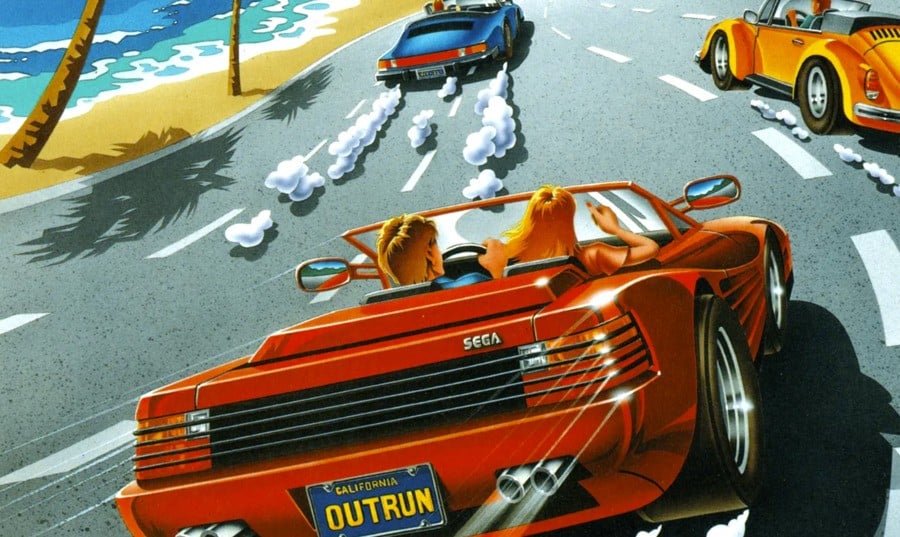
Again, the factual accuracy is not in dispute. OutRun was indeed revolutionary for its emphasis on the joy of driving, its iconic red Ferrari Testarossa, selectable BGM (with "Magical Sound Shower" being a legendary track), and its groundbreaking deluxe cabinet that mimicked car motion. However, the language, such as "stunning vistas" or "overwhelming sense of speed," while not incorrect, is often described as bland and generic. It fails to capture the visceral thrill, the sense of freedom, or the timeless appeal that has cemented OutRun‘s place in arcade history. A fan might have waxed poetic about the distinct European landscapes, the feeling of cruising with a passenger, or the unparalleled sense of style the game exuded. The phrase "an industry first" is a common AI-generated superlative, often used without deep historical context or comparison.
The concluding sentence for both games – "Even after 40 years, these are indispensable titles when talking about SEGA’s classic games—they haven’t lost their shine one bit" – further solidified the perception of AI involvement. This type of generic, laudatory closing statement is frequently observed in AI-generated promotional copy, designed to sound positive but lacking genuine insight or unique expression.
The Outcry from the Fandom: A Breach of Trust
The reaction from the Japanese Sega community was swift and overwhelmingly negative. Social media feeds quickly filled with comments expressing disbelief, frustration, and a sense of betrayal. Users pointed out the "stiff" and "unnatural" phrasing, the lack of depth, and the absence of the typical "Sega flavor" or passion that usually accompanies official communications about their beloved IPs.
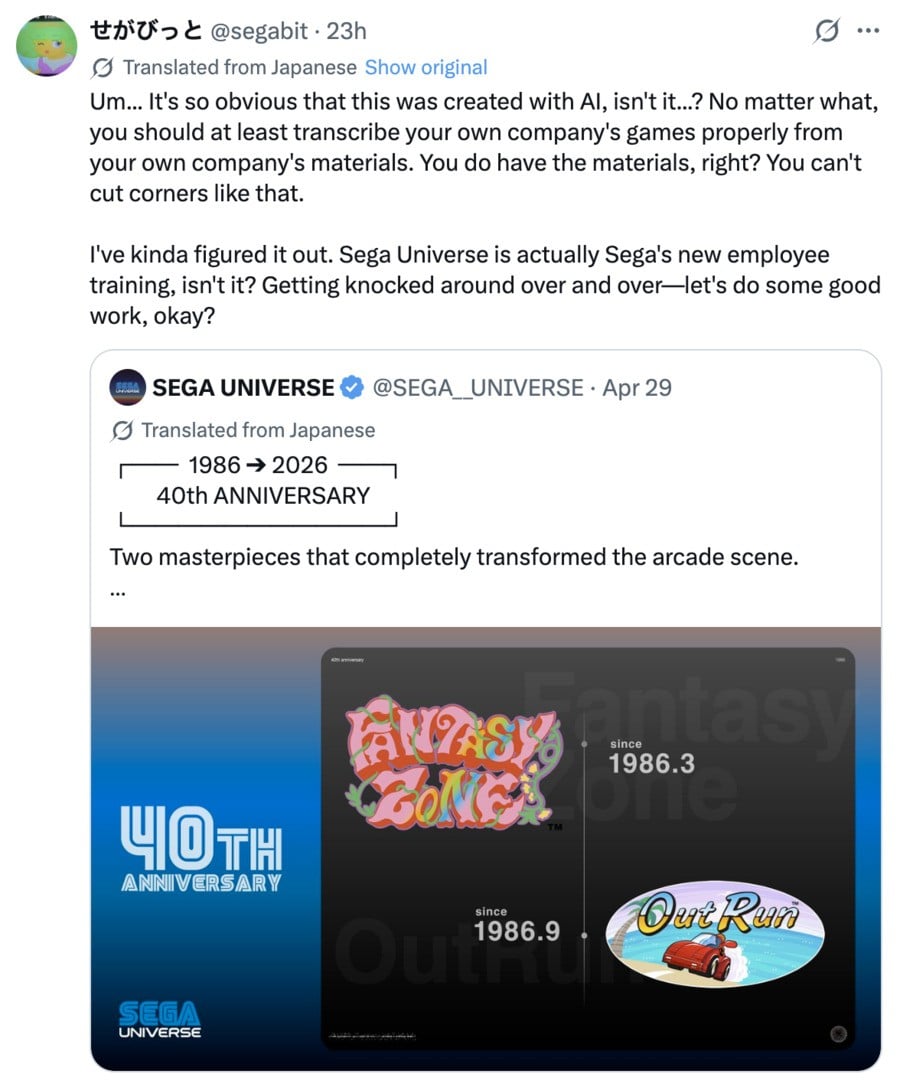
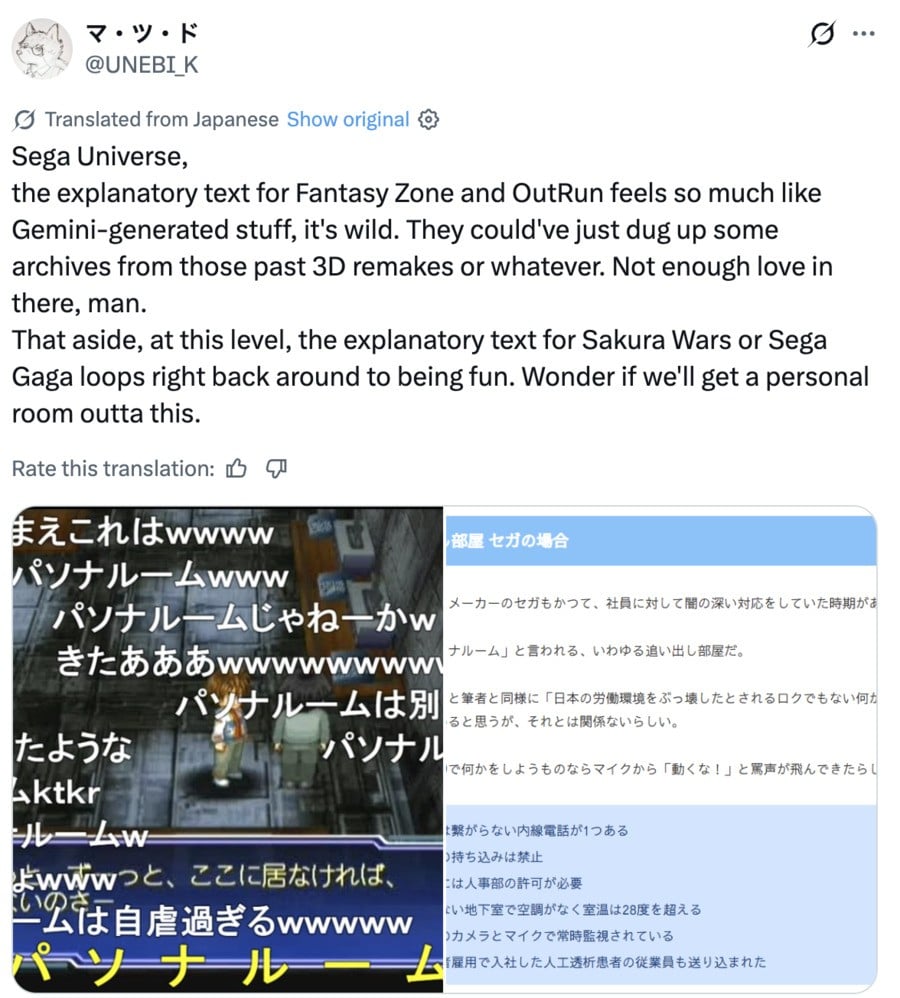
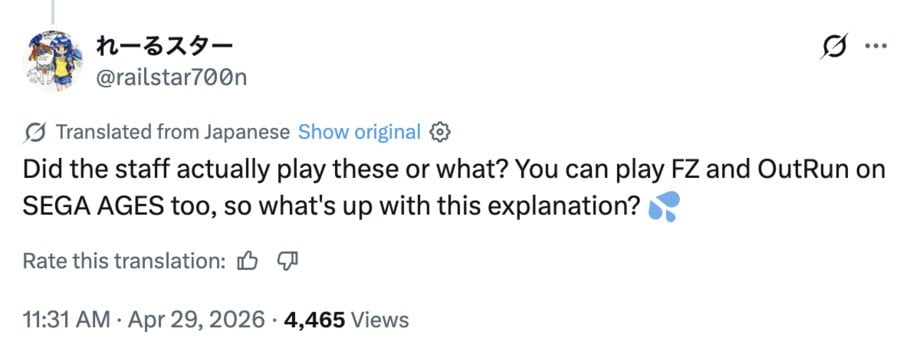
One user, @kyoutaigahara, questioned directly, "Did the staff actually play these or what?" This sentiment encapsulated the core concern: the text felt as if it were written by someone who had merely read about the games rather than experienced them with the deep engagement expected of Sega employees or dedicated fans. Another user, @segabit, lamented the general "lack of love" in the descriptions, suggesting a disconnect between the company and the very legacy it sought to celebrate. The feeling was that if Sega itself couldn’t muster genuine enthusiasm for its own masterpieces, how could it expect fans to remain loyal?
Comments like "Did they have AI write it?" and "It sounds like a chatbot" became prevalent, demonstrating a widespread consensus among the community regarding the suspected origin of the text. The specific concern was not just about poor writing, but about the implications of using AI for content related to culturally significant and emotionally resonant properties. For many, it felt like a shortcut, a cost-cutting measure that devalued the artistic and historical importance of these games. The notion that a machine could summarize cherished memories and experiences was seen as disrespectful to the developers, the games themselves, and the millions of fans who have supported Sega for decades.
The Broader Debate: AI in Creative Industries
This incident within the Sega community is not isolated but rather reflects a growing global debate surrounding the integration of generative AI into creative industries. From art and music to writing and game development, the rise of AI tools presents both unprecedented opportunities and significant ethical dilemmas. While AI can automate mundane tasks, assist with concept generation, and even create impressive synthetic media, its use in generating content that requires human empathy, nuance, and cultural understanding is increasingly scrutinized.
In the gaming industry, specifically, the use of AI for narrative, character dialogue, or promotional materials touches upon sensitive nerves. Gamers, particularly those who follow specific companies or franchises, often form deep connections with the creative talent behind their favorite titles. The idea that a machine could replace human creativity, especially when it comes to celebrating the history of a beloved brand, is met with resistance. There’s a perceived devaluation of human artistry and a fear that such practices could lead to a proliferation of generic, soulless content, eroding the unique charm and passion that draws players to games in the first place. This incident highlights a tension between corporate efficiency and authentic fan engagement, a balance that companies like Sega must carefully navigate.
Implications for Brand Loyalty and Future Engagements
The backlash against Sega’s "Sega Universe" content carries significant implications for brand loyalty and future fan engagement. For a company like Sega, whose brand identity is inextricably linked to nostalgia and a deep connection with its past, alienating its most dedicated fanbase can have long-lasting repercussions. Trust, once eroded, is difficult to rebuild. Fans expect authenticity and a genuine appreciation for the history they share with the brand. When that authenticity is perceived to be compromised by the use of AI for what should be celebratory content, it fosters a sense of disillusionment.
This incident also sets a precedent. If Sega is indeed using AI for promotional descriptions of its classic IPs, it raises questions about where else AI might be implemented within the "Sega Universe" project or other future initiatives. Will AI be used for in-game lore, character backstories, or even new game concepts? For a community that values the human touch and craftsmanship, such prospects are unsettling.
The financial pressures on major game publishers are undeniable, and the appeal of AI for cost reduction and efficiency is strong. However, this situation underscores that for cultural products like video games, the perceived cost savings might be outweighed by the intangible cost of damaged fan relations and brand reputation. Japanese fans, in particular, are known for their deep loyalty and meticulous attention to detail regarding their favorite franchises, making their critical feedback especially potent.
Sega’s Silence and the Path Forward
As of the time of this report, Sega has not issued an official statement regarding the allegations of AI-generated content in its "Sega Universe" project. This silence, while perhaps strategic in some corporate contexts, often exacerbates fan concerns in the highly interactive and community-driven world of video games. Acknowledging the feedback, clarifying the content creation process, or even committing to human-authored descriptions in the future could go a long way in assuaging fan anxieties.
The path forward for Sega involves a careful re-evaluation of its content strategy for legacy IP initiatives. While celebrating its history is a laudable goal, the how of that celebration is proving to be as crucial as the what. Engaging with its fanbase directly, demonstrating genuine appreciation for its classics through authentic, human-crafted narratives, and being transparent about its creative processes will be vital for Sega to restore trust and ensure the "Sega Universe" project truly resonates with the community it aims to serve. The current reaction serves as a powerful reminder that in an age of advanced technology, the human element – passion, nostalgia, and genuine storytelling – remains irreplaceable for a brand built on decades of cherished memories.