Retno Hari Mulyono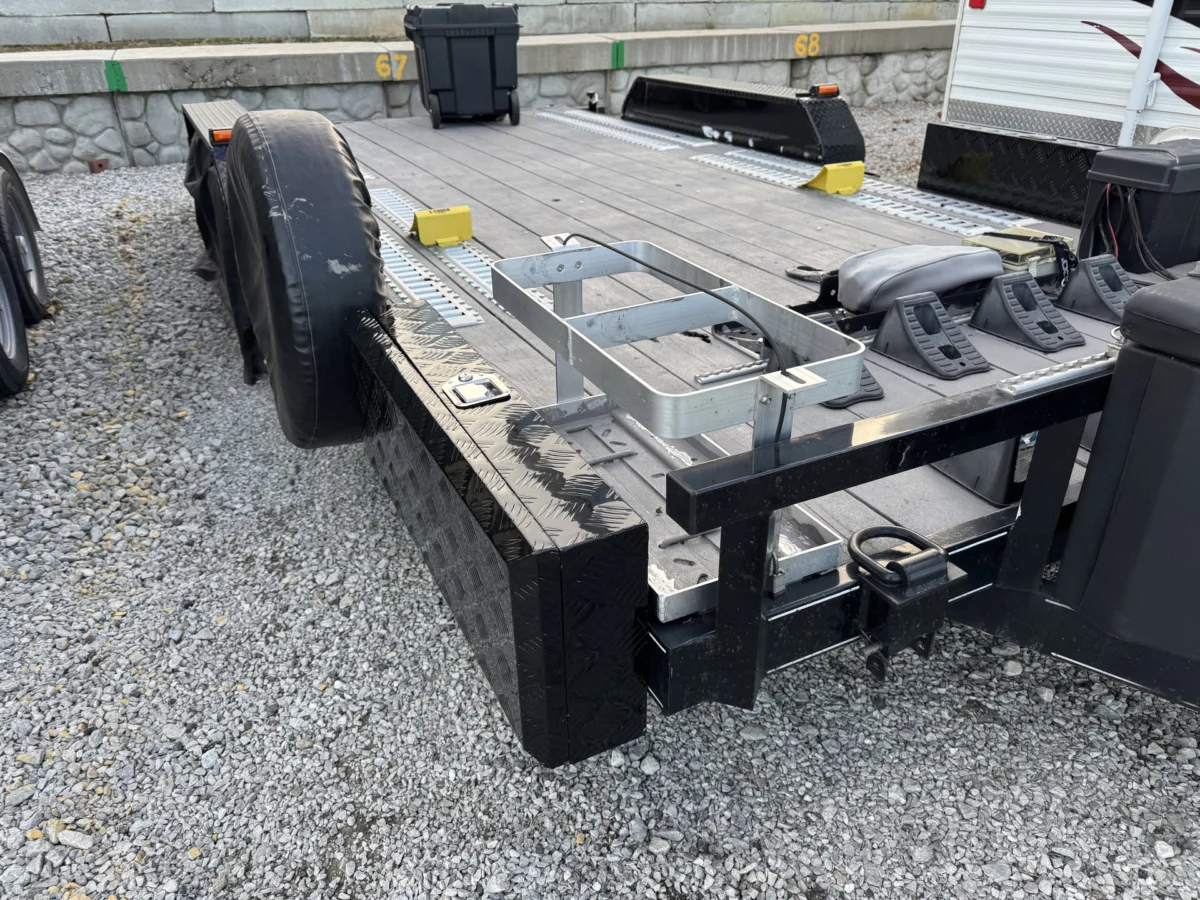
The evolution of the second-generation Mazda MX-5, known internally as the NB platform, from a standard road-going convertible into a high-performance time trials competitor reached a significant five-year milestone in February 2026. This period of development, characterized by rigorous track testing and significant mechanical overhauls, culminated in a year of substantial technical transitions, including the adoption of drive-by-wire technology and advanced drivetrain components. Over the course of the 2025 racing season, the vehicle completed 14 track days and 357 laps, bringing its documented lifetime track usage to 43.8 hours across 1,380 laps. This report details the technical trajectory, mechanical failures, and engineering solutions implemented during the fifth year of the vehicle’s development cycle.
Power Extraction and Baseline Performance Testing
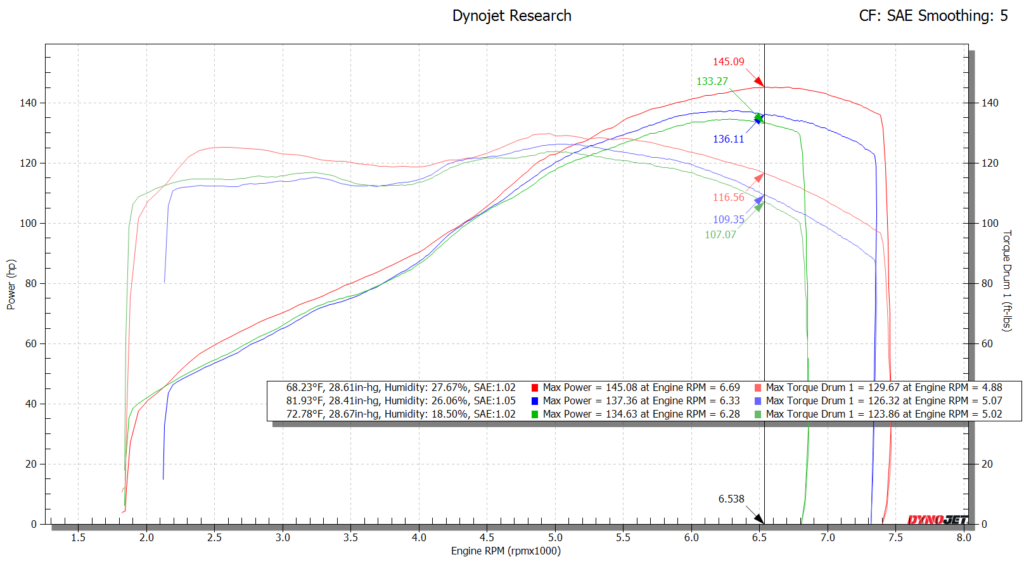
The 2025 season commenced in March with standardized dynamometer testing to establish baseline power figures for the Sports Car Club of America (SCCA) Midwest Division (MiDiv) time trials classing. Accurate power-to-weight ratios are critical for competitive integrity in these events, requiring certified documentation of wheel horsepower (whp) and torque.
During this session, the vehicle was equipped with a Skunk2 intake manifold, replacing the previous "square top" European-spec manifold. Utilizing a Dynojet chassis dynamometer, the vehicle recorded a peak output of 145.09 wheel horsepower and 129.67 lb-ft of wheel torque. This represents a significant increase over the stock factory output, which typically measures approximately 115 whp on a standard ECU. When compared to the previous two years of testing, which yielded 133.27 whp and 136.11 whp respectively, the data suggests that the combination of the Skunk2 manifold and optimized ECU tuning has effectively maximized the volumetric efficiency of the naturally aspirated 1.8-liter BP-series engine.
Competitive Campaign and Mid-Season Mechanical Failures
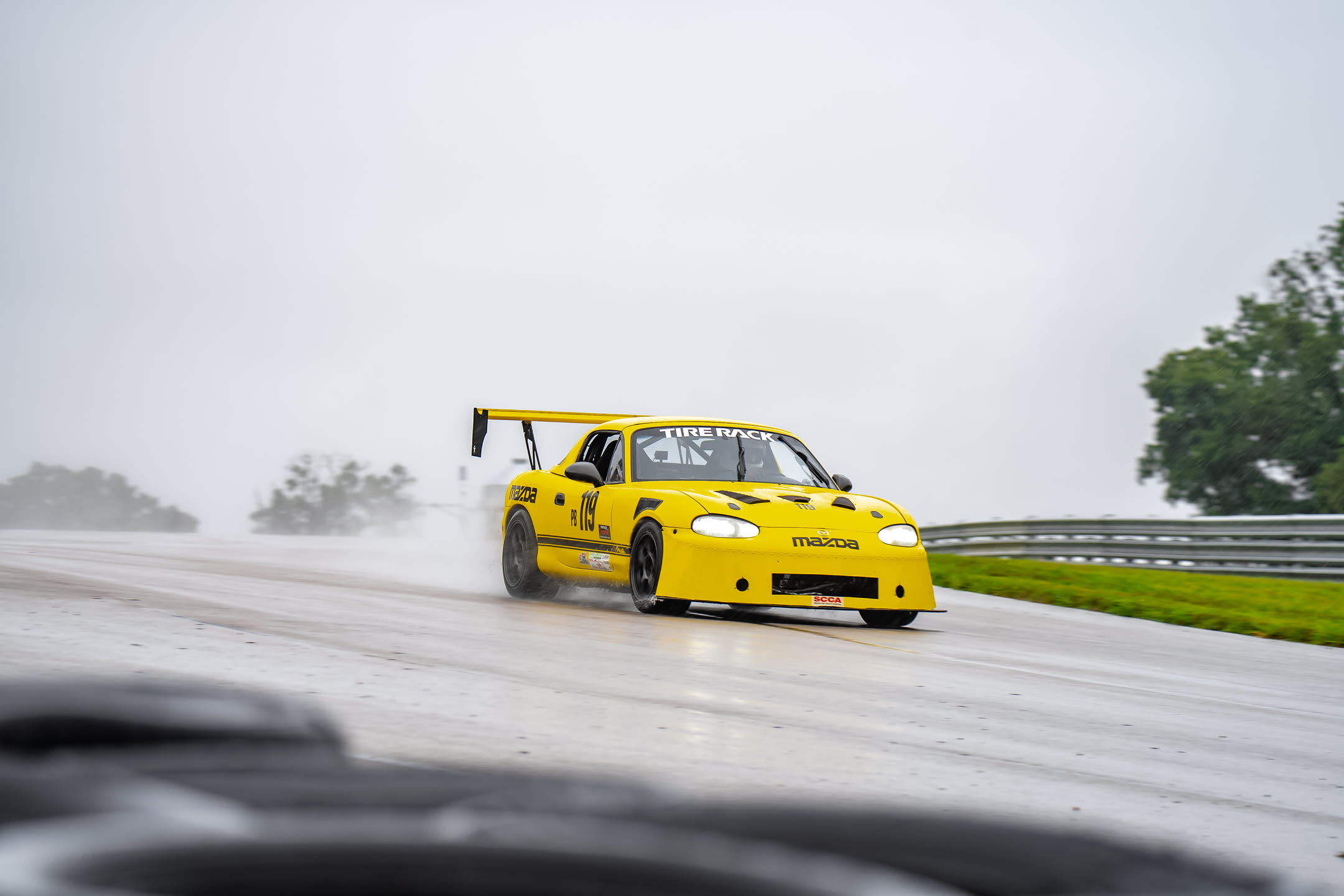
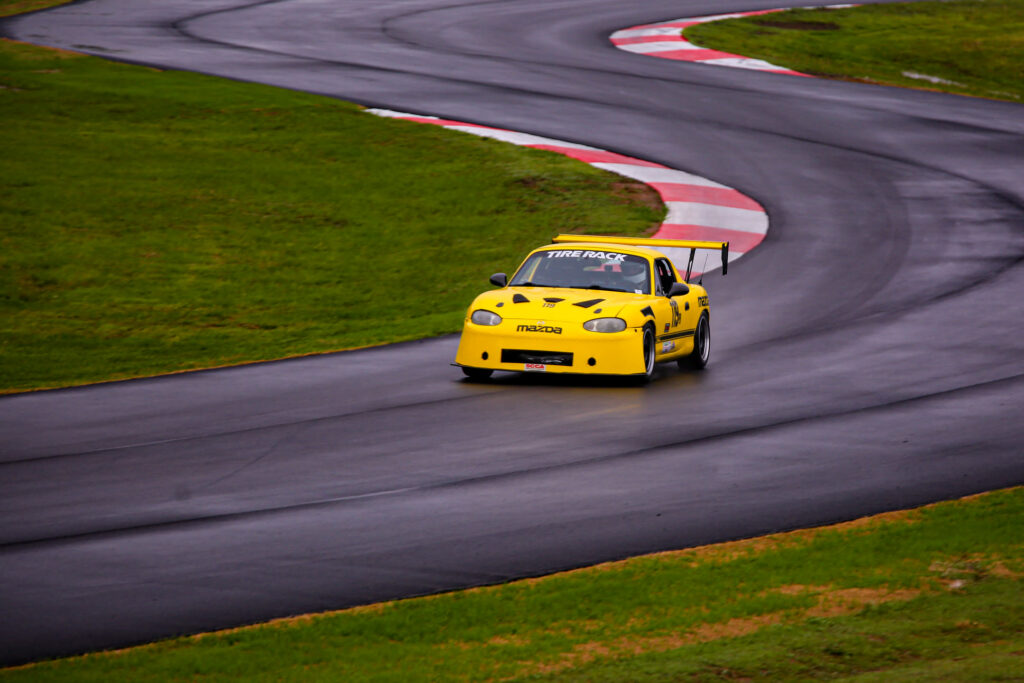
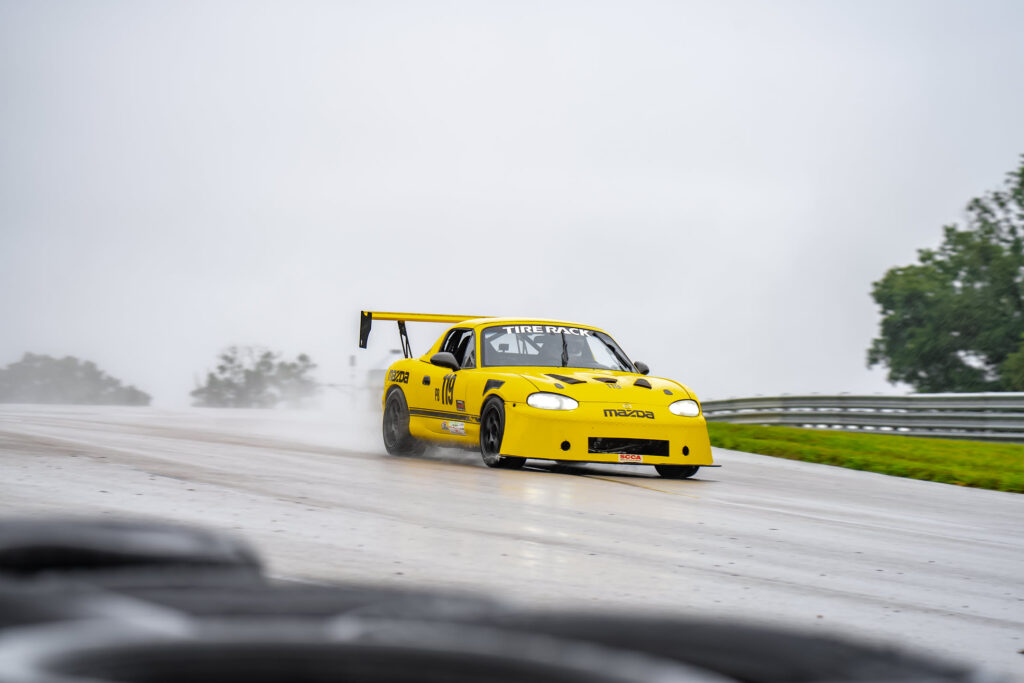
The competitive season began at the Hallett Motor Racing Circuit in April 2025. This event served as an initial assessment of the vehicle’s handling characteristics following off-season adjustments. However, inclement weather provided a unique test of the track’s recent resurfacing. Engineering observations noted the complexities of transition zones where the new asphalt met older surfaces, creating variable friction coefficients that required precise modulation of the braking system.
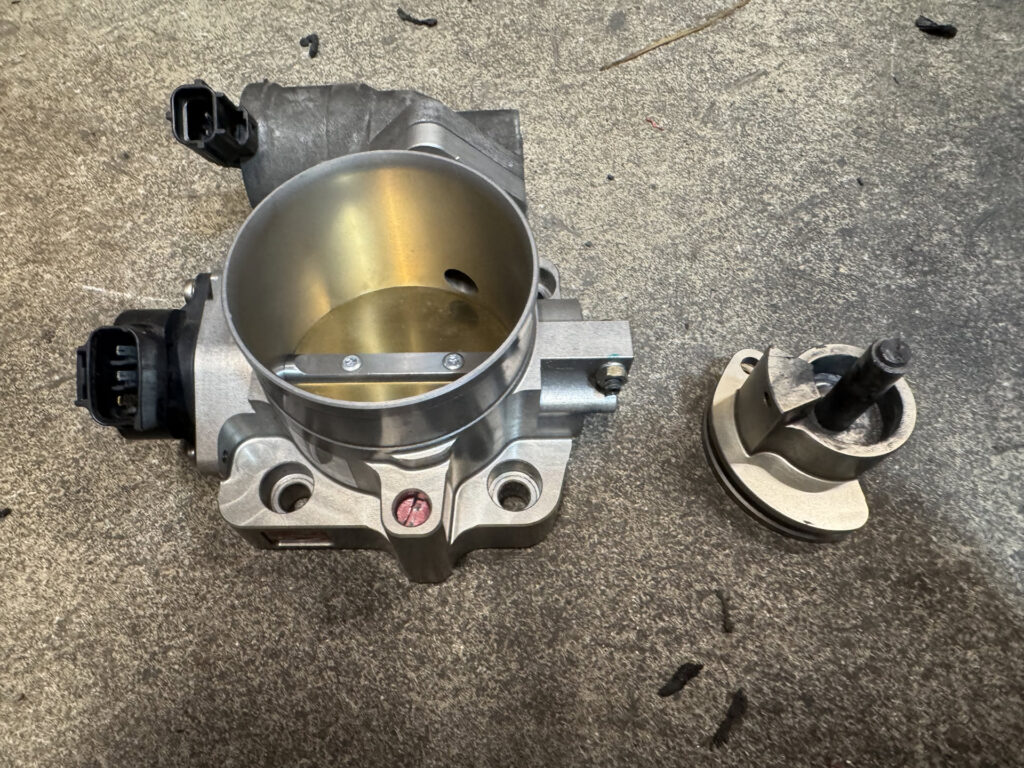
In May 2025, the development program encountered its first major reliability hurdle during testing at I29 Speedway. The throttle return spring on the aftermarket Skunk2 throttle body suffered a fatigue failure. While the operator managed to implement a temporary field repair to finish the session, this event highlighted a critical vulnerability in the throttle actuation system. A replacement unit of the same model was installed, though this would later prove to be a recurring point of failure.
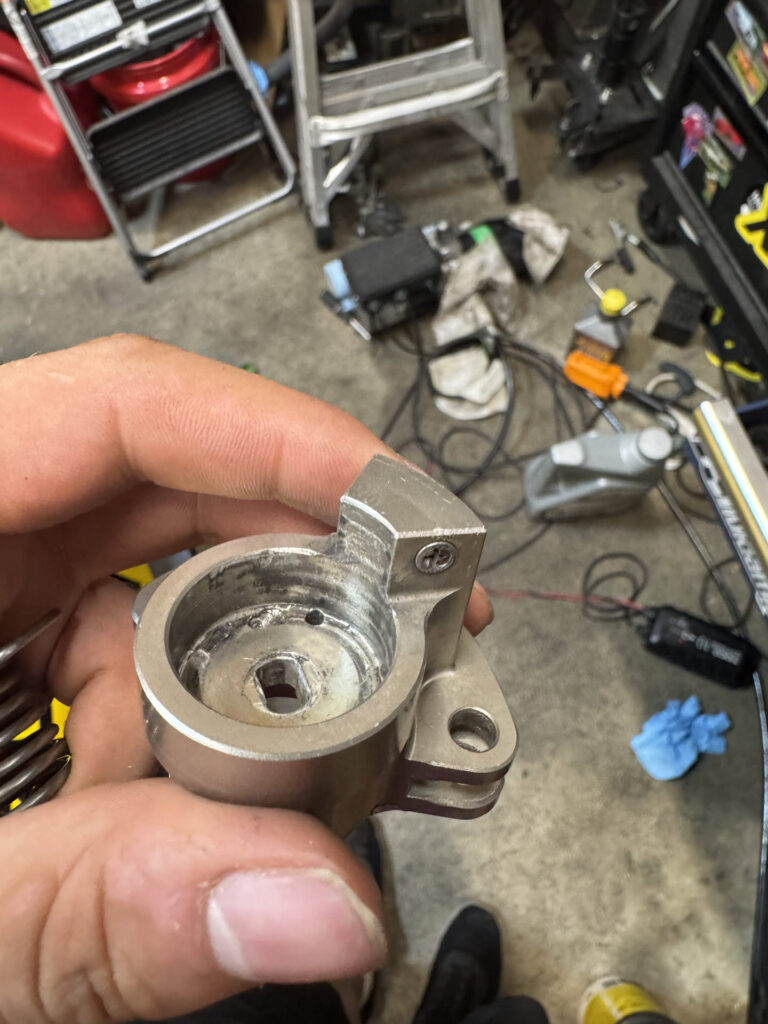
The reliability issues reached a critical juncture in August 2025 at High Plains Raceway. During a timed session, the throttle body shaft suffered a catastrophic structural failure, snapping completely. While the engine was spared from ingesting internal components, the failure resulted in an immediate loss of power and necessitated a tow-off from the circuit. These consecutive failures of aftermarket performance parts prompted a fundamental shift in the project’s engineering philosophy, moving away from cable-driven mechanical throttles toward modern electronic solutions.
Logistics and Maintenance Infrastructure Upgrades
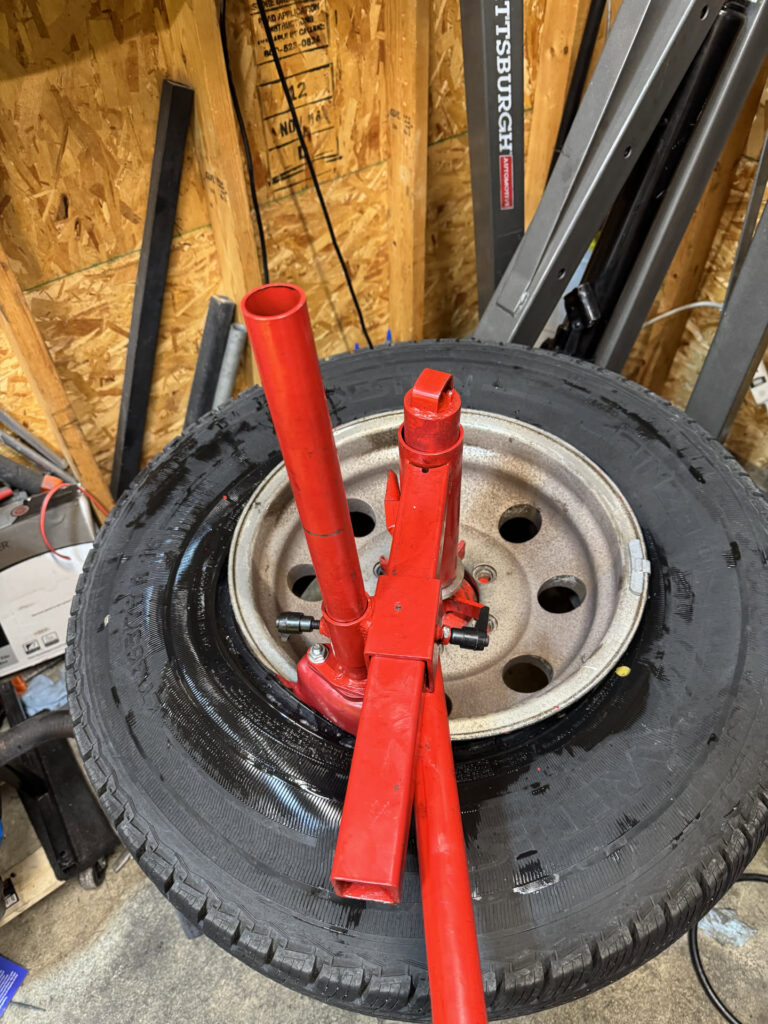
In response to the rising costs of professional automotive services, the program integrated in-house tire maintenance capabilities in June 2025. The acquisition of manual tire-changing equipment and bubble-balancing tools allowed for the rapid mounting of 200-treadwear (200TW) performance tires. This DIY approach not only reduced operational overhead but, according to technical observations, provided balancing results that met or exceeded the tolerances of commercial high-speed balancers for track-specific applications.
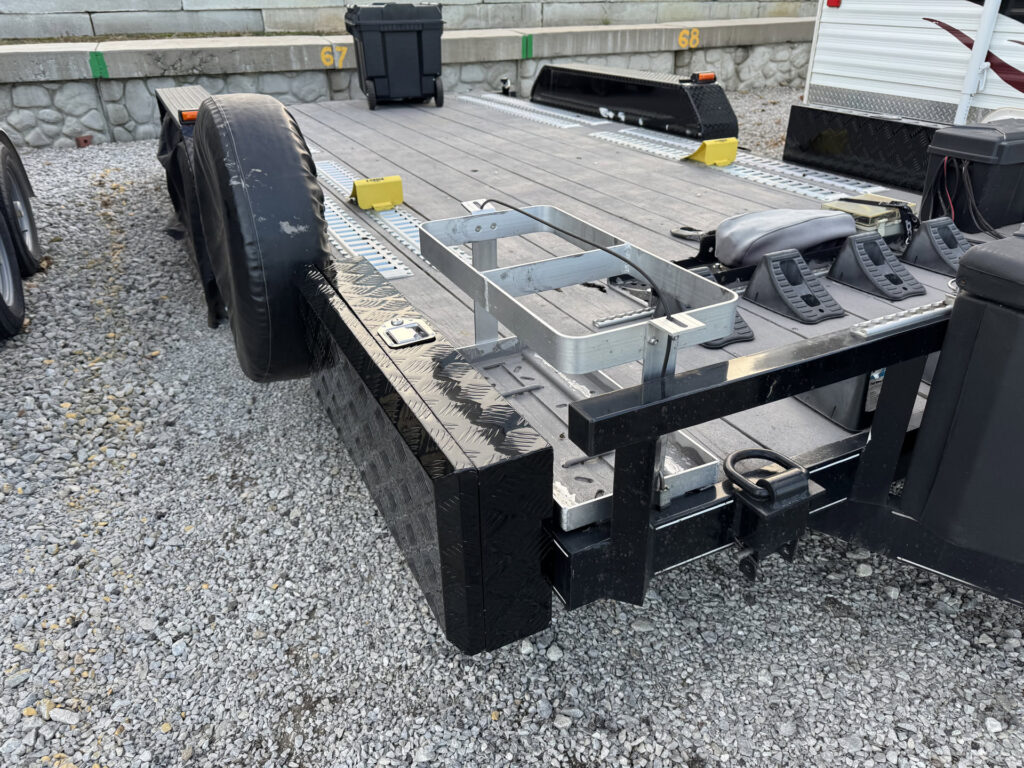
Simultaneously, the vehicle’s transport logistics were refined through enhancements to the open car hauler. In September 2025, the trailer was outfitted with an E-track tie-down system. Unlike traditional axle straps or over-the-wheel nets that can loosen as the vehicle’s suspension compresses during transit, the E-track system provides a positive mechanical lock. Data gathered during long-distance transport indicated that the tension remained constant over 50-mile intervals, significantly improving safety and efficiency during transit to regional circuits such as Ozarks International Raceway.
Technical Overhaul: Drive-by-Wire and Custom Electronics
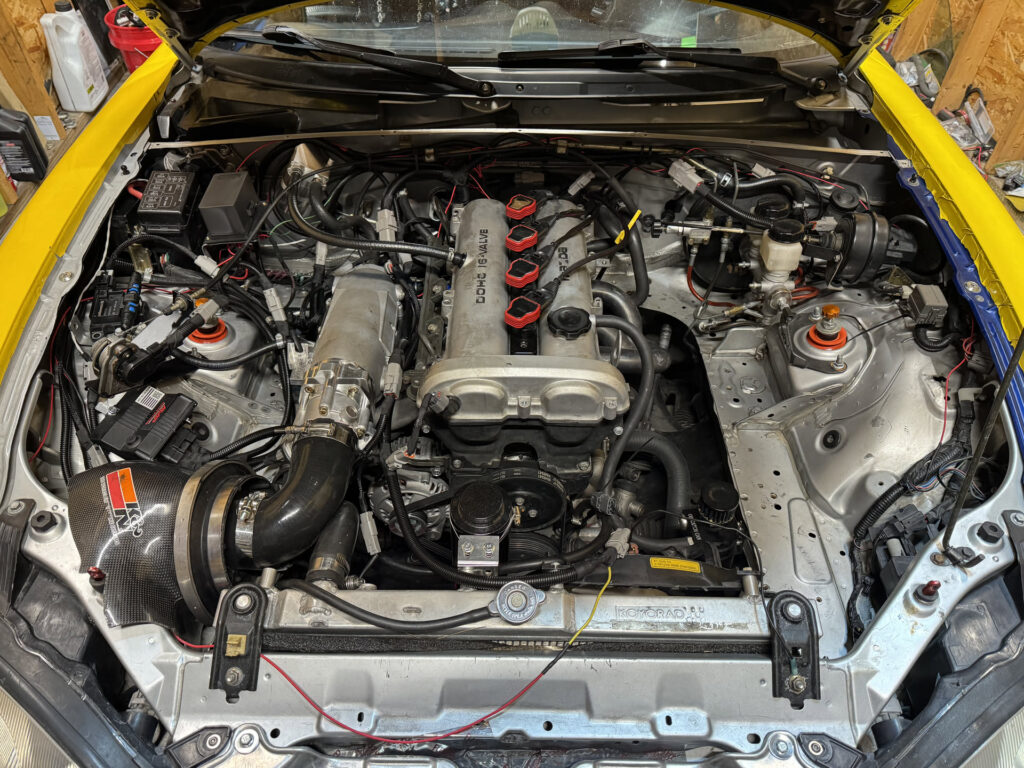
The failures of the mechanical throttle system precipitated an extensive winter engineering project beginning in October 2025. The goal was to eliminate 25-year-old electrical architecture and replace it with a modernized, motorsport-grade wiring loom.
The original engine harness, which relied on aging factory connectors and an adapter for the MS3Pro Evo ECU, was completely discarded. In its place, a custom-built harness was constructed using Deutsch connectors for modularity. This new system integrated a dedicated fuse and relay block along with a centralized ground bus bar to minimize electrical noise and improve reliability.
The most significant upgrade was the conversion to a Drive-by-Wire (DBW) system. This involved:
- Throttle Actuation: Installation of a Bosch 60mm electronic throttle body.
- Pedal Input: Integration of a Honda-sourced Accelerator Pedal Position (APP) sensor.
- Control Logic: Implementation of an AMP EFI drive-by-wire controller to interface with the Megasquirt ECU.
This conversion allows for advanced features such as programmable throttle maps, traction control integration, and more precise idle air control, effectively bringing the 2000-model-year vehicle in line with modern racing standards.
Cockpit Instrumentation and Shifter Dynamics
To complement the new electrical architecture, a Tinker Electronics digital dash was installed in November 2025. This unit communicates via the Controller Area Network (CAN bus) to display real-time data from the ECU. The interface was configured to prioritize critical engine health metrics, including oil pressure, coolant temperature, and air-fuel ratios (AFR). Visual warnings were programmed to trigger if parameters exceeded safe operating limits, providing the driver with immediate feedback during high-stress maneuvers.
Furthermore, the gear selection mechanism was upgraded in December 2025 with the installation of a Coolerworx short-throw shifter. Previous iterations used a tall-angled shifter which, while ergonomic, resulted in occasional missed shifts during aggressive track driving. The Coolerworx unit features a stiff external return-to-center spring and adjustable gate stops. These mechanical limits ensure that the shifter cannot be inadvertently forced into the reverse gate during a 4th-to-5th gear transition, a common failure point in the Mazda six-speed transmission.
Drivetrain Optimization: The OS Giken Differential
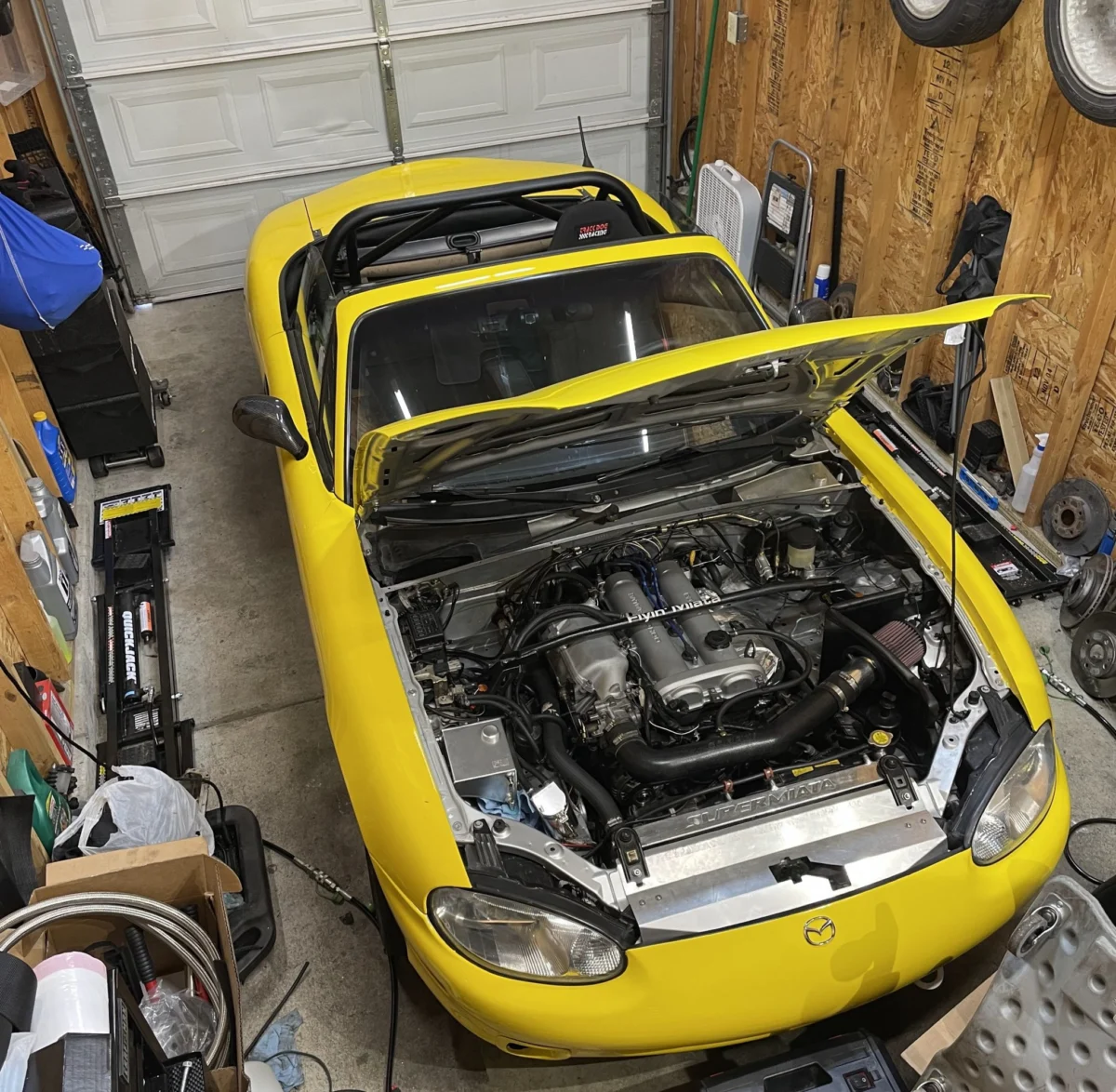
In January 2026, the vehicle’s power delivery was further refined through the installation of a Supermiata-tuned OS Giken limited-slip differential (LSD). For the preceding years, the vehicle utilized a 4.30-ratio Torsen Type II differential. While the Torsen is a robust torque-sensing unit, it is known to behave as an open differential if one wheel becomes completely unloaded, a common occurrence when navigating aggressive curbing or low-speed hairpins.
The OS Giken unit, a clutch-type LSD, provides more consistent locking characteristics under both acceleration and deceleration. By installing this unit into a 4.30-ratio open housing, the program maintained the optimal gearing for the naturally aspirated engine while gaining superior traction. This upgrade is expected to significantly improve corner-exit speeds and stability under heavy braking during the 2026 competitive season.
Expansion of the Development Fleet
The five-year mark also saw the expansion of the program with the acquisition of a second NB Miata in February 2026. This 2001 model was purchased in a degraded state for $1,800, serving as a platform for street-legal testing and experimentation. Despite cosmetic damage and a lack of interior components, the presence of a Variable Valve Timing (VVT) engine and a six-speed manual transmission provided a high-value foundation.
Initial restoration efforts included the installation of a new soft top, interior recovery, and the recycling of the 4.30 Torsen differential removed from the primary track car. This dual-vehicle strategy allows for continued development of the primary racing platform while maintaining a baseline reference vehicle for component testing and street-based data collection.
Conclusion and Strategic Outlook
As the project enters its sixth year, the Mazda NB Miata has transitioned from a basic club-level car to a sophisticated engineering platform. The data collected by the Garmin Catalyst over 43.8 hours of track time provides a comprehensive look at the vehicle’s performance envelope. While personal best lap times were less frequent in 2025 due to environmental variables and mechanical setbacks, the technical foundations laid during the winter of 2025-2026—specifically the drive-by-wire system and the OS Giken differential—position the vehicle for a highly competitive 2026 season. The integration of modern electronics into a lightweight, analog chassis remains a successful blueprint for grassroots motorsport development.