Cecilia Chamidah Nur
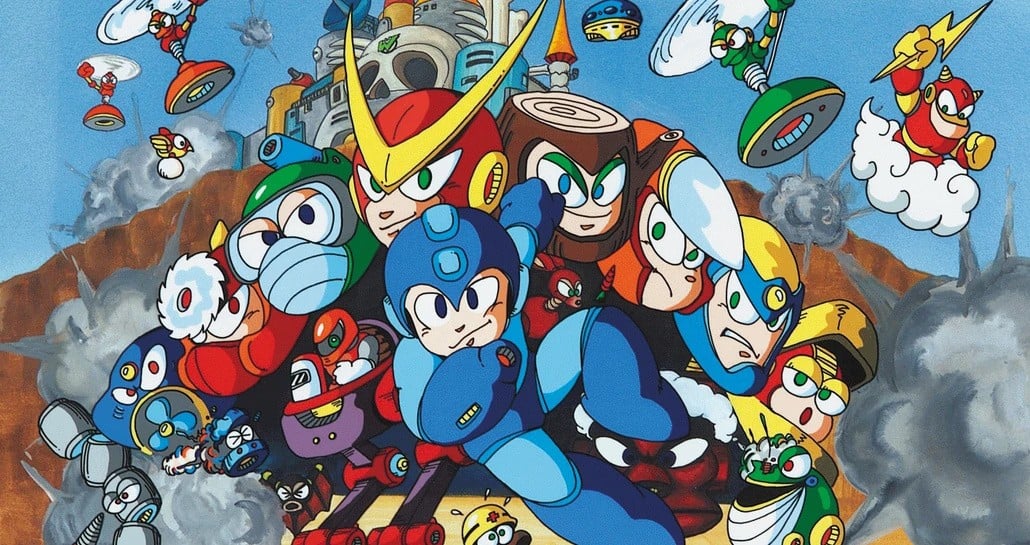
In a significant development for the retro gaming community, homebrew developer Infidelity has announced an ambitious new project: a full 16-bit Super Nintendo Entertainment System (SNES) port of the iconic Nintendo Entertainment System (NES) title, Mega Man 2. This endeavor aims to reimagine the classic 1988 platformer with enhanced visuals and audio capabilities that leverage the SNES’s hardware, specifically targeting proper 16-bit graphics and a "true, SPC700 soundtrack." The announcement, made via social media this past weekend, signals a deeper dive into SNES capabilities compared to Infidelity’s previous work, promising a bespoke experience that transcends mere emulation or simple porting.
This latest project represents a culmination of Infidelity’s long-standing aspirations within the homebrew scene. His journey into bringing Mega Man 2 to the 16-bit console began in earnest in December 2022, when he first expressed interest in such an undertaking. That initial vision materialized in 2023 with a native SNES port of Mega Man 2, which, while impressive, deliberately retained the original 8-bit graphics. The primary benefits of that earlier port were focused on performance and audio fidelity, including a notable reduction in sprite flickering, the integration of MSU-1 audio support for CD-quality music, and an expanded ROM size. The larger ROM was a strategic move, specifically designed to open the door for future community-driven graphics and audio replacement modifications. However, it now appears Infidelity himself is taking on the mantle of delivering the comprehensive 16-bit experience that many players have envisioned, moving beyond a simple technical port to create a version that truly looks and sounds like an authentic SNES title.
The current development is a testament to the passion and technical prowess prevalent in the retro gaming homebrew community. Infidelity’s stated goal is to craft a "custom SNES game" from the ground up, ensuring that the port not only plays seamlessly on the console but also fully embraces its aesthetic and auditory potential. He has explicitly differentiated his project from Mega Man: The Wily Wars, the 1994 Sega Mega Drive/Genesis compilation that included 16-bit renditions of the first three Mega Man games. Infidelity’s approach is designed to avoid a mere "copy/paste" of Wily Wars, instead focusing on an entirely unique SNES-centric visual identity. This will be achieved through a combination of entirely custom graphics, drawn by a dedicated artist, and assets carefully adapted from official SNES titles such as Mega Man 7 and Mega Man X. The visual enhancements are set to include advanced graphical features like multiple background layers (multi bg layers) and parallax horizontal scrolling, elements synonymous with the SNES’s visual capabilities. Furthermore, the port is expected to incorporate Infidelity’s usual suite of Quality of Life (QOL) features, leveraging the SNES controller’s L, R, X, and A buttons for enhanced gameplay options, reflecting modern sensibilities while respecting the original design.
A cornerstone of this ambitious project is the commitment to a "true, SPC700 soundtrack." The SPC700 is the SNES’s dedicated sound chip, renowned for its advanced capabilities compared to the NES’s more rudimentary 2A03 sound processor. While the 2023 port offered MSU-1 audio, which provides CD-quality playback, the SPC700 allows for a different kind of immersion—one deeply integrated with the SNES’s native sound architecture, capable of complex waveforms, samples, and rich instrumentation characteristic of the console’s iconic soundtracks. Infidelity plans to offer players the choice between the original 8-bit version’s audio, an improved MSU-1 option, and the fully realized SPC700 soundtrack, catering to diverse player preferences. This dual-audio approach, alongside the option to play the game with either its original 8-bit graphics or the new 16-bit visuals, highlights a commitment to both preservation and enhancement. The developer also aims to entirely eliminate sprite flicker, a common limitation of the NES hardware, building on his recent success in addressing this issue with his port of Super C.
The development process, as detailed by Infidelity, began on March 22, 2026, with a complete restart of the porting effort. This decision was made to meticulously document every palette and VRAM request, a critical step for implementing dedicated CGRAM tables for the 16-bit version. This approach avoids the complexities of his usual CGRAM swap method, which would prove unwieldy for a full graphical overhaul. Infidelity reported significant progress, having successfully ported the game up to the boss selection screen and the subsequent boss introduction sequences. His methodical, operation-by-operation approach ensures that the game can dynamically load either 8-bit or 16-bit data, depending on player choice. The ROM size for this expansive project will remain at 4MB, utilizing Hi-ROM/FastROM architecture, indicative of a large-scale, technically sophisticated undertaking.
The Enduring Legacy of Mega Man 2 and its Fan Appeal
Mega Man 2, released by Capcom in 1988, is widely considered one of the greatest video games of all time and a pinnacle of the NES library. It significantly expanded upon its predecessor, introducing new gameplay mechanics, iconic Robot Masters, and a legendary soundtrack composed by Takashi Tateishi. Selling over 1.5 million units worldwide, it became one of Capcom’s best-selling titles on the NES and solidified the Mega Man franchise as a cornerstone of the action-platformer genre. Its enduring popularity stems from its tight controls, innovative level design, memorable boss battles, and a perfectly balanced difficulty curve. This widespread adoration makes Mega Man 2 a prime candidate for fan-driven enhancements and reinterpretations, as players often dream of experiencing their beloved classics with modern technical polish or on different hardware.
The transition from 8-bit to 16-bit gaming represented a monumental leap in console technology, a shift that Mega Man itself navigated with titles like Mega Man 7 on the SNES and the Mega Man X series. The NES, powered by a Ricoh 2A03 processor (a variant of the MOS Technology 6502), was limited to a 64-color palette (with 25 active colors on screen), 8×8 or 8×16 pixel sprites, and two background layers. These limitations often led to sprite flicker when too many sprites were on screen and a relatively flat visual presentation. In contrast, the SNES, with its Ricoh 5A22 CPU (based on the 16-bit WDC 65816) and a powerful Picture Processing Unit (PPU), boasted a 32,768-color palette (with 256 active colors per screen), larger and more numerous sprites, and up to four background layers with advanced scrolling modes like parallax. The SPC700 sound chip offered 8 channels of 16-bit samples, allowing for vastly richer and more complex musical compositions and sound effects compared to the NES’s two pulse waves, one triangle wave, one noise channel, and one DPCM channel. Infidelity’s project aims to exploit these SNES advantages to their fullest, transforming the visual and auditory landscape of Mega Man 2 without compromising its fundamental gameplay.

Contrasting with Mega Man: The Wily Wars
Mega Man: The Wily Wars, released for the Sega Mega Drive/Genesis, serves as an important point of comparison for Infidelity’s new project. Wily Wars offered 16-bit remakes of the first three Mega Man games, including Mega Man 2. While appreciated for its effort to bring the classics to a new generation with updated visuals, it was not without its criticisms. The graphical style, though 16-bit, adopted a distinct Sega aesthetic that some purists found jarring compared to the original NES look. Furthermore, the game occasionally suffered from noticeable slowdowns and a different feel in terms of collision detection and responsiveness, issues that Infidelity’s SNES port seeks to avoid entirely. By using custom assets or those from SNES-native Mega Man titles, Infidelity is aiming for a visual style that feels organically "SNES," rather than a direct port of a different console’s interpretation. His focus on eliminating sprite flicker and meticulously optimizing performance suggests a dedication to creating a technically superior and aesthetically cohesive experience.
The Broader Impact of Homebrew and Fan Projects
Infidelity’s work on Mega Man 2 is emblematic of a vibrant and highly skilled homebrew and fan-modding community that plays a crucial role in video game preservation and innovation. These communities often take on projects that official developers or publishers might deem too niche, financially unviable, or technically challenging. Their efforts not only breathe new life into classic titles but also serve as a testament to the enduring appeal and technical mastery embedded within these games. Projects like this contribute to game preservation by keeping older titles relevant and accessible on modern (or even slightly less modern) hardware, often introducing them to new generations of players.
However, such projects also navigate a complex landscape of intellectual property rights. While fan-made games and ports are typically created out of passion and distributed non-commercially, they technically utilize copyrighted material. Publishers like Capcom have historically taken a relatively tolerant stance towards non-commercial fan creations that do not directly compete with their official releases. This unspoken understanding allows projects like Infidelity’s to flourish, enriching the gaming ecosystem without legal challenges. The implied ‘statement’ from the community regarding such projects is overwhelmingly positive, with high anticipation for quality enhancements that respect the original game’s spirit. These projects demonstrate what "could have been" if a game had been developed for different hardware, pushing the boundaries of what’s possible with retro consoles.
Conclusion and Future Outlook
Infidelity’s latest undertaking with Mega Man 2 for the SNES is a monumental task, requiring deep technical understanding of both the NES and SNES architectures, artistic vision, and meticulous attention to detail. The promise of a truly 16-bit graphical overhaul, complete with multi-layered backgrounds and parallax scrolling, coupled with an authentic SPC700 soundtrack and essential QOL improvements, positions this project as one of the most exciting fan-made ports in recent memory. While no precise release date has been mentioned, the detailed progress report and the methodical approach outlined by Infidelity suggest a thoughtful and committed development cycle. The retro gaming community will undoubtedly be watching with keen interest as this ambitious vision for a definitive 16-bit Mega Man 2 takes shape. Enthusiasts are encouraged to follow Infidelity on his social media channels, specifically on Twitter/X, for ongoing updates and glimpses into the development process as this remarkable project progresses towards its anticipated 2026 completion. The journey to transform an 8-bit masterpiece into a 16-bit marvel is well underway, promising a fresh perspective on a timeless classic.