Retno Hari Mulyono
The second year of a dedicated track-focused project involving the Mazda MX-5 NB (1998–2005) platform represents a critical transition from basic modifications to advanced mechanical engineering and driver development. Following its acquisition in March 2021, the vehicle—an NB1 generation Miata—has undergone a rigorous 12-month evaluation period ending in early 2023. This phase of the project focused on three primary pillars: increasing powertrain efficiency through electronic management and alternative fuels, optimizing logistical independence for track events, and implementing advanced aerodynamic and suspension components. The following report details the chronological evolution of the vehicle, supported by performance data and technical analysis of the modifications performed.
Strategic Re-entry into Competitive Driving
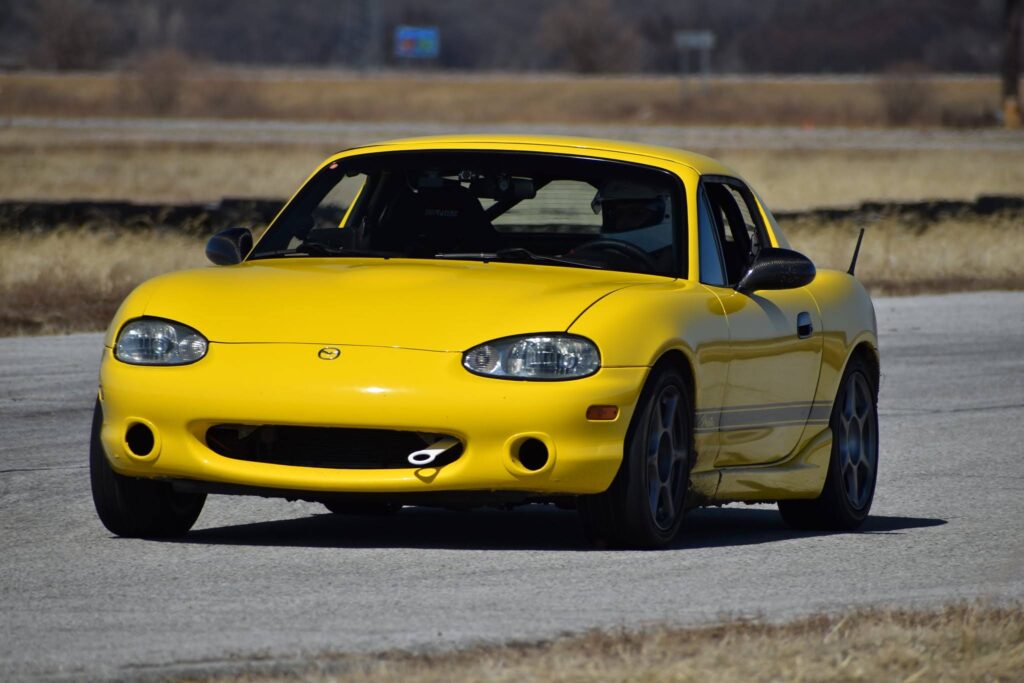
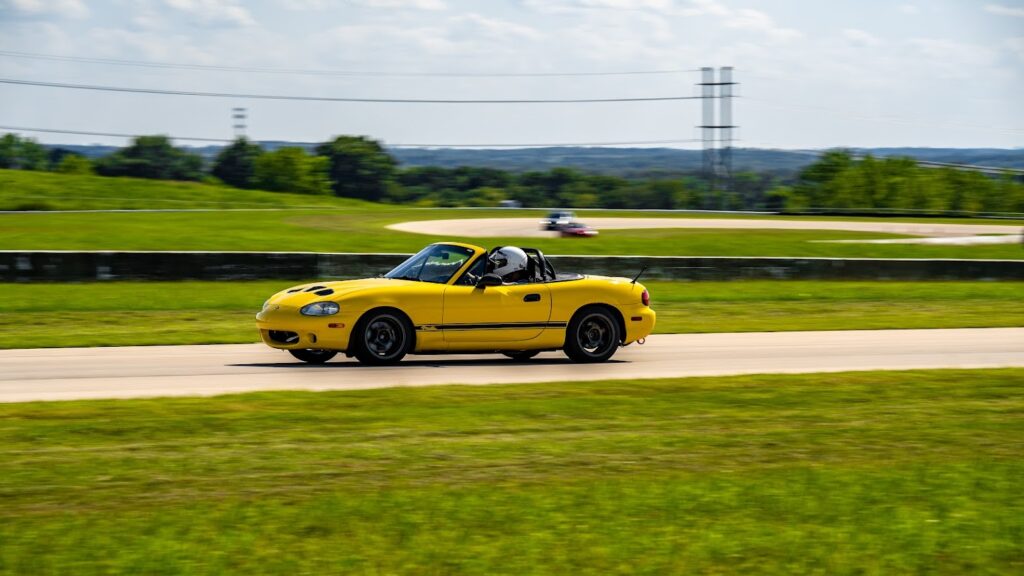
The driving season commenced in March 2022 at the Raceway Park of the Midlands (RPM). This facility, characterized by a high-friction but notably abrasive and bumpy surface, served as the primary testing ground for the vehicle’s developmental cycle. Over the course of eight track days at this location, the project recorded a cumulative lap time improvement of 11.29 seconds. Analysis suggests that while mechanical upgrades contributed to this delta, the primary driver was the refinement of vehicle control and "limit-finding" techniques by the operator.
In April 2022, the testing expanded to Motorsports Park Hastings (MPH). This venue provided a stark contrast to RPM, featuring a freshly repaved asphalt surface and superior paddock infrastructure. The technical comparison between these two tracks highlighted the importance of suspension damping adjustments; the smooth surface of MPH allowed for more aggressive cornering speeds, whereas the "patchwork" nature of RPM necessitated a setup capable of absorbing significant mid-corner undulations without upsetting the chassis.
Powertrain Optimization and Performance Metrics
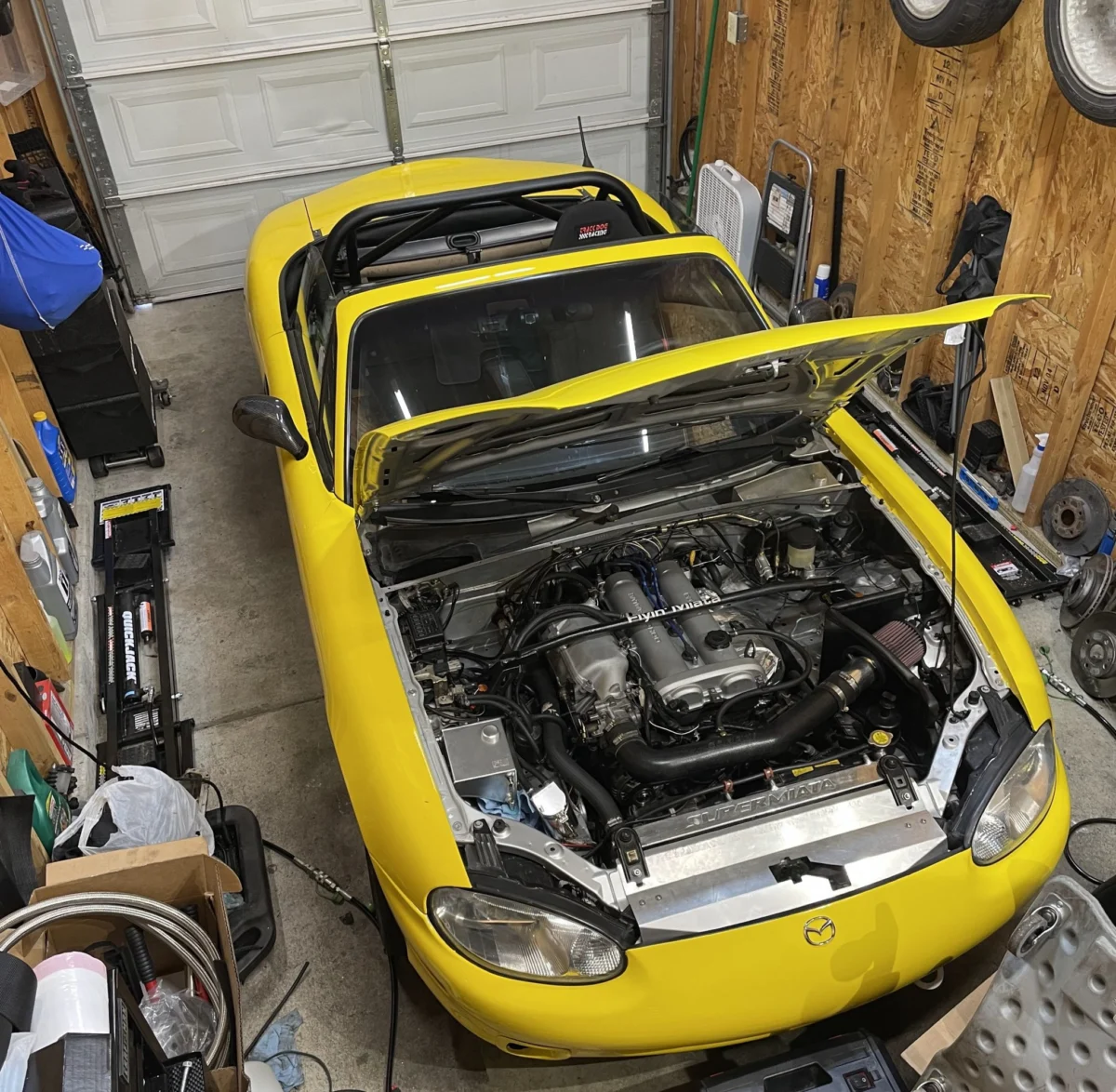
A central focus of the 2022 development cycle was the extraction of additional power from the naturally aspirated 1.8-liter BP4W engine. In August 2021, the vehicle produced 115 wheel-horsepower (WHP) and 106 lb-ft of torque using standard bolt-on components, including an aftermarket intake, headers, and exhaust.
By July 2022, the implementation of a "Squaretop" intake manifold—a component originally found in non-US markets known for superior high-RPM airflow—and a Megasquirt standalone ECU tuned for E85 ethanol fuel resulted in a significant performance increase. Dyno testing confirmed a peak output of 136 WHP and 119 lb-ft of torque. This represents an 18.2% increase in power. The shift to E85 allowed for more aggressive ignition timing due to the fuel’s higher octane rating and superior cooling properties, which are vital for maintaining engine longevity during sustained high-load track sessions.
Logistical Innovation: The Integrated Tire Trailer
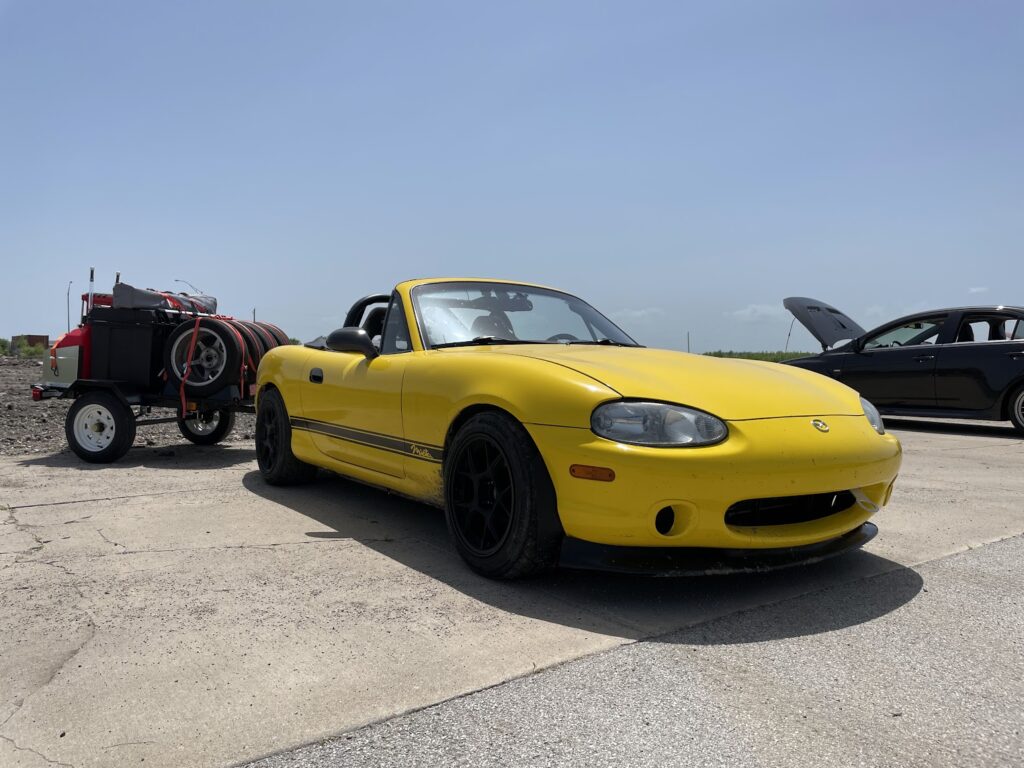
One of the inherent limitations of the Mazda MX-5 platform is its restricted cargo capacity. To facilitate self-supported track participation, a custom tire trailer was engineered and integrated into the project in June 2022. Built upon a 40×48-inch Northern Tool frame, the trailer featured an extended plywood deck designed to carry a full set of four spare wheels and tires, a primary tool chest, spare fluids, and trackside amenities such as a canopy and fuel jugs.
The trailer, weighing approximately 700 lbs when fully loaded, was towed for over 1,000 miles during the season. Engineering observations noted that the Miata’s chassis handled the additional load with surprising stability, though braking distances and acceleration were predictably affected. This modification eliminated the need for a secondary support vehicle, allowing the project to remain a "drive-to-track" endeavor while maintaining a comprehensive inventory of spare parts.
Expansion into Multi-Discipline Motorsports
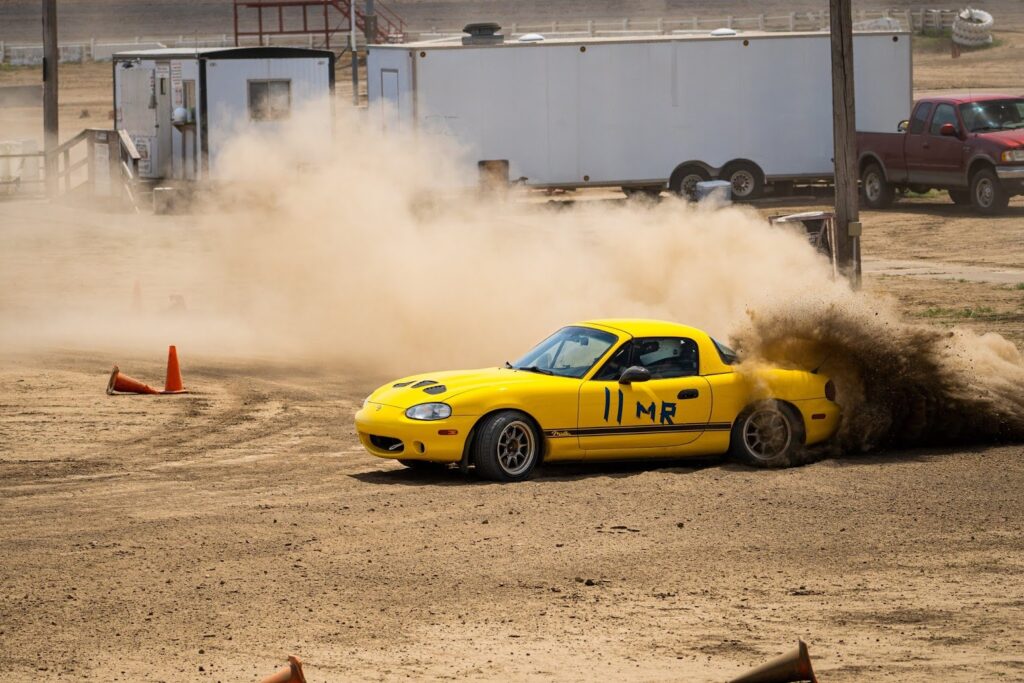
The late summer and early autumn of 2022 saw the project branch out into SCCA Rallycross and Autocross. In August, the vehicle participated in a Rallycross event at I80 Speedway in Nebraska. This provided data on low-traction vehicle dynamics. While the Miata is not traditionally optimized for dirt surfaces, the experiment demonstrated the platform’s versatility, despite the loss of a front air dam due to the uneven terrain.
In the realm of Autocross, the vehicle was campaigned in the Nebraska Region SCCA, which utilizes the same high-grip concrete surface as the SCCA Solo Nationals. Driver performance metrics showed a steep upward trajectory: starting the season in the bottom 8% of the field and concluding the year performing in the top 50%. This progression underscores the value of high-frequency, low-stakes competition in refining the "muscle memory" required for high-speed track maneuvers.
High-Speed Incident and Structural Integrity Analysis
On October 29, 2022, during the final track session at Raceway Park of the Midlands, the vehicle was involved in a high-speed excursion at Turn 11. After carrying excessive speed through Turn 10, the rear end lost traction. Although the slide was corrected, the vehicle understeered off the racing surface and impacted a tire wall at an estimated 60 mph.
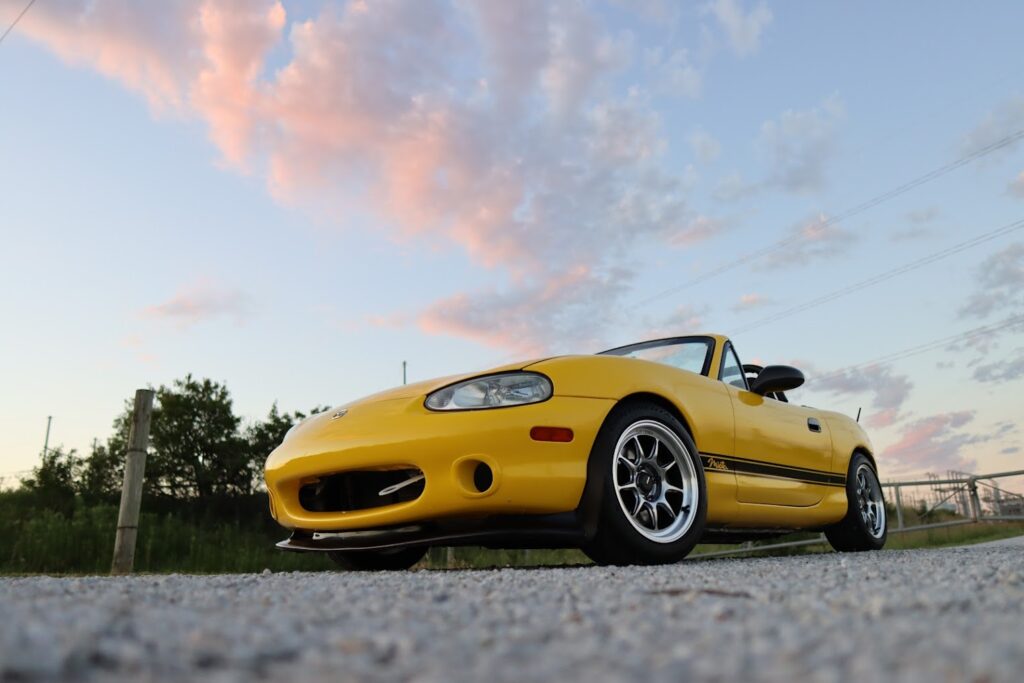
The impact served as a real-world test of the track’s safety infrastructure. The tire wall successfully dissipated the majority of the kinetic energy, preventing structural damage to the Miata’s frame or "unibody." The damage was localized to the hood, front bumper, left fender, and headlight assembly. Remarkably, the vehicle remained mechanically functional and was driven home under its own power. Repairs were completed within a month, utilizing a strategy of part replacement and re-wrapping in yellow vinyl, which proved to be a cost-effective alternative to professional paintwork for a track-dedicated machine.
Winter Refinement: Suspension and Maintenance
The winter months of late 2022 and early 2023 were dedicated to "Engine Out" maintenance and suspension overhauls. A recurring leak in the rear main seal necessitated the removal of the powertrain, providing an opportunity to replace the clutch, flywheel, and various gaskets. During this period, the project also acquired a BP6D VVT (Variable Valve Timing) engine and a six-speed transmission to serve as a future powertrain upgrade, offering a broader torque curve than the current BP4W unit.
Simultaneously, the suspension was upgraded with A1 Ground Control Nylatron bushings and Paco Motorsports adjustable rear upper control arms. The transition from rubber to Nylatron—a self-lubricating, high-stiffness plastic—was designed to eliminate bushing deflection under cornering loads. While these components increased the vehicle’s Noise, Vibration, and Harshness (NVH) levels, they provided a more direct and predictable link between driver input and chassis response.
Aerodynamic Implementation and Future Outlook
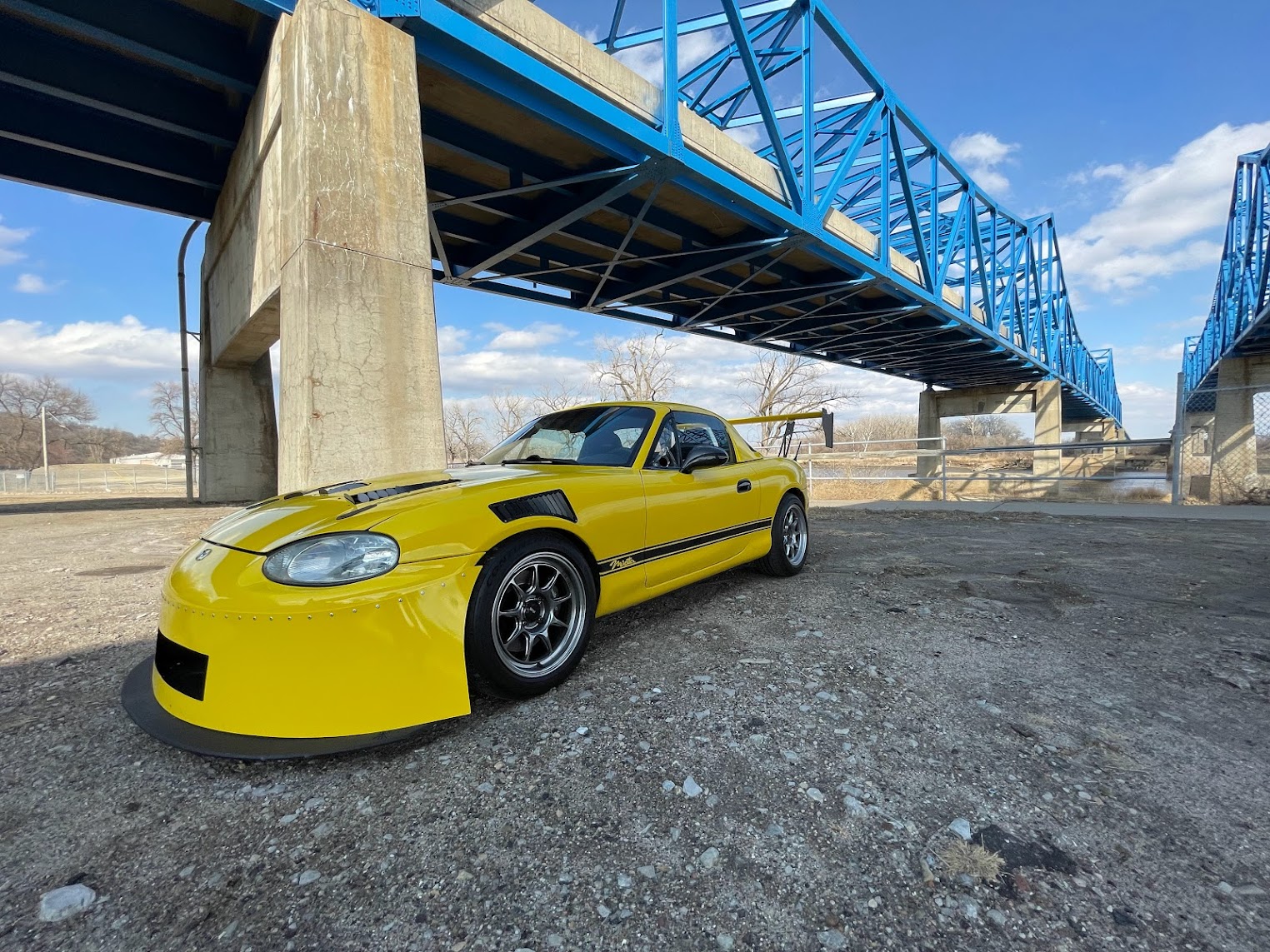
The final major modification of the second year was the installation of a Nine Lives Racing "Medium Downforce" aero kit in February 2023. This kit includes a chassis-mounted aluminum rear wing and a front splitter. Initial street testing and high-speed evaluations indicated a significant reduction in the aerodynamic lift naturally produced by the Miata’s body shape.
The rear wing, capable of supporting the weight of an adult, is designed to provide downforce that increases exponentially with speed, effectively "planting" the rear tires in high-speed sweepers. This addition is expected to transform the vehicle’s behavior in the 70–100 mph range, where the short-wheelbase chassis previously felt "light" or unstable.
Conclusion and Broader Implications
The second year of the NB Miata project has successfully transitioned the vehicle from a modified street car to a specialized racing instrument. By documenting an 11.29-second reduction in lap times and an 18.2% increase in horsepower, the project provides a data-driven roadmap for enthusiasts looking to optimize the MX-5 platform.
The broader implications of this project suggest that for aging sports car platforms, the integration of modern electronic management (Megasquirt) and advanced materials (Nylatron, Aluminum Aero) can yield performance levels that rival much newer and more expensive machinery. As the project enters its third year, the focus will shift toward the integration of the VVT engine and the fine-tuning of the new aerodynamic balance, continuing the pursuit of mechanical perfection in a classic lightweight chassis.