Cecilia Chamidah Nur
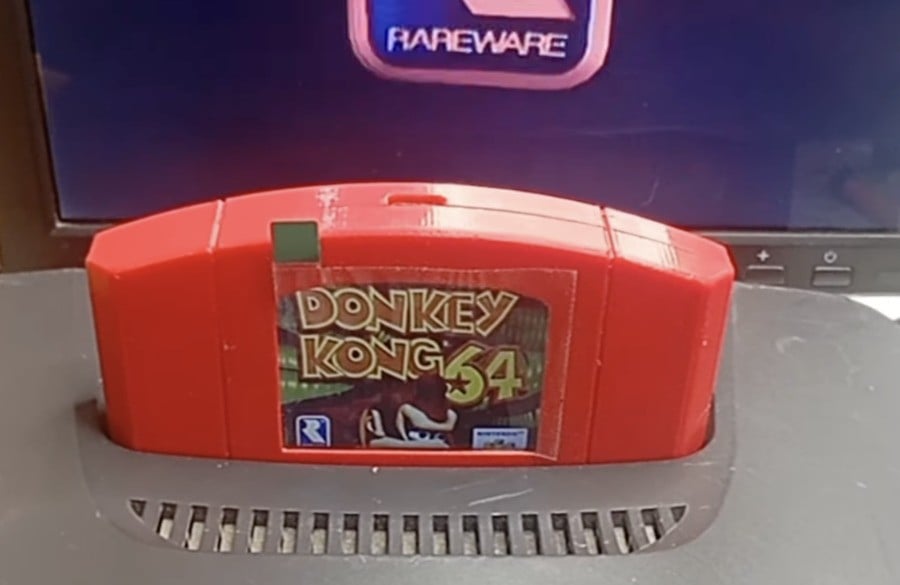
In a significant development for the retro gaming community, modder David "DAVIDXGAMESmx" Brito has introduced the Screendrive 64, an innovative flash cartridge for the Nintendo 64 that features a built-in display capable of dynamically showing the label of the game currently loaded. This ingenious solution addresses a subtle yet pervasive issue for enthusiasts using modern flash carts: the absence of the iconic visual feedback provided by traditional game cartridge labels. The innovation, initially brought to wider attention by retro gaming blog ReCollect64, represents a fusion of nostalgic appeal and contemporary technological integration, offering an enhanced user experience for N64 players.
The Enduring Appeal of Cartridge Labels: A Historical Perspective
For decades, the physical presence of a game cartridge and its distinctive label was an integral part of the gaming experience. From the earliest home consoles like the Atari 2600 to the dominant systems of the 8-bit and 16-bit eras, such as the Nintendo Entertainment System (NES) and Super Nintendo Entertainment System (SNES), and extending into the 3D-era with the Nintendo 64 (N64), cartridges were not merely storage devices; they were tangible artifacts. These cartridges, often protruding from the console’s casing, proudly displayed their vibrant artwork and game titles, allowing players to identify at a glance which adventure awaited them.
The design philosophy behind these physical cartridges served multiple purposes. Aesthetically, the labels were miniature works of art, often featuring elaborate illustrations that captured the essence of the game within. Functionally, they provided immediate visual identification, a simple yet crucial aspect of game management. Players could easily scan their collection, insert the desired title, and confirm their selection without needing to power on the console or navigate digital menus. This tactile and visual connection to the game was a hallmark of the era, deeply embedded in the ritual of playing classic console games.
With the advent of disc-based systems like the PlayStation and later consoles that transitioned to internal storage and digital downloads, the prominence of the physical cartridge began to wane. While game cases still featured artwork, the direct, in-console visibility of the game’s identity shifted. For retro enthusiasts, however, the desire to revisit these classic titles often leads to the use of flash cartridges. These modern devices offer unparalleled convenience, allowing an entire library of games to be stored on a single cart, eliminating the need to physically swap out individual game units. Yet, this convenience comes with a trade-off: the flash cartridge itself presents a static, generic label, obscuring the identity of the loaded game. This is the precise user experience gap that the Screendrive 64 aims to bridge.
Introducing the Screendrive 64: Bridging the Nostalgia Gap
The Screendrive 64 is a testament to the ingenuity prevalent in the retro gaming modding community. Developed by David "DAVIDXGAMESmx" Brito, this N64 flash cartridge stands out by integrating a small, high-resolution display directly onto its shell. This screen is programmed to dynamically update, presenting the relevant cartridge label artwork and title of the game currently selected and running. The functionality mirrors the traditional experience of seeing a game’s label while it is actively in play, a feature that has been absent from conventional flash carts.
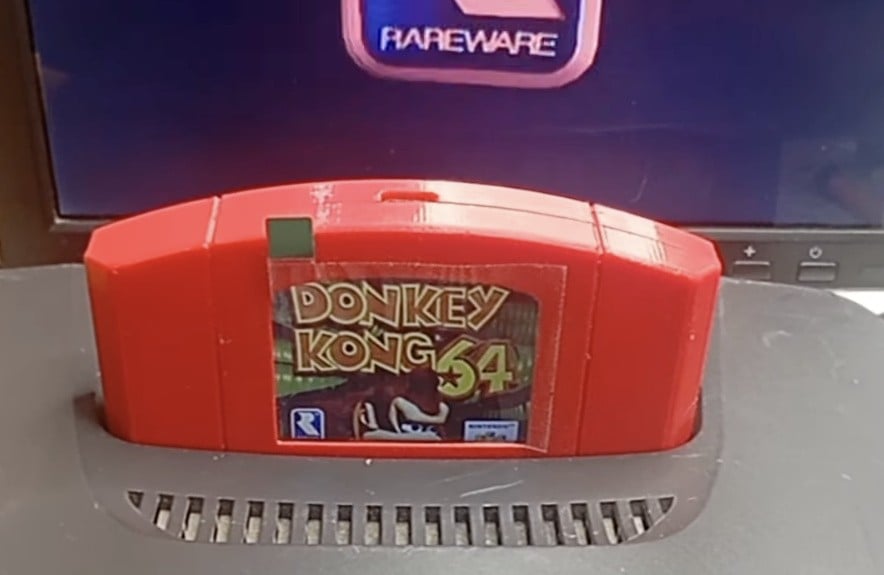
Priced at approximately $50, the Screendrive 64 offers an accessible entry point for N64 enthusiasts seeking this unique blend of modern convenience and vintage aesthetics. Underneath its innovative display, the cartridge boasts a robust technical foundation. It incorporates a 128 MB Field-Programmable Gate Array (FPGA), a crucial component that allows the cartridge to mimic the hardware behavior of original N64 game ROMs with high fidelity. This FPGA ensures compatibility and accurate gameplay, addressing the core function of any flash cartridge. Furthermore, the Screendrive 64 features a real, hardware-compatible PicoCart, indicating a commitment to quality and reliable performance within the N64 ecosystem. The entire assembly is housed within a custom 3D-printed shell, a common practice in the independent modding scene that allows for rapid prototyping and bespoke designs tailored to specific functionalities.
While Brito’s creation may not possess the sleek, mass-produced aesthetic of more established and higher-priced flash carts like the EverDrive series, its functional innovation sets it apart. The emphasis here is not merely on storing and playing games, but on enhancing the user’s connection to the game through visual feedback, a subtle yet profound improvement that taps into the nostalgic sensibilities of retro gamers.
David "DAVIDXGAMESmx" Brito: A Pioneer in Retro Hardware Modding
The creation of the Screendrive 64 highlights the vital role of individual modders and enthusiasts in the ongoing evolution and preservation of classic gaming hardware. David "DAVIDXGAMESmx" Brito emerges from this vibrant, often unsung, community as an innovator whose work directly responds to the nuanced desires of retro gamers. While specific public biographical details about Brito are scarce, his project, as identified by ReCollect64, clearly demonstrates a deep understanding of N64 hardware, software, and the broader retro gaming culture.
The modding scene is characterized by a spirit of experimentation, problem-solving, and a passion for extending the life and capabilities of vintage consoles. Modders like Brito often spend countless hours reverse-engineering hardware, developing custom firmware, and crafting bespoke components, all driven by a desire to enhance the retro gaming experience. Their contributions range from improved video outputs and controller modifications to complex hardware overhauls and, as seen with the Screendrive 64, novel flash cartridge designs.
Brito’s work with the Screendrive 64 exemplifies this dedication. It’s not just about creating a functional flash cart; it’s about identifying an overlooked aspect of the original gaming experience – the visual identity of the loaded game – and meticulously engineering a solution. This kind of grassroots innovation is crucial for keeping retro gaming vibrant, dynamic, and responsive to the community’s evolving needs and preferences. His initiative underscores how independent creators continue to push the boundaries of what is possible with aging hardware, often outperforming or complementing the offerings of larger commercial entities through sheer ingenuity and targeted solutions.
A Technical Deep Dive: FPGA, PicoCart, and the Power of 3D Printing
The technical architecture of the Screendrive 64 is a blend of specialized hardware components and modern manufacturing techniques, each playing a critical role in its unique functionality.

Field-Programmable Gate Array (FPGA): At the core of the Screendrive 64’s ability to run N64 games is its 128 MB FPGA. An FPGA is an integrated circuit designed to be configured by a customer or a designer after manufacturing. Unlike a traditional microprocessor or ASIC (Application-Specific Integrated Circuit), an FPGA’s hardware logic can be reprogrammed to perform a specific function. In the context of retro gaming, FPGAs are highly valued because they can accurately replicate the original console’s hardware logic at a very low level. This "hardware emulation" (or more accurately, hardware recreation) is distinct from software emulation, which runs on a general-purpose processor. An FPGA-based flash cart like the Screendrive 64 can therefore interact with the N64 console’s hardware in a manner almost identical to an original game cartridge, ensuring high compatibility and minimal latency. The 128 MB capacity indicates sufficient space for various N64 ROMs, which typically range from 4 MB to 64 MB.
PicoCart Integration: The mention of a "real, hardware-compatible PicoCart" is significant. The PicoCart is often associated with the N64 scene, referring to a type of flash cart or specific components that ensure compatibility and robust performance with the N64’s unique architecture. While the original PicoCart was a project by humphrey for the Game Boy Color, the term "PicoCart" has evolved in the N64 community to denote compact, often custom-built, flash solutions that interface effectively with the console. Its inclusion suggests that Brito has opted for proven, community-vetted technology to ensure the core functionality of his flash cart is sound and reliable. This focus on hardware compatibility is paramount for N64 flash carts, given the console’s intricate memory mapping and coprocessor dependencies.
3D-Printed Shell: The use of a 3D-printed shell for the Screendrive 64 is a hallmark of independent hardware development and modding. 3D printing technology has revolutionized rapid prototyping and custom manufacturing, allowing individual creators and small teams to produce intricate, functional enclosures without the need for expensive injection molding or mass production facilities. For a project like the Screendrive 64, a 3D-printed shell offers several advantages:
- Customization: It allows for precise integration of the display and internal components, tailored exactly to Brito’s design.
- Cost-Effectiveness: It keeps manufacturing costs low for small batch production.
- Flexibility: Designs can be easily iterated and improved upon, enabling quicker development cycles.
- Accessibility: It democratizes hardware creation, allowing individuals to bring their innovative concepts to life.
While a 3D-printed shell might not always have the polished finish of a commercially injection-molded product, its practicality and role in fostering innovation are undeniable. It represents the "maker" ethos that drives much of the retro gaming hardware scene.
Implications for the Retro Gaming Community: Enhancing the N64 Experience
The Screendrive 64’s introduction carries several significant implications for the broader retro gaming community, particularly for N64 enthusiasts.
Enhanced User Experience and Nostalgia: The most immediate impact is the profound enhancement of the user experience. For many retro gamers, the tactile sensation of inserting a cartridge and the visual confirmation of its label are deeply ingrained elements of nostalgia. Flash carts, while practical, often dilute this experience by presenting a generic placeholder. The Screendrive 64 restores this visual authenticity, making the act of playing an N64 game feel more complete and reminiscent of the original era. It caters directly to the emotional connection players have with their classic consoles and games.
Driving Innovation in Flash Cart Technology: Brito’s creation serves as a powerful demonstration of what is possible within the flash cartridge market. For years, flash carts have primarily focused on expanding storage, improving compatibility, and adding features like save states or cheat codes. The Screendrive 64 introduces a new paradigm: integrating interactive displays for cosmetic and functional improvements. This could inspire other flash cart manufacturers and modders to explore similar display technologies or other creative ways to enhance the user interface of their devices, moving beyond purely technical specifications to focus on the overall user experience.
Accessibility and Preservation of Gaming History: Flash cartridges play a crucial role in game preservation. As original cartridges age and become more susceptible to degradation, flash carts offer a reliable means to access and play digital ROMs of classic games on original hardware. By making this experience more authentic and user-friendly, the Screendrive 64 subtly contributes to the broader mission of preserving gaming history. It makes the transition from physical cartridges to digital ROMs less jarring, encouraging more players to engage with the N64’s extensive library.
The Power of the Independent Modding Ecosystem: The Screendrive 64 is a vivid example of the power and importance of the independent modding community. While commercial entities often focus on mass-market appeal, modders like David Brito can identify and address niche needs and desires within the community with remarkable precision and creativity. Their work often fills gaps left by larger manufacturers, offering unique solutions that cater directly to the passion of dedicated enthusiasts. This ongoing innovation ensures that retro gaming remains a dynamic and evolving hobby, continually refreshed with new ways to enjoy classic titles.
Market Position, Pricing, and Future Outlook
At a price point of approximately $50, the Screendrive 64 positions itself as a remarkably affordable option, especially considering its unique display feature. For comparison, established N64 flash carts like the various iterations of the EverDrive 64 can range from $100 to $200 or more, depending on features and availability. While these higher-end carts often boast more advanced features like larger storage capacities, faster loading times, or more robust firmware updates, they typically lack the integrated display that is the Screendrive 64’s defining characteristic.
The value proposition of the Screendrive 64 lies in its innovative blend of functionality and nostalgia at an accessible price. Its 3D-printed shell, while practical for independent production, indicates that it is not aiming to compete directly on the same aesthetic grounds as mass-produced commercial units. Instead, it appeals to a segment of the market that prioritizes unique features and a personalized touch over factory-polished finishes.
The future outlook for such a device is promising. Should the Screendrive 64 gain significant traction, it could prompt several developments:
- Increased Demand and Production: If demand outstrips the current production capacity, Brito might explore scaling up production, potentially through crowdfunding or partnerships.
- Inspiration for Competitors: Other flash cart developers might integrate similar display technologies into their future products, making this feature more mainstream.
- Customization and Community Involvement: The open nature of 3D printing could allow for community-driven customizations of the shell, further enhancing its appeal.
- Feature Expansion: Future iterations could potentially incorporate more sophisticated display options, animated labels, or even integration with in-game data.
The success of products like the Screendrive 64 underscores the sustained and growing demand within the retro gaming market for innovative accessories that enhance the experience of playing classic games on original hardware. It demonstrates that there is still ample room for creativity and technical advancement, even for consoles that are decades old.
Reactions and Recognition from the Community
The initial discovery and subsequent reporting by ReCollect64 quickly brought the Screendrive 64 into the spotlight within the retro gaming community. Posts featuring the device on platforms like Facebook groups dedicated to N64 modding and general retro gaming forums have generated considerable buzz. The reaction has been overwhelmingly positive, with many enthusiasts expressing admiration for Brito’s ingenuity and the practicality of his solution.
Comments typically highlight the cleverness of the concept, the nostalgic appeal of seeing the game label, and the potential for such a feature to become a standard in future flash cart designs. The affordability of the $50 price point has also been a frequently praised aspect, making this innovative feature accessible to a wider audience of N64 fans. This enthusiastic reception from the community validates Brito’s vision, demonstrating that even subtle improvements to the retro gaming experience can resonate deeply with players.
Conclusion: A Blend of Nostalgia, Innovation, and Practicality
The Screendrive 64 by David "DAVIDXGAMESmx" Brito stands as a compelling example of how innovation continues to flourish within the retro gaming scene. By cleverly integrating a dynamic display into an N64 flash cartridge, Brito has addressed a previously unarticulated, yet deeply felt, desire among enthusiasts to restore the visual authenticity of traditional cartridge labels. This device is more than just a functional upgrade; it is a thoughtful enhancement that reconnects players with the nostalgic elements of their past gaming experiences.
Combining a robust technical foundation with an accessible price point and a uniquely user-centric feature, the Screendrive 64 represents a significant contribution to the N64 modding landscape. It not only improves the practical utility of a flash cart but also serves as an inspiration for future developments in retro hardware, proving that even in the realm of classic consoles, there is always room for brilliant, user-focused innovation. As the retro gaming community continues to thrive, projects like the Screendrive 64 ensure that the experience of revisiting gaming’s past remains as engaging and authentic as possible.