Chalid Lutfie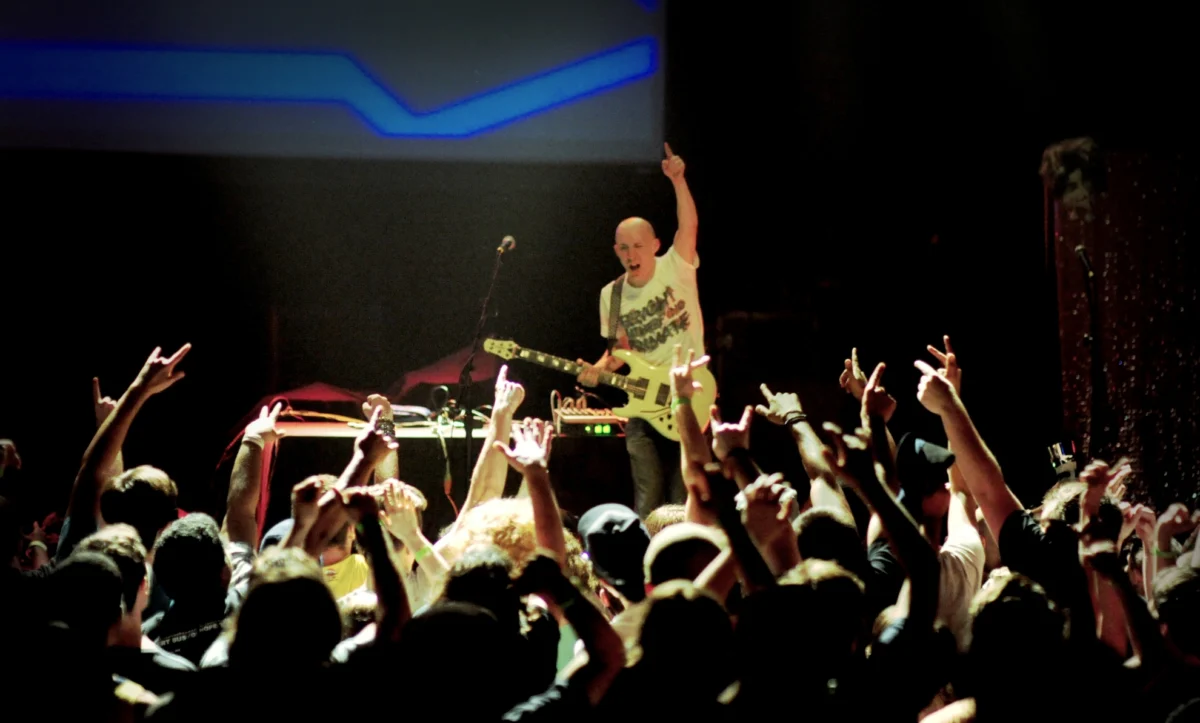
The progressive chiptune landscape is set for a significant evolution as Dan Behrens, performing under the moniker Danimal Cannon, prepares for the release of his latest full-length studio album, Lunaria. Scheduled for a global debut on March 11, the project marks a pivotal moment in the artist’s career, arriving three years after the critically acclaimed collaboration album Parallel Processing with artist Zef. Lunaria represents more than just a new collection of tracks; it is the culmination of a five-year developmental cycle focused on the technical and aesthetic marriage of 8-bit hardware and modern electric guitar instrumentation. While Behrens has long been a staple of the live chiptune circuit, frequently appearing at events such as MAGFest, his previous studio recordings have rarely captured the high-energy, guitar-driven sound that defines his stage presence. With Lunaria, the artist formally integrates these elements, utilizing a sophisticated approach to progressive music structures that aims to redefine the boundaries of the genre.
A Five-Year Developmental Chronology
The journey toward Lunaria began shortly after the 2011 release of Behrens’ debut solo album, Roots. During that era, the artist began experimenting with the integration of the Nintendo Game Boy—running software such as Little Sound DJ (LSDJ)—and the electric guitar. However, the initial results were met with significant technical hurdles. In his own retrospective analysis, Behrens noted that the 2011 sessions for Roots featured only a few tracks where the two instruments successfully coexisted. The inherent difficulty lay in the frequency spectrum; the piercing, square-wave synthesis of the Game Boy often clashed with the high-gain harmonic overtones of a distorted guitar. Consequently, much of his early discography leaned heavily into pure chiptune, leaving his guitar work primarily for live reinterpretations.
Between 2011 and 2015, Behrens dedicated himself to mastering the production techniques required to fuse these disparate sonic worlds. This period involved refining his songwriting to ensure that the Game Boy was not merely a backing track for the guitar, nor the guitar a mere accompaniment to the chiptune, but rather a cohesive "band lineup." This four-year period of experimentation allowed Behrens to develop a specialized mixing and arrangement style where the digital grit of the 8-bit hardware complements the analog warmth and sustain of the guitar. The result is a sound that Behrens describes as a "new band lineup that really gels," signaling a departure from the experimental phases of his earlier career into a more mature, established sound.
Scientific and Thematic Foundations: The Giant Impact Hypothesis
Beyond its technical achievements, Lunaria is a concept album rooted in the artist’s interest in astrophysics and planetary science. The title and overarching narrative are inspired by the "giant impact hypothesis," the leading scientific theory regarding the formation of the Moon. This hypothesis suggests that approximately 4.5 billion years ago, a Mars-sized protoplanet, often referred to as Theia, collided with the early Earth. The resulting debris from this cataclysmic impact eventually coalesced in Earth’s orbit to form the Moon.
Behrens has personified this celestial event through the character of "Lunaria," who serves as a representation of both the impactor and the resulting lunar body. The name itself functions as a linguistic double entendre: a reference to the lunar cycle and the musical term "aria," a self-contained piece for a single voice, typically found within an opera. This thematic depth provides a narrative framework for the album’s progressive structure, moving from the violent energy of a planetary collision to the serene, cold vacuum of space. The use of personification allows the album to bridge the gap between hard science and emotive storytelling, a hallmark of the progressive metal genre.
Collaborative Elements and Vocal Contributions
To bring the character of Lunaria to life, Behrens enlisted the talents of professional soprano Emily Yancey. A former neighbor of the artist, Yancey’s operatic background provided the specific vocal timbre Behrens sought for a "celestial moon goddess." By utilizing a classically trained singer, the album introduces a layer of organic sophistication that contrasts with the digital rigidity of the Game Boy. Yancey features on two prominent vocal collaborations, adding a melodic human element to the otherwise dense, technical arrangements.
The album also features a significant contribution from Samuel Ascher-Weiss, widely known in the video game music and chiptune communities as Shnabubula. A frequent collaborator who previously appeared on Roots, Ascher-Weiss is recognized for his virtuosic piano skills and complex improvisational style. For Lunaria, Behrens tasked Ascher-Weiss with a piano rendition of the track "Axis," which is cited as the most technically challenging composition on the record. The inclusion of a solo piano piece serves as a deliberate stylistic juxtaposition, allowing the listener to hear the same melodic themes translated from the quirky, limited sound chip of a 1989 handheld console to the expansive, traditional range of a grand piano.
Stylistic Influences and Genre Integration
While Lunaria is fundamentally a metal-chiptune fusion, its stylistic palette is remarkably diverse, reflecting Behrens’ wide-ranging musical influences. The artist has identified several key inspirations that informed the writing process for this record:
- Video Game Soundtracks: Specifically citing the Shovel Knight OST (composed by Jake Kaufman), Behrens draws from the modern "neo-chiptune" movement which uses retro hardware to achieve contemporary production standards.
- Industrial and Alternative Rock: The aggressive textures and rhythmic precision of bands like Nine Inch Nails and KMFDM are evident in the album’s darker, more mechanical segments.
- Indie and Experimental Rock: The influence of Buke and Gase, known for their use of handmade instruments and complex rhythms, contributed to the album’s unconventional song structures.
- Classical and Choral Music: The harmonic language of the album is influenced by the works of Wolfgang Amadeus Mozart and contemporary choral composer Eric Whitacre. These influences are particularly visible in the vocal arrangements and the use of counterpoint between the guitar and the Game Boy.
By synthesizing these influences, Behrens moves away from the "novelty" often associated with chiptune music. Instead, he positions the Game Boy as a legitimate synthesizer capable of participating in high-level progressive compositions alongside traditional instruments.
Market Release and Physical Media
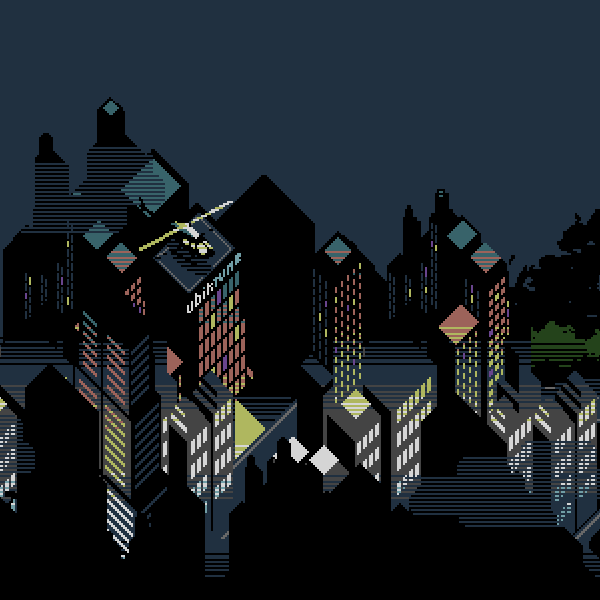
The release of Lunaria is being handled with a focus on both digital accessibility and physical collectability. The album will be available via Bandcamp, a platform that has become the primary hub for the independent chiptune and "nerdcore" scenes. In addition to the digital release, a physical CD edition is being produced, which includes a commemorative poster featuring artwork by Minerva Mopsy.
The visual component of the album, designed by Mopsy, plays a critical role in establishing the "Lunaria" persona. The artwork serves to anchor the scientific concepts of the album in a visual aesthetic that matches the epic scale of the music. The decision to release a physical CD with expanded artwork reflects a growing trend within the independent music community to provide tangible value to fans in an increasingly streaming-dominated market.
Broader Implications for the Chiptune Genre
The release of Lunaria arrives at a time when the chiptune genre is undergoing a period of professionalization. No longer confined to the "lo-fi" aesthetics of the early 2000s, artists like Danimal Cannon are pushing the hardware to its absolute limits. The integration of high-level music theory, professional operatic vocals, and advanced guitar techniques suggests that the "chip-rock" subgenre is maturing into a form of modern progressive fusion.
Furthermore, the album’s success or failure will likely serve as a benchmark for other hardware-based composers. By proving that the Game Boy can hold its own in a "metal band" setting, Behrens is providing a blueprint for future cross-genre experimentation. The four-year gap between his masteries of these instruments underscores the difficulty of this endeavor, suggesting that while the barrier to entry for chiptune is low, the ceiling for professional-grade integration is exceptionally high.
As the March 11 release date approaches, the first single, "Behemoth," has already begun to circulate within the community, offering a glimpse into the heavy, rhythmic complexity that defines the album. With its combination of scientific curiosity, technical prowess, and collaborative diversity, Lunaria stands as a significant milestone in the career of Danimal Cannon and a noteworthy entry in the broader landscape of contemporary progressive music.