Chalid Lutfie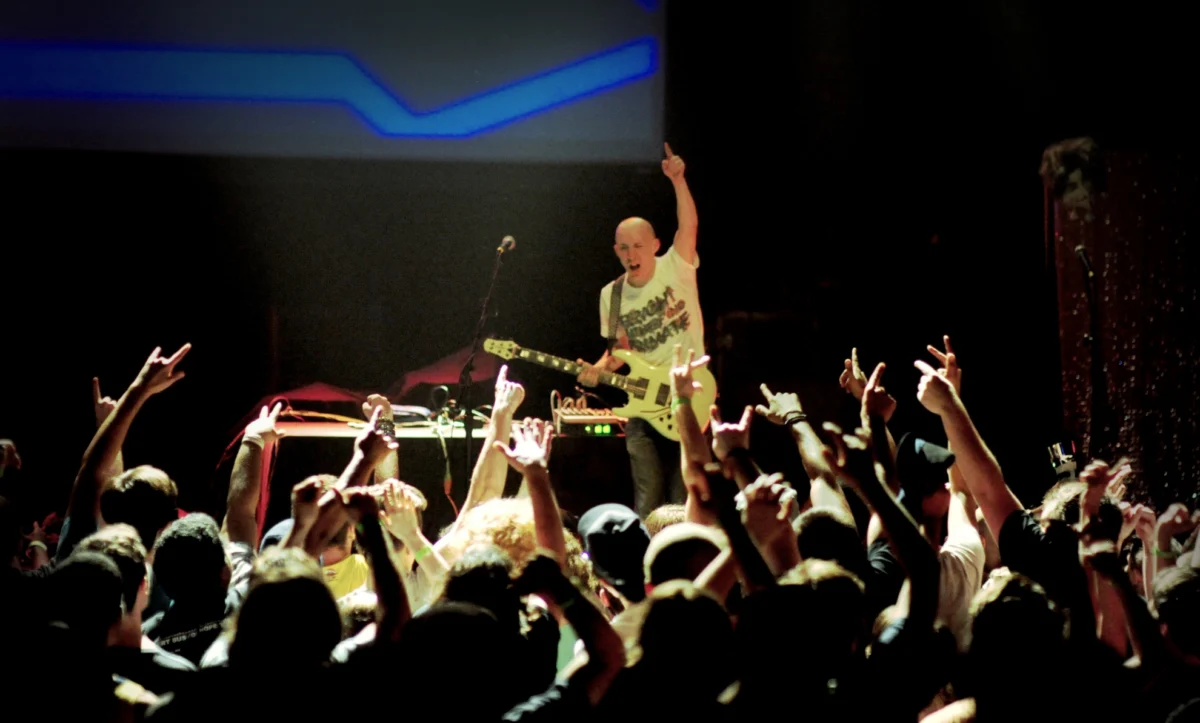
The contemporary music landscape is frequently defined by the dissolution of genre boundaries, yet few artists have navigated the intersection of nostalgic digital synthesis and modern progressive metal with the precision of Dan Burke, known professionally as Danimal Cannon. Following a three-year hiatus since his 2013 collaborative effort with Zef, titled Parallel Processing, Burke has officially unveiled his latest solo studio album, Lunaria. This release marks a pivotal shift in the artist’s discography, representing the culmination of a five-year technical and creative journey to synthesize the distinct timbres of the Nintendo Game Boy’s internal sound chip with the expansive, harmonically complex textures of progressive electric guitar. Scheduled for a global release on March 11, the album is positioned not merely as a collection of songs, but as a high-concept narrative work rooted in astrophysical theory and classical composition structures.
The Technical Evolution of the Chiptune-Metal Fusion
Since his 2011 debut album, Roots, Danimal Cannon has been recognized as a leading figure in the chiptune community, a subgenre of electronic music that utilizes the vintage sound hardware of 8-bit gaming consoles. However, the integration of live instrumentation—specifically the electric guitar—into this digital framework has historically presented significant engineering and compositional challenges. In the years following Roots, Burke noted that while his live performances frequently featured improvised and structured guitar work over Game Boy tracks, the translation of this energy to a studio recording remained elusive.
The primary difficulty lies in the frequency spectrum. The pulse waves and noise channels of the Game Boy’s LR35902 processor occupy a specific, often piercing sonic space that can easily clash with the high-gain distortion and complex overtones of a modern electric guitar. To address this, Burke spent approximately four years refining his approach to arrangement, ensuring that the two seemingly disparate elements functioned as a cohesive ensemble rather than a melody layered over a backing track. This "band lineup" approach allows the digital square waves to trade leads with the guitar, creating a polyphonic texture reminiscent of progressive metal giants while maintaining the aesthetic charm of the 8-bit era.
Chronology of Development and Artistic Hiatus
The timeline leading to Lunaria is characterized by deliberate experimentation and a refusal to rush the creative process. Following the 2011 release of Roots, Burke engaged in several high-profile collaborations, most notably Parallel Processing in 2013. During this period, the demand from his core audience for a guitar-heavy chiptune record intensified. While Roots contained glimpses of this fusion, the majority of the tracks were purist chiptune compositions.
Between 2012 and 2016, Burke engaged in a rigorous study of both technical production and music theory. This period of reflection was necessary to master the "marriage" of the two instruments. By 2015, the conceptual framework for Lunaria began to solidify, moving away from the more abstract themes of his previous work toward a structured narrative based on planetary science. The recording process involved intricate programming within the Game Boy using software such as Little Sound Disk Jockey (LSDJ), followed by the layering of precision-tracked guitar parts that demanded high levels of technical proficiency and rhythmic synchronization.
The Giant Impact Hypothesis: A Conceptual Foundation
Beyond its technical merits, Lunaria is a concept album that draws heavy inspiration from the "Giant Impact Hypothesis," the prevailing scientific theory regarding the formation of the Moon. According to this theory, approximately 4.5 billion years ago, a Mars-sized protoplanet named Theia collided with the early Earth. The resulting debris eventually coalesced to form the Moon. Burke, a self-described "science geek" who frequently engages with academic lectures on physics and astronomy, utilized this cataclysmic event as the emotional and structural backbone of the album.
The title Lunaria serves a dual purpose. On one level, it is a personification of the impactor—a character representing the celestial body that sacrificed itself to create the Moon. On a linguistic level, the title is a portmanteau of "Lunar" and "Aria," the latter referring to a self-contained piece for one voice, usually with orchestral accompaniment, in the context of an opera. This underscores the album’s dramatic, almost theatrical progression, moving from the violent energy of planetary collision to the serene, cold beauty of the lunar surface.
Collaborative Contributions and Virtuoso Performances
While Danimal Cannon remains the primary architect of the project, Lunaria features significant contributions from guest artists who bring a human element to the digital landscape. One of the most notable collaborations is with Emily Yancey, a professionally trained operatic singer. Yancey provides vocals for two tracks on the album, embodying the character of the "celestial moon goddess." Her inclusion was a strategic choice by Burke, who sought a vocal timbre that could cut through the dense arrangements of chiptune and metal while maintaining a sense of ethereal grace. The contrast between Yancey’s organic, classically trained soprano and the rigid, mathematical precision of the Game Boy tracks creates a unique sonic tension that defines the album’s melodic peaks.
Furthermore, the album features a guest appearance by Samuel Ascher-Weiss, better known in the experimental and chiptune scenes as Shnabubula. A frequent collaborator of Burke’s since the Roots era, Ascher-Weiss is celebrated for his virtuosic piano skills and his ability to translate complex digital compositions into traditional acoustic formats. For Lunaria, Ascher-Weiss provided a piano rendition of the track "Axis." Burke specifically chose "Axis" for this treatment because it represented the most challenging composition on the record. The inclusion of a solo piano piece provides a necessary dynamic shift, offering listeners a moment of respite from the high-energy fusion of the preceding tracks while highlighting the underlying compositional complexity that exists independent of the electronic medium.
Stylistic Influences and Genre Fluidity
The stylistic palette of Lunaria is exceptionally broad, reflecting Burke’s eclectic musical interests. While the "metal" label is applicable due to the aggressive percussion and distorted guitar work, the album incorporates elements of:
- Video Game Soundtracks: The influence of the Shovel Knight Original Soundtrack (composed by Jake Kaufman) is evident in the album’s adventurous, melodic phrasing.
- Industrial Music: The rhythmic rigidity and darker textures of bands like Nine Inch Nails and KMFDM informed the more aggressive, synth-driven sections of the record.
- Indie Rock: The experimental spirit of acts such as Buke and Gase influenced the unconventional structures and instrumentation choices.
- Classical and Choral Music: The harmonic language of the album draws from the works of Wolfgang Amadeus Mozart and contemporary choral composer Eric Whitacre. This influence is particularly visible in the vocal arrangements and the use of counterpoint.
By synthesizing these influences, Burke avoids the pitfalls of "novelty" chiptune, instead producing a work that stands as a serious entry in the progressive music canon.
Visual Identity and Physical Distribution
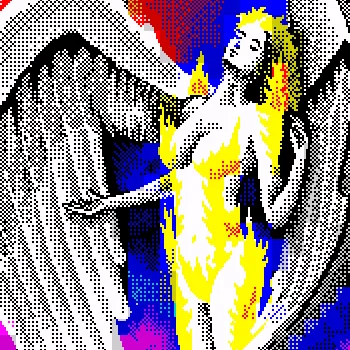
The visual component of Lunaria was handled by artist Minerva Mopsy, whose artwork aims to capture the celestial and mythological themes of the record. The aesthetic direction moves away from the pixel art common in the chiptune scene, opting instead for a more painterly, evocative style that aligns with the "Lunar Aria" concept.
The album is slated for distribution through Bandcamp, a platform that has become the de facto home for independent chiptune artists. In addition to the digital release, a physical CD version will be made available. Recognizing the value of physical media to his fanbase, Burke has included a specialized artwork poster within the CD packaging, further emphasizing the album’s status as a complete artistic package.
Broader Impact on the Chiptune and Metal Communities
The release of Lunaria is expected to have a ripple effect across several musical subcultures. For the chiptune community, it represents a benchmark in production quality and a successful template for integrating live instruments without sacrificing the core identity of the 8-bit sound. It challenges the notion that chiptune is limited to "background music" for gaming, positioning it instead as a viable lead instrument in complex arrangements.
For the progressive metal community, the album introduces a new texture. At a time when the genre is often criticized for becoming formulaic, the introduction of the Game Boy’s unique waveforms provides a fresh sonic palette. The technicality required to play alongside a programmed Game Boy—which does not fluctuate in tempo or pitch—requires a level of discipline that will likely be appreciated by fans of technical and "djent" subgenres.
Conclusion and Market Anticipation
As the March 11 release date approaches, the lead single "Behemoth" has already begun to generate significant interest within niche music circles. The track serves as a microcosm of the album’s larger goals: heavy, rhythmically complex, and deeply melodic. By bridging the gap between the nostalgic sounds of the 1980s and the cutting-edge production of the 2010s, Danimal Cannon is not merely releasing an album; he is defining a new standard for a genre that continues to evolve in unexpected directions. Lunaria stands as a testament to the power of patience in the creative process, proving that the five-year wait was a necessary investment in achieving a truly seamless fusion of man and machine.