Chalid Lutfie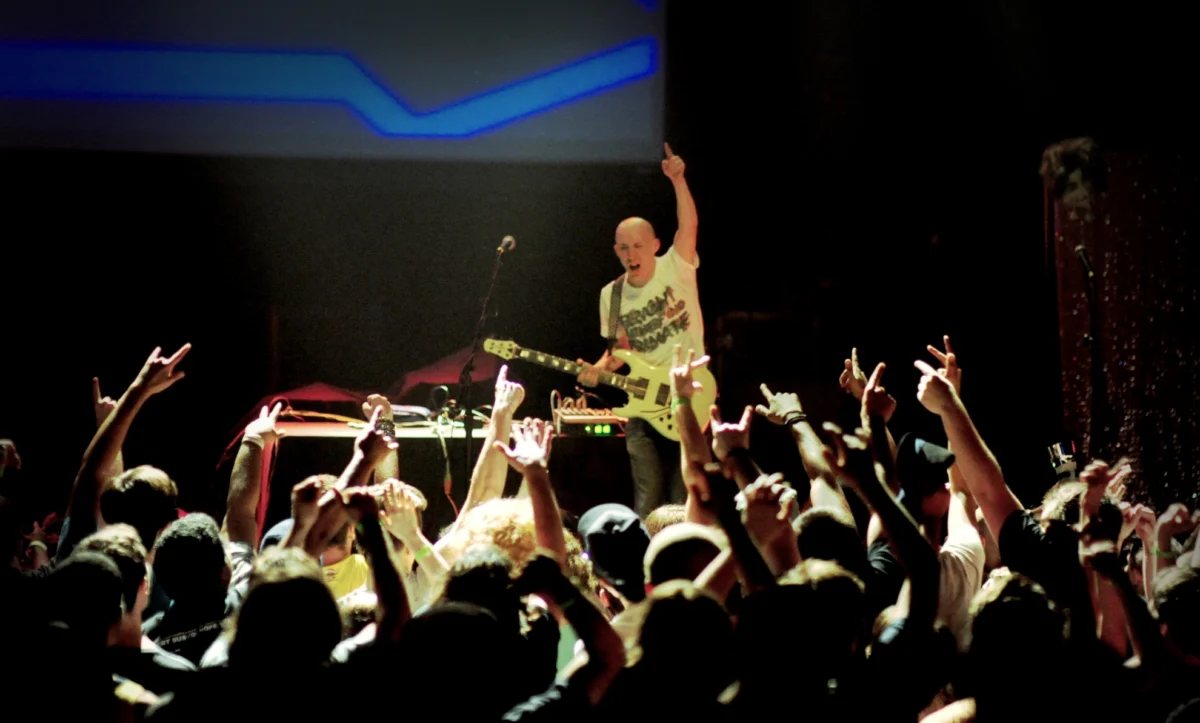
The contemporary chiptune and progressive metal landscapes are set to intersect with the upcoming release of Lunaria, the latest full-length studio album from Danimal Cannon. Following a three-year hiatus from solo production since the 2013 collaborative effort Parallel Processing with artist Zef, Danimal Cannon—the stage name for Buffalo-based musician and engineer Dan Behrens—has formalized a release date of March 11 for his most ambitious project to date. The album represents a significant milestone in the evolution of "chip-rock," a subgenre that utilizes the limited sound hardware of vintage video game consoles alongside traditional instrumentation. While Behrens has long been recognized for his high-energy live performances that feature live electric guitar shredding over Game Boy sequences, Lunaria marks the first instance where this hybrid sound has been fully realized and mastered within a studio recording environment.
Technical Evolution and the Marriage of Hardware
The development of Lunaria was born from a decade-long technical challenge: the seamless integration of the Nintendo Game Boy’s 4-channel pulse-width modulation and noise generators with the complex harmonic overtones of a high-gain electric guitar. Behrens first experimented with this duality on his 2011 debut album, Roots. However, the artist has noted that the initial attempts were fraught with engineering difficulties. The primary obstacle in combining chiptune and metal lies in frequency management; the piercing, square-wave leads of the Game Boy often occupy the same sonic space as the upper-midrange frequencies of a distorted guitar, leading to auditory "clutter" that can obscure the melody.
For the past five years, Behrens has refined his compositional approach to solve these issues. By treating the Game Boy not merely as a backing track but as a fundamental member of a "band lineup," the arrangements on Lunaria utilize counterpoint and specific frequency carving to ensure both the digital and analog components retain clarity. This mastery of the medium allows the album to push into the territory of progressive music, characterized by complex time signatures, shifting structures, and a level of technical proficiency that exceeds standard chiptune tropes.
A Scientific Foundation: The Giant Impact Hypothesis
Beyond its technical merits, Lunaria is a concept album rooted in the "Giant Impact Hypothesis," a prevailing scientific theory regarding the formation of the Moon. According to this model, approximately 4.5 billion years ago, a Mars-sized protoplanet named Theia collided with the early Earth (Gaia). The resulting debris from this cataclysmic event eventually coalesced in Earth’s orbit to form the Moon.
Behrens, a self-professed enthusiast of scientific lectures and astronomical theory, utilized this cosmic event as the narrative backbone for the album. To bridge the gap between abstract physics and musical storytelling, he personified the celestial event through a character named Lunaria. The title itself serves a dual purpose, acting as a name for this personified impactor while also functioning as a linguistic portmanteau of "Lunar" and "Aria"—the latter referring to a self-contained piece for a solo voice, typically found within an opera. This thematic depth provides a stark contrast to the often lighthearted or nostalgic themes found in traditional 8-bit music, positioning Lunaria as a work of "celestial metal."
Collaborative Contributions and Artistic Direction
To achieve the "aria" aspect of the album’s concept, Behrens recruited professional vocalist Emily Yancey. A trained opera singer, Yancey provides the "voice" of the lunar goddess, offering a timbre that Behrens sought to represent a celestial entity. The inclusion of operatic vocals further pushes the album into the realm of symphonic and progressive metal, genres known for their dramatic and wide-ranging vocal performances.
The album also features a significant contribution from Samuel Ascher-Weiss, known professionally as Shnabubula. Ascher-Weiss is a celebrated figure in the video game music and chiptune communities, recognized for his virtuosic piano arrangements and improvisational skills. For Lunaria, Ascher-Weiss provided a piano rendition of the track "Axis," which Behrens describes as the most technically demanding composition on the record. The inclusion of a solo piano piece provides a dynamic shift in the album’s pacing, offering a "traditional" acoustic counterpoint to the "quirky" digital textures of the Game Boy.
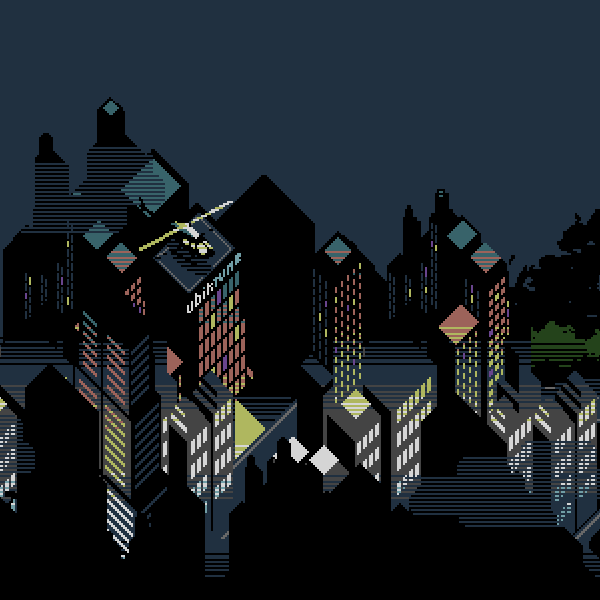
Visual aesthetics for the project were handled by artist Minerva Mopsy. The artwork reflects the album’s cosmic themes and is featured prominently on the physical CD release, which includes a fold-out poster. The visual identity of the album is designed to match the scale of the music, moving away from pixel art—a common staple of the genre—in favor of a more illustrative and atmospheric style.
Influences and Stylistic Diversity
While Lunaria is fundamentally a metal record, its DNA is composed of a diverse array of musical genres. Behrens has cited a broad spectrum of influences that shaped the writing process over the last four years:
- Video Game Soundtracks: Specifically the Shovel Knight OST (composed by Jake Kaufman), which is lauded for its modern application of NES-style limitations.
- Indie and Industrial Rock: The rhythmic complexity of Buke and Gase, alongside the aggressive synthesis and production techniques of Nine Inch Nails and KMFDM.
- Classical and Choral Music: The structural brilliance of Wolfgang Amadeus Mozart and the lush, contemporary choral textures of Eric Whitacre.
This eclectic mix ensures that Lunaria avoids the repetitive nature of some electronic music. Listeners can expect transitions from industrial-tinged riffs to soaring, Mozart-inspired melodies, all anchored by the unique "crunch" of the Game Boy’s sound chip.
Chronology of Development
The path to Lunaria has been one of deliberate pacing and artistic growth.
- 2011: Roots Release. Behrens enters the scene with a solo debut that introduces the Game Boy/Guitar concept but focuses heavily on the digital aspect.
- 2013: Parallel Processing. A collaboration with Zef that allowed Behrens to explore more dance-oriented and collaborative structures, expanding his production toolkit.
- 2014–2015: Composition and Mastering. The bulk of Lunaria is written. During this period, Behrens tours extensively, testing the guitar/chiptune integration in a live setting to see which arrangements resonate most with audiences.
- Early 2016: The Reveal. The announcement of the album and the release of the first single, "Behemoth," which serves as a proof-of-concept for the high-intensity progressive metal direction of the record.
- March 11, 2016: Scheduled Release. The album is set for global distribution via the Ubiktune label and Bandcamp.
Industry Impact and Implications
The release of Lunaria comes at a time when the chiptune movement is undergoing a transition from a nostalgia-driven subculture into a legitimate tool for contemporary composition. By incorporating professional operatic vocals and virtuosic piano performances, Danimal Cannon is challenging the "lo-fi" label often associated with 8-bit music.
From a broader industry perspective, Lunaria demonstrates the viability of independent, crowdfunded-style releases that maintain high production standards. The album’s success or failure will likely be seen as a bellwether for the "chip-prog" niche. If the album finds an audience among traditional metal fans—who are often discerning regarding production quality and technical skill—it could open doors for other chiptune artists to crossover into mainstream heavy music circles.
Furthermore, the focus on a scientific concept like the Giant Impact Hypothesis reflects a growing trend in progressive metal (exemplified by bands like The Ocean or Meshuggah) where complex scientific or philosophical themes are used to mirror the complexity of the music itself.
Availability and Formats
Lunaria is currently available for pre-order through the official Danimal Cannon Bandcamp page. In an era where digital streaming dominates, Behrens has opted to provide a tangible experience for collectors. The album will be available in the following formats:
- Digital: High-quality lossy and lossless formats (MP3, FLAC, ALAC).
- Physical CD: A traditional compact disc release featuring the artwork by Minerva Mopsy and an included poster.
The lead single, "Behemoth," is already available for public streaming, providing a glimpse into the dense, layered production that defines the album. As the March 11 release date approaches, Lunaria stands as a testament to the creative potential found in the limitations of the past, combined with the technical ambitions of the present.