Jia Lissa
The Corporate Architecture of the Sega Group
The organizational structure of Sega in 1980 is a testament to the increasing globalization of the leisure industry. Sega Enterprises, Ltd., based in Tokyo, has been a part of the Gulf & Western group since 1974. G&W, a massive industrial conglomerate ranked 52nd in the United States with annual sales of $5.3 billion, provides the financial backbone for Sega’s expansion. Nakayama clarified that while Sega of Japan is technically a "grandchild company"—owned by Sega of America, which is in turn owned by G&W—it functions as a core pillar of the group’s global strategy.
The synergy between the Japanese and American arms was further solidified through key acquisitions. In 1976, Sega of America acquired Gremlin Industries, a San Diego-based manufacturer, while Sega of Japan acquired Esco Trading in 1979. This dual-hub system allows the group to leverage Japanese manufacturing efficiency alongside American software innovation. According to Nakayama, the two entities operate with a high degree of cooperation: products developed in one region are often manufactured and distributed by the other to suit local market demands. This cross-pollination has led to significant successes, such as the licensing of Astro Fighter from other Japanese firms for the international market.
Financial Performance and Operational Scale
Sega’s fiscal performance for the year ending April 1979 underscores its dominant position in the Japanese market. The company reported sales of 24 billion yen (approximately $109 million USD at 1980 exchange rates) and a declared income of 5.37 billion yen. With a workforce of 1,200 employees, Sega operates a massive domestic network consisting of three major branch offices in Sapporo, Osaka, and Fukuoka, supplemented by 89 operational offices.

Nakayama addressed the unique challenge of Sega acting as both a manufacturer and an operator of game centers. In the Japanese amusement industry, major manufacturers often have roots in operations, creating a vertical integration that can lead to internal conflicts of interest. Nakayama emphasized that Sega’s priority remains the support and protection of third-party operators. However, he noted that maintaining a large-scale operational presence is essential for long-term sustainability and for gathering direct market data. By operating its own centers, Sega aims to achieve economies of scale while delivering consistent, high-quality service to the public.
The Strategic Pivot to TV Games
A central theme of Nakayama’s business policy is the prioritization of video games—referred to as "TV games" in the contemporary lexicon. Sega plans to dedicate 70% to 80% of its resources to this sector, viewing it as the primary driver of future growth. Nakayama argued that the novelty and entertainment value of video games are unparalleled, despite some domestic criticism regarding the industry’s shift toward purely visual content.
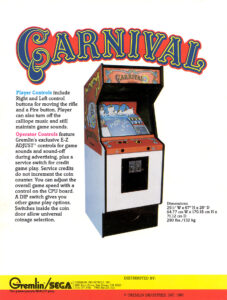
The interview highlighted a fascinating disparity between the Japanese and American markets. For instance, the game Mini Monaco was a significant hit in the United States and Europe but failed to gain traction in Japan. Nakayama attributed this to the American market’s appreciation for smaller, more efficient cabinets and the appeal of two-player competitive play. Conversely, Carnival, a game Nakayama personally championed during development, received a lukewarm reception in Japan while outperforming major titles like Missile Command in the U.S. market.
This divergence in consumer behavior has forced Sega to adopt a flexible approach to hardware design. While the "table-type" cabinet has become the standard in Japanese coffee shops and game centers following the Space Invaders boom, the "upright" cabinet remains a staple of international arcades. Nakayama stated that while Sega must cater to the Japanese demand for tabletop units, the company has no intention of abandoning the upright format, which offers higher aesthetic value and brand presence.

The Fight Against Intellectual Property Infringement
As the popularity of video games has surged, so too has the prevalence of unauthorized "clones" or copycat machines. This issue became particularly acute during the "Invader" boom of the late 1970s. Nakayama noted that while early legal frameworks in Japan were insufficient to protect software, the landscape is rapidly evolving.
Sega/Gremlin has taken a proactive stance in the United States, most notably in its legal victory against Exidy regarding the game Head-On. This case was a landmark for the industry, establishing that video games could be protected under a combination of trademark, copyright, and unfair competition laws. Nakayama warned that the proliferation of cheap copies is ultimately detrimental to the industry, as it leads to excessive competition and a decline in product quality. He argued that it is the manufacturer’s duty to pursue legal action against counterfeiters, even if the cost of developing uncopyable hardware leads to higher prices for operators.
Diversification and the Leisure Ecosystem
Beyond video games, Sega continues to diversify its portfolio to ensure stability across the broader leisure sector. This includes a commitment to the pinball market, where Sega maintains a steady supply of machines from American manufacturers like Williams and Stern. Nakayama also discussed the revitalization of "medal games"—gambling-style arcade games that use tokens—by improving and repurposing existing inventory to offer more affordable options to operators.
The group’s expansion into the food and entertainment sector is also noteworthy. Sega of America has launched "PJ Pizzazz," a pizza restaurant chain that integrates arcade gaming with family dining, similar to the Chuck E. Cheese model. This move reflects a broader trend of "location-based entertainment," where gaming is one component of a larger social and culinary experience.
Chronology of Key Sega Milestones (1974–1980)
To understand the context of Nakayama’s 1980 interview, one must look at the rapid sequence of events that transformed Sega in the preceding years:
- 1974: Sega Enterprises, Ltd. is acquired by Gulf & Western, integrating the Japanese firm into a global American conglomerate.
- 1976: Sega of America acquires Gremlin Industries, establishing a dedicated R&D and manufacturing hub in San Diego, California.
- 1978: The release of Space Invaders by Taito triggers a massive "Invader boom" in Japan, fundamentally changing the arcade landscape and popularizing the tabletop cabinet.
- 1979: Sega releases Head-On, a pioneer in the "maze chase" genre that predates Pac-Man. The same year, Sega acquires Esco Trading in Japan.
- April 1979: Sega reports record-breaking financial results, confirming the profitability of the video game sector.
- 1980: Sega/Gremlin releases Carnival, the first video game to feature a distinct bonus round, signaling a move toward more complex game design.
Industry Implications and Future Outlook
The insights provided by Nakayama suggest that the arcade industry is entering a phase of professionalization and consolidation. The era of the "lone inventor" is being replaced by corporate synergy and international licensing agreements. By aligning with a giant like Gulf & Western, Sega has the capital necessary to fight legal battles over copyrights and to invest in the next generation of hardware.
Nakayama’s focus on "long-term business sustainability" and "economies of scale" indicates that Sega is looking beyond the current boom toward a future where video games are a permanent fixture of global culture. The company’s willingness to experiment with different business models—from pizza parlors to high-end dedicated arcade cabinets—shows a sophisticated understanding of the leisure market.
As the interview concluded, Nakayama offered a supportive word for the trade press, acknowledging the role of publications like Game Machine in leading the industry toward a positive and professional direction. With 1,200 employees and a firm grip on both the Japanese and American markets, Sega stands as a primary architect of the digital entertainment revolution that would eventually move from the arcade into the home. The strategies outlined by Nakayama in 1980 laid the groundwork for Sega’s eventual emergence as a household name in the console market later in the decade.