Retno Hari Mulyono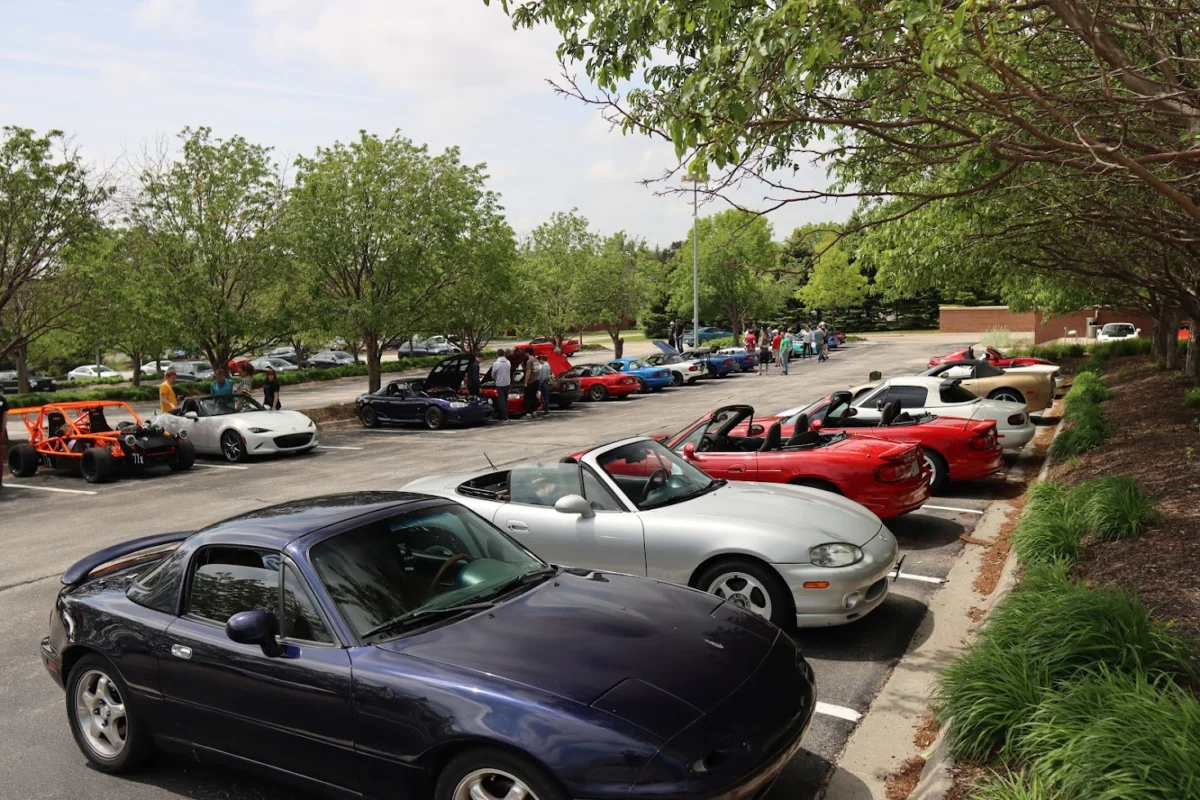
The Mazda MX-5 Miata, specifically the second-generation NB model produced between 1998 and 2005, has long been a benchmark for lightweight, rear-wheel-drive engineering in the automotive enthusiast community. In March 2021, a specific 2000 model-year unit was acquired to undergo a comprehensive twelve-month transformation, shifting from a neglected daily driver to a purpose-built track and autocross vehicle. This project highlights the enduring relevance of the NB platform, characterized by its 1.8-liter BP4W engine and a curb weight of approximately 2,300 pounds, making it a primary candidate for both mechanical restoration and performance modification.
Acquisition and Initial Reliability Assessment
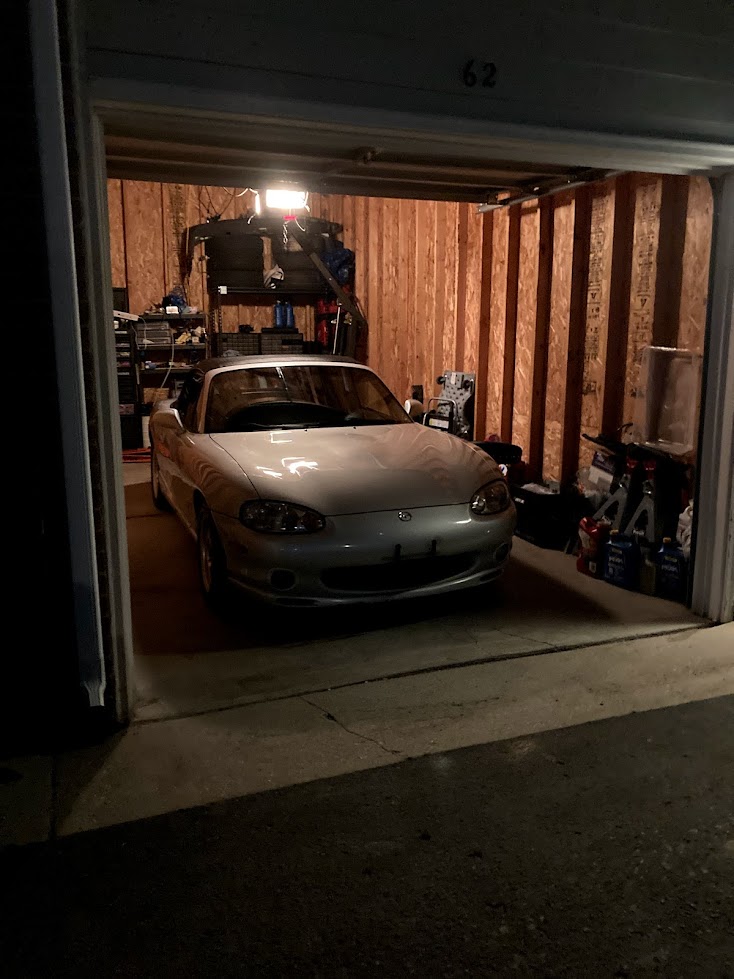
The restoration project commenced on March 19, 2021, with the purchase of a 2000 Mazda Miata. At the time of acquisition, the vehicle represented the "raw" driving experience often absent in contemporary sports cars, which are frequently burdened by electronic assists and increased mass. The NB Miata serves as a bridge between the classic simplicity of the first-generation NA and the more refined NC and ND models.
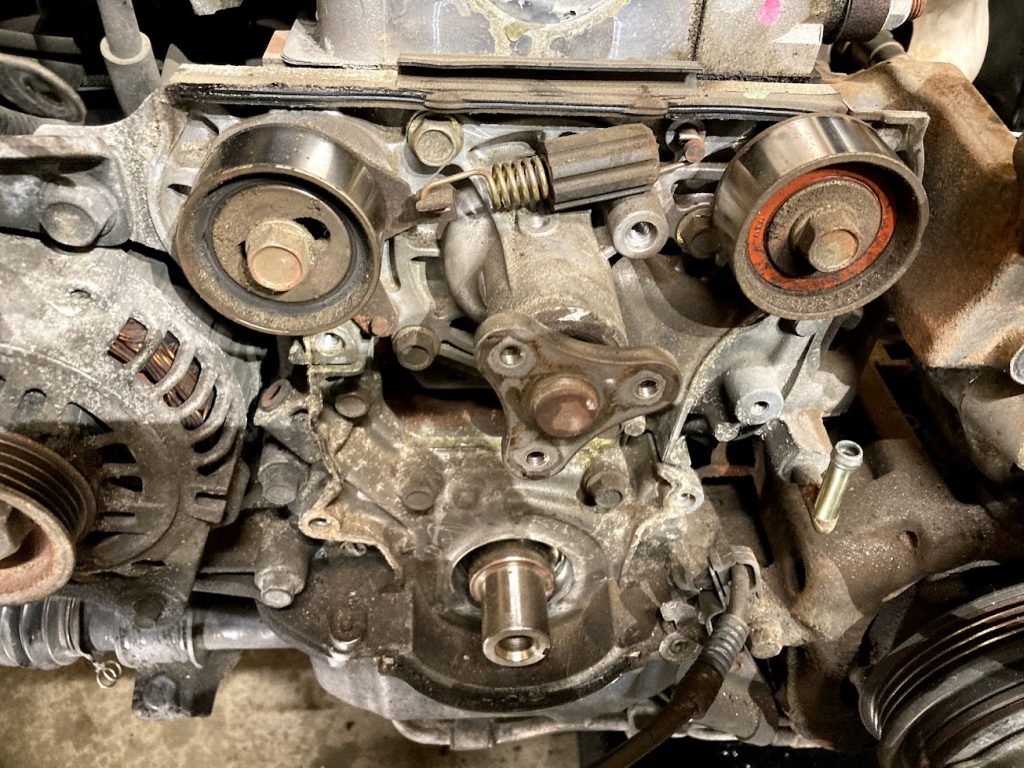
Upon purchase, the vehicle lacked a documented maintenance history, a common challenge in the used sports car market. The primary objective for the first month was to establish a "known good" baseline. The BP4W engine is a non-interference design, meaning that a timing belt failure will not result in the valves striking the pistons, thereby avoiding catastrophic engine damage. Despite this safety margin, the decision was made to perform an immediate overhaul of the timing system and other critical components. This proactive maintenance is essential for vehicles intended for the high-stress environments of track days and competitive autocross.
Community Integration and Exhaust System Optimization
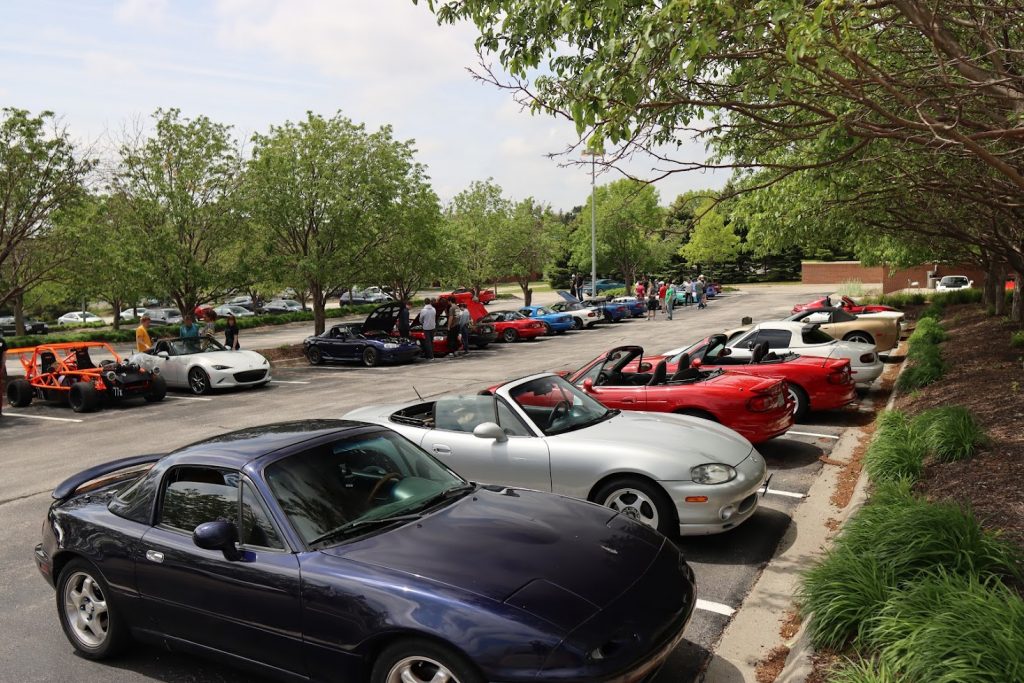
By May 2021, the project transitioned from the garage to the community. The Miata enthusiast ecosystem is notably diverse, encompassing everything from stock restorations to highly modified variants, including turbocharged builds and V8-swapped "Exocet" kit cars. Engaging with this community provided a technical roadmap for the subsequent modifications.
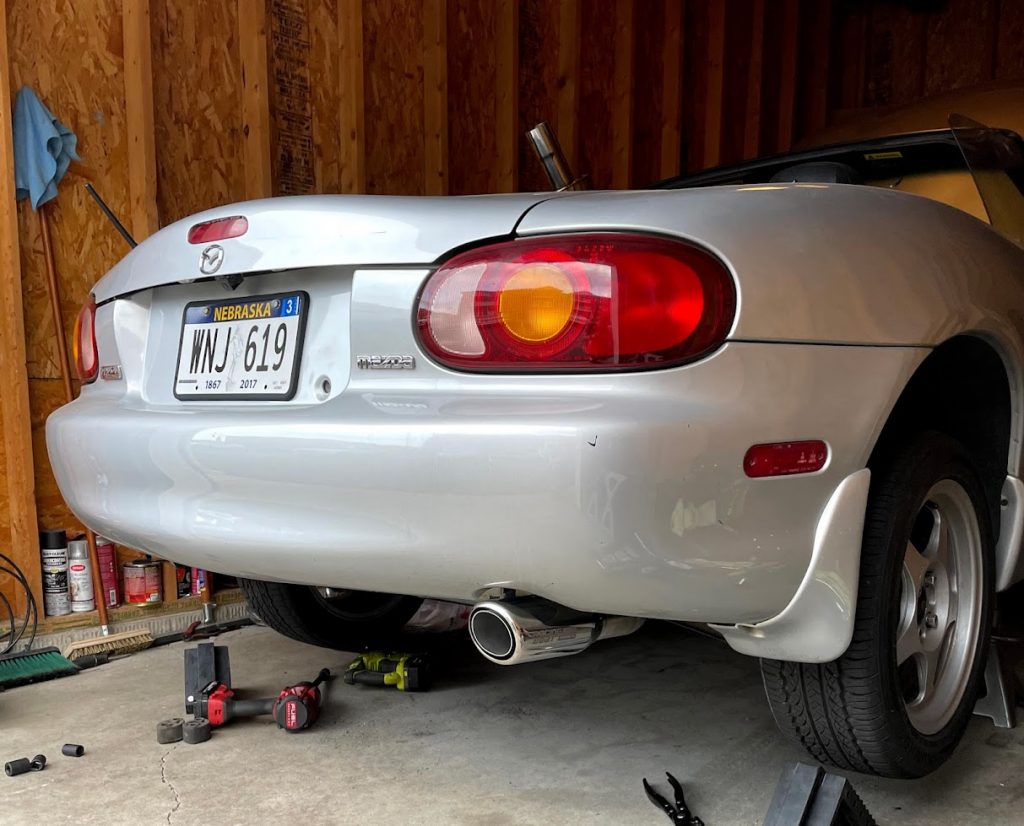
In June, the focus shifted to the exhaust and emission systems. The vehicle had begun displaying diagnostic trouble codes (DTCs) related to the catalytic converter, compounded by the presence of corroded hardware. The stock exhaust system was replaced with a combination of aftermarket components designed to improve flow and auditory feedback without exceeding decibel limits for street legality. The configuration included a Raceland header, a Cobalt midpipe, and a Racing Beat Power Pulse muffler. While the hardware improved engine responsiveness, the installation initially encountered setbacks due to an improperly connected Exhaust Gas Recirculation (EGR) pipe, illustrating the complexities of modifying aging OBD-II vehicles.
Aesthetic Overhaul and Aerodynamic Considerations
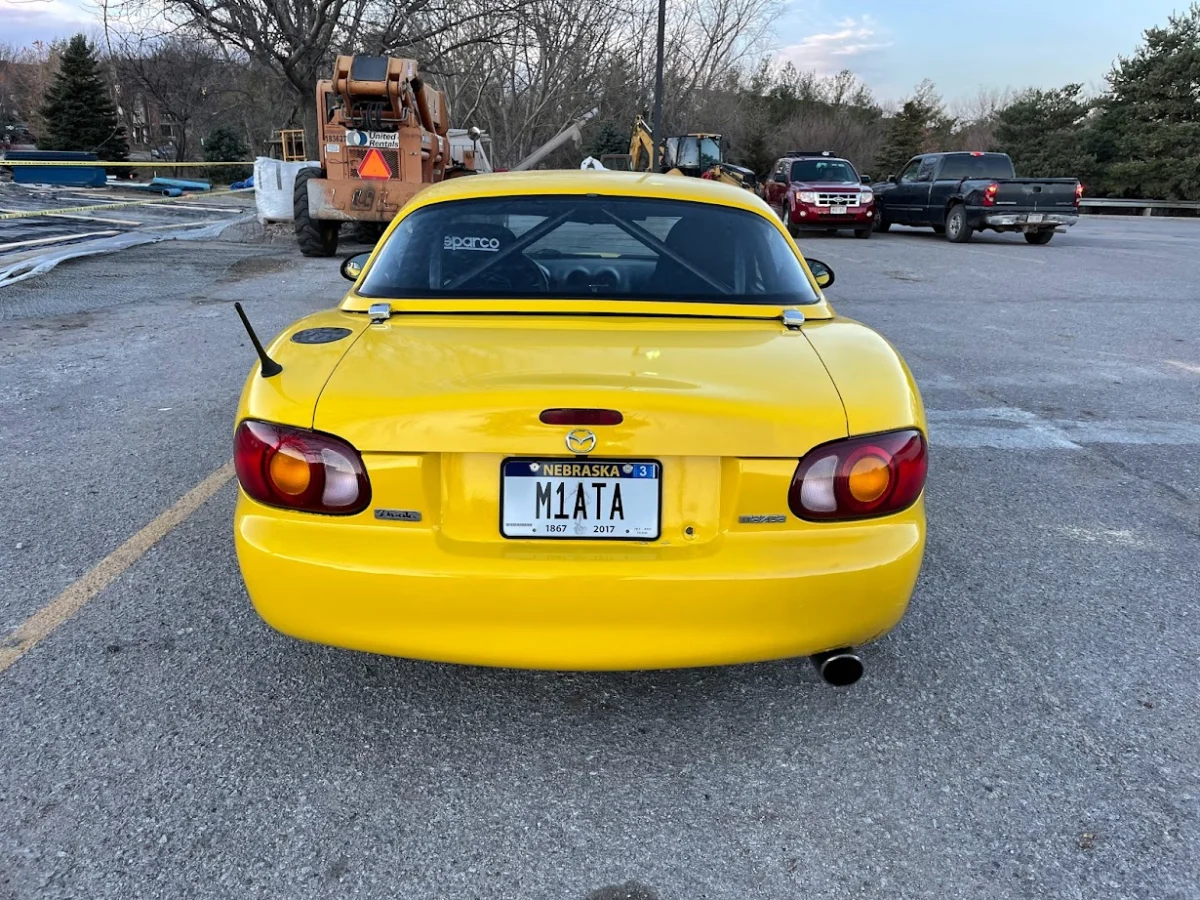
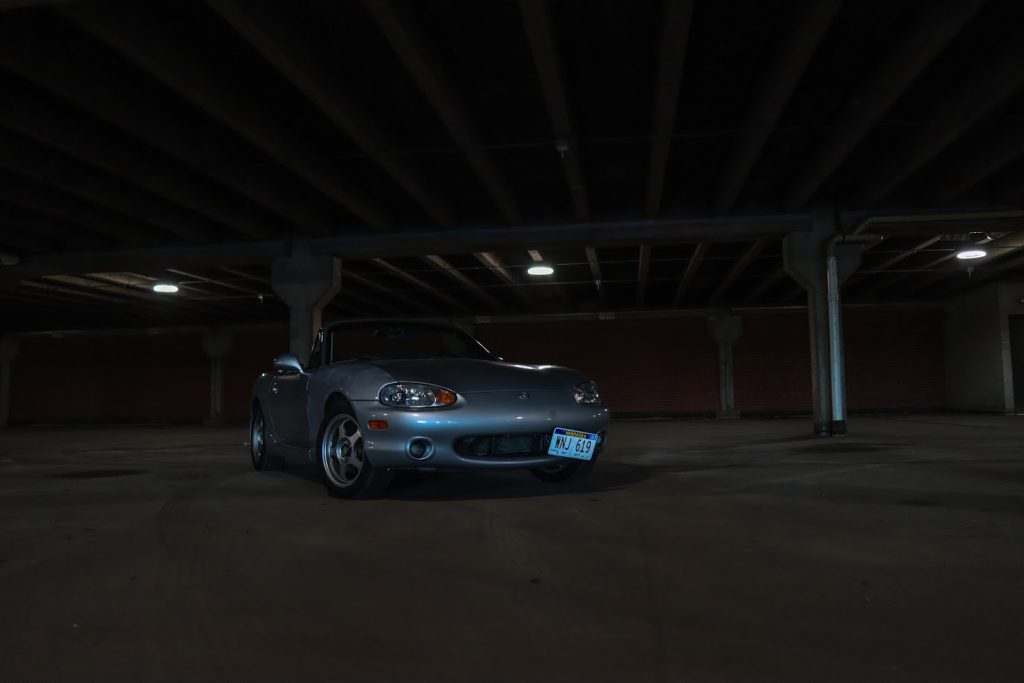
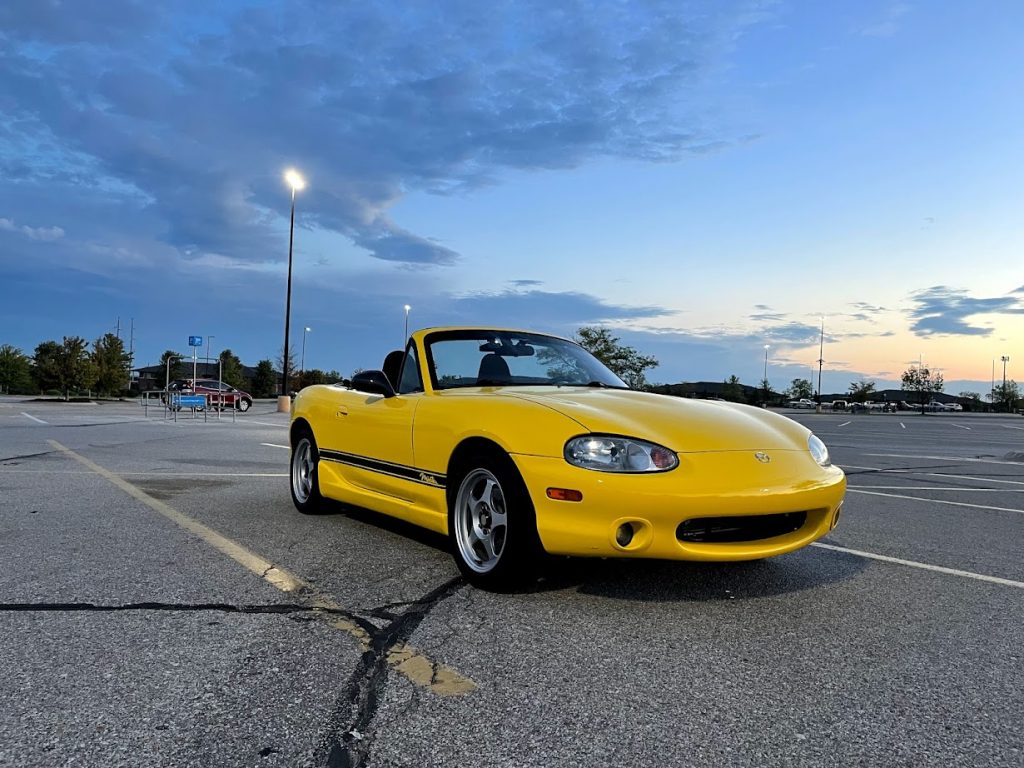
In July and August 2021, the vehicle underwent a significant visual transformation. The original silver paint, which featured a replaced and rattle-can-painted front fender, was prepared for a full vinyl wrap. The choice of a vibrant yellow wrap was more than a cosmetic preference; it marked a shift in the vehicle’s identity from a generic commuter to a high-visibility project car.
The process of wrapping a vehicle requires a smooth substrate, necessitating the repair of surface imperfections that would otherwise be magnified by the vinyl. This phase of the project demonstrated the cost-effectiveness of vinyl as an alternative to professional respraying, particularly for vehicles destined for the track where paint chips and abrasions are frequent occurrences.
Dynamic Testing: Track Days and Autocross
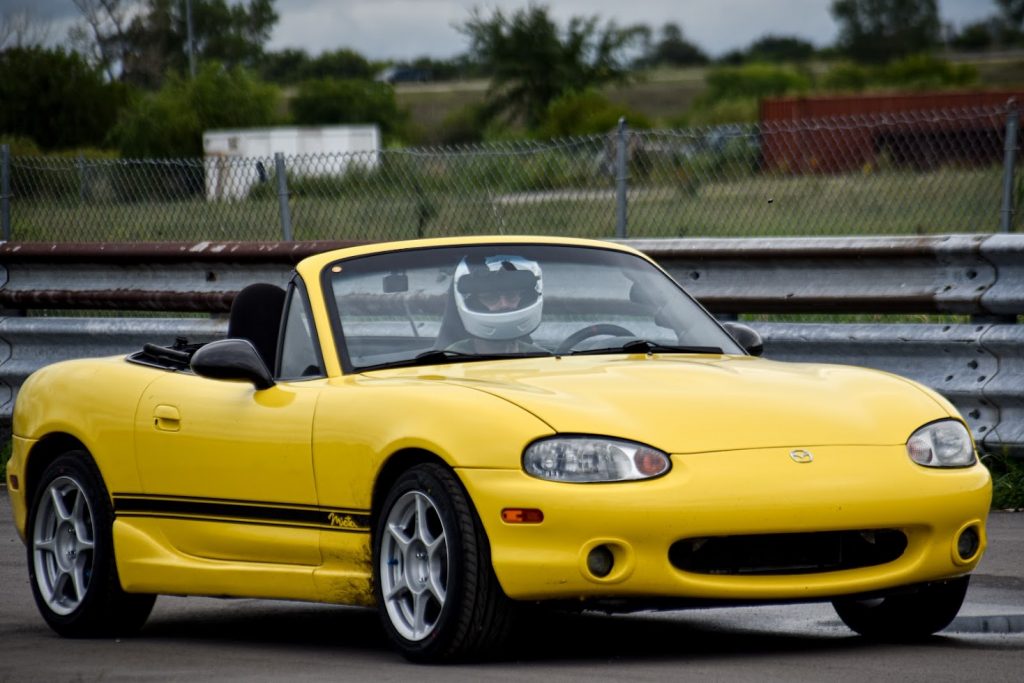
The fall of 2021 marked the transition to performance testing. In September, the vehicle was entered into a track day at Raceway Park of the Midlands. This environment allows for sustained high-speed operation, testing the limits of the cooling system, braking efficiency, and tire heat cycles. The Miata’s reputation as a "momentum car" was validated during these sessions; while it lacks the straight-line speed of high-displacement rivals, its ability to maintain cornering speeds makes it a formidable tool on technical circuits.
Following the track day, the vehicle was utilized for autocross events in October. Autocross focuses on low-speed precision and transient handling. These events provided critical data on the vehicle’s suspension geometry and weight transfer characteristics. The affordability of autocross makes it a primary entry point for enthusiasts looking to refine their driving skills and vehicle setup in a controlled environment.
Winter Engineering: Suspension and Engine-Out Maintenance
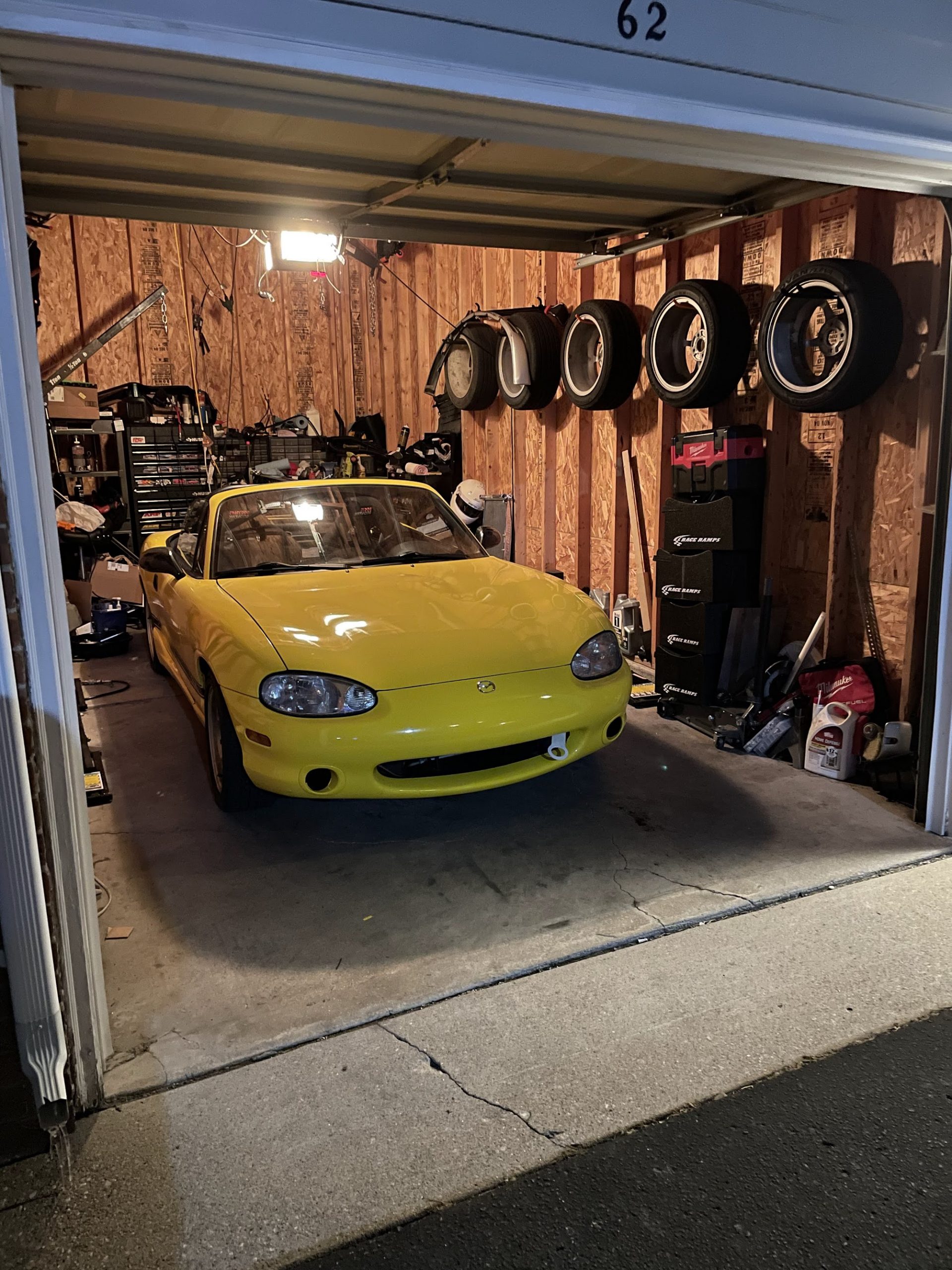
As winter approached in Nebraska, the project moved indoors to avoid the corrosive effects of road salt, to which the NB chassis is particularly susceptible. The NB generation is known for rust issues in the front frame rails and rocker panels, making seasonal storage a necessity for preservation.
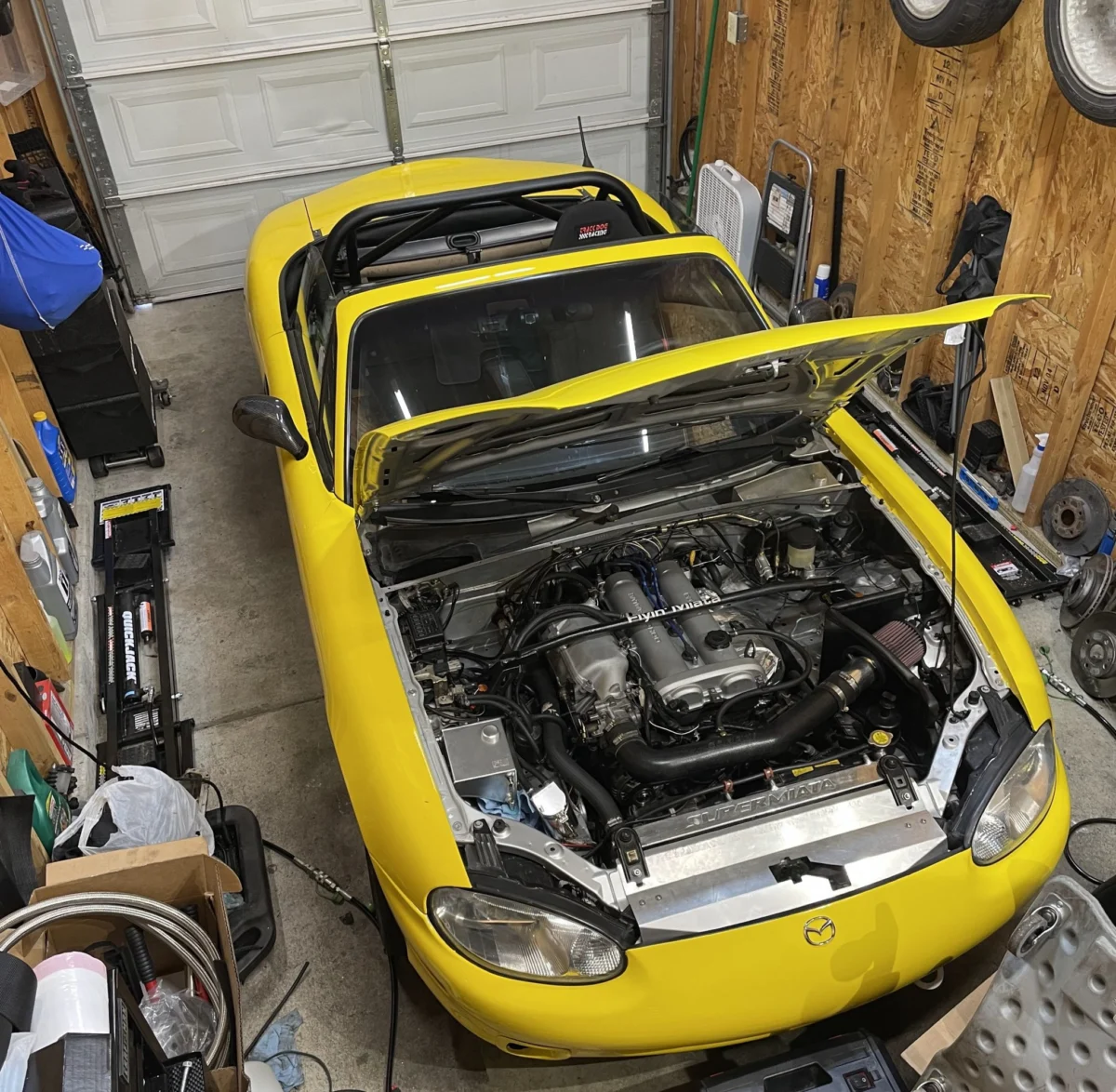
During December 2021 and January 2022, the vehicle underwent its most significant mechanical intervention. The suspension was overhauled with upgraded components to improve damping and spring rates. Subsequently, the engine was removed to facilitate repairs that are notoriously difficult to perform in-chassis. These included:
- Rear Main Seal Replacement: Addressing a persistent oil leak at the back of the crankshaft.
- Oil Pan Repair: Replacing a stripped oil drain plug.
- Coolant Reroute Installation: This is a critical modification for the B-series engine. The original factory cooling path enters and exits at the front of the block, often leaving cylinders three and four to run hotter than one and two. A reroute forces coolant through the entire length of the head, ensuring thermal parity across all cylinders.
- Inaccessible Hose Replacement: Changing coolant hoses located under the intake manifold that are prone to failure after two decades of heat cycles.
Safety Systems and Final Calibration
In the final month of the first year, the focus turned to occupant safety and chassis alignment. To meet the stringent requirements of various sanctioning bodies, the vehicle was equipped with:
- Track Dog Racing UltraShield Rally Sport Seats: Providing lateral support to keep the driver positioned during high-G cornering.
- Six-Point Harnesses: Ensuring the driver remains secured in the event of an impact or rollover.
- HANS Device: A Head and Neck Support system to prevent basilar skull fractures during rapid deceleration.
- Fire Extinguisher: A mandatory safety item for most track-oriented vehicles.
A critical safety metric for convertibles is the "broomstick test," which requires that the driver’s helmeted head sits below a line drawn from the top of the roll bar to the top of the windshield frame. Achieving this clearance often requires low-profile seat brackets or "foamectomy" modifications to the seating.
The project’s first year concluded with a DIY alignment. While professional laser alignments are standard, the use of string lines and camber gauges allows for iterative adjustments based on driver feedback. This "hands-on" approach to geometry—adjusting toe, camber, and caster—is a hallmark of the Miata tuning philosophy, where minor changes in degrees can significantly alter the vehicle’s turn-in characteristics and mid-corner stability.
Broader Impact and Market Implications
The successful restoration and modification of this 2000 Mazda Miata reflect a broader trend in the automotive industry: the "modern classic" movement. As new vehicles become increasingly complex and expensive, enthusiasts are gravitating toward platforms from the late 1990s and early 2000s. These vehicles offer a balance of reliability through fuel injection and OBD-II diagnostics, while retaining the mechanical simplicity and tactile feedback desired by purists.
Furthermore, the project highlights the economic viability of the Miata platform. The availability of aftermarket support and the interchangeability of parts between the NA and NB generations ensure that these vehicles can be maintained and upgraded indefinitely. The rise in Spec Miata racing and the popularity of the platform in SCCA (Sports Car Club of America) events have created a robust secondary market for parts and expertise.
In conclusion, the first twelve months of this NB Miata project represent a systematic approach to automotive engineering. By addressing reliability first, followed by community engagement, aesthetic updates, and finally high-performance safety and mechanical upgrades, the vehicle has been transformed from a standard roadster into a precision instrument. The project stands as a testament to the versatility of the Mazda MX-5 platform and its continued dominance in the amateur motorsport landscape. As the vehicle enters its second year of service, it serves as a case study in the sustainable preservation of internal combustion performance.