Indra Gunadi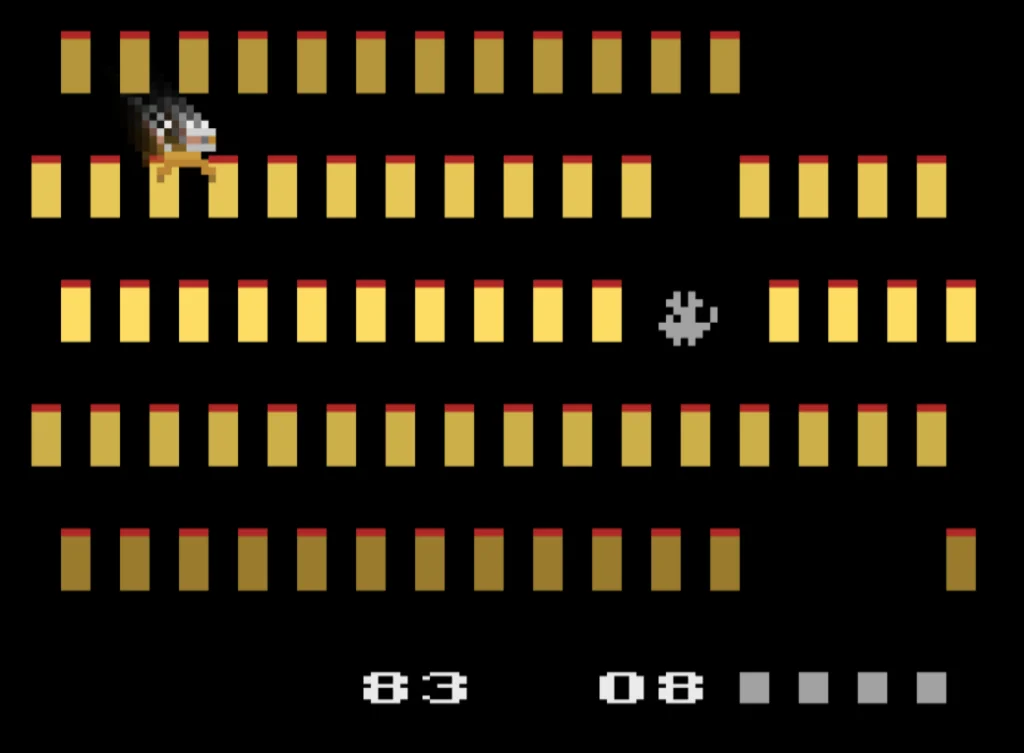
The vibrant and enduring homebrew development scene for the venerable Atari 2600 console continues to captivate enthusiasts and developers alike, with the recent announcement and digital availability of "Cat Games (2025)" by independent developer artefacto serving as a testament to this sustained creativity. Released initially in 2025 and subsequently reported on July 17, 2026, this new title introduces a quartet of mini-games, each leveraging the iconic hardware’s capabilities to deliver fresh interactive experiences starring a feline protagonist, a mischievous mouse, and a high-energy laser. The game’s emergence underscores the persistent appeal of retro gaming platforms and the dedicated community that actively contributes to their ongoing legacy, pushing the boundaries of what was once thought possible on 1970s technology.
The Enduring Legacy of the Atari 2600
Launched in 1977, the Atari Video Computer System, later known as the Atari 2600, revolutionized the entertainment landscape by bringing customizable home video gaming to the masses. With its distinctive wood-grain aesthetic and iconic joystick, the console quickly became a cultural phenomenon, selling millions of units and laying the groundwork for the modern video game industry. Its success was driven by a library of groundbreaking titles like Space Invaders, Asteroids, and Pitfall!, which captivated players with their innovative gameplay and competitive mechanics. Despite the video game crash of 1983 and the subsequent rise of more technologically advanced consoles, the Atari 2600 has maintained a dedicated following, largely due to its historical significance, the nostalgic appeal for early adopters, and the inherent challenge and simplicity of its hardware architecture.
The core of the Atari 2600’s design centered around the MOS Technology 6507 microprocessor, a scaled-down version of the popular 6502, coupled with the Television Interface Adaptor (TIA) chip, which handled all video and audio output. This combination provided a mere 128 bytes of RAM for game logic and variables, an extremely limited palette of 128 colors (typically fewer used simultaneously), and a resolution of 160×192 pixels. Developing for such constrained hardware requires profound ingenuity, forcing developers to optimize every byte and every CPU cycle, often employing tricks and techniques that were not part of standard programming curricula. This technical challenge is precisely what continues to draw a specific subset of developers, often referred to as homebrewers, to the platform decades after its commercial prime. Their work not only expands the console’s library but also serves as a fascinating exercise in digital archaeology and engineering, demonstrating how much can be achieved with minimal resources through sheer programming prowess. The community’s efforts have transformed the Atari 2600 from a relic of the past into a living, evolving platform, continually surprising both veterans and newcomers with innovative new titles.
The Rise of the Homebrew Phenomenon
The concept of homebrew gaming, particularly for vintage consoles, began to gain significant traction in the late 1990s and early 2000s, coinciding with the rise of the internet and the proliferation of emulation software. Websites like AtariAge became central hubs for enthusiasts, providing forums, resources, and platforms for developers to share their creations. What started as a niche hobby for a few dedicated programmers has since blossomed into a thriving subculture, complete with annual competitions, physical cartridge releases, and a vibrant marketplace. Developers are motivated by a variety of factors: a deep passion for retro gaming, the intellectual challenge of working within severe hardware limitations, the desire to create games that might have existed during the console’s heyday, and the satisfaction of contributing to a beloved platform’s legacy.
The homebrew scene for the Atari 2600 is particularly robust. Unlike modern game development, which often involves large teams and extensive toolchains, Atari 2600 homebrew development frequently falls to solitary programmers or small teams. They utilize specialized development kits, often based on assembly language, to craft experiences that adhere to the console’s distinctive graphical and auditory characteristics. This dedication has led to a steady stream of new games, ranging from simple arcade-style experiences to surprisingly complex adventures, many of which push the technical boundaries of the original hardware. Notable examples include Stella’s Stocking, a Christmas-themed platformer, Princess Rescue, a homage to classic NES titles, and Mr. Run and Jump, a contemporary platformer that later received an official commercial release on modern platforms, demonstrating the quality and appeal of some homebrew projects. These releases not only cater to a nostalgic audience but also introduce new generations to the unique charm and challenges of early video gaming, ensuring the Atari 2600 remains relevant in a rapidly evolving digital landscape.
Introducing artefacto and "Cat Games (2025)"
artefacto, an independent developer operating within the dynamic homebrew community, has garnered attention with their latest contribution to the Atari 2600 library: "Cat Games (2025)." While specific details about artefacto’s prior projects or development philosophy are not extensively publicized, their presence on platforms like itch.io signifies a commitment to independent game creation and direct engagement with the player base. itch.io has become a pivotal platform for indie and homebrew developers, offering an accessible storefront and community features that bypass traditional publishing routes, allowing creators to release their projects directly to a global audience.
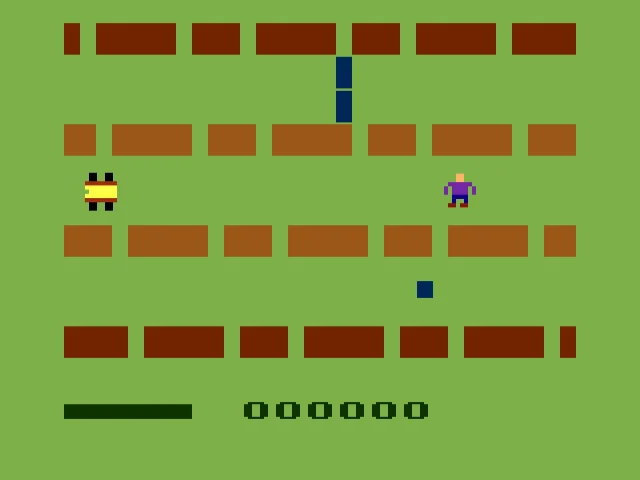
"Cat Games" stands out as a collection of four distinct mini-games, all unified by a whimsical theme centered around a cat, a mouse, and the intriguing inclusion of a laser. This multi-game format is reminiscent of early Atari titles that often bundled several variations or distinct games onto a single cartridge, maximizing replayability within the limited storage capacity of the era. The primary mini-games highlighted include "Run Cat, Run" and another unnamed segment involving a laser-wielding opponent.
In "Run Cat, Run," players are tasked with guiding the feline protagonist through an environment where the objective is to catch 40 obstacles. This suggests a fast-paced, possibly side-scrolling or top-down action game, demanding quick reflexes and strategic movement. The game’s design likely incorporates typical Atari 2600 mechanics, such as simple sprite collision detection and environmental hazards. Given the console’s capabilities, the "obstacles" could range from static objects to moving entities, requiring the cat to navigate complex patterns or timing-based interactions to achieve its goal. The challenge of catching 40 items implies a progression system, potentially increasing difficulty or introducing new elements as the game advances, aiming for a high score or completion time.
The second explicitly mentioned mini-game reverses the roles, placing the player in control of an entity dodging a cat that is now equipped with a laser. This scenario implies a different kind of challenge, likely a survival or avoidance game. Players would need to skillfully maneuver their character to evade laser beams fired by the antagonist cat, potentially in an arena-like setting. The use of a "laser" on the Atari 2600, while not graphically complex, can be effectively simulated through rapidly moving sprites or distinct color patterns, creating a sense of urgency and danger. The limited number of sprites and colors available on the 2600 means that artefacto would have had to employ clever programming techniques to animate the laser and the characters smoothly, creating a convincing visual effect within the hardware’s constraints.
While the specifics of the remaining two mini-games are not detailed, their inclusion within the "cat, mouse, LASER" theme suggests further variations on these core mechanics. Possibilities include a classic cat-and-mouse chase game, a puzzle game involving laser redirection, or even a competitive two-player mode where one controls the cat and the other the mouse or laser. The ingenuity of homebrew developers often lies in extracting maximum gameplay variety from minimal graphical assets and simple control schemes, a hallmark of the Atari 2600 era. The game’s visual presentation would undoubtedly adhere to the console’s distinct pixel art style, characterized by blocky sprites and a limited but carefully chosen color palette, evoking a sense of nostalgic authenticity. The audio would similarly feature the iconic bleeps, bloops, and simple melodies produced by the TIA chip, which are instantly recognizable to anyone familiar with the Atari 2600 soundscape.
Development and Release Timeline
The journey of "Cat Games (2025)" from concept to public release follows a typical trajectory for modern homebrew projects. The title’s designation as "(2025)" indicates its initial digital release or significant development milestone occurred in that year. This often involves months, if not years, of dedicated coding, debugging, and testing within the tight technical confines of the Atari 2600. Developers in this sphere frequently leverage emulators for initial testing and debugging before deploying their creations on actual hardware using flash cartridges or programmer-specific tools.
The news of its availability, reported on July 17, 2026, highlights the community-driven dissemination of information within the retro gaming world. Unlike mainstream titles with orchestrated marketing campaigns, homebrew games often gain traction through word-of-mouth, forum discussions, and dedicated retro gaming news portals. This gap between the game’s initial release and its wider reporting is not uncommon, reflecting the organic growth and discovery process inherent to the independent and niche development scene. artefacto’s decision to distribute the game via itch.io ensures accessibility, allowing players worldwide to download the ROM file and experience the game either through an emulator on modern devices or by flashing it onto a compatible cartridge for play on original Atari 2600 hardware. This dual approach caters to both casual enthusiasts and dedicated collectors, democratizing access to new content for vintage systems.
The Modern Retro Gaming Market and Its Appeal
The retro gaming market has experienced a significant resurgence in recent years, transforming from a niche hobby into a substantial segment of the global entertainment industry. Market analysis firm reports indicate a steady growth in the retro gaming sector, driven by several key demographics. Nostalgia plays a dominant role, with individuals who grew up during the golden age of arcade and console gaming seeking to relive their past experiences. However, the appeal extends beyond nostalgia; younger generations are increasingly discovering the foundational titles and simpler, yet often challenging, gameplay mechanics of classic systems. This demographic appreciates the historical context and the unique design philosophies that predated the complexity of modern gaming.
Supporting data points to a burgeoning market for vintage hardware, original game cartridges, and increasingly, new homebrew releases and re-imaginings of classic titles. Platforms like eBay and specialized retro gaming stores report robust sales of Atari 2600 consoles and games. The continued innovation in the homebrew scene contributes directly to this market vitality by providing fresh content that keeps the platform relevant and engaging. Events such as the annual Portland Retro Gaming Expo (PRGE) or the Classic Gaming Expo (CGE) regularly feature dedicated sections for homebrew developers, allowing them to showcase their latest creations and interact directly with a passionate audience. The digital distribution model employed by artefacto via itch.io aligns perfectly with this ecosystem, providing a low-friction method for both developers to publish and players to acquire new games without the overhead of physical production, though many successful homebrew titles eventually see limited physical cartridge runs due to collector demand.
Community Reception and Developer Insights
While direct statements from artefacto regarding "Cat Games (2025)" are not widely available, the typical sentiment from developers within the Atari 2600 homebrew community often revolves around a profound respect for the platform and the satisfaction of overcoming its technical hurdles. One could infer that artefacto embarked on this project out of a passion for retro gaming and a desire to contribute a unique vision to the Atari 2600’s ever-expanding library. Developers frequently express the intellectual gratification derived from optimizing code, meticulously crafting pixel art within severe color constraints, and designing engaging gameplay loops that resonate with the console’s era.
Reactions from the broader retro gaming community to releases like "Cat Games" are typically enthusiastic. Forum discussions on platforms such as AtariAge or Reddit’s r/retrogaming often highlight appreciation for the creativity, the technical skill involved, and the sheer dedication required to develop for such an archaic system. Commentators frequently praise new homebrew titles for their originality, their ability to evoke nostalgic feelings, or for pushing the boundaries of what the Atari 2600 is capable of. Reviewers in the retro gaming press or on YouTube channels dedicated to vintage hardware often provide in-depth analyses, scrutinizing gameplay mechanics, graphical ingenuity, and sound design against the backdrop of the console’s limitations. Such feedback is invaluable for independent developers, providing both validation and constructive criticism that can inform future projects. The community’s active engagement serves as a vital feedback loop, demonstrating the living nature of these vintage platforms and the strong bond between creators and players.
Broader Impact and Implications
The release of "Cat Games (2025)" by artefacto carries significant implications for the Atari 2600 ecosystem, the broader homebrew movement, and the cultural landscape of gaming preservation. For the Atari 2600 community, each new homebrew title acts as a vital shot in the arm, injecting fresh content and maintaining interest in a console that is now nearly half a century old. It demonstrates that the platform is not merely a historical artifact but a viable canvas for contemporary creative expression. This continued influx of new games helps attract new enthusiasts who might not have experienced the Atari 2600 during its original run, ensuring its legacy is passed down through generations.
Furthermore, the game contributes to the ongoing narrative of the homebrew movement as a whole. It serves as a powerful example of how passion and ingenuity can transcend technological obsolescence. The ability of independent developers to create compelling, entertaining experiences on severely limited hardware challenges conventional notions of what constitutes "modern" gaming and highlights the timeless principles of game design. It inspires other aspiring developers, showing them that barriers to entry can be overcome with dedication and a deep understanding of the chosen platform.
From a gaming preservation standpoint, every new homebrew release adds to the digital archive of the Atari 2600, expanding its available library and providing richer context for future scholars and historians of video games. These titles are not just entertainment; they are cultural artifacts that showcase the evolution of programming techniques, artistic styles, and game design philosophies over time. The open distribution model via itch.io further aids preservation by making these games readily accessible for download and emulation, ensuring they are not lost to time.
Finally, the continued commercial viability of homebrew games, even in a niche market, underscores the economic potential of retro gaming. While "Cat Games" is currently a digital release, successful homebrew titles often see limited physical cartridge runs, becoming sought-after collector’s items. This micro-economy supports independent developers and fosters a sustainable environment for continued innovation on vintage platforms. The ongoing narrative of games like "Cat Games" reinforces the idea that true creativity and engaging gameplay are not solely dependent on cutting-edge technology but can thrive within the most humble of digital canvases. The Atari 2600, through the efforts of developers like artefacto, remains a dynamic and relevant platform, continually surprising and delighting its dedicated