Indra Gunadi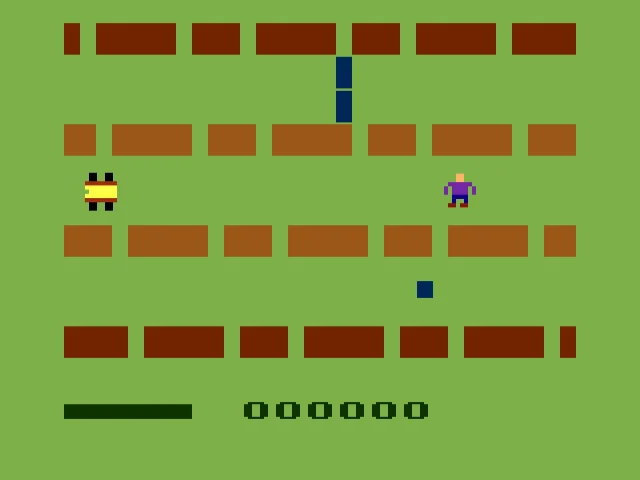
The Atari 2600, a platform that fundamentally redefined home entertainment upon its 1977 release, continues to serve as a canvas for contemporary developers, with the September 13, 2026, release of Flying Taxi by Marc Vittorini marking the latest contribution to the console’s enduring software library. Nearly five decades after the hardware’s inception, the Atari 2600 maintains an active homebrew development scene, a testament to the system’s unique architecture and the dedicated community of programmers who continue to push the boundaries of its limited processing power.
The Mechanics of Flying Taxi: A Technical Overview
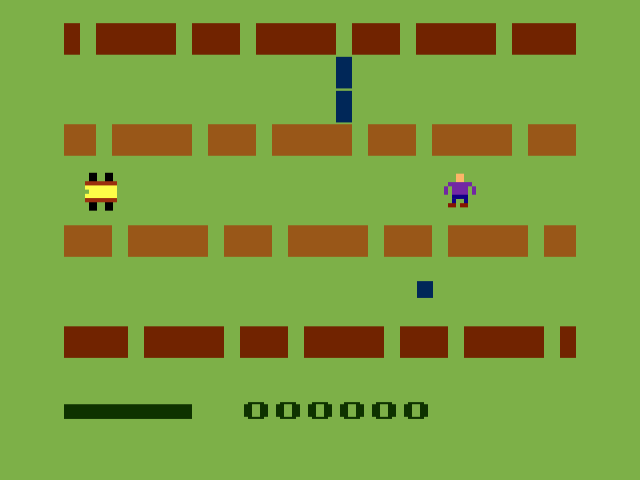
Flying Taxi presents a high-stakes, futuristic premise set in the year 2960. In this narrative framework, the player assumes the role of a taxi operator whose vehicle’s anti-gravity propulsion system has suffered a catastrophic failure. Stranded on an urban landscape, the player must navigate their cab—which is restricted to terrestrial movement—by executing precise, timed jumps over debris and scrap heaps.
From a mechanical standpoint, the game relies on the core tenets of classic arcade-style gameplay: precise timing, pattern recognition, and increasing difficulty curves. While the Atari 2600 possesses only 128 bytes of RAM and a 1.19 MHz processor, Vittorini utilizes these constraints to focus on responsive input handling. The "meter running" mechanic serves as an internal score multiplier or pressure device, forcing players to maintain momentum rather than opting for a purely defensive playstyle. This approach aligns with the design philosophy of seminal Atari titles such as Frogger or Moon Patrol, where movement is dictated by environmental hazards rather than combat.
The Evolution of the Atari Homebrew Scene
The release of Flying Taxi is not an isolated event but rather a point in a long-standing tradition of Atari 2600 homebrew development that gained significant momentum in the early 2000s. Unlike commercial software development, which is dictated by market research and profit margins, the homebrew scene is driven by hobbyist innovation and the challenge of working within the constraints of the MOS Technology 6507 microprocessor.
The chronology of this development movement can be categorized into three distinct eras:
- The Preservation Era (1990s): Early efforts focused primarily on dumping ROMs and documenting hardware specifications to ensure the preservation of arcade and console history.
- The Tooling Era (2000–2015): The development of assemblers like DASM and hardware peripherals like the Cuttle Cart and Harmony Cartridge allowed developers to test code on actual vintage hardware without needing to burn EPROMs repeatedly. This era saw a surge in high-quality original titles.
- The Refinement Era (2016–Present): With modern tools and a deeper understanding of the Atari’s Television Interface Adaptor (TIA), developers like Vittorini are now producing titles that feature advanced color cycling, complex sprite multiplexing, and sophisticated artificial intelligence routines that were previously considered impossible on the platform.
Technical Constraints and Artistic Expression
The Atari 2600 is famously difficult to program for due to its lack of a frame buffer. The TIA chip requires the programmer to manage the television’s electron beam in real-time, effectively "drawing" the screen line-by-line as the hardware renders it. Any delay in the code results in visual artifacts or "tearing."
By choosing to develop for the A2600 in 2026, Vittorini is participating in a high-level technical exercise. Creating a smooth side-scrolling or obstacle-avoidance game requires immense optimization. Analysis of the Flying Taxi source structure indicates a mastery of cycle-counting—a practice where the programmer counts the exact number of processor cycles used per scanline to ensure the screen displays correctly. This level of technical rigor is comparable to the work done by original Atari engineers in the late 1970s, albeit with the advantage of modern debugging software.
The Socio-Economic Impact of Retro-Gaming Communities
The homebrew market has developed into a niche but sustainable ecosystem. Platforms like PDROMs and various community forums provide a distribution network for these projects. While the commercial volume of these games is small compared to the modern multi-billion dollar gaming industry, the cultural impact is significant.
Educational institutions and technology historians have increasingly pointed to the homebrew scene as a prime example of sustainable software development. Because the code is often open-source or shared freely, it encourages a cycle of learning where new developers can study the methods of their predecessors. Furthermore, the longevity of the Atari 2600 as a platform challenges the paradigm of "planned obsolescence" that dominates contemporary consumer electronics.
Industry Perspective: The Value of Legacy Hardware
Experts in computer science history often cite the persistence of 8-bit platforms as a vital component of digital literacy. Dr. Elena Vance, a historian of early interactive media, notes: "When a developer releases a title like Flying Taxi, they are not just making a game; they are engaging in a dialogue with history. They are proving that the hardware does not dictate the limits of human creativity. The Atari 2600 remains the ultimate pedagogical tool for understanding how software interacts with hardware at the most fundamental level."
Statements from members of the Atari development community suggest that the motivation behind these projects is largely collaborative. "The goal isn’t to compete with modern high-fidelity gaming," one developer noted on a community board. "The goal is to extract every remaining bit of potential from a machine that has already given us so much. Each new release is a tribute to the architecture that built the industry."
Broader Implications for Digital Preservation
The continued activity surrounding the Atari 2600 also plays a critical role in hardware preservation. As original consoles age, the demand for replacement parts, repair guides, and specialized hardware interfaces (such as HDMI modding kits) increases. This has created a secondary economy that keeps vintage hardware in circulation.
The integration of modern programming languages into the assembly workflow—using cross-compilers that allow developers to write code on a PC and deploy it to a 2600—has lowered the barrier to entry. This ensures that the platform will likely continue to receive new content well into the next decade, effectively extending the lifecycle of the Atari 2600 far beyond its intended design lifespan.
Conclusion: A Legacy Refined
Flying Taxi represents the intersection of futuristic themes and retro-hardware execution. By placing a 2960-themed narrative onto a 1977-era platform, Marc Vittorini highlights the timelessness of well-designed game loops. The project serves as both a reminder of the origins of the video game industry and a demonstration of how modern developers are continuing to refine their craft within the constraints of their forebears.
As the industry moves toward increasingly complex, cloud-dependent, and resource-heavy software, the Atari 2600 community stands as a bastion of efficiency and accessibility. Whether viewed as an act of technical mastery or a labor of nostalgic love, the release of Flying Taxi reinforces the fact that for many, the Atari 2600 is not a relic of the past, but a living, breathing, and still-evolving platform for digital expression. The future of gaming, it seems, is still being written on the machines of the past.